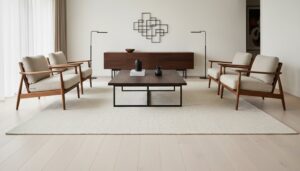
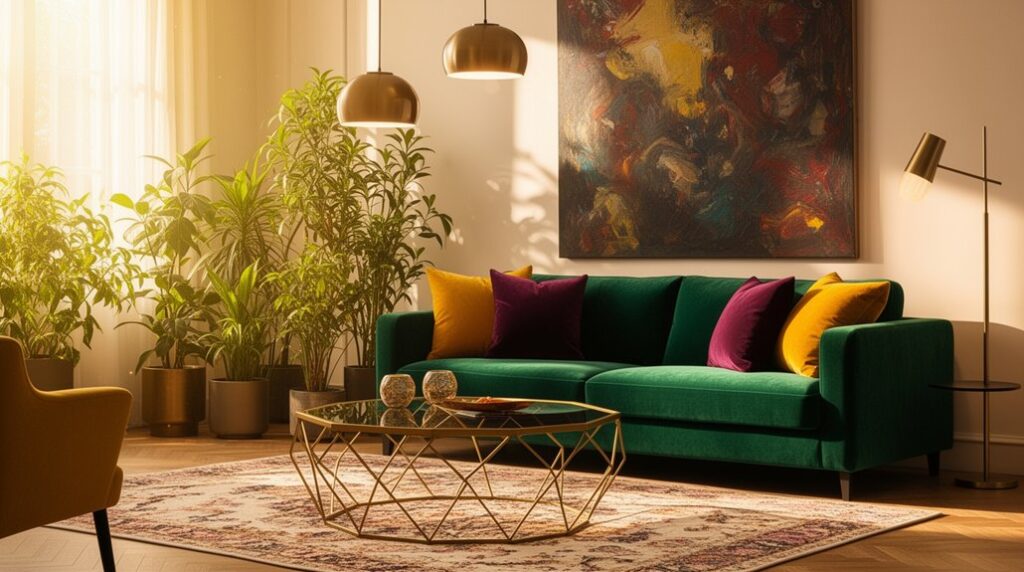
Pick one bold move first—paint an accent wall or fireplace surround in a deep blue, terracotta, or emerald—and test samples in different light. Add statement lighting with a sculptural ceiling fixture plus dimmable lamps for warmth. Rearrange seating into an L or U shape and keep 30–36 inches of clear walkway. Layer three standout textures (bouclé, velvet, leather) and mix patterns by varying scale. Finish with oversized art, styled shelves, and one great hero piece—there’s more ahead.
Key Takeaways
- Paint one high-impact area in a bold hue, testing samples in different lighting to match the mood you want.
- Layer three standout textures—like bouclé, velvet, and leather—repeating each twice for a cohesive, intentional look.
- Add pattern with an anchor rug or curtains, then mix scales across pillows and throws while keeping one solid for balance.
- Upgrade to statement lighting and layered lamps, using dimmers or smart plugs to instantly shift the room’s atmosphere.
- Rearrange furniture for better flow and a clear focal point, then finish with oversized art, a mirror, and greenery.
Start With One Bold Living Room Color Move
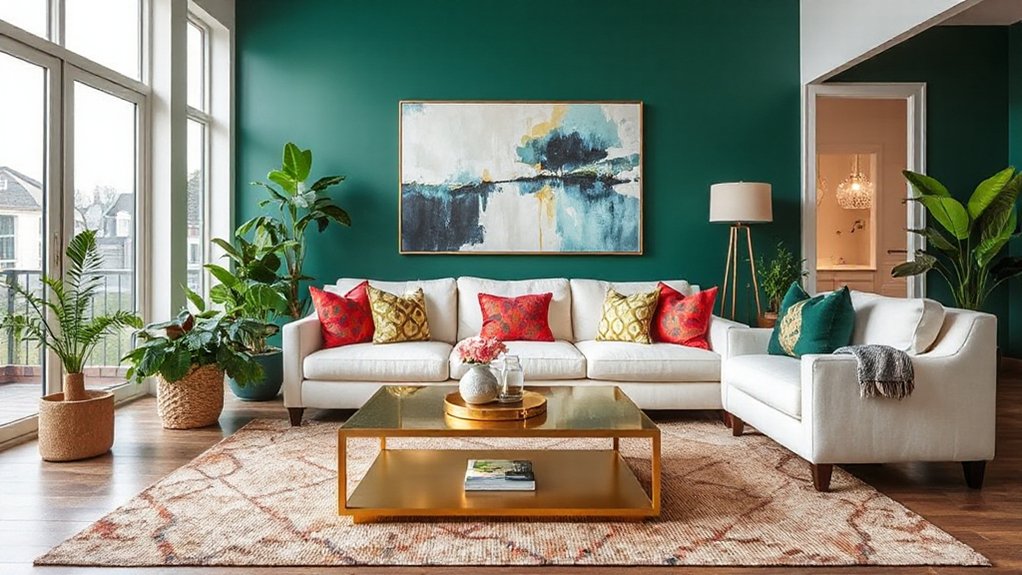
One bold color move can change your whole living room without a full makeover. Pick a single high-impact target: an accent wall, the fireplace surround, or built-in shelves.
Use Color psychology to guide the choice—deep blue calms, terracotta warms, and emerald adds richness—then match it to how you want the room to feel at night and in daylight.
Keep costs down by buying a sample first and checking it on multiple walls.
Prep well so you don’t waste paint: clean, patch, sand, and tape crisp edges.
For smooth paint application, cut in with an angled brush, then roll in a “W” pattern, keeping a wet edge.
Two thin coats beat one thick coat every time.
Transform Your Living Room With Statement Lighting
Swap in a sculptural ceiling fixture to set the room’s style instantly, and keep costs down by choosing a standard size that fits your existing junction box.
Then build layered ambient lighting with a mix of floor and table lamps so you can brighten corners and soften the mood without rewiring.
Put the lights on dimmable bulbs or smart plugs, and you’ll get flexible control for a small spend.
Sculptural Ceiling Fixtures
Ever notice how your living room feels “finished” only after you look up? Sculptural ceiling fixtures give you that final, intentional punch without buying new furniture. Choose Modern geometric shapes—ring pendants, faceted globes, or linear bars—to echo clean lines you already have.
If you like Artistic installations, try an affordable cluster fixture or a lightweight mobile-style chandelier that adds movement. Measure first: keep at least 7 feet of clearance and center the fixture over your main seating area.
Stick to one standout piece so the room doesn’t feel busy. Save money by swapping only the shade or canopy, and use a plug-in pendant with a ceiling hook if you can’t rewire. Match finishes to existing hardware for cohesion.
Layered Ambient Lighting
How do you make a living room feel warm and intentional without cranking up a single harsh overhead light? You layer light at different heights so your eyes relax and the space reads finished.
Start with a dimmable floor lamp in a corner for an ambient glow; swap in an LED bulb and add a $10 plug-in dimmer if the lamp isn’t built in.
Next, place a table lamp near the sofa to light faces for conversation.
Then tuck an inexpensive LED strip behind your TV console or shelves to soften edges and reduce glare.
Finally, add one small accent, like a battery sconce or picture light, for mood lighting.
Use warm bulbs (2700K) throughout and put everything on timers.
Rearrange Your Living Room Layout for Better Flow
Before you buy anything new, rearrange what you’ve got to create clear pathways from doors to seating and to high-use spots like the TV or fireplace.
Anchor your seating around a single focal point, then pull pieces in or out so conversation feels easy without blocking walkways.
Keep scale and spacing balanced by leaving consistent gaps between furniture and walls, and by avoiding oversized pieces that crowd the room.
Define Clear Pathways
Where do people naturally walk when they enter your living room, head to the sofa, or cross to the next room? Trace those routes first, then protect them. Aim for 30–36 inches of clear space so you’re not sidestepping tables or clipping corners.
Start with furniture arrangement: pull pieces a few inches off walls if it opens a straighter line, and rotate a chair or slim console to redirect traffic. Replace bulky side tables with nesting tables or a narrow C-table. If a rug narrows passage, shift it or size down rather than buying new.
Add pathway lighting to prevent trips: a plug-in floor lamp at a dark corner, or warm LED strip lights under a console for cheap, subtle guidance.
Anchor Seating Around Focal Point
Clear pathways keep you moving easily, but the room won’t feel settled until the seating has a clear “home base.” Pick one focal point—fireplace, TV, big window, or a statement shelf—and aim your main sofa toward it. Then place chairs to form a simple conversation zone (think a U or L shape).
If your focal point is the TV, angle the sofa slightly so it still suits talking, not just watching. Use a rug you already own to visually “lock” the group in place, or rotate it so the front legs sit on it.
Add a small side table to create a Cozy corner for reading. Treat your focal point as the statement centerpiece, and keep everything aimed to it.
Balance Scale And Spacing
Even if you’ve anchored your seating to a focal point, the room can still feel “off” when the furniture sizes don’t match the space or when pieces sit too tight (or too far) apart. Aim for scale harmony by matching big items with visual weight: pair a large sofa with substantial chairs, or lighten it with armless pieces and slim legs.
For spacing balance, measure before you move. Leave 30–36 inches for main walkways, and 18 inches between sofa and coffee table (12 is fine for small rooms). Keep side tables within arm’s reach, and align front legs of seating on the rug to “connect” the grouping.
If a chair blocks flow, swap it with a smaller one or rotate it 15 degrees—free, fast fixes.
Layer Bold Living Room Textures (Bouclé to Velvet)
If your living room feels flat, layering a few high-contrast textures can add depth fast without a full makeover. Start with one “hero” fabric, like a bouclé accent chair or boucle pillow covers, then add a counterweight: velvet cushions, a nubby wool throw, or a smooth leather ottoman for Textural contrast.
Aim for smart Material pairing—soft next to sleek, matte next to sheen—so each piece reads clearly.
Keep it budget-friendly by swapping textiles first: pillow covers, throws, and slipcovers cost less than new furniture. Ground the mix with a durable rug (low-pile for easy cleaning) and add a woven basket to corral blankets.
Limit yourself to three dominant textures, repeat each twice, and your room will look intentional, not chaotic.
Mix Patterns in Your Living Room Like a Pro
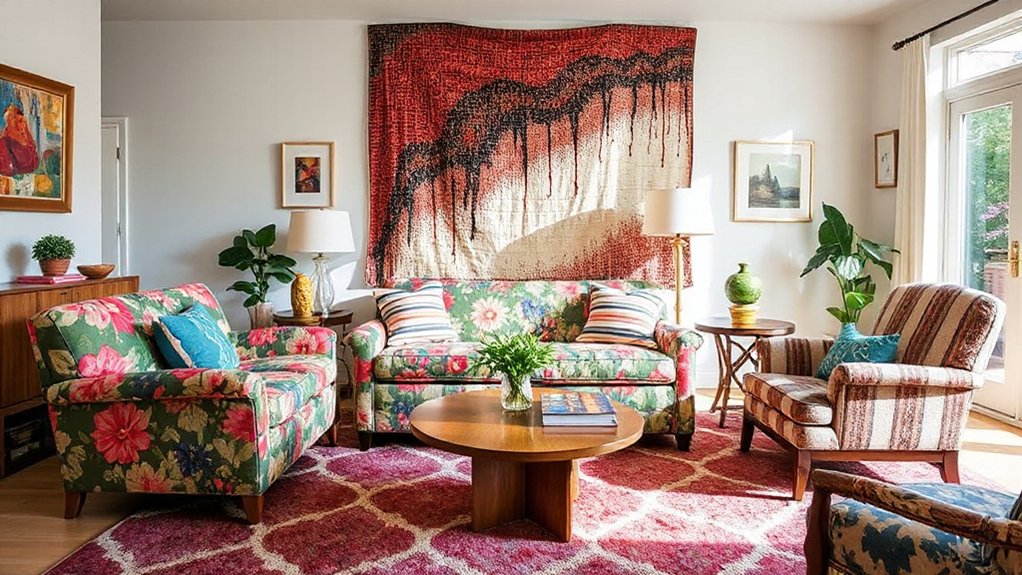
When you mix patterns with a simple rule set, you can make a living room feel layered and designer without buying all new furniture. Start with one “anchor” print you love—like a rug or curtain—and pull two colors from it for color coordination across pillows, throws, and a small accent chair.
For pattern mixing, vary scale: pair a large floral or geometric with a medium stripe, then add a small dot or herringbone. Keep at least one solid in each grouping so your eye can rest. Limit yourself to three patterns per seating zone, and repeat each pattern at least twice to look intentional.
Shop your home first, then fill gaps with budget pillow covers, removable wallpaper panels, or thrifted textiles you can tailor.
Go Oversized With Living Room Art and Mirrors
Because a single oversized piece creates an instant focal point, go big with wall art or a mirror instead of scattering lots of small frames. Hang it so the center sits at eye level (about 57–60 inches) and keep it 6–8 inches above your sofa for a tailored look.
Stretch your budget by shopping thrift stores, estate sales, and online marketplaces for large frames, then swap in inexpensive prints or DIY abstract canvas panels.
If your room feels dark, choose a tall mirror to bounce window light; lean it safely or anchor it with anti-tip hardware.
Add interest with one shelf holding small abstract sculptures, but keep the wall dominant.
For another big statement, try oversized wall clocks that double as art without extra clutter.
Upgrade Your Living Room With Standout Furniture
Why settle for a room full of “fine” pieces when one standout furniture item can elevate the entire space? Pick a hero piece that solves a real need: a deep, structured sofa for lounging, a sculptural swivel chair for extra seating, or a storage ottoman that hides clutter.
Set a firm budget, then shop outlet sections, floor models, and secondhand listings for solid frames and quality upholstery.
Use Vintage accents to add character without overspending—think a mid-century credenza, a cane chair, or brass legs you can polish. Keep the rest simple so it reads intentional.
For Greenery incorporation, choose a tall floor plant beside the hero piece to soften lines and balance scale, especially in tight rooms.
Style Bold Living Room Shelves and Surfaces
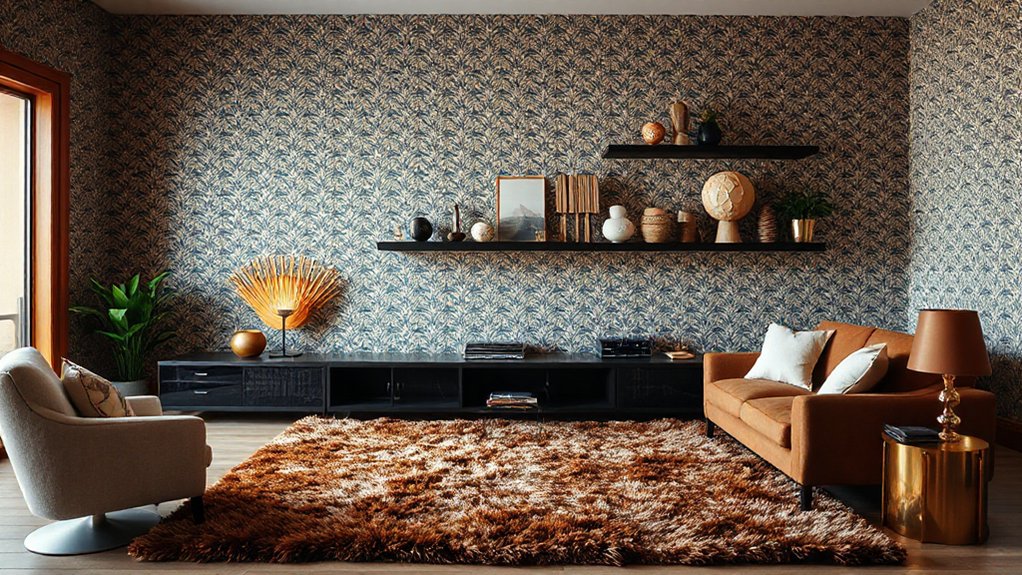
Even if your furniture stays simple, you can make the room feel curated by styling shelves, consoles, and coffee tables with a clear plan. Start with a tight color palette: two neutrals plus one accent pulled from your rug or art.
On Living room shelving, group items in threes, vary heights, and leave 30% empty space so it doesn’t look crowded. Use inexpensive risers (books, boxes wrapped in craft paper) to lift smaller objects.
For surface styling, anchor each surface with one larger piece (tray, bowl, or stack of books), then add one functional item (coaster set, candle, remote box) and one organic element (plant cutting, dried stems). Rotate thrifted finds seasonally instead of buying new.
Frequently Asked Questions
How Do I Bolden My Living Room on a Tight Budget?
You can bolden your living room on a tight budget by focusing on high-impact swaps. Add colorful accents like thrifted pillows, a bright throw, or peel-and-stick wallpaper on one wall.
Rearrange first, then buy one statement furniture piece secondhand—an oversized chair or painted coffee table.
Refresh with budget paint, upgraded lamp shades, and layered rugs.
Use removable art prints in cheap frames, and shop clearance endcaps.
What Bold Updates Are Renter-Friendly and Fully Reversible?
You can go bold and still undo everything: use removable wallpaper on one accent wall, or hang peel-and-stick wall murals for instant color. Swap in high-contrast throw covers and budget curtains you can take with you.
Replace hardware with temporary knobs, and add plug-in sconces or LED strips using Command hooks. Layer a washable rug and oversized art on adhesive strips, then patch nothing. Keep receipts, store originals.
Which Bold Choices Boost Resale Value Versus Hurt It?
Boost resale with bold that looks intentional, not personal: think warm greige, soft navy, or muted sage—color psychology signals calm and “move-in ready” while still memorable.
Pair it with one quality statement furniture piece (a tailored sofa or timeless credenza), then keep everything else neutral and scaled.
Skip neon walls, ultra-specific murals, and built-ins that break layouts.
Choose reversible upgrades: lighting, hardware, and durable rugs.
Keep receipts.
How Do I Choose Bold Decor That Works With Kids and Pets?
Choose bold decor by prioritizing washable, durable materials and stable, tip-resistant pieces.
Use Color coordination to keep loud accents confined to a repeatable palette, so chaos doesn’t show.
Lean into Texture mixing with performance velvet, indoor-outdoor rugs, and wipeable faux leather for easy cleanup.
Pick slipcovers, removable cushion covers, and stain-resistant treatments.
Avoid delicate ceramics; use shatterproof frames and anchored shelves.
Buy one standout item, then thrift accessories.
How Can I Make Bold Changes Without Hiring a Designer?
You can make bold changes yourself by setting a tight plan, then executing in small, reversible steps.
Pick 2–3 Color palettes and test swatches on walls and fabrics before you buy.
Anchor the room with one affordable Statement art piece, then repeat its colors in pillows, a rug, and curtains.
Shop secondhand and online marketplaces, measure everything, and use painter’s tape to map layouts before moving furniture.
Conclusion
You don’t need a full remodel to refresh your living room this season—just a few bold, smart swaps. Pick one punchy color move, then add statement lighting with an efficient bulb to cut costs. Shift your layout for smoother traffic, layer affordable textures like bouclé pillows over a thrifted velvet chair, and mix patterns in a tight palette. Hang oversized art or a mirror to double light. These tweaks can feel a million times bigger than their price.