
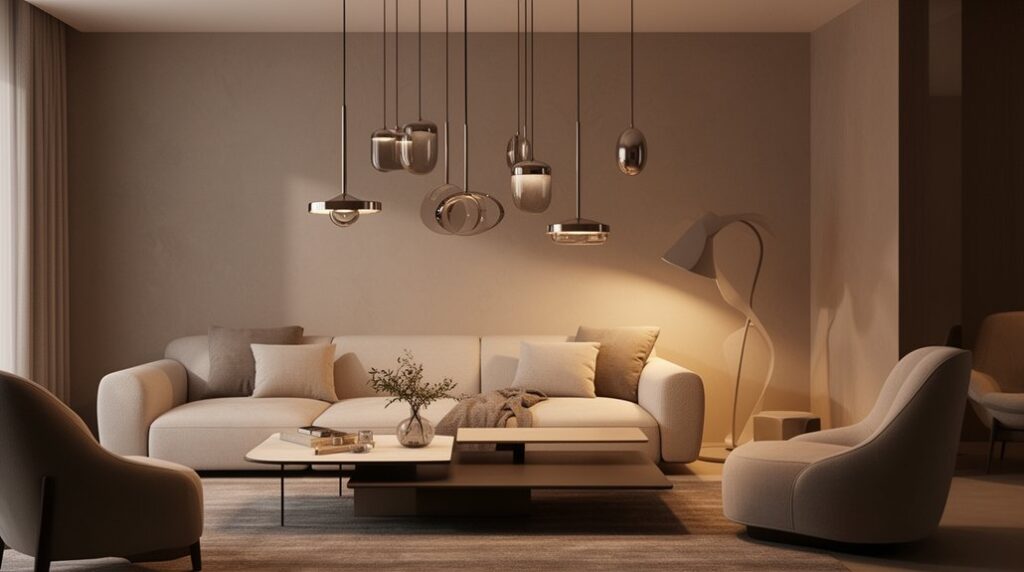
Lift any room fast by layering light: start with warm 2700K–3000K ambient bulbs, add a focused task lamp, then tuck in an accent light to wash a wall. Swap harsh clear bulbs for frosted, and keep color temps consistent in one sightline. Add an LED-compatible dimmer (or a plug-in dimmer for lamps) for instant mood control. If your overhead feels dated, hang a simple sculptural pendant or sconce. Next, you’ll see easy placement and glare fixes.
Key Takeaways
- Layer ambient, task, and accent lighting to instantly make rooms feel balanced, brighter, and more intentional.
- Standardize bulb color temperature within sightlines: 2700–3000K cozy, 3000–3500K clean, 4000K studio-crisp.
- Add dimmers or smart controls for quick mood changes, smoother evenings, and better LED performance.
- Swap dated overheads for a sculptural pendant or scaled chandelier to create a modern focal point with impact.
- Reduce glare and shadows using frosted LEDs, shaded lamps, wall sconces, and indirect aiming toward walls or ceilings.
Start With Modern Lighting Basics: Layers + Kelvins
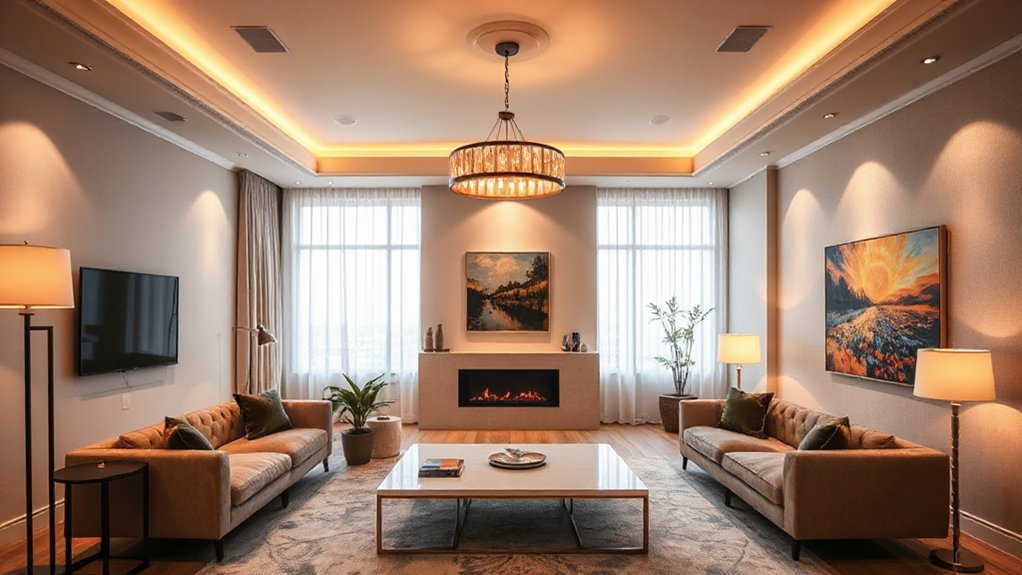
Before you buy a single fixture, map out your lighting in layers—ambient for overall glow, task for focused work, and accent to highlight features—then choose bulb color temperature (Kelvins) to match how you use the space.
Start by listing activities per room: reading, cooking, grooming, relaxing. Pick LEDs by Kelvin: 2700K–3000K for cozy living areas, 3000K–3500K for kitchens and baths, 4000K only if you want a crisp, studio feel.
Keep Color temperature consistent within sightlines so rooms don’t clash. Add dimmers where you can; they stretch bulb life and let one setup handle day and night.
Budget tip: upgrade bulbs first, then add one task light per work zone to complete your lighting layers.
Upgrade Overhead Modern Lighting With Statement Fixtures
Once you’ve nailed layered light and the right kelvins, upgrade your overhead with a statement fixture that does more than “just illuminate.” You can anchor the room with a sculptural pendant centerpiece, go bold with an oversized chandelier statement (scaled to your table or seating width), or keep it flexible with layered canopy cluster lights that spread light without major rewiring.
To stay on budget, reuse an existing junction box, choose LED-compatible sockets, and prioritize finishes that match your hardware so the new piece looks intentional.
Sculptural Pendant Centerpieces
One well-chosen sculptural pendant can do more for a room than a full set of basic ceiling lights because it adds focused task light and doubles as decor. Place it over a dining table, kitchen island, or reading nook to anchor the layout without cluttering the ceiling.
To keep it budget-friendly, choose one standout fixture instead of multiple recessed cans, and use a dimmable LED bulb (2700K–3000K) to control mood and glare.
Hang it 30–36 inches above a tabletop, or 7 feet above the floor in open areas. Pick matte black, brass, or soft white finishes to match hardware you already own.
These sculptural pendant centerpieces give you the impact of artistic lighting installations while staying compact, efficient, and easy to install.
Oversized Chandelier Statements
Where can you get the biggest overhead lighting upgrade without remodeling the ceiling? Swap in an oversized chandelier. You’ll get instant scale, better light distribution, and a focal point that makes basic rooms feel finished.
Keep it budget-smart: measure your room, then aim for a fixture diameter (in inches) close to the room’s length plus width (in feet).
Hang it about 30–34 inches above a dining table, or keep 7 feet of clearance in open areas.
Choose dimmable LEDs to cut energy use and heat.
If you want glam without pricey glass, look for acrylic prisms that mimic Elegant crystal.
For warmth, pick a Vintage design in aged brass or matte black.
Update the canopy and chain, and you’ll look custom for less.
Layered Canopy Cluster Lights
If your ceiling box sits in the “wrong” spot but you don’t want to open drywall, a layered canopy cluster light gives you a high-impact fix. You mount one canopy, then drop multiple pendants on adjustable cords so the glow lands where you need it—over a table, island, or seating zone.
Choose a Canopy cluster with swivel cord grips or a multi-port plate so you can fan lights outward without extra junction boxes. Keep costs down by mixing one standout shade with two simple globes, or by buying a kit and swapping in budget LED bulbs.
Aim for three heights to create layered lighting: task, ambient, and a little sparkle. Use warm 2700–3000K for inviting, modern balance.
Add Modern Lighting Layers With Table and Floor Lamps
Although overhead fixtures can light the whole room, they rarely give you the control you need for daily tasks and downtime, so add modern lighting layers with table and floor lamps.
Start with one floor lamp to create Ambient ambiance, then add a table lamp where you read, work, or relax.
Choose LED bulbs to cut costs; aim for 2700K–3000K in living areas for warmth, and 3500K–4000K near desks for focus—your Color temperature choice matters.
Look for dimmable sockets or plug-in dimmers so you can shift from bright task light to soft evening glow.
Use shades that hide the bulb and spread light evenly, and match lamp heights to seating so glare doesn’t hit your eyes.
Use Modern Wall Lighting to Free Up Surfaces
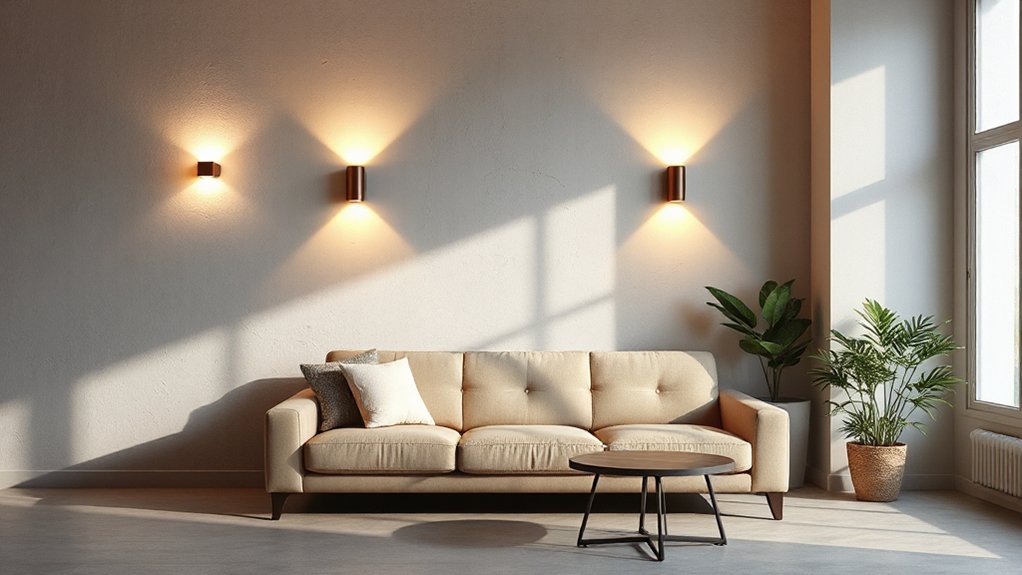
Mount modern sconces at the right height and spacing to clear cluttered nightstands, desks, and console tops without buying more furniture. You can even skip a bulky bedside table by pairing a plug-in wall light with a slim floating shelf or a small wall-mounted ledge for just the essentials.
Keep it tidy and safe by routing cords with paintable raceways, hiding slack behind the fixture, and placing outlets where they’re easy to reach but out of sight.
Space-Saving Sconce Placement
When floor space and tabletop real estate feel tight, modern wall sconces give you usable light without sacrificing a nightstand, console, or desk surface. Mount them 60–66 inches from the floor, or 6–12 inches above a headboard, so the beam lands where you read and relax.
For pairs, space them 24–36 inches apart to balance the wall and avoid harsh shadows. Choose a dimmable LED to control artificial ambiance without extra fixtures, and match color temperature to the room: 2700K for cozy bedrooms, 3000K for living areas, 3500K for task-heavy nooks.
If you rent, use plug-in sconces with cord covers; you’ll save on electrician costs and keep the look tidy. Add swivel heads for flexibility.
Floating Nightstand Alternatives
If your bedside setup feels cramped, swap bulky nightstands for a floating shelf or slim wall-mounted ledge and let modern wall lighting handle the rest. Choose a plug-in or hardwired sconce with an adjustable head so you can read without a lamp eating surface space.
For floating nightstand alternatives: wall-mounted storage, pick a 6–10 inch deep ledge; it’s enough for a phone, water, and book, but shallow enough to keep the walkway clear. To stay budget-friendly, use two matching shelves and paint them the wall color for a built-in look.
Look for models with hidden compartments to stash meds, earbuds, or a spare key out of sight. Add a small lipped tray to prevent items sliding off at night.
Cable Management And Concealment
A floating ledge clears the tabletop, but loose cords can make the whole setup look messy fast. Switch to modern wall lighting—plug-in sconces or hardwired fixtures—so you’re not sacrificing your few usable surfaces to lamps and chargers.
Start with Cable organization: run cords straight down, not diagonally, using paintable cord covers ($10–$20) that blend into the wall.
For Concealed wiring, tuck excess length behind the ledge or inside a slim cable box, then secure it with adhesive clips every 8–12 inches.
If you’re renting, choose plug-in sconces and hide the cord along trim; if you can DIY, fish a low-voltage line through the wall and add a wall plate.
Finish by labeling adapters and matching cable color to the wall.
Install Modern Lighting Dimmers for Instant Mood Shifts
Although swapping fixtures can get pricey, installing modern lighting dimmers gives you the fastest, most budget-friendly way to change a room’s mood on demand.
Start by checking your bulb type: many LEDs need “dimmable” labeling or they’ll flicker. Match the switch to the load (LED, incandescent, or universal) and confirm your box has a neutral if you want smart features.
New dimming technology often includes presets, schedules, and smooth fade-ins, so you can shift from task lighting to relaxed ambience in seconds for better mood control.
If you’re DIYing, shut off the breaker, label the wires, and use a voltage tester.
Prefer simple? A plug-in dimmer works for lamps without rewiring.
Keep one dimmer per circuit for stable performance.
Highlight Details With Modern LED Strip Lighting
When you want to spotlight architectural lines and small decor without paying for new fixtures, modern LED strip lighting delivers clean, customizable accents for very little money. Tuck strips under floating shelves, behind headboards, or along toe-kicks to add depth without glare.
Choose high-CRI strips (90+), so wood tones and artwork look natural, not washed out. For easy installs, buy kits with adhesive backing and plug-in drivers; reinforce corners with mounting clips, since tape can fail on textured paint.
Hide wires in paintable raceways for a finished look. Use warm white (2700–3000K) in living spaces, cooler in task zones.
Add Accent colors sparingly—one wall niche or cabinet run—so Texture contrast reads intentional, not chaotic.
Try Smart Modern Lighting Scenes for Day and Night
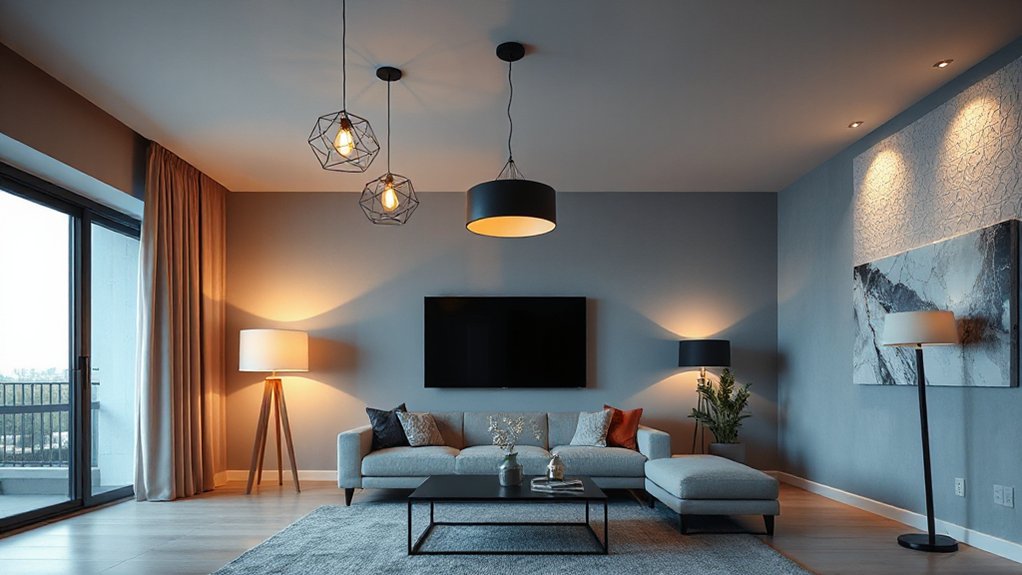
Since your lighting needs change from morning focus to evening downtime, smart modern lighting scenes let you swap the whole mood with one tap (or automatically on a schedule) without buying new lamps.
Start with two presets: “Work” (cooler, brighter) and “Relax” (warmer, dimmer). Use Smart scenes to control multiple bulbs at once, even across rooms, so your entry, kitchen, and living area shift together.
To keep costs down, upgrade just your most-used fixtures first: a table lamp, main ceiling light, and one accent. Add a cheap smart switch if you’ve got plenty of standard bulbs.
Turn on Daylight automation so lights fade up at sunrise and soften at sunset, helping you stay alert, then wind down.
Rename scenes clearly so guests won’t guess.
Fix Common Modern Lighting Mistakes Fast (Glare, Shadows)
Even a sleek modern fixture can make a room feel harsh if it throws glare or leaves you with heavy shadows, but you can fix both fast without replacing everything.
Start with glare reduction: swap clear bulbs for frosted or diffused LEDs, or add a clip-on shade or diffuser film to exposed globes. Aim bulbs away from eye level; rotate adjustable heads toward walls or ceilings to bounce light. Use dimmers or lower-lumen bulbs (and warm 2700–3000K) to cut sparkle on screens and glossy paint.
For shadow control, layer light: add an inexpensive plug-in floor lamp, under-cabinet strips, or a small table lamp near task zones. Finally, raise fixtures or widen spacing so light overlaps, not spotlights.
Frequently Asked Questions
Do Modern Light Fixtures Increase Home Resale Value?
Yes, modern light fixtures can increase your home’s resale value because buyers notice updated, functional lighting and associate it with a well-maintained house.
You’ll get the best return when you choose fixtures that improve energy efficiency, like LED-ready designs, and add Smart controls for convenience.
Stick to neutral finishes, replace dated builder lights, and prioritize key areas (kitchen, entry, baths).
Keep receipts and specs for listing details.
How Do I Choose Lighting That Complements Art Without Fading It?
Choose LED fixtures with low UV/IR output and a warm 2700–3000K color temperature, and keep brightness modest to protect pigments.
For art display, use dimmable lights and add a UV-filtering lens or acrylic glazing if you’re on a budget.
Prioritize lighting placement: aim beams at 30 degrees to reduce glare, and keep lights a few feet away to limit heat.
Avoid direct sunlight or halogens.
Are Modern LED Lights Safe for People With Migraines or Light Sensitivity?
Yes—modern LEDs can be migraine-safe, but the wrong ones can feel like a billion strobe lights.
For LED safety, you’ll want high-quality drivers and “flicker-free” or low-flicker ratings, plus warm color temps (2700–3000K).
Choose dimmable bulbs that don’t buzz or pulse, and avoid bare, high-glare fixtures.
For migraine friendly lighting on a budget, start with one good lamp and a diffuser shade.
Test return policies.
What Modern Lighting Options Work Best in Rentals With No Rewiring Allowed?
You’ll get the best results with plug-in and battery options: plug-in wall sconces, swag pendant kits, floor lamps with adjustable heads, under-cabinet LED strips, and rechargeable puck lights.
Add Smart controls like plug-in dimmers, smart bulbs, or smart plugs so you can tune brightness and schedules without touching wiring.
For Energy efficiency, choose LEDs (warm, high-CRI) and look for low-watt, long-life ratings too.
How Can I Keep Modern Fixtures Dust-Free and Looking New Long-Term?
Treat your modern fixtures like you’d treat a VHS tape: handle gently, clean often. Kill power, then use microfiber weekly and a soft paintbrush for crevices.
For glass, mist vinegar-water (1:1) onto cloth, not the fixture, to avoid drips.
Swap to low-dust LED bulbs and wipe bulbs monthly.
These Cleaning tips plus simple Fixture maintenance—tighten screws quarterly, check cords, replace yellowed shades—keep them looking new.
Conclusion
Start by layering light, not blowing your budget: mix ambient, task, and accent, and keep bulbs in the right Kelvin range for your room. Swap in one statement fixture, then add a table lamp, a floor lamp, and a wall sconce to clear surfaces. Install dimmers, run LED strips to highlight shelves, and set smart scenes for day and night. Tackle glare, tame shadows, and you’ll make every corner feel finished.