
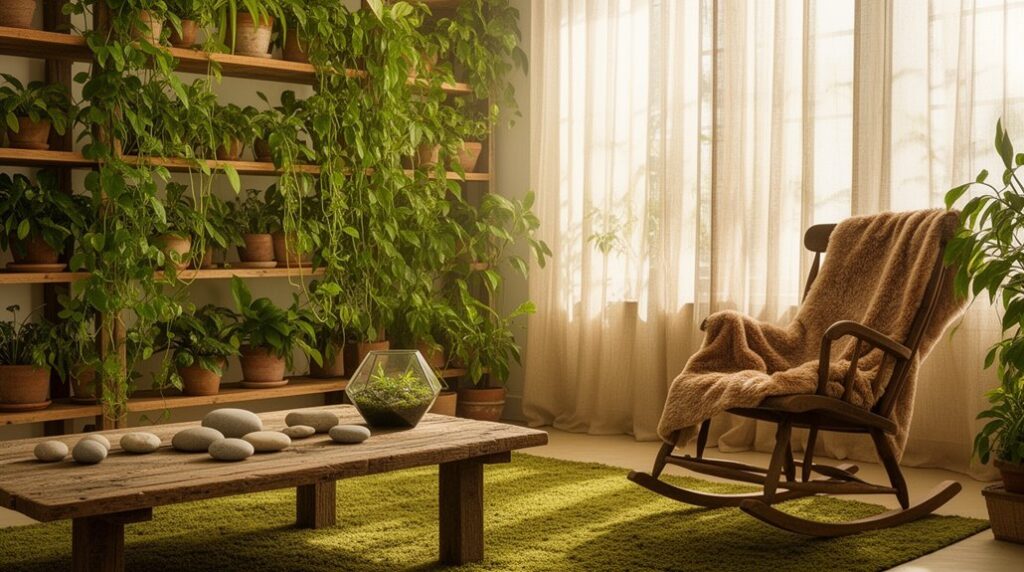
You can create a serene, earthy sanctuary by maximizing daylight first: clear windows, add sheer curtains, and hang a mirror opposite for extra bounce. Bring in 1–2 hardy, budget-friendly plants like pothos or snake plant, and group them on a tray to catch drips. Layer real textures—reclaimed wood accents, stone or clay pieces, and neutral cotton or jute textiles. Soften your layout with round shapes and keep clutter to a landing tray. Keep going for more ideas.
Key Takeaways
- Use natural, sustainably sourced materials like wood, stone, clay, and linen to add warmth, texture, and durability.
- Maximize daylight by decluttering windows, layering sheer and blackout curtains, and placing mirrors opposite windows to bounce light.
- Start with 1–2 low-maintenance plants (pothos, snake plant, ZZ) and group them on trays to simplify care and boost humidity.
- Favor organic shapes and gentle pathways; swap sharp furniture edges for round pieces and maintain 30–36 inch walkways for calm flow.
- Build simple daily resets: open windows, wipe plant leaves, use warm LEDs at night, and keep a landing tray to prevent clutter.
Biophilic Design Basics: What It Is
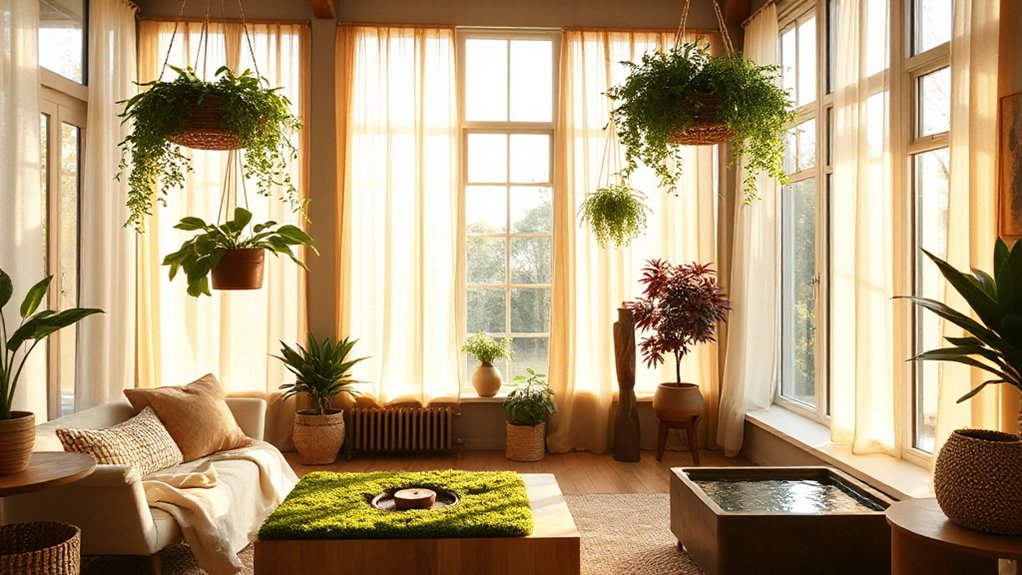
Why do certain spaces instantly feel calmer and easier to work in? You’re responding to cues that echo nature—air movement, natural textures, plant presence, and views of life outside. Biophilic design is the deliberate practice of building those cues into interiors so you feel grounded, focused, and restored.
You don’t need a remodel to use biophilic architecture principles. Start by prioritizing real materials (wood, stone, clay), varied but muted greens and browns, and curved lines that soften hard corners.
Add low-maintenance plants that match your care level, and place them where you’ll notice them. Support urban wildlife with a small balcony planter of native species or a bird-safe window decal.
Choose durable, easy-clean finishes so you don’t pay twice in upkeep.
Start Biophilic Design With Daylight
Start your biophilic design with daylight by clearing sightlines so natural light can travel deeper into the room—move tall furniture off windows, trim back heavy decor, and keep glass clean.
Layer sheer window treatments to soften glare while still letting light in, and pair them with blackout panels only where you truly need privacy or sleep control.
Boost brightness without new fixtures by adding daylight-reflecting surfaces like light-colored paint, satin finishes, mirrors opposite windows, and glossy tile or metal accents.
Maximize Natural Light Flow
Although plants, textures, and color all matter, daylight does the heavy lifting in biophilic design because it improves how a room feels without adding much cost. Start by studying outdoor views and tracking where the sun lands at different times; you’ll know which corners need help and which don’t.
Improve window placement choices you can control without renovation: clear the sill, move tall furniture off the glazing line, and keep bookcases perpendicular to windows so light travels deeper. Use light-colored, matte wall paint to bounce glare-free illumination, and hang mirrors opposite windows to extend brightness and reflect greenery.
Swap heavy interior doors for glass panels, or simply keep doors open to share borrowed light. Finally, tidy cables and clutter near windows; you’ll brighten the room instantly.
Layer Sheer Window Treatments
When you want daylight without the harsh glare or street-level exposure, layer sheer window treatments to soften and spread light while keeping views intact. Choose light-filtering linen blends or washable polyester voile for a natural look on a budget, and hang panels wider than the window so they stack off glass. Mount the rod 4–6 inches above the frame to make ceilings feel taller and to reduce side gaps.
For privacy enhancement, add a double-rod: keep sheers closed during the day, then pull a thicker curtain or roller shade at night. If you rent, use tension rods or no-drill brackets.
In kitchens and baths, pick moisture-resistant sheers and hem them to skim the sill, not the counter, so they stay clean.
Use Daylight-Reflecting Surfaces
If daylight feels weak or uneven, you can amplify it fast by adding a few reflective surfaces near your windows. Hang a mirror on the wall opposite the glass to bounce light deeper into the room. Choose a thin frame, thrift it, or use a peel-and-stick mirror tile panel for a budget-friendly option.
For daylight enhancement, swap dark décor for light, matte finishes that still reflect softly: off-white paint, pale oak, or a satin-finish console top. Place a glossy ceramic planter or glass vase on a sill to catch sun and spread it. Use a small tray with a metallic rim to brighten a shady corner.
Keep reflections controlled—angle mirrors away from seating to avoid glare, and clean glass weekly so you don’t lose brightness.
Add Indoor Plants for Biophilic Design
To bring biophilic design into your home without a remodel, start by adding indoor plants where you’ll see and care for them daily. Choose 1–2 hardy starters like pothos, snake plant, or ZZ to keep costs low and success high. Buy smaller sizes; they’re cheaper and adapt faster. Set a simple Indoor gardening routine: water on the same day each week, then adjust only if soil stays wet or bone-dry.
Use smart Plant placement to match light and traffic. Put bright-light plants within 2–3 feet of a sunny window, and low-light plants deeper in the room. Group plants on a tray to catch drips and raise humidity. If you’re short on surfaces, hang one planter or add a narrow shelf. Rotate pots monthly for even growth.
Use Natural Materials in Biophilic Design
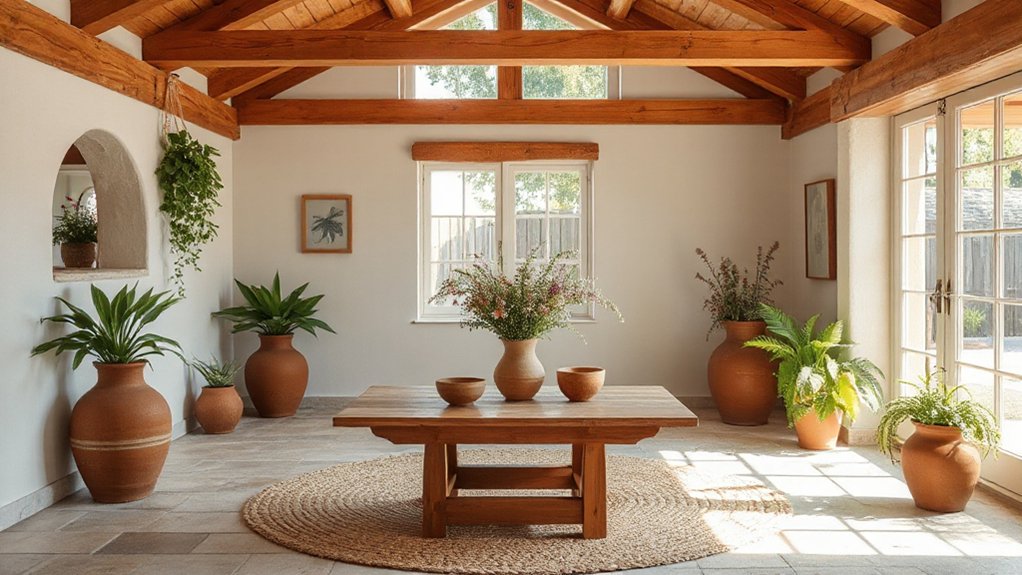
After you’ve added greenery, you can reinforce biophilic design by choosing natural materials like wood, stone, and clay for surfaces and accents.
You’ll also get warmth and comfort on a budget by swapping in natural fibers and textiles—think cotton, wool, jute, or linen—for rugs, curtains, and upholstery.
To keep costs and impact down, prioritize reclaimed and sustainably sourced options, and use them where they’ll take the most wear and visual attention.
Wood, Stone, And Clay
While plants add life, wood, stone, and clay give biophilic design its everyday “backbone” because they’re durable, tactile, and easy to use in small, budget-friendly upgrades.
Start with what you can swap, not what you must remodel: add a solid-wood cutting board on display, a reclaimed-wood shelf, or wood drawer pulls for instant Rustic textures and Earthy tones. Choose matte finishes and visible grain to keep it believable, not glossy.
For stone, use a small slab as a trivet, a bedside catchall, or a peel-and-stick stone tile backsplash behind a sink for moisture resistance.
Bring in clay with terracotta pots, a clay soap dish, or a ceramic lamp base.
Buy secondhand, seal porous surfaces, and stick to three materials per room.
Natural Fibers And Textiles
Because textiles cover more surface area than almost any other decor, swapping in natural fibers is one of the fastest, cheapest ways to make a room feel more grounded. Start with high-impact basics: a cotton or linen duvet cover, hemp curtains, and wool or jute rugs. You’ll get richer textile textures—slubby linen, nubby wool, braided jute—without changing your furniture.
For comfort and savings, buy neutral covers and rotate smaller accents seasonally. Check fiber durability before you commit: wool resists stains and crush marks, cotton washes easily, and linen gets softer over time but wrinkles. Use tight weaves for high-traffic sofas, and add removable, washable slipcovers to protect cushions.
Aim for matte, undyed tones to keep the look calm, natural.
Reclaimed And Sustainable Materials
If you want a more nature-forward home without paying “new” prices, start with reclaimed and sustainably sourced materials. Hunt for salvaged wood shelves, vintage doors as headboards, and remnant stone for a small backsplash. You’ll get real patina, and you’ll keep usable materials out of landfills.
Prioritize certified woods (FSC), low-VOC finishes, and locally made pieces to cut transport costs. Choose Eco friendly furniture with repairable joinery and replaceable cushions, so you won’t rebuy in a few years.
Mix in Recycled decorative accents—glass vases, metal planters, or woven baskets from reclaimed fibers—to layer texture without clutter. Before you buy, measure carefully, check for pests or warping, and negotiate bundle pricing at salvage yards and thrift stores.
Choose Biophilic Design Colors and Patterns
To make biophilic design feel intentional rather than themed, start by choosing a nature-based color palette and a few grounded patterns you can repeat. Stick to Earth tones like clay, sand, moss, bark, and stone, then add one cool accent (sky gray or deep water blue) to keep rooms from feeling flat. Test paint with peel-and-stick samples and observe it morning and night before you commit.
Use Botanical patterns sparingly: one statement textile (pillow covers, curtains, or a duvet) plus one small-scale print (tea towels or a lampshade) is plenty. Keep pattern colors muted and tie them to your wall or rug.
If you’re budgeting, swap covers instead of buying new furniture, and choose washable fabrics.
Bring Nature’s Shapes Into Your Layout
Once your colors and patterns feel cohesive, let the layout echo nature, too—rooms look calmer when they flow like a landscape instead of a grid. Start by softening hard angles: rotate your rug slightly, swap a square coffee table for a round thrifted one, or add an oval tray to break up rectangles.
Use Organic shapes to guide movement—curve a chair toward the sofa, and leave a gentle “path” from doorways to seating.
Layer Natural textures to reinforce those lines without buying new furniture. Drape a woven throw over an arm, stack smooth river-stone coasters, or place a low basket near the curve of a console.
Keep clearances practical: 30–36 inches for walkways, and 16–18 inches between table edges and seats.
Make Biophilic Design Feel Calm Daily
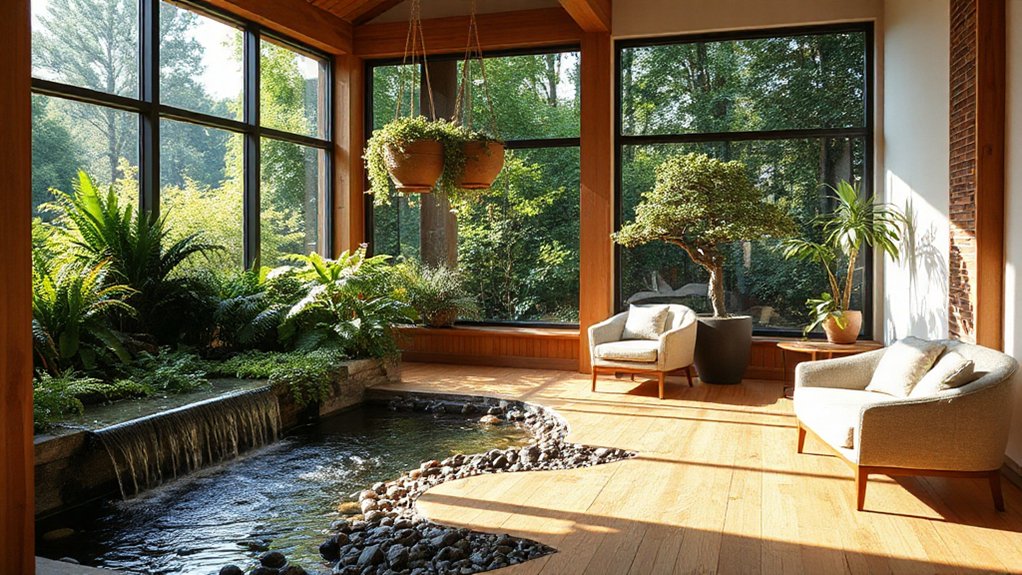
Because a space only feels “biophilic” when you can live in it without fuss, build a few low-effort habits that keep it calm day after day.
Start with a two-minute reset: open a window, shake out a rug, and wipe plant leaves so they photosynthesize better.
Water on a schedule, not by mood—set a phone reminder and use a cheap moisture meter to avoid overwatering.
Keep one “landing tray” for keys and mail to stop clutter from spreading.
At night, dim lamps and swap harsh bulbs for warm LEDs; you’ll mimic sunset without spending much.
Pair this with mindful meditation: sit by your best greenery and breathe for five slow cycles.
Finish by rotating nature inspired art seasonally—printables work—so the room stays fresh, not busy.
Frequently Asked Questions
What Are Budget-Friendly Biophilic Upgrades for Renters With Strict Lease Rules?
Choose no-damage, low-cost changes: add budget friendly greenery like pothos or snake plants in thrifted pots, or use countertop herb kits.
Use renter friendly upgrades such as removable hooks for hanging planters, peel-and-stick window film to soften light, and a small tabletop fountain.
Swap bulbs for warm LEDs, add a jute rug, and use nature photos in clip frames.
Keep everything portable for move-out.
Which Indoor Plants Are Safest for Cats, Dogs, and Small Children?
Skip the “mystery leaf roulette”: you want Pet safe plants and Child friendly greenery like spider plant, Boston fern, areca palm, calathea, peperomia, prayer plant, and African violet.
You’ll keep costs down by buying small starters, swapping cuttings, and choosing hardy picks that tolerate missed waterings.
Still, you’ll place pots up high, use heavy planters, and avoid lilies, pothos, philodendron, sago palm, and aloe.
How Do I Prevent Mold and Pests When Adding Many Houseplants?
Prevent mold and pests by controlling moisture and airflow.
For Plant watering, don’t soak; water only when the top inch dries. Empty saucers, and use well-draining mix and pots with drainage.
For Mold prevention, space plants, run a fan, and wipe wet leaves and soil surface.
Quarantine new plants two weeks, inspect undersides weekly, and treat early with cheap neem or insecticidal soap.
Avoid overfertilizing and stale water.
Can Biophilic Design Help Sleep Quality and Reduce Anxiety Levels?
Yes—biophilic design can support sleep improvement and anxiety reduction by calming your nervous system and stabilizing routines.
You’ll get the best results by controlling light: use blackout curtains at night and bright, indirect daylight in the morning.
Add one or two easy plants (pothos, snake plant) and keep soil dry on top to avoid mold.
Use a $20 tabletop fountain or white-noise app for gentle nature sound.
What Low-Maintenance Options Work Best for Frequent Travelers or Busy Schedules?
NASA tests showed some indoor plants can remove up to 87% of VOCs in 24 hours, so you’ll get a noticeable “cleaner air” feel fast.
For frequent travel, choose succulent arrangements in gritty soil and self-watering pots; you can leave them 2–4 weeks with minimal risk.
Add wall mounted planters with hardy pothos or snake plant, plus a drip wick reservoir.
Set a $10–$20 timer grow light if windows are unreliable.
Conclusion
You’re the caretaker of a small indoor forest, and every choice guides it. You open the “canopy” with daylight by swapping heavy curtains for sheers. You plant low-cost greenery—pothos, snake plants—in reused jars and simple pots. You lay “stone and bark” through wood, linen, rattan, and matte finishes, then paint with quiet earth tones. You curve paths with rounded furniture and repeat leaflike patterns sparingly. Tend it daily, and calm stays.