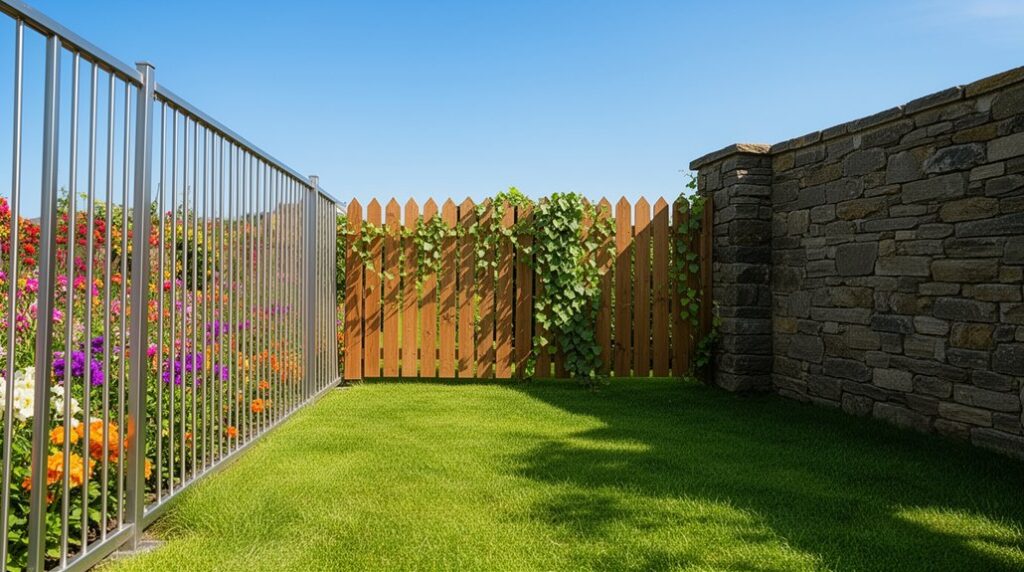
Start by deciding what you need most—clear boundary marking and pet containment, or privacy and deterrence—then choose a climb-resistant design with smooth tops, tight picket spacing, and self-closing, self-latching gates. Check council and HOA rules for height, setbacks, and permits, and confirm the line with a survey before you dig (call utility locators, too). Match material to upkeep: timber needs sealing, metal needs coatings, vinyl needs washing, masonry needs solid footings. Next, you’ll see how to fine-tune height, sightlines, and hardware.
Key Takeaways
- Define your top goals (privacy, containment, deterrence, wind blocking) and match fence height and spacing to those priorities.
- Confirm boundaries with a survey and check local/HOA rules for height, setbacks, corner sightlines, and any permit requirements.
- Choose materials that fit your style and upkeep tolerance: timber (sealing), steel/aluminum (coatings), vinyl (impact risk), masonry (footings).
- Improve security with climb-resistant designs: vertical pickets, tight gaps, smooth tops, and no decorative footholds near gates.
- Reinforce access points using self-closing, self-latching gates, tamper-proof fixings, and motion lighting while keeping landscaping trimmed for clear sightlines.
Decide What Your Boundary Fence Must Do
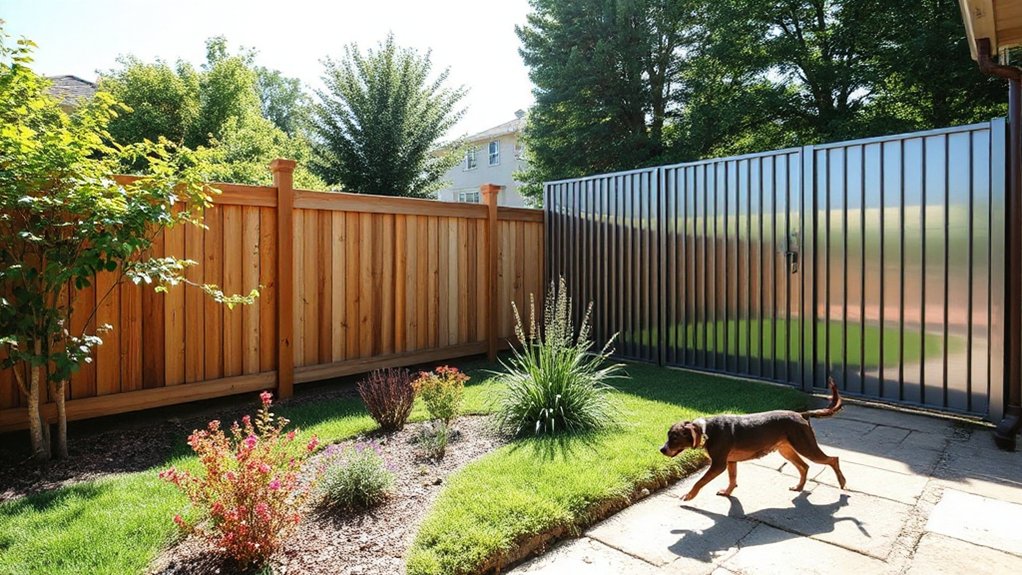
Before you compare materials or prices, decide what you need your boundary fence to accomplish day in and day out: mark a legal property line, keep children or pets safely contained, deter trespassers, block wind, protect a garden from wildlife, or simply add privacy. List your top two goals and design around them.
If safety’s first, prioritize climb-resistant panels, smooth tops, and self-closing, self-latching gates.
For pets, choose height and picket spacing that prevents squeezing through, and avoid footholds.
For security, limit gaps, reinforce gate hardware, and plan clear sightlines to doors and windows.
Build in landscaping integration by leaving maintenance access and avoiding plantings that hide hazards.
Add wildlife considerations: choose mesh size, bottom clearance, or dig barriers to stop digging.
Confirm Boundary Fencing Rules Before You Choose
Once you’ve nailed down what your fence needs to do—privacy, pet containment, security, or all three—check the rules that control what you’re allowed to build on your boundary line. Start with local council codes and any HOA bylaws for height limits, setback distances, and whether front and side boundaries differ. Confirm if you need a permit, a site plan, or inspections, especially near pools, retaining walls, or easements.
Next, verify exact boundary locations with a recent survey so you don’t encroach or create hazards for pedestrians or services. Call utility locators before you dig post holes. Ask about restrictions on fence color options and visibility at driveways and corners.
Finally, plan landscaping integration so plants don’t block sightlines, damage footings, or push panels out of alignment.
Compare Boundary Fencing Materials by Style and Upkeep
Although most boundary fences can meet the same basic goals, the material you choose will dictate how the fence looks from the street, how it handles weather and impact, and how much hands-on upkeep you’ll take on over the next decade.
Timber suits classic streetscapes and takes paint or stain well, but you’ll need regular sealing, fastener checks, and rot monitoring near soil contact.
Steel and aluminum give crisp lines and strong security; prioritize galvanizing or powder-coat for Material durability, and inspect for chips that can rust.
Vinyl stays uniform and resists moisture, yet it can crack under heavy impact and needs occasional washing.
Masonry reads premium and blocks damage, but requires sound footings and periodic joint repairs.
Add Decorative accents only where they won’t create climb points.
Set Boundary Fencing Height for Privacy and Sightlines
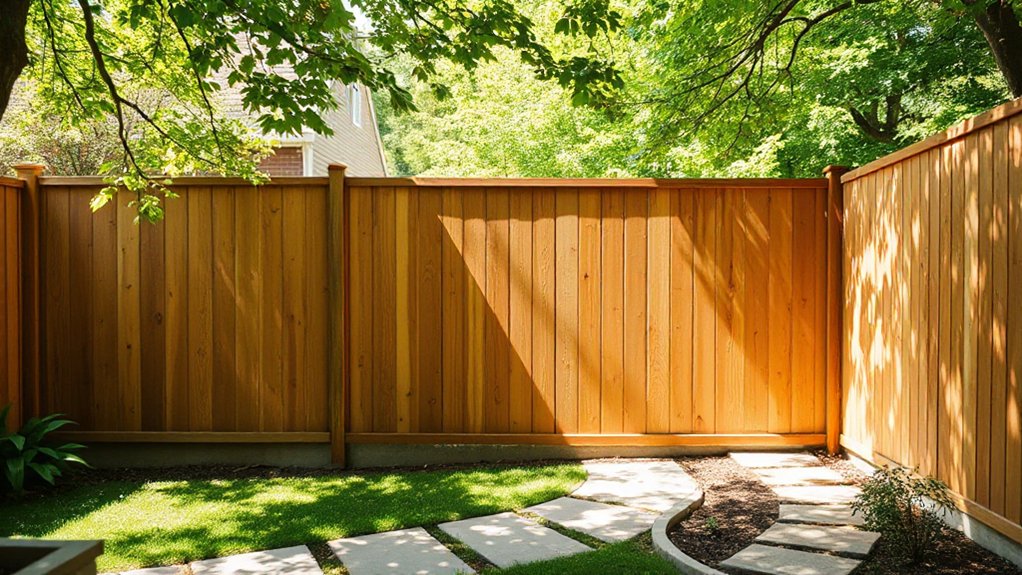
If you set your boundary fence height with both privacy and visibility in mind, you’ll get a safer, more comfortable yard that still works with the street. Check local rules first, then map your sightlines from driveways, sidewalks, and corners so you don’t block approaching vehicles or pedestrians.
Use taller panels where you spend time—patios, pools, and windows facing neighbors—then step down near the front boundary to keep views open and reduce blind spots.
On sloped lots, follow the grade or terrace sections to prevent gaps and awkward angles.
Plan aesthetic enhancements like capped posts or consistent picket spacing that won’t compromise visibility.
For landscaping integration, place shrubs slightly inside the fence line so growth won’t create hidden zones.
Add Boundary Fencing Security Features That Blend In
Getting the height and sightlines right sets the stage, but smart security details are what actually discourage climbing, tampering, and unwanted access without making your yard look like a fortress.
Choose climb-resistant profiles like vertical pickets with tight spacing, smooth top rails, or a modest curved topper that looks like Decorative accents, not deterrents.
Use tamper-proof screws and concealed fixings on gates, and add a keyed latch with a self-closing hinge to prevent accidental swings.
Place motion-sensor lighting on posts or eaves to remove hiding spots without glare.
For ground-level defense, install Pest barriers such as buried mesh or a kickboard to block digging and reduce rot splash.
Keep landscaping trimmed so you don’t create footholds.
Frequently Asked Questions
What Does Boundary Fencing Typically Cost per Metre, Including Installation?
You’ll typically pay $80–$300+ per metre installed, depending on materials, access, and ground conditions.
Timber paling often lands around $100–$200/m, while Colorbond fencing costs about $120–$250/m.
Masonry or retaining-style fences can exceed $300/m.
You should check fence height regulations before quoting, since changes affect posts and wind loading.
If you want decorative fencing options, expect higher labour and finishing costs overall.
How Long Does Each Fencing Material Usually Last in Coastal Conditions?
In coastal conditions, you’ll get shorter lives from untreated metals, longer lives from protected materials, and best lives from composites.
Expect treated pine 10–20 years, hardwood 15–30, aluminium 20–40, Colorbond steel 15–30, galvanised steel 10–25, PVC/vinyl 20–30, composite 25–50.
Fence durability depends on coastal weather: salt spray, wind, and UV.
You’ll extend life with stainless fixings, sealed cuts, and frequent rinsing.
Can I Install Boundary Fencing on a Sloped or Uneven Property Line?
Yes, you can install boundary fencing on a sloped or uneven property line, but you’ll need to plan carefully. Use stepping panels or racking systems to follow grade while keeping posts plumb and footings below frost depth.
Check fence height considerations so gaps don’t exceed local limits and privacy rules.
Confirm permission requirements, surveys, and setbacks before digging.
Mark utilities, brace during installation, and avoid creating climbable hazards.
Will a New Boundary Fence Affect My Home Insurance Premium or Coverage?
Yes, a new boundary fence can affect your premium or coverage, but usually only slightly. About 1 in 20 home insurance claims involve liability—so a sturdier fence can reduce risk.
You should document Fence material options, height, locks, and any pool enclosure features, then update your insurer.
Review Insurance policy considerations like exclusions, “attractive nuisance” rules, and replacement-cost limits.
Keep permits and photos to prove compliant installation.
How Do I Handle Boundary Fence Maintenance Responsibilities With Neighbours?
You handle boundary fence maintenance by agreeing in writing who owns which section, how you’ll split costs, and how you’ll schedule inspections.
Start with Neighbor collaboration: walk the line together, note damage, and set a repair timeline.
Put safety first—check for loose posts, sharp edges, rot, and leaning panels after storms.
If tensions rise, use Fence dispute resolution: share quotes, use mediation, and follow local boundary rules.
Conclusion
You’re choosing boundary fencing to look good and keep people out, so test the common theory: “taller always means safer.” It’s not always true—poor footing, weak latches, and climbable rails fail fast. Before you commit, confirm local rules, then match material to upkeep you’ll actually do. Set height for privacy without blocking sightlines where you need visibility. Finish with discreet security: locking gates, anti-climb tops, and solid posts.