Table of Contents
Key Takeaways
- London riverside property commands a significant premium over comparable homes even a few streets back from the water — understanding whether that premium is justified for your specific situation is the central question this article addresses.
- The Thames is not one market but many: Shad Thames, Battersea, Chiswick, Richmond, and Twickenham all offer very different riverside property experiences at very different price points.
- The advantages are real and substantial — views, light, green space, prestige, and a demonstrable track record of capital appreciation that outperforms most comparable London locations.
- The challenges are equally real — flood risk, service charges, leasehold complexity, limited parking, and the specific maintenance demands of buildings in a riverside environment.
- Flood risk assessment and leasehold due diligence are the two most critical checks for any buyer considering a Thames-side purchase — both require specialist input, not just a standard conveyancing search.
- For the right buyer, in the right building, a London riverside property is among the most consistently rewarding residential investments in the UK. For the wrong buyer, the premium paid for water views can quickly be eroded by costs and complications that were not properly understood at the point of purchase.
The Thames Has Always Commanded a Premium
London was built on the Thames. For two thousand years the river was the city’s commercial spine, its highway, its boundary, and its identity. The industrial age turned long stretches of the riverbank into working dock and factory frontage, pushing residential use away from the water. The transformation of those industrial zones — from the 1980s Docklands regeneration through to the ongoing development of Nine Elms, Battersea, and the Royal Docks — has returned the Thames to its older role as the most desirable address in the city.
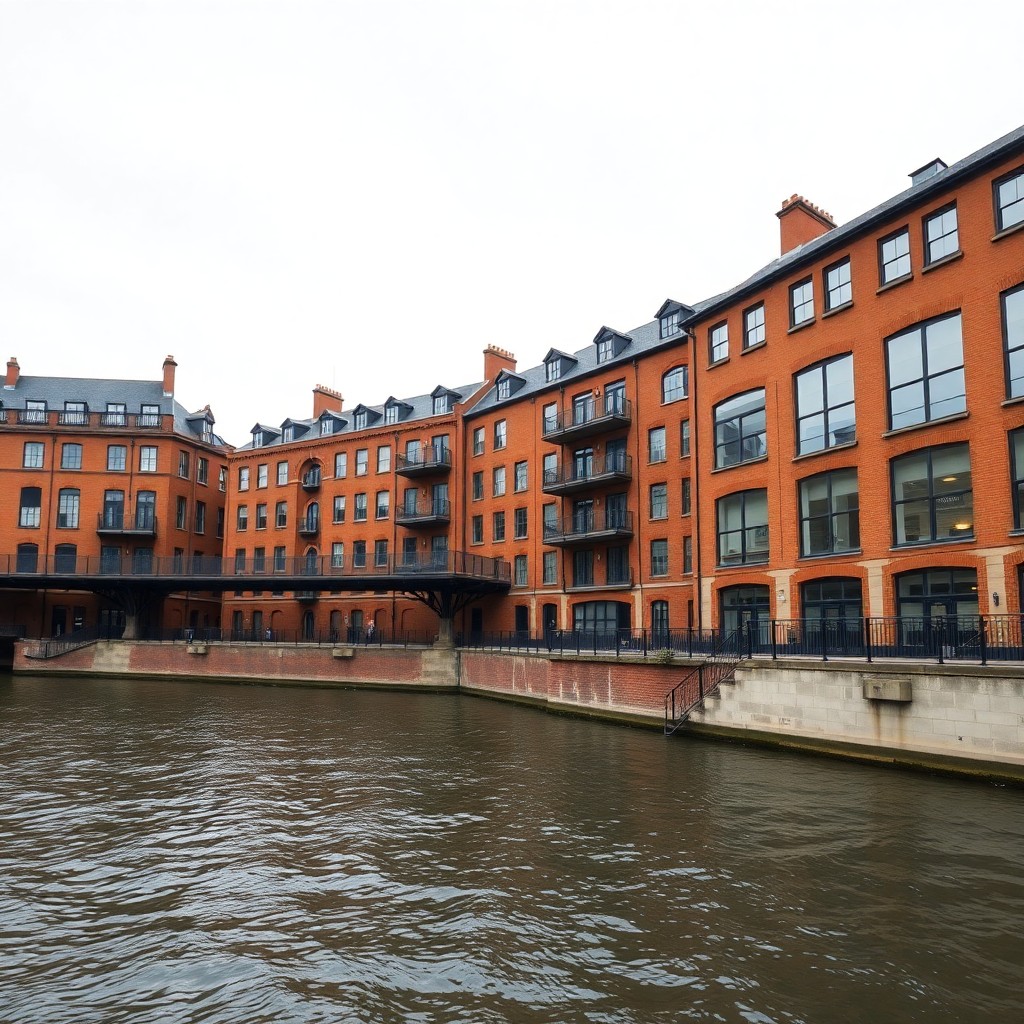
London riverside property today spans an enormous range: converted Victorian warehouses in Shad Thames with their characteristic iron bridges and cobbled streets; new-build towers on the South Bank with floor-to-ceiling glass and concierge services; Georgian townhouses in Richmond and Twickenham with private gardens running down to the water; mansion block flats in Chiswick with direct Thames frontage and village-scale amenity within walking distance. The river connects all of them, but the experience of living on it varies as dramatically as the price.
Understanding the pros and cons of buying a London riverside property — honestly, and in the specific terms that matter to a buyer making a significant financial decision — is what this guide is for.
The Pros of Buying a London Riverside Property
The Views Are Genuinely Irreplaceable
This sounds obvious, but it is worth stating clearly: a direct Thames view from a London property is a finite resource. The river is a fixed width, the buildings that can see it from their principal rooms are a fixed number, and no amount of new development changes that fundamental constraint. Views across open water — particularly the Thames with its width, its tidal movement, and the constantly changing light it reflects — have a quality that no urban street or courtyard view replicates.
The practical implication of this irreplaceability is that river views hold their value through market cycles that erode the premium on other view types. The tower that blocked your park view or the new development that obscured your city view are common stories in London property. Nobody is building anything in the middle of the Thames.
Natural Light
River-facing properties in London, particularly those on the north bank looking south or on bends where the aspect opens up, receive exceptional natural light. The reflective surface of the water amplifies light in a way that even open park views do not — on bright days, a river-facing living room receives a quality of light that feels categorically different from the same room facing a street or garden. For buyers for whom natural light is a priority — and in London’s frequently grey climate, it should be a priority for almost everyone — a Thames-facing aspect is one of the most effective ways of addressing it.
Capital Appreciation
The track record of London riverside property on capital appreciation is strong, particularly in the established zones — Shad Thames, Bermondsey, the South Bank, Chiswick, Hammersmith, Richmond, and Twickenham. These areas have consistently outperformed the wider London market over ten and twenty-year periods, driven by the combination of genuine scarcity, continued demand from high-net-worth domestic and international buyers, and the ongoing improvement of riverside amenity.
New-build riverside developments are a different story and require more careful assessment — some have delivered excellent returns, others have been affected by the well-documented issues with new-build leasehold structures, service charges, and the premium paid at the point of purchase that takes years to recover. Established conversions and period buildings in proven riverside locations have generally shown the most consistent appreciation.
Green Space and Amenity
The Thames towpath — running continuously for much of its length through London — provides direct access to one of the finest linear green spaces in any European capital. For runners, cyclists, dog owners, and anyone who values the ability to walk alongside open water from their front door, riverside property provides an amenity that is genuinely rare in a dense urban environment. The combination of the towpath, the water itself, and the parks and open spaces that have historically clustered along the Thames gives riverside residents access to outdoor space that is categorically different in quality from a standard London street environment.
In the outer riverside zones — Richmond, Twickenham, Kew, and Chiswick — the amenity extends to some of London’s most significant parkland, with Richmond Park, Kew Gardens, and Chiswick House grounds all within easy reach of riverside addresses.
Prestige and Lifestyle
There is an honesty required here: the prestige of a Thames address is a real component of its value, and dismissing it as superficial misunderstands how property markets work. An address on the Thames carries social and professional significance in London that translates into concrete financial value — at the point of purchase, in rental yield, and at the point of resale. For buyers for whom London property is partly a professional and social investment as well as a home, this dimension of riverside ownership is not trivial.
Rental Demand
Prime riverside locations in London carry strong rental demand from corporate and international tenants — professionals on assignment, financial services executives, and overseas buyers seeking a London base. Rental yields in established riverside zones are typically competitive with the wider prime London market, and void periods tend to be shorter than in less distinctive locations. For buyers considering a riverside purchase partly as an investment vehicle, the rental market fundamentals in zones like Canary Wharf, the South Bank, and Chelsea support the case.
The Cons of Buying a London Riverside Property
Flood Risk
This is the most important single issue for any buyer considering a Thames-side property and it requires direct, unvarnished assessment. The Thames is a tidal river through central London, and while the Thames Barrier provides protection against tidal surge flooding, it does not eliminate flood risk — it manages it. Climate change is increasing the frequency and severity of flood events nationally, and the long-term adequacy of the Barrier’s protection level is a subject of active debate among engineers and planners.
The Environment Agency’s flood risk maps should be checked for any specific property under consideration, and the property’s flood zone designation — Zone 1 (low risk), Zone 2 (medium risk), or Zone 3 (high risk) — should be established clearly before any offer is made. Flood insurance for properties in higher-risk zones can be expensive, and in some cases difficult to obtain at any price. The Flood Re scheme provides a safety net for residential properties in high-risk zones, but it has limitations and its long-term future is not guaranteed.
Critically, flood risk should be assessed not just for the property itself but for the local infrastructure — if the road access to your building floods, the building’s own resilience is of limited comfort. Ask specifically about the flood history of the immediate area, not just the flood zone designation of the building.
Service Charges and Leasehold Complexity
The majority of desirable London riverside property — particularly the converted warehouse developments and new-build riverside towers that make up a large proportion of the market — is sold on a leasehold basis with substantial service charges. These service charges cover the maintenance of communal areas, building insurance, concierge services, and in some developments gym facilities, roof terraces, and other amenities. In riverside buildings, they also cover the maintenance of specific riverside infrastructure — pontoons, riverside walkways, flood defence measures, and the waterproofing and maintenance of structures built at the water’s edge.
Service charges on premium riverside developments in London are frequently substantial — £5,000 to £15,000 per year is not unusual for a well-specified building in a central location, and charges on some developments are significantly higher. They are also subject to increase, and the history of service charge management in some London apartment blocks has not been reassuring — poorly managed buildings have seen charges increase dramatically in short periods as deferred maintenance becomes impossible to ignore.
The leasehold reform agenda in the UK Parliament has addressed some of the worst abuses in the leasehold system, but buyers of riverside leasehold property should still obtain a detailed service charge history, a copy of the most recent service charge accounts, and a report from a specialist leasehold solicitor before proceeding. The lease length — and the cost of extending it if it is below 80 years — is a further consideration that affects both the mortgageability and the future saleability of the property.
Purchase Premium vs Long-Term Value
Buying any view premium at a new-build development carries a specific risk: you are paying today’s premium for tomorrow’s market. The history of London’s riverside new-build developments includes a number of well-publicised cases where buyers who purchased at launch prices, attracted by the view premium and the marketing of a high-specification building, found that the open market value of the property at completion was lower than the price they had paid — in some cases significantly so.
Established conversions in proven locations have generally held their premiums more reliably than new-build towers, partly because the premium in an established building reflects a track record of demand rather than a developer’s projection of future desirability. Buyers considering new-build riverside property should research comparable resales in the same or similar buildings carefully before accepting the developer’s pricing as a reliable guide to market value.
Limited Parking and Access
Many central riverside developments in London offer limited or no resident parking — the density of development along prime riverside zones, the planning restrictions on car parking in central London, and the design priorities of buildings oriented towards the water all contribute to a car ownership experience that ranges from inconvenient to impractical. For buyers for whom a car is an important part of their lifestyle — particularly those with families, those who travel regularly outside London, or those based in outer zones — the parking situation at any specific riverside development should be assessed carefully and honestly.
Access more broadly can be a consideration in riverside locations. Riverside paths and walkways in some developments are managed and maintained by residents’ management companies, and access arrangements — both for residents and for the public rights of way that run through many riverside developments — can be complex.
Noise and Amenity Disruption
The Thames is not a quiet river, particularly in central London. Tidal movement, river traffic — pleasure craft, working vessels, RNLI and Port of London Authority operations — and the noise that accompanies riverside leisure and hospitality uses all contribute to an ambient sound level that some buyers find invigorating and others find genuinely disruptive. Buyers who value quiet — particularly for working from home, for young children’s sleep, or simply for the ability to open windows in summer — should spend time at any specific property at different times of day and at weekends before making a decision. A riverside apartment that is peaceful on a Tuesday morning may be significantly less so on a Saturday afternoon in July.
Building-Specific Risks in Riverside Environments
Buildings positioned at the water’s edge face specific maintenance challenges that their owners and management companies must address: the waterproofing of foundations and lower levels, the corrosive effect of the damp riverside environment on structural and finishing materials, the maintenance of any pontoon or river-facing infrastructure, and in some buildings the management of riverbank stability. These issues are not always apparent from a standard survey, and a building survey by a surveyor with specific experience in riverside and waterfront property is significantly more valuable than a generic structural survey for this type of purchase.
London’s Key Riverside Zones: A Brief Guide
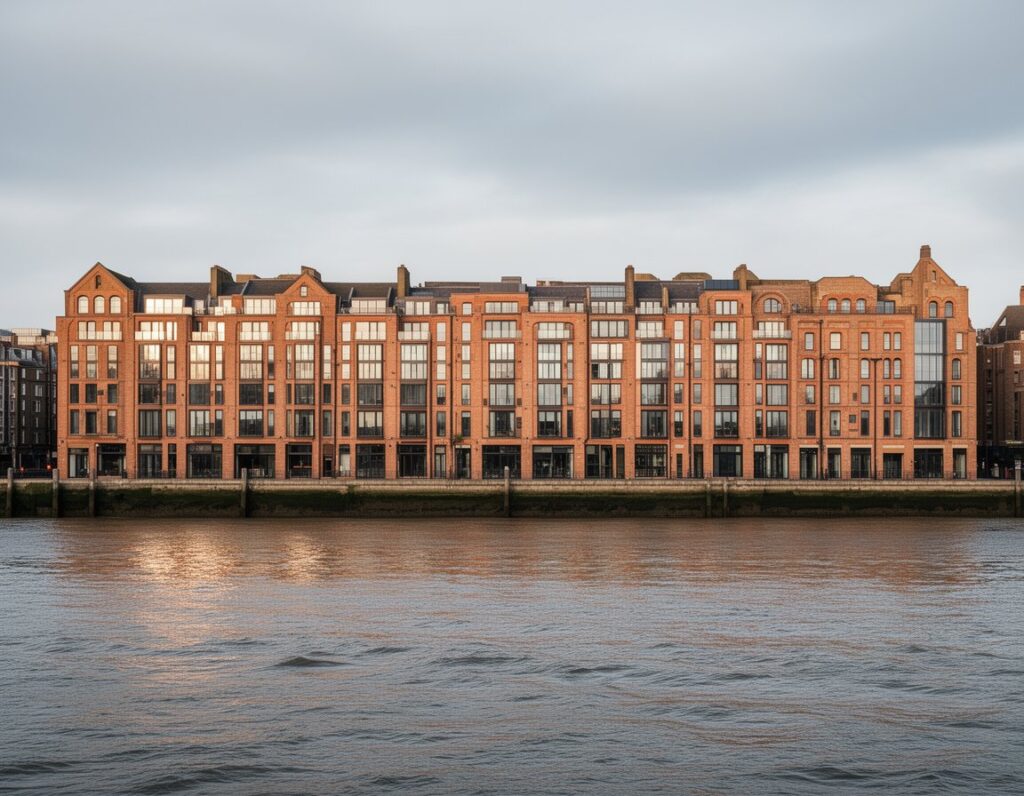
Central London: Shad Thames, Bermondsey, and the South Bank
The highest-profile and most intensively developed riverside zone. Converted Victorian warehouses and contemporary developments sit alongside cultural institutions, restaurants, and the continuous pedestrian route of the South Bank. Premium prices, strong rental demand, and the most urban of the riverside environments — the Thames here is wide, the views dramatic, and the pace emphatically metropolitan.
Chelsea, Pimlico, and Battersea
Chelsea Embankment and Cheyne Walk represent some of the most prestigious riverside addresses in London — period properties facing the Thames, with the quiet grandeur of established money. Battersea Power Station and the Nine Elms development have created a new riverside neighbourhood immediately adjacent, with a very different character and market dynamic. The contrast between the established and the newly created in this stretch of the river is instructive.
Hammersmith and Chiswick
A more residential, less metropolitan riverside experience. Chiswick in particular offers period housing within walking distance of the water, good transport links, and a neighbourhood-scale amenity — local independent shops, a market town feel — that purely central riverside locations do not provide. The annual Boat Race passes through this stretch, bringing a specific seasonal character to the area.
Richmond and Twickenham
The outer London riverside at its most village-like. Richmond’s combination of the Green, the Park, and the riverside has made it one of London’s most consistently desirable residential areas. Property values reflect this, and the competition for riverside and river-view addresses in Richmond and Twickenham is intense. The quality of life in this stretch of the river is arguably the highest of any London riverside zone — less urban density, more green space, and the specific pleasure of a river that feels closer to countryside than city.
Frequently Asked Questions
Is London riverside property a good investment?
In established zones with a proven track record — Shad Thames, Chiswick, Richmond, and parts of the South Bank — the long-term investment case for riverside property is strong. The combination of genuine scarcity, sustained demand, and the structural premium that water views command has produced capital appreciation that consistently outperforms comparable non-riverside London property over ten and twenty-year periods.
New-build riverside developments require more careful evaluation — the initial premium at launch can take years to recover in a flat or falling market, and service charge escalation can erode yield significantly. The best investment in London riverside property, as elsewhere, is usually an established building in a proven location bought at a fair market price rather than at a developer’s launch premium.
How serious is the flood risk for London riverside property?
It depends entirely on the specific location and the flood zone designation of the property. Properties behind the Thames Barrier are protected against the tidal surge events that caused London’s worst historical flooding, but the Barrier does not address all flood risk — fluvial flooding from rainfall events, groundwater flooding, and the risk of the Barrier’s own operational capacity being exceeded in increasingly extreme weather events are all relevant considerations.
Properties in flood zones 2 and 3 require specialist flood insurance, which adds meaningfully to the cost of ownership. Any buyer considering a riverside property should obtain a detailed flood risk report from a specialist firm, not simply rely on the standard conveyancing flood search, which is a broad-brush assessment rather than a property-specific one.
What should I look for in a service charge history for a riverside development?
The key indicators are the trend — whether charges have increased steadily, dramatically, or remain relatively stable over the past five years — the adequacy of the sinking fund (the reserve set aside for major maintenance and repair), and any pending or anticipated major works. Riverside buildings have specific maintenance liabilities — waterfront infrastructure, specialist waterproofing, and riverside walkways — that non-riverside buildings do not carry, and these should be accounted for in the sinking fund. A service charge history that shows dramatic recent increases may indicate deferred maintenance being addressed, which is not necessarily a negative — it depends on what the money is being spent on and whether the building is now properly funded for future liabilities.
Are there planning restrictions on altering a riverside property in London?
Many of the most desirable riverside properties in London — period conversions, listed buildings, and properties in conservation areas — carry planning restrictions that limit what can be altered. Riverside settings are also frequently subject to view corridor protections and planning policies that restrict development height and massing to preserve key Thames views. For buyers planning significant alterations — internal reconfiguration, extension, or changes to the external appearance — checking planning policy and any specific restrictions affecting the property should be an early priority. A planning consultant with experience in riverside London planning applications can provide a rapid assessment of what is and is not likely to be achievable.
Is riverside living in outer London significantly different from central riverside living?
Yes, considerably. Central riverside living — on the South Bank, in Shad Thames, or at Battersea — is an intensely urban experience. The river is wide and dramatic, the density of activity is high, and the neighbourhood amenity is overwhelmingly oriented towards restaurants, cultural institutions, and evening economy uses. Outer riverside living — in Richmond, Twickenham, Chiswick, or Kew — is a quieter, greener, more residential experience. The river in these locations is a backdrop to village-scale life rather than the defining feature of an urban neighbourhood. The two experiences appeal to different buyers, and the choice between them should be driven by the lifestyle a buyer actually wants rather than the prestige or the price point of a specific property.
Conclusion
London riverside property is, at its best, some of the most rewarding residential real estate in the world. The combination of the Thames — its scale, its light, its history, and its irreplaceability — with the city that has grown around it for two thousand years produces addresses that justify their premiums for buyers who understand what they are buying and choose carefully.
The risks are real and should not be minimised. Flood risk, service charge exposure, leasehold complexity, and the specific vulnerability of new-build pricing to market correction all require serious due diligence before any purchase. But for buyers who approach the market with clear eyes, specific knowledge of the location they are targeting, and the specialist professional advice that a purchase of this significance demands, the rewards — in terms of lifestyle, capital appreciation, and the daily experience of living alongside one of the world’s great rivers — are difficult to match anywhere in the UK.
The Thames, as London’s defining geographical feature, has been at the centre of the city’s desirability for centuries. There is no compelling reason to expect that to change.