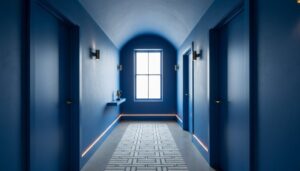
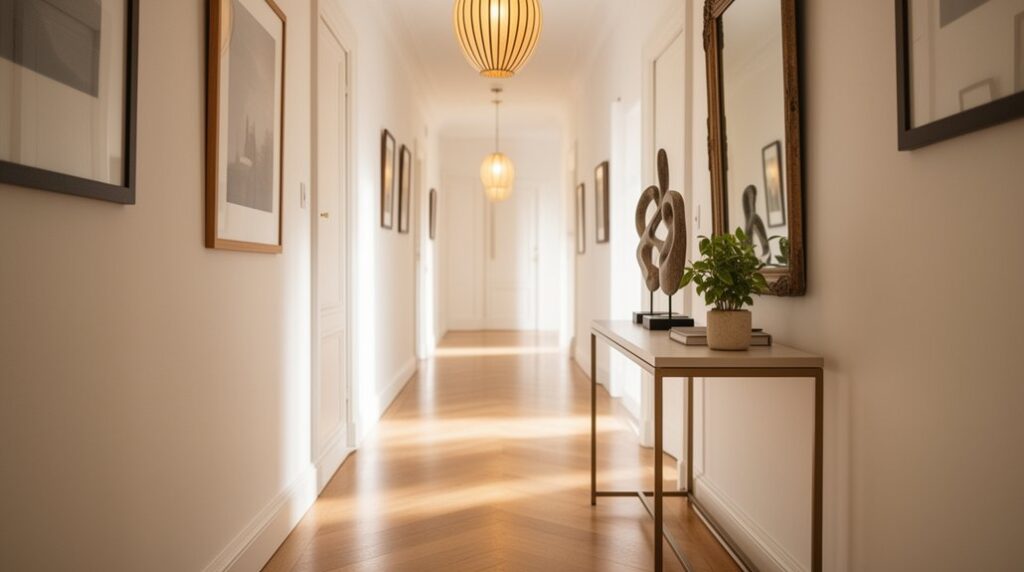
Start by measuring your hallway’s width, length, and pinch points so you don’t block doors or vents, then tackle repairs, hardware, and lighting first. Choose a connector neutral (greige, white, taupe) that matches nearby rooms, and add depth with a darker accent shade. Layer warm 2700K–3000K lighting, bounce brightness with a well-placed mirror, and pick slim 8–12 inch furniture plus a tidy drop zone. Keep going for more hallway upgrades.
Key Takeaways
- Measure the hallway and map door swings, outlets, and pinch points before buying furniture or décor.
- Use a cohesive palette: neutral connector paint plus one deeper accent, keeping undertones consistent with adjacent rooms.
- Upgrade lighting with warm bulbs, layered sources, and dimmers; add sconces or picture lights to highlight walls.
- Add a slim anchor piece and a functional drop zone with hooks, tray, and hidden shoe/mail storage to control clutter.
- Install a durable runner and a well-placed mirror to add polish, protect floors, and visually brighten narrow spaces.
Measure Your Hallway and Set Priorities
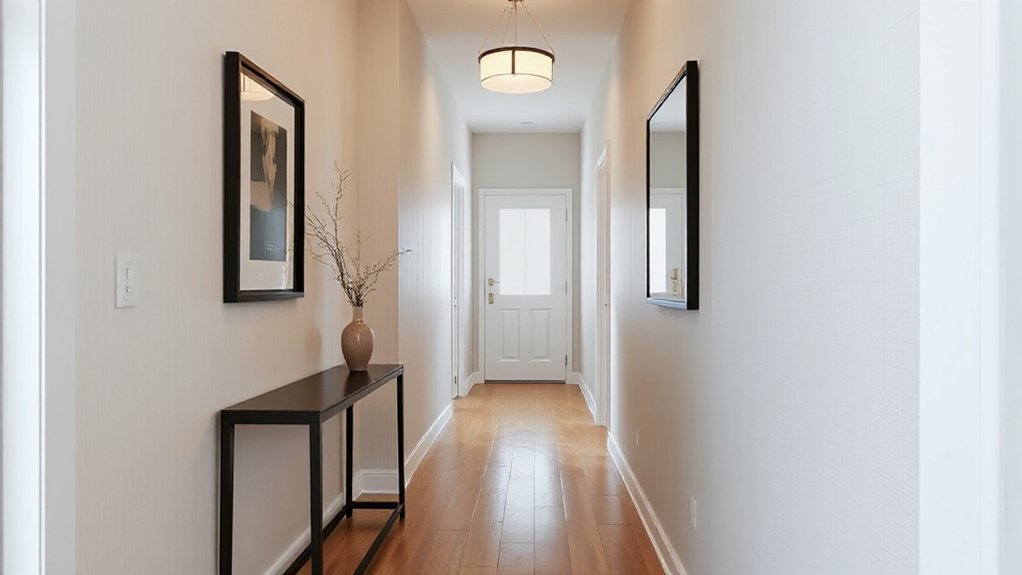
Before you buy paint, runners, or sconces, take ten minutes to measure your hallway and decide what actually needs fixing. Measure width, length, and every pinch point near doors, vents, and trim, then note traffic flow from entry to adjacent rooms.
Check ceiling height to choose proportions that feel current, not cramped—slimmer consoles, shallow shoe cabinets, and low-profile hooks work in tight corridors, while taller walls can handle stacked art and an oversized mirror.
Map your furniture arrangement on paper, including door swings, radiator clearance, and outlet locations for lamps or charging trays.
Prioritize upgrades: patch dents, replace dated hardware, improve lighting, and add closed storage before you shop décor. You’ll waste less and get a cleaner result.
Pick a Hallway Color Palette That Flows
Because a hallway usually connects multiple rooms at once, your color palette needs to bridge those spaces instead of fighting them. Start by sampling the dominant tones in adjacent rooms, then pick one “connector” neutral—warm greige, creamy white, or soft taupe—that can live comfortably beside both. Use Color coordination by repeating that neutral in trim, doors, or a runner.
Next, build controlled palette contrast: pair the neutral with one deeper shade for depth (ink navy, forest green, charcoal) on a focal wall, wainscot, or interior doors. Keep undertones consistent; mix warm with warm or cool with cool to avoid a muddy look.
Test large swatches in morning and evening, and commit only after you see them against flooring and hardware.
Upgrade Hallway Lighting for Instant Warmth
To make your hallway feel instantly warmer, layer ambient ceiling light with accent sources like table lamps or LED strips so shadows don’t flatten the space.
Stick with warm bulbs (around 2700K–3000K) to keep the vibe cozy and modern, not clinical.
Then mount slim wall sconces to wash light over your art and photos, turning the corridor into a curated gallery.
Layer Ambient And Accent
Even if your hallway gets plenty of daylight, layered lighting makes it feel warmer and more intentional after dark. Start with ambient layering: a flush-mount, semi-flush, or slim LED downlights spaced evenly to remove shadows and help guests navigate. If your ceiling is low, choose a fixture with a tight profile; if it’s long, repeat the same fixture to create rhythm.
Next, add accent accents that guide the eye. Aim a picture light at a gallery wall, tuck an LED strip under a floating shelf, or mount adjustable sconces to graze textured paint or paneling.
Put ambient and accent circuits on separate dimmers so you can shift from practical brightness to a softer, styled glow without changing fixtures.
Choose Warm Color Temperature
When your hallway lighting feels harsh or “cold,” the quickest fix is to swap to a warmer color temperature. Aim for 2700K to 3000K LEDs; they flatter paint, wood tones, and skin, and instantly create a warm ambiance without changing fixtures.
If your hallway is narrow or windowless, stay closer to 2700K for a cozy atmosphere. If it’s modern with crisp whites, 3000K keeps it inviting yet clean.
Check packaging for “Soft White” or “Warm White,” and match all bulbs so the space doesn’t look patchy.
Add a dimmer or smart bulbs to dial brightness down at night while keeping color warm. You’ll notice fewer shadows and a calmer, more welcoming entry.
Highlight Art With Sconces
If your hallway walls hold art you actually want to notice, picture lights and a pair of slim sconces can do more for warmth and polish than a brighter ceiling fixture.
Mount sconces at about 60–66 inches from the floor to center, and align them with frames for a clean gallery look.
Choose warm LEDs (2700–3000K) and a high CRI (90+) so colors read true and skin tones don’t look gray.
For an art spotlight effect, aim adjustable heads or use picture lights that throw an even wash across the canvas.
Put sconces on a dimmer to shift from daytime pass-through to evening glow.
Finish with matching metal tones to your hardware for cohesive lighting accents throughout.
Choose a Statement Piece That Fits
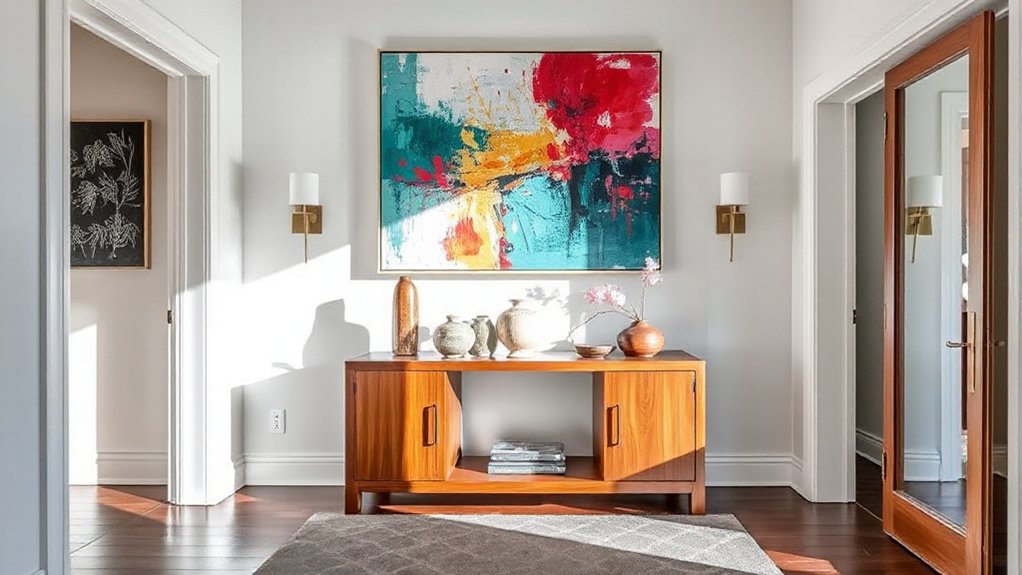
Where should your eye land the moment you step into the hallway? Choose one anchor that suits your scale and traffic flow, then let everything else support it.
Statement pieces work best when they’re proportional: in a narrow pass-through, pick a slim console, a sculptural mirror, or an oversized artwork hung slightly higher to avoid shoulder bumps.
In wider entries, try a bold bench, an arched mirror, or a vintage runner with a strong pattern. Keep finishes consistent with nearby rooms, but add contrast—blackened brass, fluted wood, or lacquer—to make it feel current.
Create clear hallway focal points by centering the piece on the longest sightline and leaving breathing room around it.
Add Smart Hallway Storage Without Bulk
Keep your hallway streamlined by choosing a slim console with shallow drawers or a lower shelf so keys and mail stay corralled without eating up walking space.
Mount entry storage on the wall—floating shelves, peg rails, and a compact mirror cabinet—to lift clutter off the floor and match today’s clean-lined look.
If you need seating, pick a bench with hidden compartments so shoes, bags, and seasonal extras disappear in seconds.
Slim Console Solutions
Even when your entryway feels too tight for “real” furniture, a slim console can add drop-zone storage without crowding the walk path. Choose one 8–12 inches deep so you can pass comfortably with bags and coats.
For minimalist decor, pick clean lines, matte finishes, and hardware-free fronts to keep the view calm.
Look for space saving furniture with built-in drawers or a lower shelf, so keys, mail, and sunglasses don’t pile up on top. Add a shallow tray for daily essentials and a small lidded box to hide clutter fast.
If you’ve got kids, dedicate one drawer to labels and spare masks. Finish with a tall vase or sculptural lamp to add height without taking surface space.
Wall-Mounted Entry Storage
If a slim console still feels like one more thing to squeeze past, move your storage up the wall. Start with a narrow rail or peg strip at shoulder height so bags and coats hang flat, not wide.
Choose Decorative hooks in mixed materials—brass, blackened steel, or oak—for an updated, curated look. Mount them into studs or use heavy-duty anchors, and keep the bottom hook at least 48 inches high to protect walls from scuffs.
Add a shallow shelf above for keys and sunglasses, then hang wall-mounted baskets underneath for mail, dog leashes, and gloves. Label baskets subtly or sort by person.
Finish with a small mirror to bounce light and streamline last-second checks.
Hidden Bench Compartments
One well-designed bench can pull double duty in a tight hallway by hiding storage where you’d otherwise waste space. Choose a hidden bench with a lift-top seat or smooth-glide drawers, so you can stash shoes, dog leashes, and seasonal gear without visual clutter.
Look for storage compartments sized for baskets; they keep small items corralled and make grab-and-go mornings easier.
Keep proportions slim: aim for 12–15 inches deep so the walkway stays clear. Add a tailored cushion in performance fabric for durability, and match hardware to your entry finishes (matte black and brushed brass are trending).
If you rent, pick a freestanding bench; if you own, consider a built-in with toe-kick clearance for a custom look.
Use Mirrors to Brighten a Dark Hallway
Because most hallways don’t get much natural light, mirrors are one of the fastest ways to make yours feel brighter and wider without touching the wiring.
Start with mirror placement: hang a large mirror opposite a window or the brightest adjacent room to bounce light through the space. If you don’t have a window nearby, place it across from a lamp or ceiling fixture to double the glow and reduce shadows.
Choose reflective surfaces with a slim metal frame for a modern look, or a softly arched silhouette for an on-trend, welcoming vibe. Mount the center at eye level and keep it clear of door swings.
For narrow halls, try a vertical mirror to stretch height and reduce tunnel effect.
Style Hallway Walls With Art and Texture
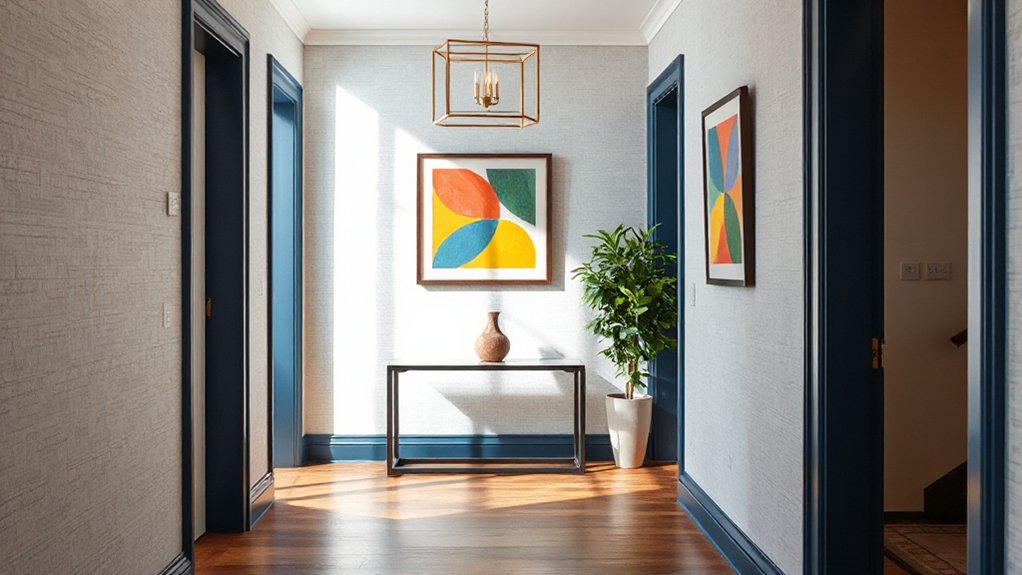
Mirrors can pump light through a hallway, but your walls still need personality to keep the space from feeling like a pass-through. Start with a tight color plan: pick two frame finishes and one mat color so your art looks intentional, not chaotic.
Build Gallery walls around a visual anchor—an oversized print, a vintage map, or a bold photo—then layer smaller pieces outward, keeping 2–3 inches between frames. Use paper templates and painter’s tape to map placement at eye level before you commit.
If you want depth without clutter, try textured paint like limewash or a fine sand finish on one wall. It hides scuffs, feels current, and makes even simple black-and-white art pop.
Add slim picture lights for polish.
Lay Down a Hallway Runner That Works Hard
Pick a runner length that visually stretches your hallway without crowding door swings—aim to leave a few inches of floor showing at both ends.
Choose a durable, low-pile weave like wool or flatweave polypropylene so it handles heavy traffic and stays easy to vacuum.
Lock it in place with non-slip pads (or rug tape) so it won’t creep, curl, or become a trip hazard.
Choose The Right Length
While a hallway runner can instantly warm up a pass-through space, it only looks polished if the length fits the traffic pattern. Measure your hallway’s clear walking zone (ignoring door swings), then choose a runner that leaves 4–6 inches of floor showing on each side for a tailored border. Stop it 3–6 inches before door thresholds so edges don’t catch and the line feels intentional.
In long corridors, a near-wall-to-wall run reads current and improves hallway acoustics by softening echoes without looking cramped.
In short entries, go slightly shorter so the floor acts as a frame. Keep proportions flexible for seasonal decor: swap doormats or a small entry rug without bunching against the runner. It should guide you forward, not fight your layout.
Pick Durable, Low-Pile Materials
Because hallways see constant foot traffic, you’ll get the best-looking (and longest-lasting) runner from durable, low-pile fibers that don’t crush, shed, or snag. Prioritize tightly woven wool blends, solution-dyed nylon, or indoor/outdoor polypropylene for easy cleaning and colorfastness.
Low pile rugs keep doors clearing smoothly, reduce trip risk at edges, and hide vacuum tracks, so your space looks polished between cleanings. If you’ve got pets or kids, choose heathered or patterned designs that camouflage debris and scuffs while staying on-trend (think micro-geometrics, subtle stripes, or vintage-inspired medallions).
Match the runner’s durability to your durable flooring: rough-sawn wood and textured tile handle sturdier weaves, while softer finishes benefit from smoother backings. Opt for bound edges to prevent fraying over time.
Anchor With Non-Slip Pads
Even if you’ve chosen the perfect low-pile runner, it won’t feel luxe—or safe—until you anchor it with a non-slip pad that grips your specific floor. Match the pad to your surface: rubberized felt for hardwood, PVC grid for tile, and a cushioned option for concrete to soften sound.
Size it 1–2 inches smaller than the runner on all sides so edges lie flat and don’t telegraph. For high-traffic hallways, pick non slip pads labeled “extra tack” and “no residue,” and vacuum under them seasonally to prevent grit from scratching.
If your runner still creeps, add corner rug grippers or double-sided carpet tape. This simple step delivers instant safety enhancement without changing your style.
Create a Drop Zone That Stays Tidy
How do you keep the hallway from turning into a daily pile-up of keys, shoes, and mail? Give every item a designated landing spot you’ll actually use.
Mount a slim shelf with a tray for keys and earbuds, then add two to three hooks at shoulder height for bags and dog leashes. Place a lidded catchall basket underneath for incoming mail, and empty it on a set day.
Use a narrow shoe cabinet or two-stack cubbies to keep pairs off the floor while staying easy to grab. Add Decorative wall decals above the station to visually “frame” the zone and make it feel intentional.
For seasonal umbrella storage, tuck a drip tray and tall canister beside the door to corral wet umbrellas.
Avoid These Hallway Styling Mistakes
Once you’ve set up a drop zone that works, the next step is making sure your hallway doesn’t look cluttered or feel cramped despite the organization. Don’t push oversized consoles or bulky benches into tight paths; choose slim Entryway furniture styles with legs or wall-mounted pieces to keep sightlines open.
Avoid mixing too many finishes—stick to two metals and one wood tone. Skip dark paint in windowless corridors unless you balance it with bright art and layered lighting; smart Hallway color schemes rely on contrast, not gloom.
Don’t hang a gallery wall at random heights; align frames to eye level and keep spacing consistent.
Finally, resist scattershot storage: corral shoes in lidded bins and limit hooks to what you’ll actually use daily.
Frequently Asked Questions
How Do I Reduce Echo and Noise in a Long Hallway?
You can cut echo in a long hallway by adding soft, sound-absorbing layers along hard surfaces. Start with a thick runner rug plus a dense rug pad to damp footfall.
Mount slim Acoustic panels on the longest wall at ear height, and add framed options for a modern look.
Hang soundproof curtains over doorways or sidelights to block bounce.
Swap hollow doors for solid cores, seal gaps, and add felt pads.
What Budget Should I Set for a Hallway Makeover?
Set $200–$1,500 for a hallway makeover, depending on whether you’re revitalizing or fully upgrading—why overspend when smart choices work?
Start with Budget planning: paint ($40–$120), lighting swap ($60–$250), runner or rug ($80–$400), wall hooks/storage ($30–$150), and art/mirrors ($50–$300).
Add Cost effective ideas like peel-and-stick wallpaper, thrifted frames, and LED bulbs.
Save contingency 10% for surprises.
Which Hallway Styles Best Match My Home’s Exterior and Entry Door?
Match your hallway to your exterior by echoing its era and materials. If you’ve got a modern door, choose clean lines, matte black accents, and recessed Decorative lighting.
With a traditional paneled door, go classic: warm wood tones, brass, and a lantern-style fixture.
For craftsman or cottage, use earthy paint, shiplap, and nature-inspired Wall art options.
Keep one exterior color inside as an accent for continuity.
How Can I Make My Hallway Pet-Friendly and Easy to Clean?
Like a well-worn path, your hallway should handle paws and spills without fuss. Choose Pet friendly flooring such as luxury vinyl plank or sealed tile with low-gloss grout.
Use Easy to clean materials: washable paint in satin, wipeable wall panels, and a runner with a non-slip, machine-washable backing.
Add a bench with hidden leash storage, a boot tray, and a durable doormat to catch grit fast.
Do I Need Permits or Electrician Approval for Hallway Upgrades?
You might need permits or an electrician’s sign-off if you’re moving wiring, adding new circuits, or installing hardwired Lighting upgrades. Swapping bulbs or fixtures on existing boxes usually doesn’t require permits.
Check your local building department and HOA rules first.
For Flooring options, permits are rarely required unless you alter subfloors or structural elements. Still, you should confirm fire-rated hallway requirements in multifamily buildings and schedule a licensed pro for inspections.
Conclusion
It’s funny how the “in-between” space ends up doing the most work. When you measure first, keep a flowing palette, and swap harsh bulbs for warm layered lighting, your hallway stops feeling like a pass-through. Add one right-size statement piece, slim storage, and textured art, then anchor it with a durable runner. Build a tidy drop zone, and skip clutter, undersized rugs, and random frames. Suddenly, guests judge you—nicely.