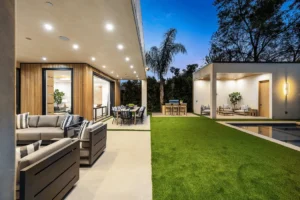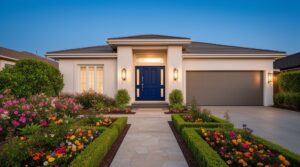
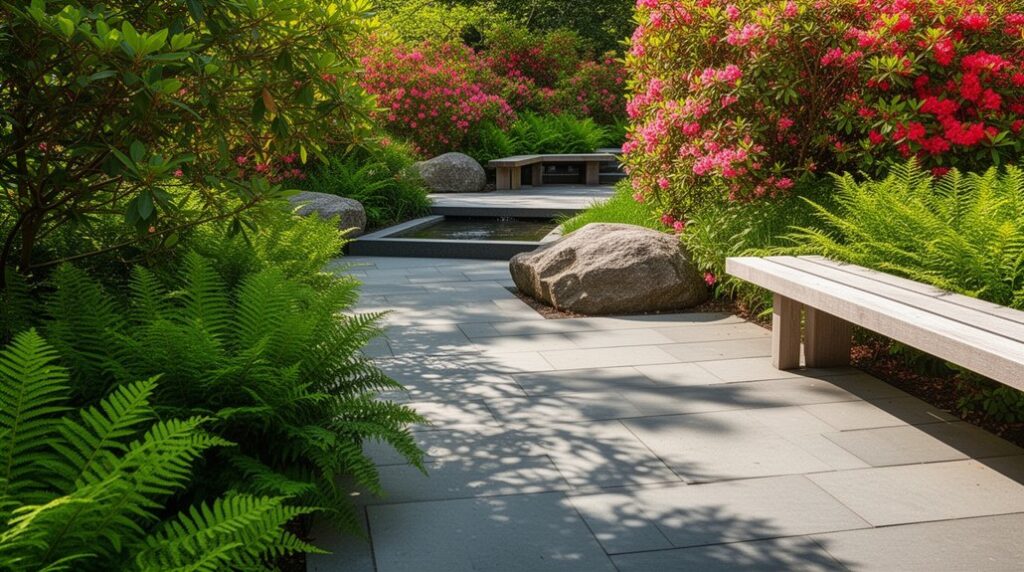
You’ll get the best blend by locking in hardscape zones, path widths (36 inches single-file, 48 inches two people), and drainage first, then sloping patios 1/8–1/4 inch per foot away from the house. Next, soften edges with 12–24 inch planting strips, solid edging, and layered beds plus spillover plants like thyme or sedum. Break up big paving with planted islands or gravel inlays, and repeat matching colors/textures every 6–10 feet for cohesion—keep going to see easy layout mistakes to avoid.
Key Takeaways
- Plan hardscape zones and circulation first, then set grades to drain away from structures into swales, drains, or permeable areas.
- Soften edges with 12–24 inch planting strips, sturdy edging, and layered plant heights to blur hardscape boundaries.
- Break up large paved areas using planting islands, gravel inlays, and pocket beds to reduce heat and add visual rhythm.
- Tie materials together by repeating complementary colors and contrasting textures in plants, pots, and surfaces every 6–10 feet.
- Maintain balance by limiting materials, matching scale to plant massing, and preserving clear paths and maintenance access year-round.
Plan Hardscape Zones, Paths, and Drainage First
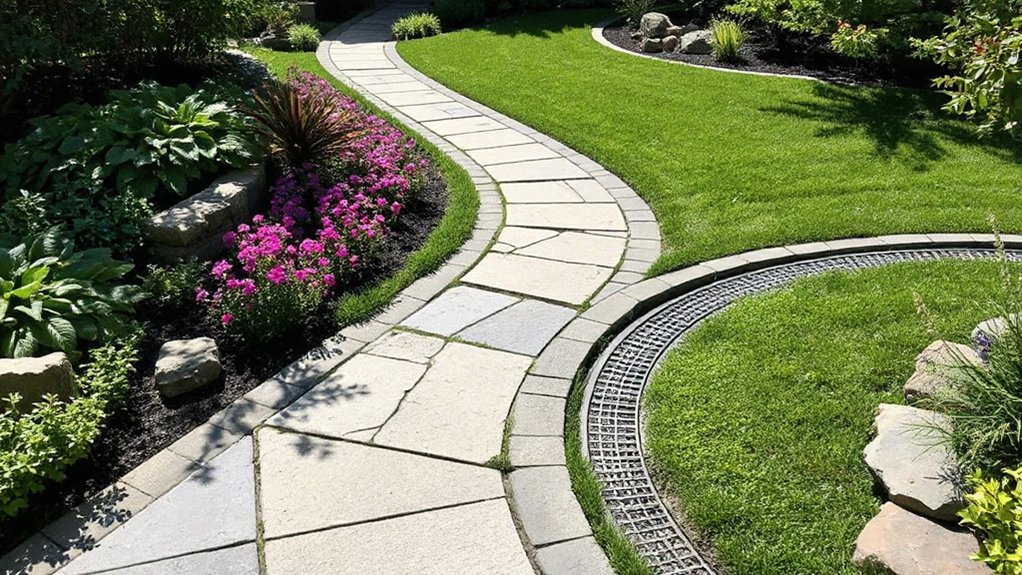
Before you pick plants or patio furniture, map your hardscape zones first—where you’ll walk, sit, cook, park, and store tools—because these fixed surfaces dictate everything that follows. Sketch circulation lines, then size paths to real traffic: 36 inches for single-file, 48 for two people, wider near grills and doors.
Set grades next. You’ll prevent puddles by sloping patios 1/8–1/4 inch per foot away from the house and directing runoff to swales, drains, or permeable areas.
Choose surfaces for Material durability: freeze-thaw-rated pavers, sealed concrete, or compacted gravel with edging.
Build in Maintenance strategies now—access to cleanouts, removable pavers over utilities, and joints you can re-sand—so repairs stay simple, not disruptive.
Soften Hardscape Edges With Beds, Borders, and Spillover Plants
Once your patios, walks, and walls are set, you can make them feel intentional—not stark—by breaking up hard edges with planting beds, low borders, and a bit of “spill.” Leave a consistent planting strip (often 12–24 inches) along hardscape where you can tuck in soil, mulch, and irrigation, then use edging—steel, stone, or brick—to hold the line and keep gravel or mulch off the pavers.
Use Plant layering: place compact evergreens or grasses at the back, then mid-height perennials, then groundcovers at the edge to blur gradations. For spillover, choose plants that drape without rooting into joints, like creeping thyme, sedum, or ajuga.
Refine border design by repeating the same edging material, keeping curves broad, and leaving access gaps for weeding.
Break Up Large Hardscape With Islands, Inlays, and Greenery
Even if you love the look of an expansive patio or driveway, a single uninterrupted slab of pavers can feel flat and run hot, so break it up with islands, inlays, and pockets of planting. Start by reserving one or two “cutouts” for small trees or shrub clumps, then edge them with steel or stone to keep joints crisp and soil contained.
Use gravel or groundcover in tight spots where roots won’t heave pavers. Add inlays by swapping a band of pavers for permeable gravel strips to improve drainage and reduce glare.
Place garden sculptures on these islands to create focal points without blocking circulation. If you want movement and sound, tuck compact water features into a planted pocket and run utilities beneath nearby joints.
Tie Hardscape and Softscape Together With Color and Texture
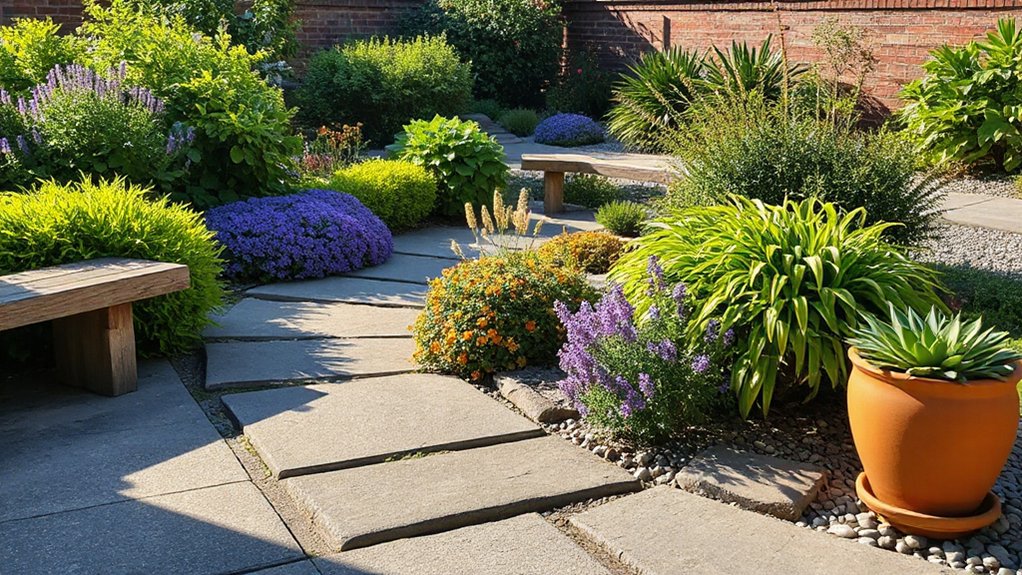
Breaking up big paver areas with planted pockets gives you structure; now make the whole space read as one design by repeating color and texture across both hardscape and softscape.
Start with Color harmony: pull one or two tones from your stone—warm buff, cool gray, rust—and echo them in foliage, blooms, and containers. If your pavers skew tan, use chartreuse grasses, apricot yarrow, and terracotta pots. If they’re charcoal, pair silver artemisia, purple salvia, and black planters.
Then build Texture contrast on purpose: set fine blades (fescue) against rough boulders, glossy leaves (boxwood) against matte concrete, and feathery perennials against sharp steel edging. Repeat each pairing every 6–10 feet to stitch the layout together visually.
Avoid the Biggest Hardscape–Softscape Balance Mistakes
If you don’t set a clear hardscape-to-planting ratio up front, the space can end up feeling either like a parking pad with token shrubs or a jungle that swallows your paths. Sketch your layout and assign percentages for paving, beds, and lawn before you buy materials.
Don’t ignore scale: match paver size and wall height to plant massing, and avoid tiny pots against big stone. Keep circulation legible by framing edges with low growers, then layer mid and tall plants to soften corners.
Plan drainage early—hardscape must slope to swales or permeable zones so beds don’t drown. Limit materials to two main surfaces and one accent for Natural integration.
Finally, repeat plant groups and leave maintenance access for Environmental harmony, year-round.
Frequently Asked Questions
How Do I Estimate Total Costs for Blending Hardscape and Softscape?
Start by itemizing every hardscape and softscape component, then price materials, labor, equipment, permits, and disposal line by line for accurate cost estimation.
Get at least three bids and verify quantities from a scaled plan.
Add soil, plants, irrigation, lighting, and mulch, plus base prep, drainage, and edging for hardscape.
Build budget planning around a 10–20% contingency and ongoing maintenance costs before you commit.
Track unit rates carefully.
Do I Need Permits or HOA Approval for Patios, Walls, or Pathways?
Yes—you often do, even if you’re “just” adding pavers. Don’t assume it’s too small to matter: skipping Permitting requirements can trigger stop-work orders or fines.
Call your city/county planning desk to ask about patios, retaining walls, drainage changes, and setbacks; many walls over a height threshold need permits.
Then check your CC&Rs and submit drawings for HOA approval before ordering materials or scheduling contractors.
Which Hardscape Materials Stay Coolest and Safest in Hot Climates?
You’ll keep surfaces coolest with light-colored concrete (broom finish), porous pavers, natural limestone, and decomposed granite—these cool surface materials absorb less heat and add traction.
Avoid dark asphalt, sealed slate, and metal edging.
Choose textured, matte finishes and wider joints to reduce glare and slipping.
Add shade tree options like desert willow, palo verde, or live oak, and include pergolas or shade sails over seating and walkways.
How Do I Make Hardscape–Softscape Designs Accessible for Wheelchairs and Strollers?
Start with Accessible pathways: keep them at least 48 inches wide, use firm, slip-resistant paving, and cap slopes at 1:12 with level landings every 30 feet.
You’ll create wheelchair friendly design by minimizing gaps (under 1/2 inch), avoiding loose gravel, and using flush connectors between hardscape and planting beds.
Add curb cuts, edge protection, and turning spaces (60-inch diameter).
Keep clear zones around gates, benches, and hose bibs.
What Seasonal Maintenance Schedule Keeps Both Plants and Pavers Looking Their Best?
You don’t need a complicated calendar—just a seasonal routine.
In spring, reset irrigation scheduling, edge beds, and do plant pruning after bud break. Sweep, rinse, and re-sand joints.
In summer, adjust irrigation scheduling weekly, spot-weed, and top up polymeric sand if washouts appear.
In fall, cut back perennials, clear leaves before staining, and seal pavers if needed.
In winter, use plastic shovels and calcium chloride.
Conclusion
When you blend soft landscaping with bold hardscape, you’re composing a garden symphony—each element needs room to play. Start by locking in zones, paths, and drainage, then soften edges with layered beds and spillover plants. Break up big paved areas with islands, inlays, and pockets of green to cool the space. Match colors and textures so stone and plants feel intentional. Avoid overpaving, cramped beds, and ignoring runoff.