
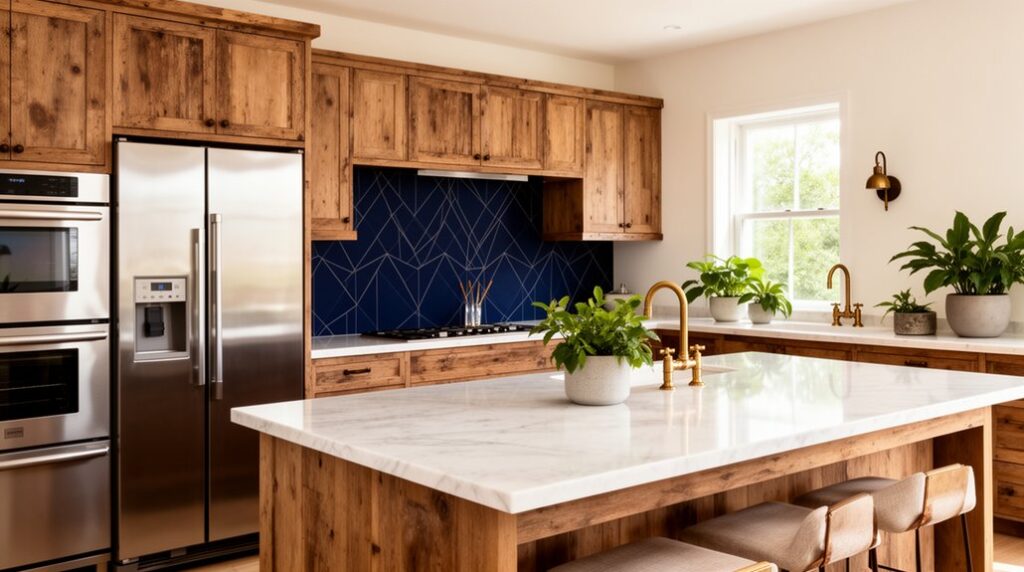
You can give your traditional kitchen a modern edge by keeping the classic layout, trim, and sturdy cabinets, then updating what you touch and see most. Paint cabinets in warm white, greige, or muted green with durable enamel, and swap ornate knobs for slim pulls plus soft-close hinges. Replace dated lights with clean-lined milk-glass or matte fixtures on dimmers, and mix metals in a 70/30 split. Next, you’ll see which upgrades matter most.
Key Takeaways
- Define your modern style first, then choose updates that complement existing trim, door styles, and classic proportions.
- Preserve quality traditional cabinets by refinishing, repainting classic colors, and upgrading hinges and slides with soft-close hardware.
- Swap ornate hardware for slim pulls or simple knobs in satin finishes, mixing metals intentionally with a dominant finish and subtle accent.
- Modernize lighting and plumbing with clean-lined fixtures, warm LEDs on dimmers, and streamlined faucets in matte black or warm brass.
- Simplify busy surfaces with calm quartz, larger-format backsplash tile, and wider matte-finish flooring in low-variation, warm neutral tones.
Pick a Modern Edge That Suits Your Kitchen
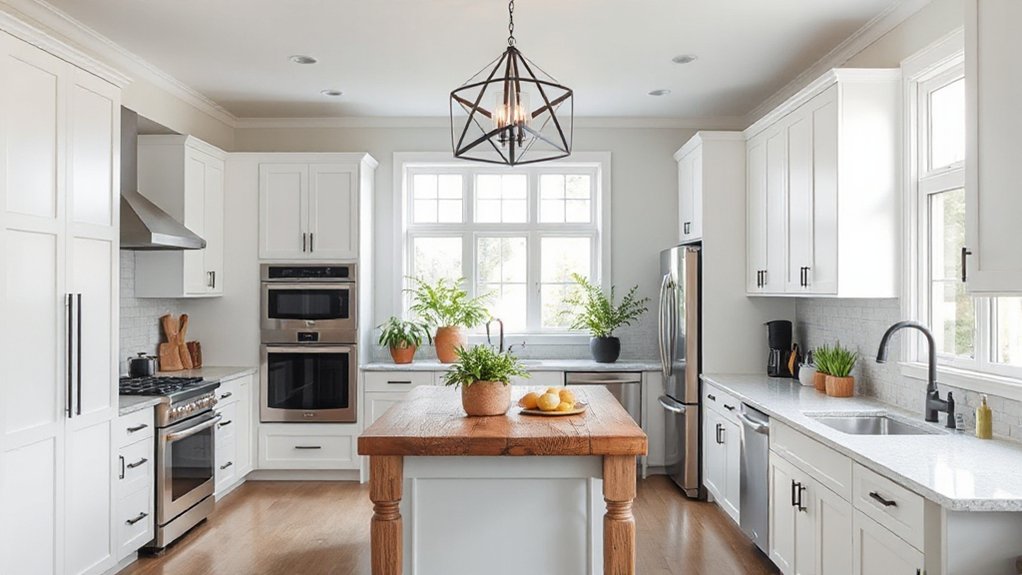
Before you buy anything, decide what “modern” should mean in your space—because a traditional kitchen can handle a sharp update, but it needs to match what’s already there. Walk the room and list what reads “classic”: door style, trim, counters, lighting. Then pick one modern edge that complements it, not competes.
If you’ve got Vintage charm and rustic accents, lean modern with cleaner lines, not glossy futurism: matte black hardware, a simple slab-front island base, or a streamlined faucet. If your kitchen already feels polished, choose warmth: brushed brass, reeded glass, or a minimal pendant in an aged finish.
Price it out by impact per dollar, and start with swaps you can return.
Keep Traditional Kitchen “Anchors” in Place
Keep your kitchen’s traditional anchors where they matter most by preserving classic cabinetry and updating around it. You’ll save money by refinishing, rehinging, or swapping hardware instead of replacing boxes. This approach also helps keep the original proportions that make the room feel right.
Then highlight timeless architectural details—like crown molding, window trim, and built-ins—so modern lighting or surfaces look intentional, not out of place.
Preserve Classic Cabinetry
Even if you’re craving a sleek update, hang onto your classic cabinet layout and any well-built wood boxes—you’ll get the biggest “modern edge” by treating them as anchors rather than ripping them out.
Start by fixing what’s tired: tighten hinges, replace worn slides, and add soft-close hardware instead of buying new carcasses. If doors are dated but sturdy, reface or repaint them; you’ll spend far less than a full replacement and avoid surprises behind walls.
Stick with classic color schemes (warm whites, deep navy, or muted greens) to keep the room grounded while you modernize around it. Then swap in sharper pulls, add under-cabinet lighting, and style with vintage accessories on open shelves to bridge old and new.
Keep it cohesive, not busy.
Highlight Timeless Architectural Details
Although a modern refresh can tempt you to strip everything back, you’ll get a cleaner, more cost-effective result by spotlighting the traditional “anchors” that give your kitchen its character—think crown molding, window trim, inset panels, arched doorways, a built-in hutch, or a well-proportioned range alcove.
Keep these elements, then update what surrounds them so the contrast feels intentional, not mismatched. Patch dings, recaulk seams, and repaint trim in a crisp, durable enamel to sharpen edges without rebuilding.
If wood stays natural, clean and clear-coat instead of replacing. Add slim LED under-cabinet lighting to wash your timeless architectural features at night.
Choose one modern finish—matte black or brushed nickel—and repeat it across hardware to support a classic design while keeping the budget tight.
Modernize a Traditional Kitchen With Paint
Paint gives you the fastest, lowest-cost way to add a modern edge without ripping out what already works.
Pick a clean, current palette—think warm whites, soft greiges, or muted greens—and commit to one main wall color plus a crisp trim color to sharpen the lines.
Then update the look where it counts by painting dated trim and cabinets with a durable cabinet-grade enamel for a smooth, modern finish.
Choose Modern Color Palette
When you want a traditional kitchen to feel current without touching the cabinets, start by choosing a modern, restrained color palette. Aim for warm whites, soft greiges, or muted sage; they calm visual noise and read contemporary. Use color psychology: cooler undertones feel crisp and airy, while warmer neutrals add comfort without looking dated.
Keep costs down by sampling three swatches and checking them morning, afternoon, and under your bulbs. Match the wall color to existing counters and flooring, not to trends. For cohesion, choose one main wall color and one accent (like a deep charcoal on a pantry wall).
Apply smart paint techniques: matte hides flaws, eggshell cleans easier, and a quality primer prevents bleed-through and extra coats.
Update Trim And Cabinets
If your kitchen’s layout still works, you can get the biggest “modern” payoff by updating trim and cabinets with the right prep and a crisp, current finish.
Start by labeling doors and hardware, then degrease with a strong cleaner. Scuff-sand to dull the sheen, patch dings, and vacuum dust.
Use a bonding primer so tannins and old finishes don’t bleed through, then apply a durable cabinet enamel with a foam roller and angled brush.
Keep costs down by painting boxes in place and replacing only tired hinges.
Choose classic color schemes like warm white uppers and deep, moody lowers, then let Vintage accents—brass pulls or a stained island—add character without dragging the room back in time.
Let coats cure fully.
Update Traditional Kitchen Hardware for a Modern Look
Although your cabinets and counters may read “traditional,” swapping the hardware can give the whole kitchen a cleaner, more modern edge without a full remodel. Start by replacing ornate knobs with slim bar pulls or simple round knobs in a crisp profile. Measure your existing hole spacing (common is 3 inches) so you can reuse holes and avoid patching.
If you want to keep Vintage accents, choose streamlined pulls with subtle curves instead of scrollwork. Skip heavy rustic finishes; pick satin or brushed options that hide fingerprints and look current.
Upgrade hinges if yours are exposed—soft-close, concealed hinges instantly feel newer. Buy a few samples first, test comfort, then order in bulk to save.
Mix Metals to Make a Traditional Kitchen Feel Current
Even with classic cabinetry and warm wood tones, you can make a traditional kitchen feel more current by mixing metals in a controlled, intentional way. Start with one dominant finish you already have (often brushed nickel or oil-rubbed bronze), then add one accent metal for clear design contrast. Keep the ratio roughly 70/30 so it reads deliberate, not random.
Use a simple metal pairing rule: match undertones. Warm brass plays well with bronze; cool chrome works with nickel. Repeat each finish at least twice—pulls plus faucet, or knobs plus pot filler—so the eye connects the dots.
If you’re on a budget, swap only the most visible pieces (faucet, cabinet pulls, range knobs) and keep less-seen hinges consistent.
Swap in Modern Lighting That Still Feels Classic
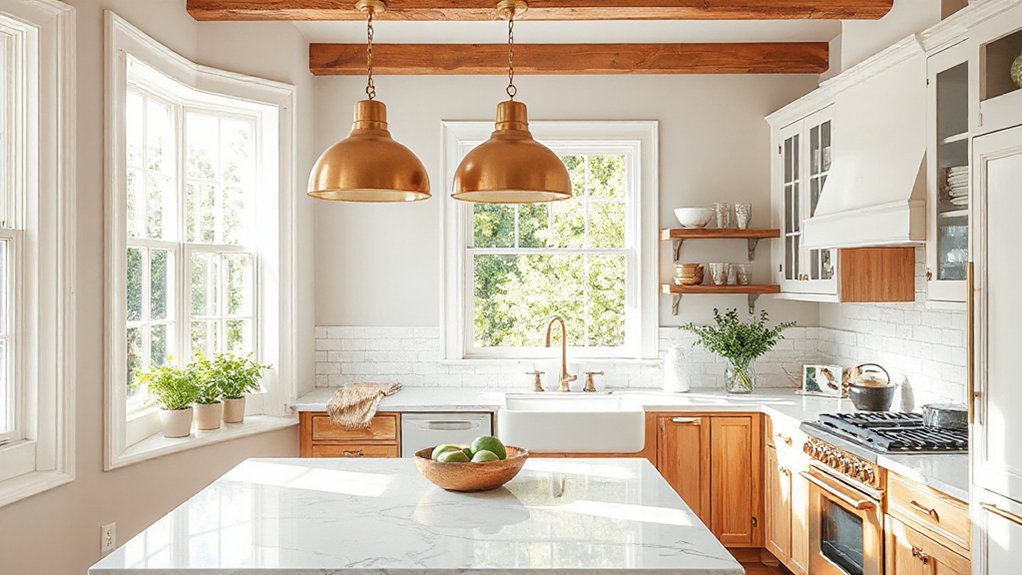
While your cabinets and counters may lean traditional, you can update the whole room fast by swapping in lighting with clean lines and classic materials. Choose milk-glass globes, aged brass, or matte black finishes to bridge old and new without feeling trendy.
Start with the main ceiling light: replace a dated chandelier with Vintage fixtures that have simple silhouettes and updated proportions. Over an island or peninsula, add pendant lighting in pairs or threes; keep shades minimal and consistent for a streamlined look.
Use warm LED bulbs (2700K–3000K) to preserve a cozy, classic glow, and put them on a dimmer for flexibility. Shop open-box, refurbish existing shades, or swap only the hardware to save money while boosting impact.
Add a Modern Edge With Streamlined Faucets
You can modernize a traditional kitchen fast by swapping in a sleek, minimalist faucet with a clean arc and simple handle.
Choose matte black for crisp contrast or brass for warmth that still feels classic, and stick to a single finish to avoid extra costs.
Keep the existing sink and plumbing if you can, and just match the faucet’s hole configuration so installation stays quick and affordable.
Sleek Minimalist Faucet Profiles
If your cabinets and counters lean traditional, a sleek, minimalist faucet can update the whole sink wall without forcing a full remodel. Choose low-arc or straight-spout profiles with clean lines to echo contemporary design while staying quiet next to ornate details.
Focus on function first: a single-handle lever is fast to use and easier to wipe down than cross handles. Pick a pull-down head only if you’ll use it daily; otherwise, skip the upcharge.
Measure your sink’s hole spacing, spout reach, and clearance to any window trim before you buy to avoid returns. Install costs drop if you keep the same configuration, so match existing holes or use a simple deck plate.
Minimalist fixtures look best when you declutter soap and sponge storage nearby.
Matte Black Or Brass
A streamlined faucet profile sets the tone, but the finish is what reads “updated” at a glance—matte black and warm brass do that fast without touching your cabinets.
Choose Matte black if you want crisp contrast against cream stone, white subway tile, or wood tones; it hides water spots better than chrome, but you’ll still wipe it with a soft cloth to prevent mineral haze.
Pick brass when your kitchen already leans warm—oak, travertine, or beige counters—and keep it cohesive by repeating Brass accents in one or two places like cabinet pulls or a soap dispenser.
To stay budget-smart, upgrade only the faucet first, then add matching hardware later if the look earns it.
Always check finish warranties and standard hole spacing before buying.
Choose Countertops That Modernize a Traditional Kitchen
While cabinets and hardware set the tone, countertops usually deliver the fastest “modern” upgrade in a traditional kitchen without a full remodel.
Start by deciding if you’ll keep your existing sink and appliances; that choice affects cutouts, labor, and cost.
If you have granite countertops with busy speckling, consider swapping to a calmer slab or a honed finish to reduce shine and visual noise.
For predictable pattern and low upkeep, choose quartz surfaces in soft white, warm gray, or greige; they read clean and current while still pairing well with traditional doors.
Keep edge profiles simple—eased or small bevel—and skip ornate ogee edges.
Use a standard thickness to avoid custom fabrication fees and aim for fewer seams by selecting larger slabs.
Bring a Modern Edge With a New Backsplash
Since your backsplash sits at eye level and spans the full work zone, updating it can shift a traditional kitchen toward modern faster than most mid-range upgrades. Start by choosing a simple field tile in a larger format (3×12 or 4×16) to reduce grout lines and look cleaner.
If you want contrast without a full redesign, add a single band of glass mosaic above the range or behind the sink.
For a bolder update, pick porcelain or ceramic in geometric patterns—hex, chevron, or elongated pickets—and keep the color tight: white, warm gray, or deep ink. Use a grout shade that matches the tile to avoid visual noise.
Shop closeouts, and limit specialty tile to focal areas to control cost.
Modernize a Traditional Kitchen With New Flooring
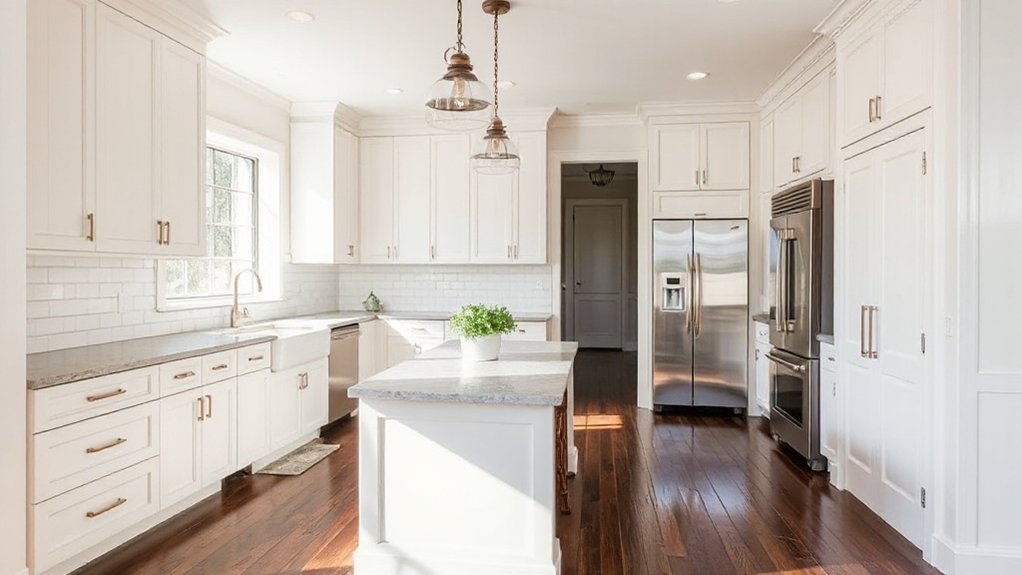
If you want a traditional kitchen to feel more current without touching the cabinets, swap the flooring—because it covers the largest surface and instantly changes the room’s “era.” Look for wider planks, low-variation tones, and a matte finish (think light oak, greige, or warm medium brown) to modernize the space without fighting classic details.
For the best value, compare luxury vinyl plank, engineered wood, and porcelain tile that mimics wood. LVP handles spills, installs fast, and costs less, while engineered wood delivers real grain and can be refinished lightly.
Choose subtle bevels to keep Vintage charm, and skip heavy distressing unless you want rustic textures. Plan a simple layout (straight or staggered), and budget for underlayment, transitions, and baseboard touch-ups.
Add Modern Seating to a Traditional Kitchen
New flooring sets a cleaner, more current base, but seating is what people notice and use every day. Swap bulky spindle chairs for slimmer silhouettes: metal-framed stools, molded shells, or armless dining chairs that tuck in tight.
To keep the traditional room grounded, match finishes to what you’ve got—black hardware, warm wood tones, or brushed nickel.
Choose Modern seating with wipeable fabrics and replaceable parts so you’re not rebuying everything later. Add Contemporary cushions to bridge styles: a crisp solid, small-scale geometric, or textured neutral reads updated without fighting your cabinetry.
Stick to two materials max, and measure seat height and overhang before you buy. If budget’s tight, replace only the island stools first, then phase in dining chairs later.
Style Open Shelving for a Modern-Traditional Mix
Although open shelves can look cluttered fast, you can use them to modernize a traditional kitchen by editing hard and keeping the styling intentional. Limit Open shelving to one run or a small nook, then repeat a tight palette: white dishes, clear glass, and one warm wood tone to bridge the Modern traditional mix.
Stack plates vertically, group mugs by color, and leave 20–30% empty space so everything reads clean. Add a few “anchors” (a crock, cutting board, or framed recipe) to break up rows without adding chaos.
Use matching shelf brackets or hidden supports for a sleeker line. Shop your own cabinets first, then fill gaps with affordable sets from outlet stores or secondhand finds. Keep daily-use items at eye level.
Avoid These Modern Updates That Clash With Traditional Style
Open shelving looks its best when the rest of your choices stay edited, too—because one mismatched “modern” update can make a traditional kitchen feel disjointed instead of refreshed. Skip Futuristic motifs like neon LED strips, glossy acrylic stools, or spaceship hardware; they fight classic millwork and warm woods.
Avoid Ultra minimalist decor that erases detail: handle-less slab fronts, waterfall counters, and hidden appliances can read cold next to raised panels and crown molding.
Watch finishes and scale. One oversized industrial pendant or matte-black faucet can dominate; choose smaller silhouettes and softer metals instead.
Steer clear of trendy high-contrast backsplashes or bold geometric tile that overwhelms. If you want a modern lift, update lighting bulbs, add a simple runner, or swap pulls—low-cost changes that still respect tradition.
Frequently Asked Questions
What Modern Kitchen Upgrades Add Value Without a Full Remodel?
You’ll add value fast by swapping to energy-efficient appliances, upgrading to a deep stainless sink, and installing a pull-down faucet with vintage fixtures styling.
Replace dated lighting with LED pendants, add under-cabinet strips, and update hardware to matte black or brushed nickel.
Install a smart thermostat and a quiet range hood.
Refresh with durable quartz-look counters or a new backsplash, plus rustic accents like open shelving.
Keep costs tight.
How Do I Modernize a Traditional Kitchen on a Tight Budget?
You modernize a traditional kitchen on a tight budget by focusing on high-impact, low-cost swaps. Replace dated fixtures with Vintage lighting in warm metals, and use Classic color schemes—crisp white, greige, or navy—for paint and accessories.
Update cabinet pulls to sleek bar hardware, add peel-and-stick backsplash tile, and install under-cabinet LED strips.
Refresh grout, declutter counters, and use one statement runner to anchor the space.
Which Smart Appliances Blend Best With Traditional Cabinetry Styles?
You’ll get the best fit from panel-ready dishwashers, counter-depth fridges, and slide-in ranges with simple knobs in stainless, matte black, or white.
Prioritize Smart integration that hides tech behind classic fronts: Wi‑Fi ovens with minimal displays, quiet smart dishwashers, and discreet under-cabinet voice hubs.
For Appliance aesthetics, choose matching handles, avoid glossy touch panels, and buy last-year models or open-box deals to save.
How Can I Improve Kitchen Storage While Keeping a Classic Look?
You can improve storage and keep a classic look by making every inch count. Add pull-out trays and tiered risers inside base cabinets, and install a shallow pantry cabinet for spices.
Use open shelving sparingly for daily dishes, framed with simple brackets. Choose matching drawer dividers and labeled bins, then finish with Vintage accents like glass knobs or a plate rack.
You’ll spend modestly but gain order quickly.
What’s the Best Way to Modernize a Traditional Kitchen for Resale?
You’ll modernize a traditional kitchen for resale best by keeping classic bones while upgrading high-impact basics. Swap to energy-efficient appliances, add under-cabinet LED lighting, and refresh hardware in brushed nickel or matte black.
Refinish cabinets or paint them warm white, then install a simple quartz-look countertop if budget allows. Keep Vintage fixtures if they’re charming, but balance them with clean lines and restrained decorative accents.
Avoid trendy colors buyers hate.
Conclusion
You don’t have to “save” your traditional kitchen by stripping it of everything that makes it traditional. Keep the anchors—classic cabinets, millwork, maybe that stubborn charm—and modernize around them with paint, crisp hardware, and a smart metal mix. If you want the biggest upgrade per dollar, start underfoot with updated flooring or a washable runner. Add lean-lined seating, style open shelves with restraint, and skip flashy trends that shout. Let “updated” look effortless.