
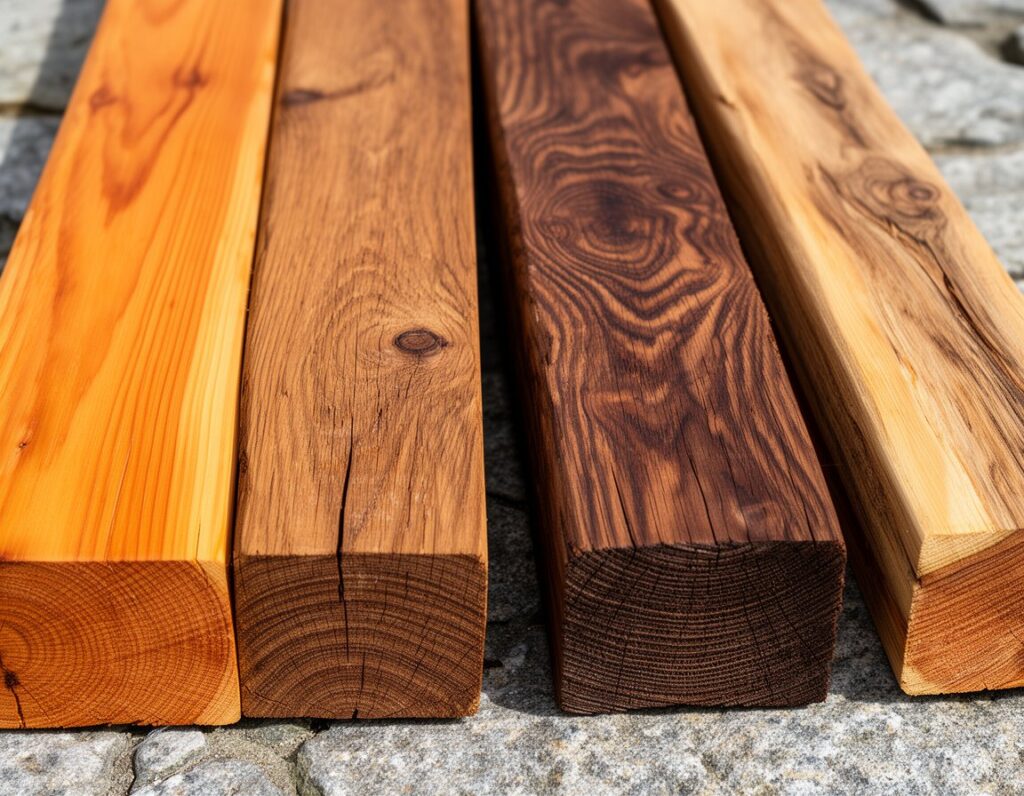
Table of Contents
Key Takeaways
- The best reclaimed wood for a fireplace mantel combines visual presence at eye level with the density and stability to handle the warmth of a fireplace environment — not every species delivers both.
- Oak is the most widely recommended choice and for good reason, but elm, pitch pine, and chestnut all have compelling cases depending on the aesthetic and the room.
- Safety clearances are non-negotiable regardless of species — the timber must be positioned outside the minimum distances specified by Building Regulations for your specific heat source.
- Density matters more for a mantel than for most other furniture applications because of the sustained warmth the piece will be exposed to — denser, more stable timbers handle this environment significantly better than softer species.
- Every species option carries genuine trade-offs: availability, cost, workability, and visual character all vary considerably and should be weighed against the specific requirements of your project.
- A reclaimed wood fireplace mantel, chosen and fitted correctly, will outlast the fireplace itself — and look better with every year it spends above the fire.
The Most Important Piece of Timber in the Room
The fireplace mantel sits at eye level, in the most prominent position in the room, above the feature that draws the eye more than anything else in most living spaces. It is looked at directly, from close range, for years on end. The choice of timber matters more here than almost anywhere else in the home.
Reclaimed wood brings particular qualities to a fireplace mantel that new timber simply cannot replicate. The patina of genuinely old timber — the grain that has had decades to develop its depth, the surface marks that speak of a previous life, the colour that new wood requires years of oxidation to approach — all of these present themselves beautifully at the scale and viewing distance of a mantel shelf.
But not all reclaimed timber is equally suited to the fireplace environment. The sustained warmth from the heat source below, the cycle of heating and cooling as the fire is lit and allowed to die down, and the close scrutiny the piece receives all place specific demands on the material. Choosing the right species — and understanding the genuine pros and cons of each option — is the most important decision in the project.
This guide covers the best reclaimed wood species for a fireplace mantel, honestly assessed for their advantages, their limitations, and their suitability for the particular demands of the role.
The Fireplace Environment and What It Demands of Timber
Before the species options can be meaningfully assessed, it is worth understanding what the fireplace environment actually asks of a mantel beam.
Heat and Thermal Cycling
A fireplace mantel positioned at the correct safety clearance — outside the minimum distances specified in Building Regulations Approved Document J — is not at risk of ignition under normal operating conditions. However, it is exposed to warmth that rises from the fire and accumulates at ceiling height, and to the radiant heat from the fire opening that reaches the front face of the beam. Over time, this warmth draws moisture out of the timber and can cause surface checking and cracking if the wood is not sufficiently dense and stable.
Dense, resinous, or tight-grained timbers handle this thermal cycling significantly better than open-grained or softer species. A soft pine beam above a regularly used fire may develop surface checking within a few seasons. A dense oak or chestnut beam in the same position will remain stable for decades.
Moisture Differential
The front face of a mantel beam is warmed by the fire; the back face, against the wall, remains at room temperature. This differential — even in a well-fitted beam — creates a slight moisture gradient that encourages the timber to move. Well-seasoned, low-moisture timber moves less than green or improperly dried timber, and denser species with tighter grain move less than softer, more open-grained ones.
Visual Scrutiny
A mantel is looked at from arm’s length, in the direct light of the fire and the room, every time anyone sits in front of the hearth. This is one of the most demanding visual environments for any piece of timber furniture or architectural woodwork. The species chosen needs to have the grain character, colour, and surface quality to reward that scrutiny — not just on day one, but across the decades.
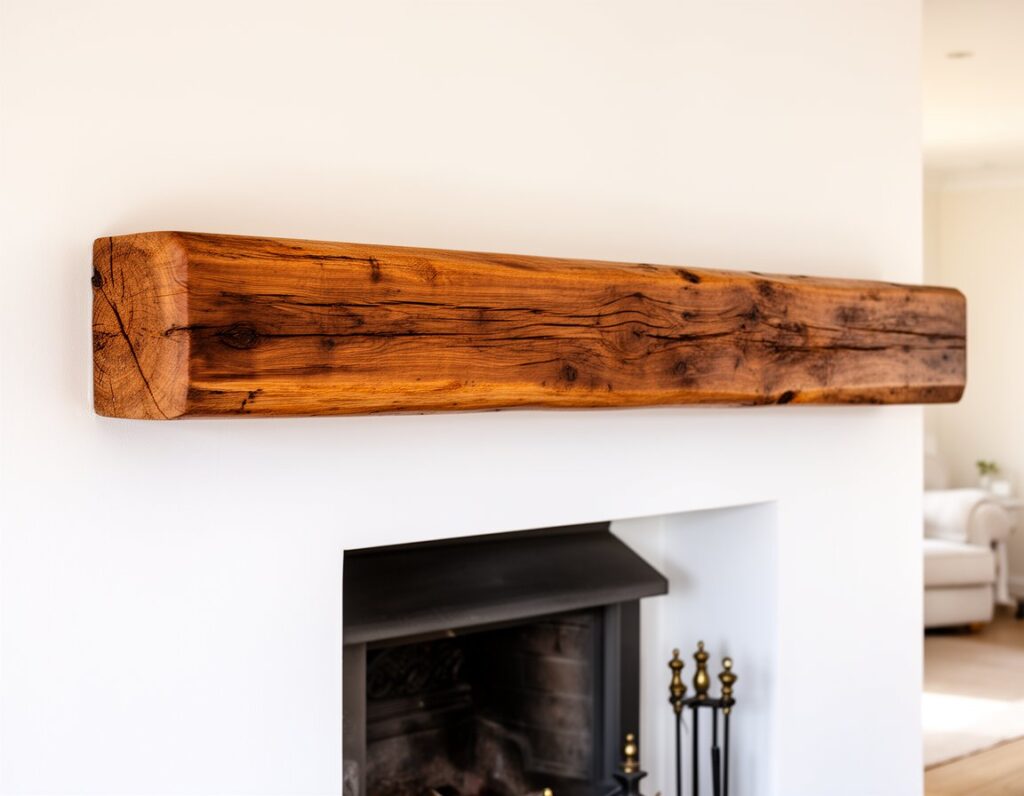
The Best Reclaimed Wood Species for a Fireplace Mantel
Oak
The definitive choice for most applications.
Reclaimed oak is the most widely used species for fireplace mantels, and it earns that position on merit. Old-growth oak — the kind recovered from Victorian and Edwardian buildings, from barn frames, from agricultural structures that were themselves built of oak felled centuries ago — is a different material from the fast-grown commercial oak available from timber merchants today. It is denser, harder, more stable, and more visually complex.
The grain of old oak, seen at eye level above a fireplace, is genuinely beautiful. Quarter-sawn sections show the characteristic medullary ray figure — the silver, satin-like flecks across the face of the board — that is one of the most distinctive and prized visual features in any hardwood. Through-and-through sawn sections show a bolder, more open grain with stronger figure. Both have their place depending on the aesthetic of the room.
Oak darkens and deepens with age and warmth. A reclaimed oak beam that has been above a fireplace for ten years will have a richer, more complex colour than the day it was installed — the warmth from the fire below is, in this sense, part of the finishing process.
Pros
Oak is among the densest and hardest of the commonly available reclaimed British hardwoods, giving it exceptional stability in the warm, thermally cycling environment of a fireplace. It is widely available at specialist reclamation yards across the UK in beam sections appropriate for a mantel. It ages magnificently — no species in the British reclaimed timber market develops a better patina over time. It machines and finishes cleanly, and takes hardwax oil beautifully, which is the most appropriate finish for a mantel beam.
Cons
Premium reclaimed oak is not cheap. Wide, clean-faced sections of old oak in the dimensions appropriate for a substantial mantel shelf can be expensive, particularly from architectural salvage companies. It is also heavy — a solid oak beam of mantel dimensions can weigh significantly more than equivalent sections in pine or fir, which has implications for fixing into masonry walls. It is harder to work than softer species, requiring sharp, well-maintained tools for clean results.
Best suited to: Traditional, country, farmhouse, period, and contemporary interiors where the quality of the timber is the primary consideration. Almost any fireplace style.
Elm
The most visually dramatic option — when you can find it.
Elm has not been commercially available as new timber in the United Kingdom since Dutch elm disease devastated British elm populations in the 1970s. What remains is entirely reclaimed — old elm from agricultural buildings, furniture, workbenches, and structures that predate the disease. This scarcity gives elm a particular value and character in reclaimed timber markets.
The grain of elm is its defining characteristic. Unlike the relatively predictable grain of oak, elm’s interlocking, cross-grain figure produces a surface that swirls and shifts in ways that seem almost deliberate — complex, varied, and genuinely unlike any other British hardwood. At mantel height, with the light of the fire below catching the grain, an elm beam has a visual drama that nothing else quite matches.
Elm is also dense and hard — comparable to oak in terms of stability in the fireplace environment, though slightly more variable in its properties depending on the specific piece and its history.
Pros
The grain and visual character of old elm is unmatched by any other readily available reclaimed species. Because it has not been commercially produced for decades, an elm mantel has an inherent rarity value and tells a specific story about the age and provenance of the material. It is genuinely stable in a warm environment and, well finished, ages beautifully.
Cons
Availability is the primary limitation. Finding elm in beam sections of the right dimensions for a mantel requires patience and a willingness to search beyond the obvious sources. Expect to visit multiple yards and be prepared to wait for the right piece to come available. The interlocking grain that gives elm its visual character also makes it more demanding to machine — grain reversal during planing can cause tearing, and the surface requires more careful preparation than oak to achieve a clean finish. It commands a premium price when found in good condition.
Best suited to: Interiors where the visual drama of the timber is the primary goal. Period properties, eclectic interiors, and spaces where the fireplace is genuinely the centrepiece of the room.
Pitch Pine
The industrial choice with unexpected elegance.
Pitch pine earned its name from the high resin content that makes it one of the most durable softwood species ever used in construction. Victorian mills, factories, schools, and churches used it extensively for flooring, structural members, and joinery — which means it is available in quantity at reclamation yards across the UK, often in large-section pieces that suit a mantel shelf particularly well.
The resinous quality of old pitch pine gives it properties unusual in a softwood: it is denser and harder than most commercial pine, it resists moisture and checking better than non-resinous species, and the resin pockets and grain figure in the face of a well-selected board are genuinely beautiful in the warm light of a fire. The colour — deep amber through to reddish brown, depending on the specific piece — is warm and rich in a way that suits the fireplace environment instinctively.
Pros
Pitch pine handles the warmth of a fireplace environment exceptionally well. The resin content that makes it so hard-wearing also acts as a natural stabiliser against the moisture-drawing effect of sustained warmth. It is more affordable than oak or elm in most markets and available in large, wide sections that suit an ambitious mantel design. The colour and surface character, properly finished, are genuinely beautiful — warmer and more amber in tone than oak, with a different but equally compelling character.
Cons
Pitch pine is not a hardwood — it is a resinous softwood — and while its density is significantly greater than commercial pine, it is softer than oak or elm and more susceptible to surface denting from hard contact. The high resin content that gives it its stability also means that some finishing products — particularly water-based treatments — do not adhere well to pitch pine surfaces. Solvent-based or oil-based finishes are more appropriate. In very warm environments, the resin can occasionally bleed from resin pockets in the timber, leaving a sticky residue on the surface — though this is more common in very old timber that has not had time to acclimatise and is less likely with well-dried, pre-installed beams.
Best suited to: Industrial, rustic, farmhouse, and relaxed contemporary interiors. Kitchens with exposed brickwork. Rooms where warmth and character are prioritised over formal elegance.
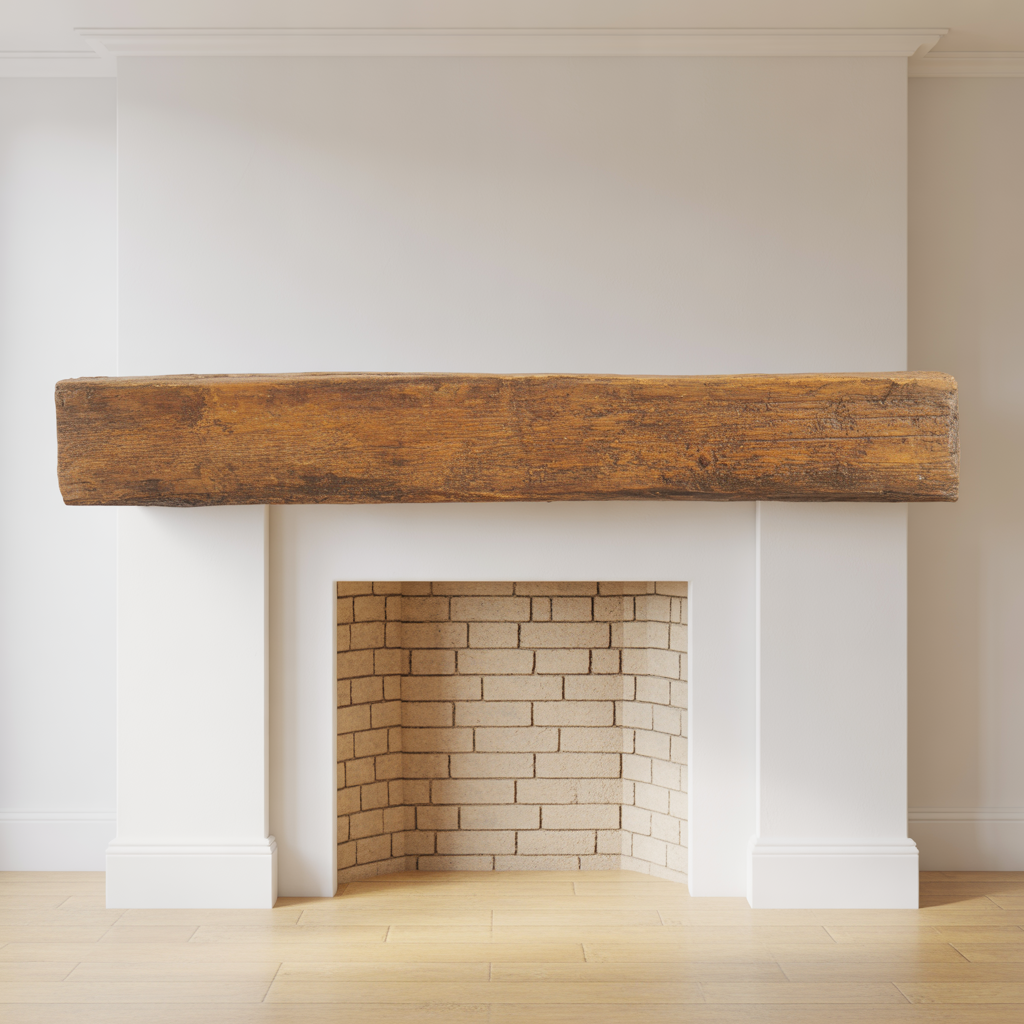
Sweet Chestnut
The underrated alternative to oak.
Sweet chestnut is one of the most underappreciated species in the reclaimed timber market. Visually, it resembles oak closely enough that the two are often confused by non-specialists — the grain structure is similar, the colour is comparable, and at a distance the two species look almost identical. The key visual distinction is the absence of the medullary ray figure that gives quartersawn oak its characteristic flecking.
Structurally, sweet chestnut is dense, stable, and naturally resistant to moisture — qualities that make it well suited to the fireplace environment. It has been used in building construction, fencing, and furniture for centuries and ages in a similar way to oak: darkening and deepening in colour with warmth and light exposure.
Pros
Sweet chestnut offers much of the visual quality of oak at a price point that is typically lower, since it is less well known and therefore less aggressively marketed. It handles the fireplace environment well due to its density and natural tannin content. It machines and finishes cleanly, and it accepts oil treatments in the same way as oak. For a buyer who wants the warm, characterful quality of an oak mantel but is working within a tighter budget, sweet chestnut is a genuine alternative worth seeking out.
Cons
Sweet chestnut is less commonly available than oak at most reclamation yards — finding a piece in the right dimensions for a mantel may take more searching. Because it is visually similar to oak, there is a risk of confusion between the two species; if provenance and species accuracy matter for the project, confirm identification with a specialist. It does not carry quite the prestige in the UK market that oak does, which matters more for some buyers than others.
Best suited to: Traditional, country, and period interiors where the warm, tannin-rich quality of the species suits the room. An excellent choice for buyers seeking the oak aesthetic at a lower price point.
Reclaimed Douglas Fir
The straight-grained option for contemporary spaces.
Douglas fir is not a British species — it is native to the Pacific Northwest of North America — but it was imported in large quantities during the Victorian and Edwardian building booms and used extensively in construction and industrial applications. Old-growth Douglas fir recovered from demolished buildings of that period is a very different material from the commercial fir available today: tighter grained, denser, and more stable.
The visual character of Douglas fir is defined by its straight, consistent grain and the warm amber and reddish tones of the heartwood. It does not have the visual drama of elm or the prestige of old oak, but it has a clarity and warmth that suits contemporary and Scandinavian-influenced interiors particularly well.
Pros
Old-growth Douglas fir is relatively affordable compared to reclaimed hardwoods, available in large sections, and extremely clean to machine. The straight grain produces a mantel with a consistent, calm surface character — appropriate in rooms where the fireplace is a warm functional feature rather than a theatrical focal point. It is more stable than most commercial softwoods due to its density and tight grain.
Cons
Douglas fir is softer than the hardwood options listed above and more susceptible to surface denting and scratching in a position that receives the daily contact a mantel does. In a warm fireplace environment, it requires more thorough preparation and finishing than denser species to achieve long-term stability. The visual character, while genuine and pleasing, lacks the drama of elm or the depth of oak — it is a quieter timber, which suits some rooms and not others.
Best suited to: Contemporary, Scandinavian, and relaxed modern interiors where a calm, warm grain character is preferred over visual drama.
Species to Approach With Caution
Railway Sleeper Oak or Pine
Railway sleepers are often proposed as an inexpensive source of substantial beam timber for fireplace mantels. This is an approach to treat with considerable caution. The vast majority of railway sleepers — including oak sleepers — have been treated with creosote or other industrial preservatives at concentrations significantly higher than is appropriate for indoor use in a living space. These treatments off-gas at room temperature, have a persistent odour, and contain compounds that are hazardous with prolonged indoor exposure. Even sleepers that appear dry and odour-free at purchase may release compounds when warmed by the heat of a fire. Railway sleeper timber should not be used for fireplace mantels in habitable rooms.
Unseasoned or Green Timber
Timber that has not been properly dried — whether reclaimed or new — is not appropriate for a fireplace mantel. The warmth of the fire will accelerate drying in the exposed face while the concealed face remains at room temperature, creating a severe moisture differential that will cause splitting, checking, and warping within a short time of installation. Always check moisture content with a calibrated meter before installation and ensure the reading is in the 8–12% range appropriate for indoor timber in a centrally heated home.
Comparing the Options: A Practical Summary
For maximum visual drama
Elm, if you can find the right piece. The interlocking grain at fireplace height is unmatched.
For the most reliable, long-lasting result
Oak. Widely available, deeply proven in this application, exceptional long-term performance.
For the best value without compromise on character
Sweet chestnut or pitch pine. Both deliver genuine quality at a price point below premium reclaimed oak.
For a contemporary, calm aesthetic
Douglas fir. Straight grain, warm colour, and a surface character that suits modern rooms.
For the warmest, most amber tone
Pitch pine. The resinous colour and density make it distinctive among the softwood options.
Preparing and Finishing Your Chosen Beam
Regardless of species, the preparation and finishing process for a reclaimed fireplace mantel beam follows the same essential sequence.
Clean the beam thoroughly, removing all loose material, old lime wash, and surface debris with a wire brush. Sweep with a strong magnet and remove all hidden fixings. Check moisture content — wait until the beam reads below 12% before proceeding. Inspect for active woodworm; old holes without fresh bore dust are historical and harmless, fresh bore dust indicates an active infestation requiring treatment before the beam is installed.
Once clean and dry, work the face of the beam to the level of surface refinement that suits the aesthetic — from a lightly cleaned natural surface that retains maximum character, to a planed and sanded face that is smooth and consistent. The right level of surface working is a judgement call specific to the timber and the room.
Finish with a penetrating hardwax oil — Osmo Polyx, Rubio Monocoat, or Treatex are all appropriate — applied in two coats with a light abrade between coats. A penetrating finish enhances the grain and colour of reclaimed timber without forming a film on the surface that can crack or peel in the warmth of the fireplace environment. Avoid surface lacquers and water-based polyurethane, which sit on the surface and respond poorly to the thermal cycling a mantel experiences.
Frequently Asked Questions
Is reclaimed oak or elm better for a fireplace mantel?
Both are excellent choices, and the decision comes down primarily to availability, budget, and aesthetic preference. Oak is denser, more widely available, and generally easier to source in the right dimensions. Elm has a more dramatic and visually complex grain, carries a rarity value that oak does not, and produces a mantel with a visual presence that is genuinely hard to match. If a good piece of elm can be found at a reasonable price, it is a spectacular choice. If the search for elm is proving fruitless, a well-selected piece of old oak will produce a result that any room would be proud of.
Can I use reclaimed pine for a fireplace mantel?
Standard reclaimed pine — Victorian floorboards, roof timbers, domestic joinery pine — is softer and less stable in the fireplace environment than the hardwood and pitch pine options described above. It is not disqualified, but it requires careful sourcing of dense, well-dried timber, and it will develop surface checking and denting more readily than the harder species. If budget is the primary constraint and the fire is not an open fire — gas or electric only — reclaimed pine in a thick section can produce an acceptable result. For an open fire or a wood-burning stove, choose a denser species.
How thick should a reclaimed wood fireplace mantel beam be?
For a mantel that reads as a proper architectural element rather than a shelf, a minimum thickness of 10cm front-to-back is recommended. Anything less than this at mantel height looks inadequate — the shadow line below the shelf is too thin and the beam lacks visual weight. 12–15cm is the most common range for a well-proportioned mantel, and beams up to 20cm deep are entirely appropriate in a room with a large chimney breast or high ceilings. The thickness also matters structurally if concealed bracket fixings are being used — the beam needs sufficient depth to accommodate the bracket rods without breaking through the face.
How do I protect a reclaimed wood mantel from the heat of the fire?
Correct positioning at the required safety clearance — as specified in Building Regulations Approved Document J and the manufacturer’s instructions for your specific appliance — is the primary protection. No timber finish provides meaningful fire resistance, and no treatment should be relied upon to compensate for incorrect positioning. Beyond clearance, a penetrating hardwax oil finish keeps the timber hydrated and minimises the drying and checking effect of sustained warmth. Maintaining the finish with an annual or biannual re-application of the same product will keep the surface protected and looking its best through repeated cycles of heating and cooling.
What is the best way to fix a reclaimed wood beam as a fireplace mantel?
The most visually satisfying fixing method is concealed steel brackets — lengths of square steel bar fixed horizontally into the masonry of the chimney breast, with corresponding slots routed into the back face of the beam so it slides onto the brackets without any visible hardware. This method requires accurate measurement and routing but produces a result that looks as though the beam is growing from the wall.
The alternative is surface-fixed heavy-duty shelf brackets, which are simpler to install and equally strong but require either acceptance of visible brackets or the addition of a fascia board to conceal them. All fixings must go into solid masonry — not plasterboard — and must be rated for the weight of the specific beam being installed.
Conclusion
Choosing the best reclaimed wood for a fireplace mantel is not a decision that needs to be rushed. The beam will be in place for decades, looked at every day, and its quality will be apparent every time anyone sits in front of the fire. Taking the time to find the right species in the right piece — visiting yards, assessing options, waiting if necessary for a better piece to come available — is entirely justified by the result.
Oak earns its status as the default choice through genuine merit. Elm earns its place at the premium end through its rarity and visual drama. Pitch pine and sweet chestnut offer compelling alternatives for buyers with different aesthetic goals or tighter budgets. Douglas fir serves contemporary rooms that want warmth without drama.
What all of these options share is the fundamental quality that distinguishes reclaimed timber from every manufactured alternative: they are real, they have history, and they will continue to develop character long after the fire beneath them has been lit and extinguished a thousand times.
For a full grounding in sourcing, preparing, and working with salvaged timber across all types of projects, our complete guide to reclaimed wood covers everything you need to know before you start.