
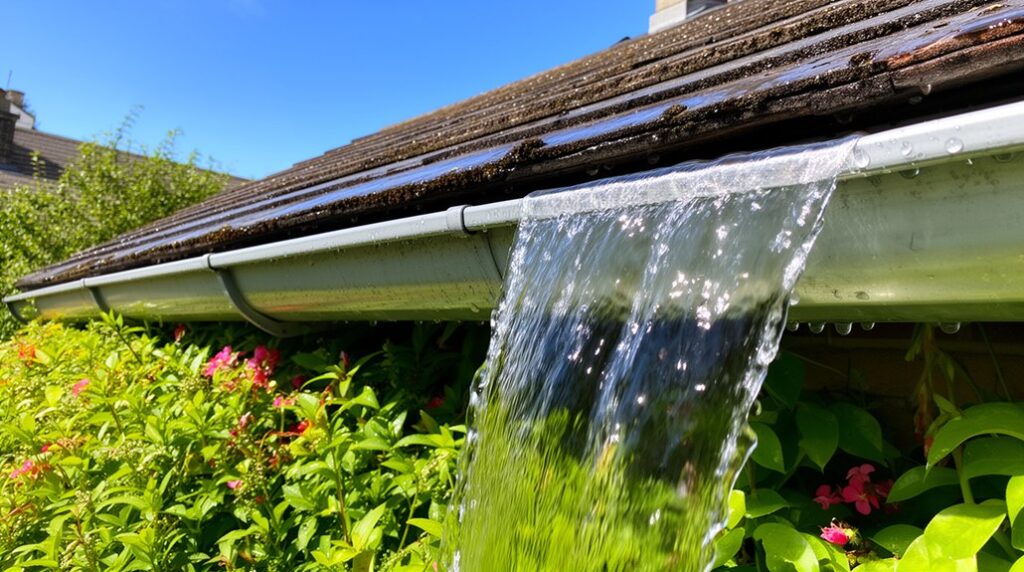
Well‑maintained gutters keep roof runoff from overflowing at the eaves and soaking your fascia and soffit vents, which prevents rot and shingle-edge damage. When you clear clogs and fix leaks, you stop sheet water from staining siding and warping trim. You also keep perimeter soil from staying saturated, reducing erosion, freeze-thaw stress, and hydrostatic pressure that can crack foundations or flood basements. Keep going to see key warning signs and maintenance steps.
Key Takeaways
- Well‑maintained gutters channel rainwater away, preventing overflow that soaks fascia, soffits, and roof edges.
- Proper drainage reduces foundation saturation and hydrostatic pressure, lowering risks of cracks, seepage, and basement flooding.
- Clear gutters prevent sheet water down walls, protecting siding and trim from staining, warping, and rot.
- Consistent flow keeps perimeter soil drier, minimizing erosion, grade loss, and freeze‑thaw stress near the foundation.
- Clean, intact gutters avoid standing water and trapped debris, reducing corrosion and limiting mosquito, ant, and rodent infestations.
What Clogged or Damaged Gutters Do to Your Home
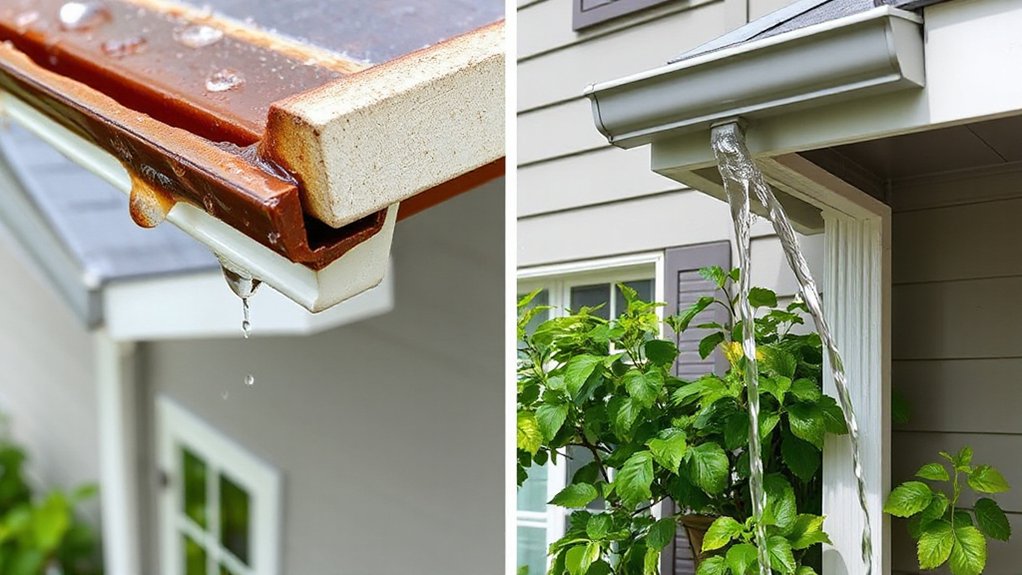
When your gutters clog or fail, they stop controlling roof runoff and start redirecting water to places your home isn’t designed to handle. You’ll see overflow at eaves, wet fascia boards, and saturated soffit vents as water sheets back under shingles and against trim.
Downspouts that discharge too close to the foundation keep the perimeter soil wet, promoting soil erosion and undermining your grading. As debris compacts, you add static load and trap moisture, accelerating corrosion at seams, hangers, and end caps.
Standing water in troughs becomes a breeding site, increasing pest infestation risk from mosquitoes, ants, and rodents using the gutter line as a travel corridor.
In winter, restricted flow encourages ice buildup that can bend sections and loosen fasteners.
The Most Common Water Damage From Bad Gutters
When your gutters overflow or leak, you concentrate runoff at the footing line, saturate backfill, and drive hydrostatic pressure that can crack your foundation and flood your basement.
You also force water behind the gutter edge, soaking the fascia and wicking into roof decking until fasteners loosen and rot starts.
As water sheets down exterior walls, it stains and warps siding, opens seams, and keeps wood and trim wet long enough for decay to spread.
Foundation And Basement Flooding
Although gutters seem like a simple exterior add-on, they control where thousands of gallons of roof runoff go each year, and any failure tends to push water straight to your foundation. When downspouts clog or discharge too close to the wall, water saturates backfill, increases hydrostatic pressure, and forces seepage through cracks, joints, and porous concrete.
You’ll often see wet basement walls, musty odors, and recurring sump pump cycles after heavy rain.
Overflow also strips topsoil and creates soil erosion and landscape erosion that lower grade near the house. As the slope flattens, runoff ponds against the footing, prolonging saturation and freeze-thaw stress.
You can prevent this by keeping gutters pitched, clearing debris, extending downspouts 6–10 feet, and maintaining positive grading away from the foundation.
Fascia, Siding, And Rot
Because overflowing gutters dump roof runoff directly onto the eave line, they frequently cause the most visible and costly damage: saturated fascia boards, peeling paint, swollen trim, and rotten siding edges. Once water wicks behind drip edge and soffit vents, you’ll get chronic wetting that accelerates Fascia deterioration and loosens fasteners.
You may notice nail pops, cupped clapboards, and soft spots where you can press a screwdriver into the wood. Persistent splashback also drives siding discoloration as tannins leach, algae grows, and dirt tracks form below the roofline.
To prevent rot, you should clear debris, verify gutters slope 1/16–1/8 inch per foot, seal end caps, and extend downspouts 6–10 feet. Inspect flashing and repaint exposed grain.
How to Spot Clogged, Leaking, or Sagging Gutters
After a heavy rain, your gutters should move water cleanly from roof edge to downspout without overflow or drips. If you see water overflow at the lip, suspect a clog from roof debris or a blocked downspout elbow. Watch for “waterfall” sheets that bypass the trough and hit the fascia or foundation line.
To spot leaks, look for pinhole sprays, seams that weep, or dark streaks under joints and end caps. Check hangers: if brackets pull away, the gutter can twist and open seams.
For sagging, sight along the run; a low spot holds standing water and sediments. Also note gutters separating from the roofline or pulling off at corners, which signals fastener failure or excess load.
Gutter Maintenance Checklist (and How Often to Do It)
Set a seasonal inspection schedule—at minimum in spring and fall, plus after major storms—so you catch blockages, loose hangers, and seam failures before they damage fascia or foundations.
Clean the system by clearing roofline debris, flushing gutters and downspouts with a hose, and verifying each downspout discharges away from the slab or drain line.
Repair immediately by reseating hangers to restore pitch, sealing leaking joints/end caps, and replacing crushed or corroded sections before the next rain cycle.
Seasonal Inspection Schedule
Even if your gutters look fine from the ground, you should follow a seasonal inspection schedule that matches debris load, roof type, and local weather patterns. Set inspection timing at least twice yearly: late spring after pollen drop and late fall after leaf shed.
If you’ve got pine trees, steep roofs, or frequent wind events, add mid-summer and mid-winter checks. After any heavy rain, hail, or freeze-thaw cycle, inspect within 48 hours for overflow marks, loose hangers, separated seams, and downspout discharge near foundations.
During seasonal cleanup windows, verify water flow by observing runoff during a moderate rain, and confirm downspouts terminate where grading carries water away. Log findings, dates, and weather triggers so you can adjust frequency year to year.
Cleaning And Repair Steps
A seasonal inspection only helps if you follow it with consistent cleaning and targeted repairs that restore full flow. You’ll start by clearing roof debris, then scoop gutter channels and bag waste. Flush with a hose from the high end; verify downspouts discharge freely and use a plumber’s snake if they don’t.
Tighten hangers, replace missing fasteners, and re-slope sections that hold water. Reseal leaking seams and end caps with gutter-grade sealant; patch pinholes with metal repair tape. Remove rust, then apply primer before Gutter painting to prevent recurrence.
Confirm drip edges direct water into the trough. Reinstall decorative accessories only after flow tests, and check they don’t trap leaves. Repeat cleaning spring and late fall.
Signs It’s Time to Repair or Replace Gutters
When your gutter system can’t control roof runoff, the warning signs usually show up on the fascia, siding, and foundation before the gutters fully fail. You’ll see peeling paint, soft wood, and dark streaks where overflow keeps the surface wet.
Check for persistent drips at seams, separated miters, and fasteners pulling loose; those point to joint failure or hanger fatigue. If sections sag, hold standing water, or slope back toward the house, you’re risking ice loads and accelerated corrosion.
Rust-through, pinholes, and repeated clogs that return right after cleaning suggest internal deterioration. Cracked sealant and warped profiles hurt Gutter aesthetics and increase landscaping impact by dumping water onto beds, mulch, and roots.
Replace when damage is widespread or alignment can’t hold.
Gutter Upgrades: Guards, Downspouts, and Extensions
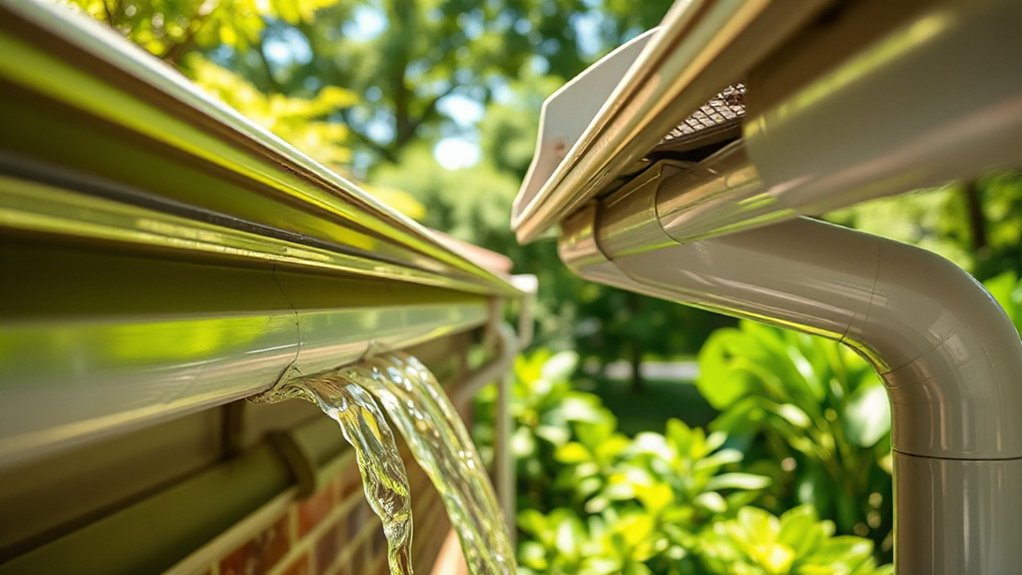
Small gutter defects often signal a bigger issue: your system can’t move roof runoff fast enough or far enough away from the house. Upgrade capacity and debris control before damage spreads. Install 5- or 6-inch gutters and oversized downspouts to reduce overflow at high-volume valleys. Add rigid elbows and secure straps so joints don’t separate under hydraulic surge.
Gutter guards cut clogging, but choose a guard matched to your roof and tree load: micro-mesh for fine grit, hooded covers for heavy leaf drop. Maintain correct slope and keep hangers at 24 inches on center for stiffness.
Finish by adding Downspout extensions that discharge 6–10 feet from the foundation or into a tightline to daylight. Route water away from patios and basement walls.
Frequently Asked Questions
Do Gutters Affect Home Insurance Claims for Water Damage?
Yes—gutters can affect home insurance claims for water damage because insurers check whether you prevented avoidable loss.
If you skip gutter maintenance and overflow causes roof leaks, fascia rot, or foundation seepage, your adjuster may classify it as neglect and reduce or deny insurance claims.
You should document cleanings, repairs, and downspout extensions, and keep photos and receipts.
You’ll strengthen causation arguments if storms, not clogs, drove intrusion.
Are There Local Regulations for Gutter Runoff and Drainage?
Yes—you’ll often face local rules for gutter runoff and drainage, like a Roman aqueduct’s modern cousin. You must follow Rainwater management codes that prevent discharge onto sidewalks, neighboring lots, or storm drains without controls.
Check Downspout regulations for required extensions, splash blocks, or connections to approved leaders. Many towns mandate setbacks, infiltration trenches, or rain gardens, and some ban direct tie-ins to sanitary sewers.
Verify permits and fines with your municipality.
How Do Gutters Impact Pest Activity Like Mosquitoes, Rodents, or Birds?
Gutters impact pest activity by creating standing water and sheltered nesting zones when they clog or sag. You’ll see Gutter pests thrive: mosquitoes use pooled water for insect breeding, rodents exploit leaf mats as cover, and birds build nests at downspout elbows.
You can reduce activity by keeping flow continuous, screening outlets, sealing fascia gaps, and trimming overhanging branches.
You should flush debris, correct pitch, and repair leaks promptly.
What Gutter Materials Last Longest in Coastal or Snowy Climates?
You’ll get the longest life from aluminum or copper on coasts, and from heavy-gauge steel or aluminum in snow—lightweight won’t outlast load and salt.
In a durability comparison, marine-grade aluminum (0.032″) resists corrosion, while copper delivers top material longevity if you prevent galvanic contact.
For snowy zones, 24–26 ga galvanized/steel handles ice; pair with robust hangers and heat cables where needed.
Can Clogged Gutters Cause Structural Issues in Detached Garages or Sheds?
Yes—clogged gutters can cause structural issues in detached garages or sheds. You’ll trap water at the eaves, saturate fascia and rafter tails, and drive capillary wetting into wall sheathing.
Overflow can erode grade, undermining shallow slabs or pier footings and shifting posts. In freezing climates, you’ll get ice dams that leverage shingles and drip into framing.
Prioritize Gutter cleaning and guarantee Proper gutter installation with correct pitch and downspout discharge.
Conclusion
You don’t see gutter failure coming—you see the bill. One season of clogs can push runoff under shingles, behind fascia, and down your foundation wall. Hairline leaks turn into rot, mold, and soil washout before you notice the first stain. Keep a schedule: clear debris, flush downspouts, check pitch, tighten hangers, reseal joints. Upgrade with guards and extensions where flow overwhelms. Because the next storm won’t ask if you’re ready.