Boost kerb appeal and function by picking a surface that fits your budget and upkeep: concrete or asphalt for value, gravel for low cost and grip, pavers or resin-bound for a premium look and drainage. Plan widths at 2.7–3.0 m per car (5.0–5.5 m for two), and add turning space so you don’t reverse blind. Use simple patterns, 100–150 mm borders, 1–2% fall, and warm LED lighting. Keep going to see smart layout and drainage upgrades.
Key Takeaways
- Choose a surface that fits budget and upkeep: concrete, asphalt, pavers, gravel, or resin-bound for a clean, durable finish.
- Size the layout for real use: 2.7–3.0 m per bay, wider at the garage, plus space for bins and a walkway.
- Add a turning pad or hammerhead so cars can exit forward, improving safety and reducing tyre scuffing.
- Boost curb appeal with simple paving patterns, two-tone colours, and 100–150 mm contrasting borders to frame edges neatly.
- Build in drainage and lighting early: 1–2% fall, channels or permeable surfacing, and warm LED path lights for safe night access.
Choose a Driveway Surface: Cost, Grip, Upkeep
Before you commit to a new driveway, weigh each surface option on three practical points: what it costs to install and maintain, how much grip it gives you in rain or frost, and how much ongoing upkeep you’re willing to do.
Concrete gives solid value and good surface durability, but it can crack and may need sealing.
Asphalt costs less upfront, offers decent traction, and you’ll reseal periodically to slow fading and soft spots.
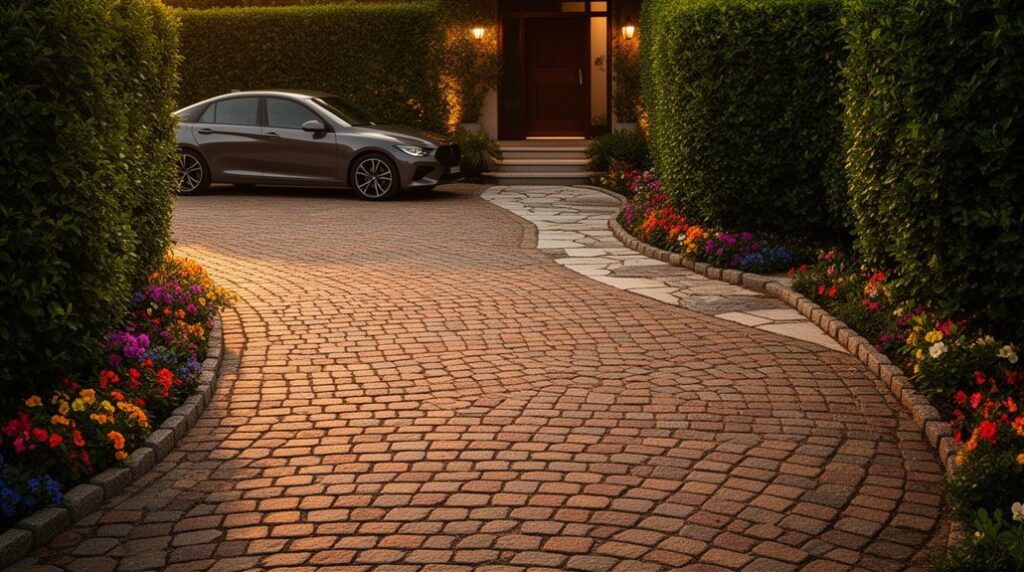
Pavers cost more, yet you can replace single units and they drain well when laid right; watch weeds in joints.
Gravel is the cheapest driveway material and has great grip, but you’ll rake, top up, and control migration with edging.
Resin-bound sits mid-high price, stays porous, and needs careful base prep.
Plan Driveway Layout: Width, Parking, Turning Space
Although the surface you choose matters, the layout determines how easy—and safe—it is to use your driveway every day. Start by measuring your vehicles and allowing door-swing clearance.
A single bay typically needs about 2.7–3.0 m width, while a comfortable two-car drive runs 5.0–5.5 m, plus space for bins and walkways.
If you’ll park side-by-side and still access the garage, widen near the door to avoid costly scrapes.
Plan turning space so you can exit forward: add a hammerhead or small turning pad if your street is busy.
Keep sightlines clear at the curb.
Use landscape integration to soften edges with planting zones, and reserve room for low-cost aesthetic enhancements like lighting placement.
Add Driveway Patterns, Edging, and Contrast Borders
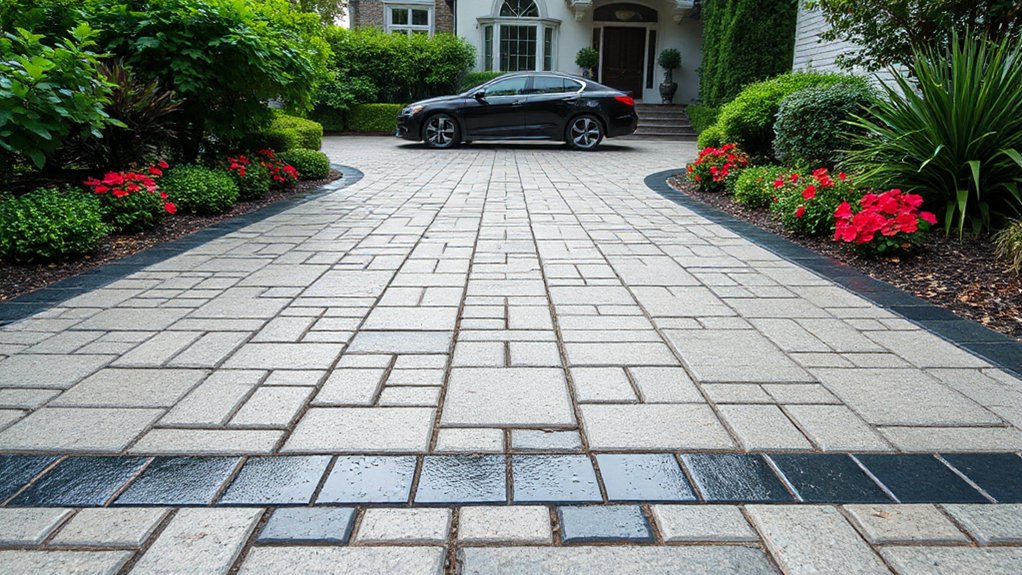
When you add pattern and a contrasting edge to your driveway, you instantly make it look more deliberate without paying for a premium surface. Use simple, repeatable layouts: a herringbone block strip down the centre, stretcher-bond rows, or a two-course soldier edge. You’ll get the most impact by limiting yourself to two tones and keeping joints straight.
Frame the surface with Decorative borders to hide cut edges, stop gravel creep, and reduce chipping on paving. Choose contrasting materials that suit what you’ve already got: charcoal blocks against light concrete, brick edging against asphalt, or a stone setts band for a heritage look.
Keep the border 100–150 mm wide so it reads clearly. Match edging height to the surface to avoid trip points.
Plan Driveway Drainage: Slopes, Channels, Permeable Options
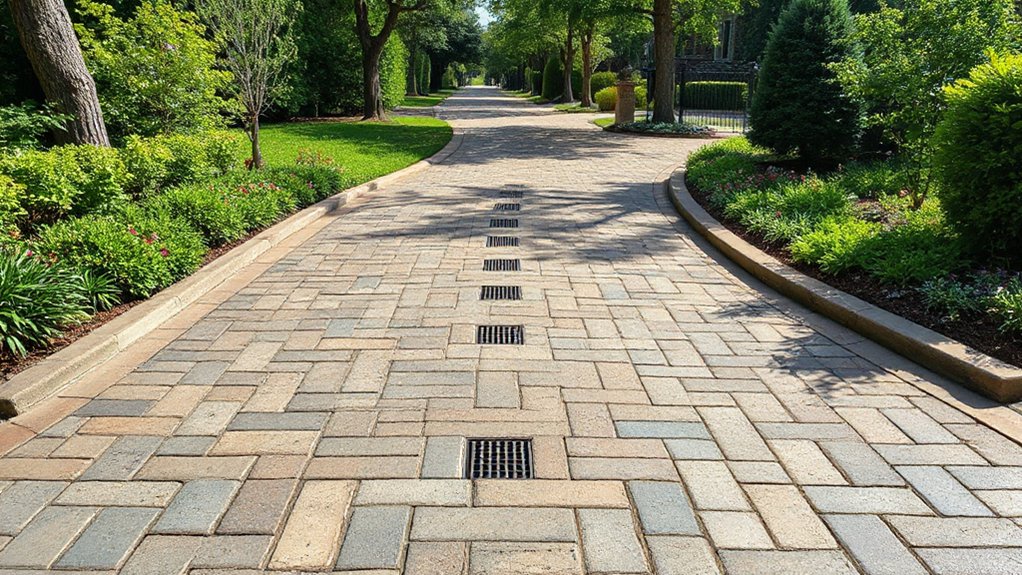
If you plan drainage from the start, you’ll avoid puddles, ice patches, and water running toward your garage or foundations. Set a gentle fall of about 1–2% away from buildings, and confirm it with a string line before you pour or lay pavers.
Where water concentrates, add linear channels or a trench drain at the low point and tie it into a soakaway or approved storm connection. These drainage solutions cost less to install during construction than to retrofit after settlement.
Consider permeable materials like permeable pavers, porous asphalt, or resin-bound gravel over a free-draining base to reduce runoff and keep compliant in many areas. Match your sub-base depth to soil type, traffic load, and local rainfall.
Upgrade Driveway Lighting and Low-Maintenance Planting
Since a driveway often gets used in the dark, upgrading lighting and swapping fussy borders for low-maintenance planting can lift kerb appeal fast without locking you into weekend upkeep.
Start with LED bollards or low-profile path lights to define edges and reduce trips; choose warm 2700–3000K for a premium look.
Add a motion-sensor flood near the garage for Security enhancements, and put lights on a timer so you don’t waste power.
Use solar only where you get full sun; mains LEDs cost more upfront but perform reliably.
For Garden integration, replace thirsty beds with gravel mulch and tough plants like lavender, dwarf grasses, or creeping thyme.
Keep heights low at junctions for sightlines, and install root barriers to protect paving.
Frequently Asked Questions
What Permits or Planning Approval Are Required for a New Driveway?
You’ll usually need planning approval if you create a new vehicle access (dropped kerb), alter drainage, or add more than the allowed impermeable area.
You may also need a building permit for retaining walls, lighting, or steep grades.
Check local rules, especially for heritage overlays.
Choose compliant Driveway materials (permeable pavers, gravel) and plan Landscape integration so runoff stays on-site, avoiding costly redesigns and fines.
How Can I Prevent Tyre Marks and Oil Stains From Setting In?
Like a raincoat for your pavement, you’ll stop tyre marks and oil from setting by acting fast. Sweep grit weekly, then rinse with warm water and a mild degreaser after parking.
For Tire protection, apply a penetrating sealer yearly and use rubber-friendly mats where you turn.
For Oil stain prevention, blot spills immediately with kitty litter or baking soda, then scrub with dish soap; don’t hose first.
Will a Driveway Increase My Home’s Resale Value and by How Much?
Yes, a driveway can increase your home’s resale value, typically adding about 3–10%, depending on your market and condition.
You’ll get the best return when you fix cracks, improve drainage, and choose durable, low-maintenance materials.
Pair the upgrade with cost-smart Landscaping enhancements (edging, mulch, tidy beds) and efficient lighting options (solar path lights, motion LEDs) to boost first impressions without overspending and reduce buyer concerns.
How Do I Stop Weeds From Growing Through Driveway Joints?
Like a persistent itch, weeds keep returning unless you block light and roots. Stop them by clearing joints, then laying weed resistant membranes or using mulch barriers where gaps allow, and refilling with polymeric sand or compacted gravel.
Seal the surface to reduce moisture and seed lodging. Spot-treat with boiling water or a targeted herbicide, then sweep regularly.
Do quick monthly checks; early pulls cost nothing and prevent spread.
What’s the Best Way to Keep Snow and Ice off the Driveway?
You’ll keep snow and ice off your driveway best by plowing early and often, then applying rock salt or calcium chloride before refreezing for Snow prevention and Ice removal.
Shovel while snow’s light, and clear down to the surface so meltwater can’t glaze.
Spread grit or sand for traction instead of extra salt.
Improve drainage, and seal cracks so water won’t pool.
Consider a cheap snow blower if you get frequent storms.
Conclusion
When you rethink your driveway, you’re not just pouring a surface—you’re buying daily convenience and long-term value. Choose a finish that fits your budget and grip needs, then set widths and turning space so parking doesn’t become a puzzle. Add edging and contrast borders for tidy lines without big spend. Manage water with smart slopes, channels, or permeable paving. Finally, install efficient lighting and low-maintenance planting—small upgrades, outsized impact.