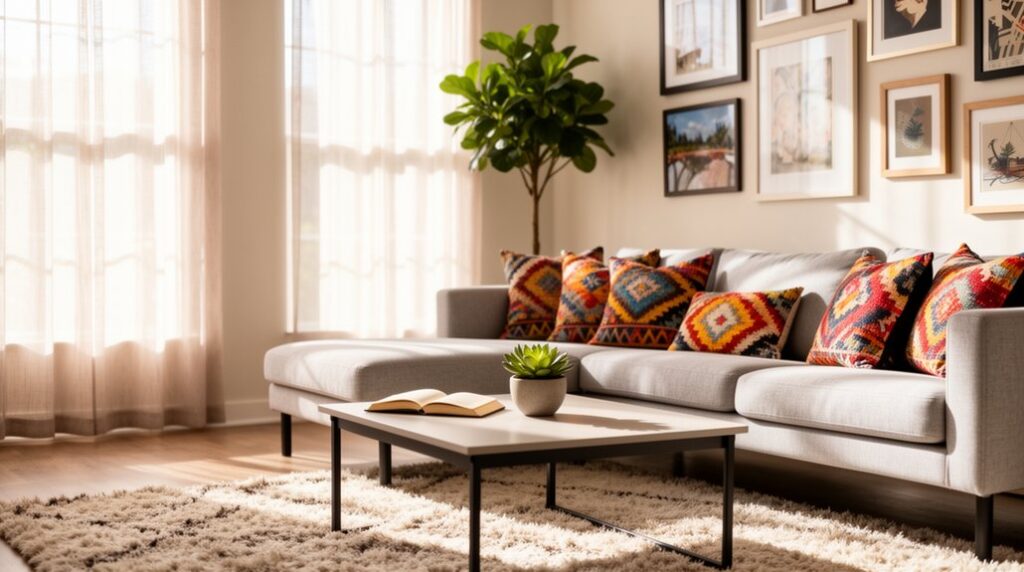
Start by tightening your layout: keep 30–36 inches clear, pull the sofa off the wall, and float a chair with a side table to form a conversation triangle. Modernize fast with layered lighting—dimmable 2700K–3000K high-CRI LEDs, plus slim matte-black or warm brass fixtures. Refresh textiles with mixed textures and a new throw, then anchor the palette with one key hue. Add hidden storage, matching labeled bins, and a few plants—there’s more ahead.
Key Takeaways
- Rework the layout: keep 30–36 inches of clear pathways, pull the sofa off the wall, and center seating around a focal point.
- Add layered lighting with warm, high-CRI dimmable LEDs, mixing ambient, task, and accent fixtures for a modern, cozy glow.
- Refresh textiles and color: add textured pillows/throws, upgrade window treatments, and anchor the room with one main hue plus two supporting tones.
- Streamline surfaces with hidden storage: use media consoles with cable routing, matching labeled bins, and clear one tabletop for breathing room.
- Update details and decor: swap dated hardware, add a large floor plant plus a trailing plant, and use a few intentional accents for a curated look.
Refresh Your Tired Living Room Layout First
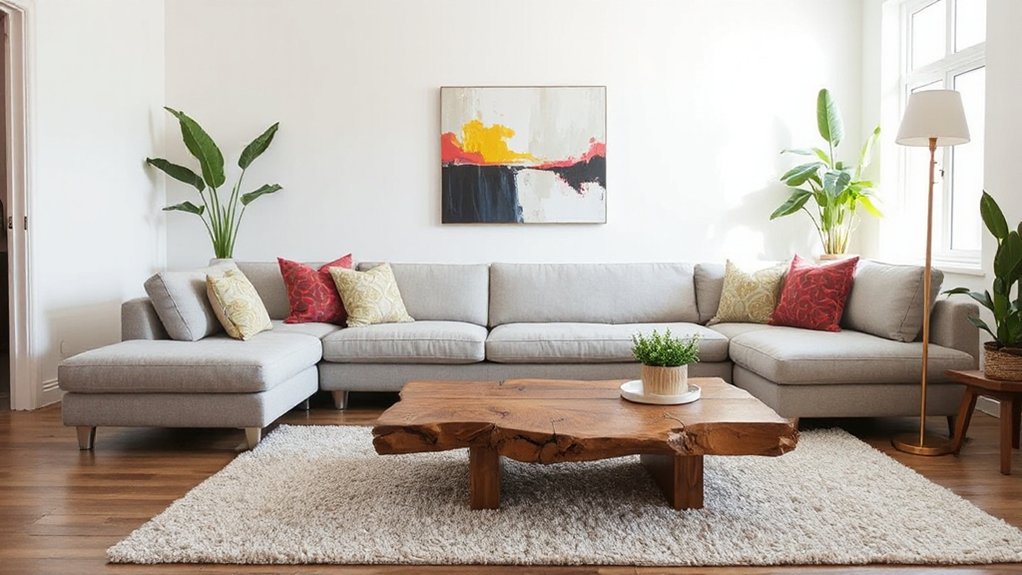
Before you buy anything new, take a hard look at your living room layout, because a smarter flow can make the whole space feel refreshed for free. Start by measuring pathways; keep 30–36 inches clear so you’re not weaving around corners.
Re-center the seating on a focal point (fireplace, media console, or best window), then pull the sofa off the wall if it creates a dead zone.
In your Furniture arrangement, float one chair to form a conversation triangle and add a slim side table to anchor it.
Edit surfaces: clear one tabletop completely to create breathing room.
Finish with wall art placement: hang frames so the center sits at eye level, and align edges with nearby furniture for a clean, modern grid.
Update Lighting to Modernize Your Living Room
Once you’ve refreshed the layout, update your lighting so the room feels current and functional. Use layered lighting—ambient overhead, task lamps, and accent sconces—to control mood and eliminate dark corners.
Then swap dated fixtures for clean-lined styles and upgrade to warm, high-CRI LED bulbs (ideally dimmable) for better color and a modern glow.
Layered Lighting For Ambience
If your living room still relies on a single overhead fixture, you’re missing the easiest modern upgrade: layered lighting. Start by separating light into three zones: overall, task, and accent. For an ambient glow, spread light sources around the room so shadows soften and corners feel intentional.
Next, build mood lighting with dimmable table lamps, a floor lamp near seating, and small plug-in sconces to frame art or shelving. Aim for varied heights: low (side tables), mid (console), and tall (reading corner). Keep switches and smart plugs grouped so you can change scenes fast—movie night, hosting, or work-from-sofa.
Use a warm, consistent color feel across sources, and position lights to wash walls, not blast faces.
Upgrade Fixtures And Bulbs
Why does your living room still feel dated even after you’ve added more lamps? Outdated fixtures and mismatched bulbs can flatten your design. Swap brassy ceiling mounts for slim matte-black or warm brass pendants, or a sculptural flush-mount if your ceilings are low. Replace yellowing glass shades with clear or opal to sharpen light.
Then standardize bulbs: choose LED in 2700K–3000K for a modern, cozy tone, and aim for high CRI (90+) so colors look true. Add dimmable bulbs and a compatible switch to control glare and mood.
For Smart home upgrades, use Wi‑Fi or Zigbee bulbs with schedules and scenes. You’ll boost energy efficiency, cut heat, and instantly modernize the room.
Swap Textiles to Refresh a Tired Living Room
Even when you keep the same sofa and layout, swapping textiles can make your living room feel brand-new with minimal cost and effort. Start with pillows: mix Textile textures like bouclé, linen, and velvet to add depth without clutter. Rotate in a new throw with a chunky knit or a sleek woven finish for a modern contrast.
Next, upgrade your window treatments. Swap heavy drapes for tailored sheers or a lined panel that hangs just above the floor for a cleaner, designer look. Add a patterned rug or layer a smaller one to define seating zones and reduce echo.
When you choose fabric patterns, keep scale in mind: pair one bold motif with smaller geometrics or subtle stripes. Stick to washable covers so updates stay easy.
Refresh a Tired Living Room With New Color
Once you’ve updated pillows, throws, and rugs, color becomes the fastest way to shift the whole room’s mood without touching the layout. Pick one anchoring hue, then build a tight palette of two supporting tones and one metal or wood finish. Warm whites, clay, and muted olive feel current; inky blue and charcoal read modern and calm.
Test paint with large swatches and check morning and night light. If you can’t repaint, try Wall treatments like peel-and-stick murals, limewash, or a half-height color block behind the sofa.
Rebalance your furniture arrangement to show the new focal wall: angle chairs toward it, pull the sofa slightly forward, and keep sightlines open. Finish with art mats or lampshades that repeat the accent color subtly.
Add Streamlined Storage to Reduce Visual Clutter
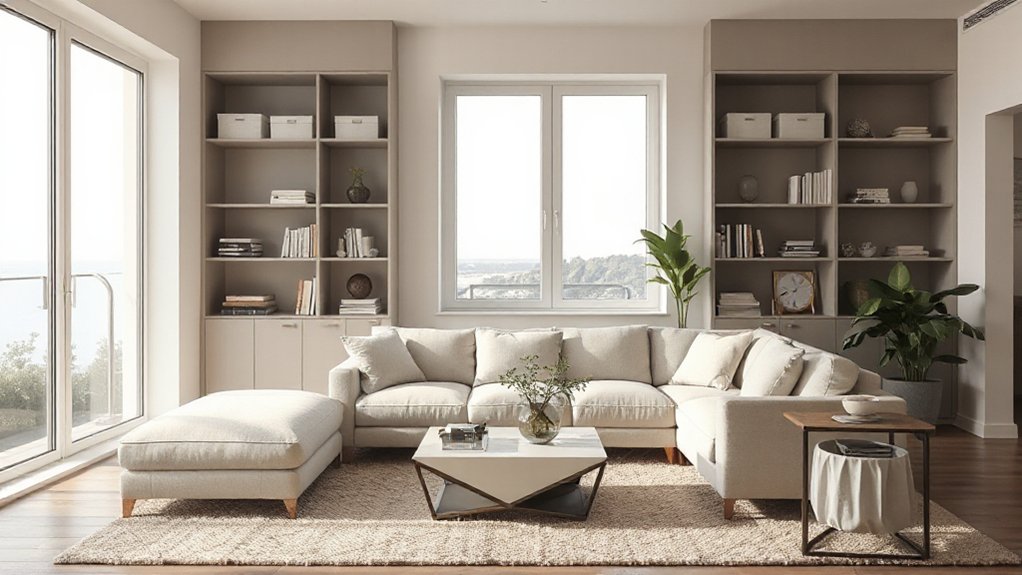
When surfaces stay clear, your living room instantly looks more modern and intentional, so focus on storage that hides the everyday stuff without adding visual weight. Swap open shelves for sleek cabinetry with flat fronts, soft-close hinges, and push-latch doors to keep sightlines clean.
Choose a media console with hidden compartments for remotes, cords, and game controllers, and route cables through grommets so nothing dangles. Add a low storage bench with lift-top seating for throws and board games, or nest two ottomans that open for extra blankets.
If you’re short on floor space, mount a floating cabinet to free up visual space and simplify vacuuming. Finish by grouping like items in matching bins and labeling inside doors so you’ll maintain the tidy look daily.
Bring In Modern Decor That Feels Intentional
Now that you’ve cleared the clutter, choose a few statement pieces—like a sculptural floor lamp, oversized art, or a modern accent chair—that instantly anchor the room.
Keep the rest intentional by repeating a tight palette and consistent finishes (think warm metals, matte black, or light oak) across smaller accents like pillows, trays, and vases.
You’ll get a layered, current look that feels curated, not crowded.
Curate Statement Pieces
Although you don’t need a full room overhaul to make a living room feel current, adding one or two intentional statement pieces can instantly sharpen the space. Choose a single anchor that reads as focal decor, like a sculptural floor lamp, an oversized abstract canvas, or a curvy accent chair in a performance fabric.
Scale matters: size your art to span two-thirds of the sofa, and pick a lamp tall enough to sit just above eye level when you’re seated. Prioritize material contrast—metal with warm wood, bouclé against sleek leather—to hit that modern, layered look.
Keep placement deliberate: center art to furniture, leave breathing room around objects, and use a tight color edit so statement pieces feel collected, not chaotic.
Choose Cohesive Accents
If your living room feels visually busy, cohesive accents will modernize it faster than adding more furniture. Start by choosing two to three color palettes: a base neutral, a warm wood or metal, and one accent hue. Repeat those tones across pillows, throws, and art so the room reads intentional, not random.
Next, edit your decorative accessories. Keep fewer, larger pieces instead of many small ones: a sculptural vase, a tray for remotes, and one modern table lamp. Stick to consistent finishes—matte black, brushed brass, or chrome—so nothing competes.
Balance shapes, too: pair curved ceramics with clean-lined frames. Finally, group accessories in odd numbers and vary height for a curated look that still feels relaxed and current.
Use Budget-Friendly Updates With Big Impact
When your living room feels stuck in the past, you don’t need a full remodel to bring it back to life—you just need a few high-impact, low-cost swaps.
Start with textiles: replace tired pillow covers with modern solids or small-scale patterns, and add a throw in a trending texture like bouclé or chunky knit.
Update lighting next. Swap an old shade for a linen drum, or add a plug-in sconce to free up side tables.
Refresh walls with DIY art: frame oversized printable abstracts or paint simple color-block panels that echo your accent palette.
Then layer plants and greenery for instant freshness—one tall floor plant plus a small trailing pothos reads intentional.
Finally, upgrade hardware and pulls on built-ins or media consoles for a quick, polished finish.
Frequently Asked Questions
How Do I Choose a New Sofa Size for My Living Room?
Choose a new sofa size by measuring your room, doorway, and the wall you’ll place it on. Then leave 30–36 inches for walkways.
Map the sofa footprint with painter’s tape to confirm scale.
Use sofa placement tips like aligning the front legs on a rug and keeping sightlines open.
Balance depth with your coffee table clearance.
Consider sofa color choices that suit light and wear.
What Are the Best Pet-Friendly Materials for Living Room Furniture?
Go for performance fabrics (solution-dyed acrylic, high-grade polyester) and top-grain leather; they’re best for pets. Imagine your cat as a tiny Roman centurion testing every surface.
You’ll get strong pet stain resistance, easy wipe-downs, and fewer snags than loose weaves. Choose tight, textured weaves like chenille or tweed, avoid velvet and linen.
For allergy friendly fabrics, pick smooth leather or washable slipcovers and vacuum-friendly finishes.
Do I Need a Permit to Remove a Living Room Wall?
You probably do need building permits for wall removal, especially if the wall’s load-bearing, affects electrical/plumbing, or changes egress. Start by checking your city’s permit portal or calling the building department.
Then have a contractor or structural engineer confirm whether it’s structural. Even “non-load-bearing” walls can hide wiring, HVAC, or sprinklers.
Skipping permits can trigger fines, resale issues, and insurance problems. Document plans and inspections too.
How Can I Improve Living Room Acoustics for TV and Music?
You can improve living room acoustics by reducing reflections and controlling bass. Start with a thick area rug, lined curtains, and a fabric sofa to absorb highs.
Add soundproofing options like weatherstripping doors and sealing outlet gaps to cut noise bleed.
For acoustic panel placement, mount panels at first reflection points beside and behind the TV, plus a couple on the ceiling.
Place bookshelves or diffusers on rear walls.
What’s the Ideal Rug-To-Room Size Ratio for My Space?
Aim for a rug that covers about 60–75% of your room’s usable floor, leaving 8–18 inches of bare floor at the perimeter.
For area rug placement, size it so at least the front legs of sofas and chairs sit on it; in larger rooms, fit all legs on.
Use color coordination by pulling two or three tones from your upholstery and art, keeping contrast subtle, not busy.
Conclusion
You don’t need a full renovation to make your living room feel current—you just need focused, modern moves. Start with the layout, then layer in updated lighting, fresh textiles, and a new color hit that matches today’s calmer palettes. Add streamlined storage to erase visual noise, and choose a few intentional decor pieces instead of more stuff. Consider this: people spend nearly 70% of their time at home indoors—make that space feel good.