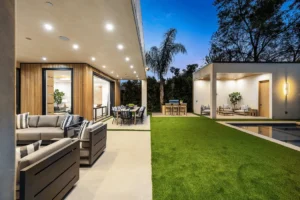
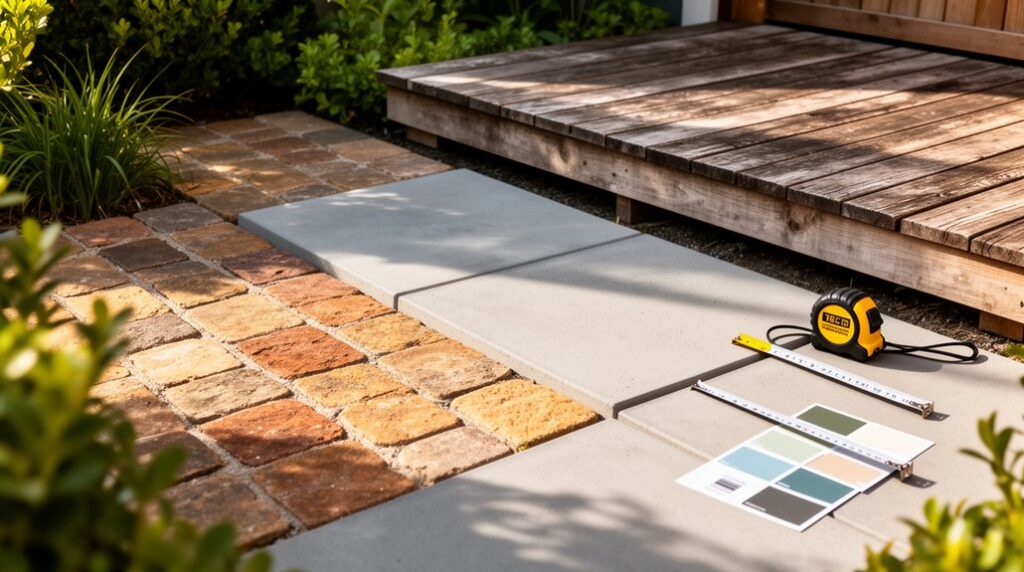
Choose your driveway or patio material based on use, climate, and upkeep. If you’ll park vehicles, you need a deep, well-compacted base, thicker units, and tight joints; for lounging, prioritize comfort, traction, and easy cleaning. In freeze-thaw areas, pick dense, low-absorption options like air-entrained concrete, rated brick, or hard stone, and build 1/8–1/4 in per foot slope for drainage. Costs run from low-cost gravel to $15–$40+/sq ft stone—keep going for smart picks.
Key Takeaways
- Match material to use: driveways need thick, tightly jointed surfaces and deep bases; patios can use thinner pavers or smaller stones.
- Choose climate-ready materials for freeze-thaw: air-entrained concrete, rated clay brick, or low-porosity stone reduce cracking and spalling.
- Plan drainage first: slope 1/8–1/4 inch per foot away from structures, and consider permeable pavers, gravel, or drain channels.
- Balance budget, lifespan, and maintenance: gravel is cheapest but needs upkeep; pavers and stone cost more but allow easy piece-by-piece repairs.
- Consider safety and seasonal care: textured finishes improve slip resistance, and select surfaces that tolerate deicing, shovels, and plows.
How Will You Use the Space (Cars vs. Lounging)?
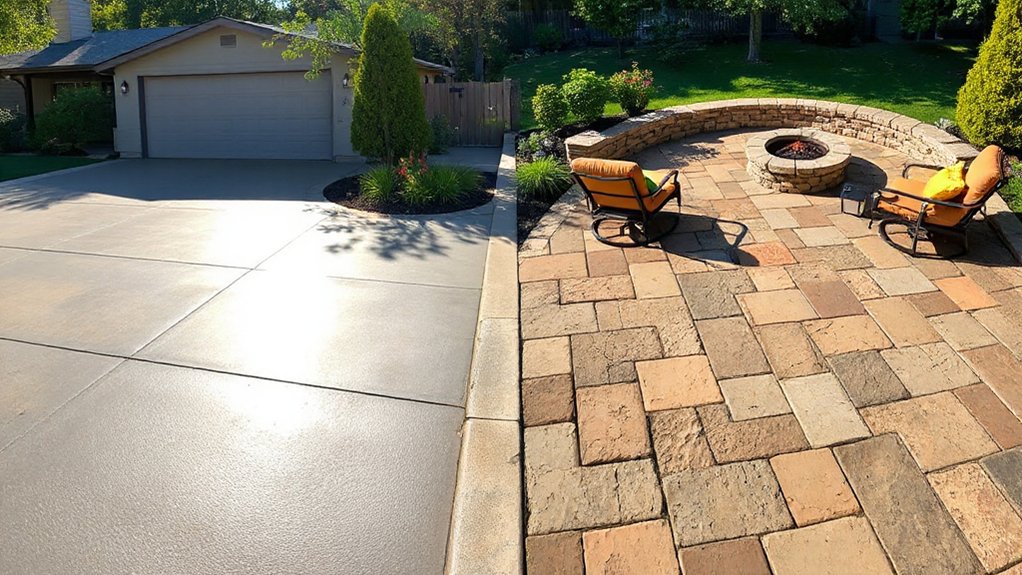
Before you choose pavers, concrete, gravel, or stone, decide whether the space needs to handle vehicle weight or mainly serve as a place to sit and walk.
For cars, you’ll want a stable base, thicker material, and tight joints that resist rutting and shifting. Concrete and properly installed pavers usually cost more upfront, but they reduce ongoing regrading and stone replacement.
If you park heavy trucks or turn wheels in place, avoid loose gravel in high-stress zones or plan for edging and periodic top-ups.
For lounging, prioritize comfort, traction, and easy cleaning. You can spend less by using thinner pavers or smaller stone in low-load areas while still getting decorative patterns and flexible color options through stains, blends, or borders.
Climate Check: Freeze-Thaw, Heat, and Heavy Rain
If your area freezes and thaws, pick materials and a base that won’t trap water, since trapped moisture expands, cracks surfaces, and drives up repair costs.
You’ll save money by prioritizing proper compaction, frost-friendly bedding, and joints that shed water instead of holding it.
For heavy rain, plan drainage upfront—slope the surface away from structures and consider permeable options or drain channels so water doesn’t pool and undermine the base.
Freeze-Thaw Resistance Basics
When temperatures swing above and below freezing, water that seeps into tiny pores and cracks expands as it turns to ice, pushing your surface apart over time. You’ll see spalling, widening joints, and loose pavers if the material can’t handle repeated cycles.
Pick dense, low-absorption options: air-entrained concrete, clay brick rated for severe weather, or hard, low-porosity stone. Avoid soft limestone, weak pavers, and thin slabs that trap moisture.
Plan for thermal expansion by leaving proper joints and using flexible joint sand or sealants where specified. Control frost heave risk with a deep, well-compacted granular base and consistent thickness, since uneven support cracks cheaper mixes fastest.
Spending a bit more on rated products usually costs less than resurfacing later.
Drainage For Heavy Rain
Where will all that water go after a hard downpour—off the surface, or into your base? If you don’t plan drainage, you’ll trap subsurface moisture, soften the base, and invite ruts, settling, or heaving later.
Build slope first: aim for about 1/8–1/4 inch per foot away from the house and toward a safe outlet. Choose permeable pavers or porous concrete when budgets allow; they reduce puddling and help runoff management.
If you use asphalt or standard concrete, add control joints, tight edges, and a gutter-to-drain plan.
Spend on the base, not cosmetics: 4–8 inches of compacted crushed stone, geotextile over clay, and a clean, open-graded bedding layer.
Add a trench drain where water concentrates.
Upfront Cost vs. Lifetime Cost (Quick Ranges)
Although the sticker price grabs your attention first, the smarter comparison looks at both upfront cost and what you’ll spend over the next 20–30 years on repairs, sealing, and replacement.
Asphalt often runs $3–$7/sq ft installed, but you may face earlier resurfacing.
Basic concrete sits around $6–$12/sq ft; it costs more upfront but typically lasts longer.
Pavers usually land at $12–$25/sq ft, yet individual units can be swapped without tearing out the whole surface.
Natural stone ranges widest, $15–$40+/sq ft, and can deliver the longest service life when well installed.
Balance those ranges with Design aesthetics and material sustainability: local, durable materials can reduce replacement cycles and hauling costs later.
Your budget stays predictable overall.
Maintenance Level by Material (Sealing, Weeds, Cracks)
Because maintenance drives long-term hassle and cost as much as installation price, you’ll want to match the material to how often you’re willing to seal, pull weeds, and chase cracks.
Asphalt needs periodic resealing and crack filling, but repairs stay affordable if you catch issues early.
Concrete asks for joint crack monitoring; plan on occasional patching and a sealer if you want stain resistance.
Pavers shift and invite weeds in joints, so your main chore is weed control plus topping joint sand; sealing helps lock sand and reduce stains.
Gravel is cheapest to refresh, yet you’ll rake, top up stone, and manage weeds more often.
Natural stone varies: denser stones need less sealing frequency, while porous ones need regular sealing.
Drainage and Base: Permeability and Depth Needs
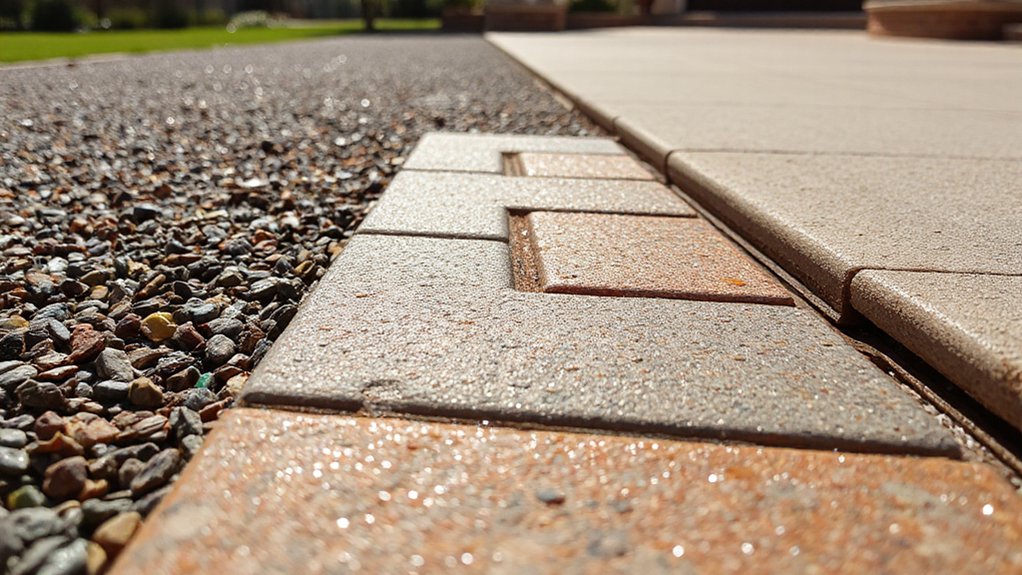
Before you pick a surface, you need to think like water: if runoff can’t move away from the slab or filter through the layer below it, you’ll end up paying for puddles, frost heave, and settling.
Match the material to your drainage reality: permeable pavers and gravel forgive minor grading errors, while poured concrete and asphalt demand positive slope and tight edge control.
Budget for a proper base, not just the top layer. On clay or fill, plan Soil stabilization with geotextile and well-graded aggregate to prevent pumping and rutting.
Set Foundation depth by load and climate: deeper, compacted base for driveways, shallower for patios, and deeper still in freeze zones. Skimping here is the costliest shortcut.
Traction and Safety: Slip Resistance and Snow/Ice
If you deal with rain, shade, or winter storms, traction should drive your material choice as much as appearance and price.
Smooth finishes look great but turn slick when algae, ice, or packed snow shows up. Prioritize Surface texture: broom-finished concrete, textured pavers, exposed aggregate, and brushed asphalt give your shoes and tires bite without major added cost.
Avoid high-gloss sealers on flat areas; if you seal, choose a grit additive and reapply as it wears.
In snowy climates, check how a surface handles shovels and plows: uneven stones can catch blades, while tight joints reduce snagging.
Also consider deicing: salt can pit some concrete and damage certain stone.
Balance traction with aesthetic appeal.
Best Picks by Priority (Budget, Looks, Durability, DIY)
While every surface involves trade-offs, you’ll get the best result by picking a material that matches your top priority—lowest installed cost, curb appeal, long service life, or a realistic weekend DIY.
If budget leads, focus on minimizing excavation, base depth, and edging costs, and plan for routine touch-ups in your maintenance line item.
If looks come first, compare color options, border details, and how stains or fading affect Material aesthetics over time.
If durability is the goal, prioritize thick, well-compacted base layers, proven freeze-thaw performance, and repairability so you can fix small failures without full replacement.
If you’re DIYing, choose systems with forgiving tolerances, simple tools, and readily available fill/level materials.
Also weigh environmental impact: permeability, recycled content, and whether you’ll need sealers, de-icers, or frequent replacements later.
Material Showdown: Concrete, Asphalt, Pavers, Gravel, Stone
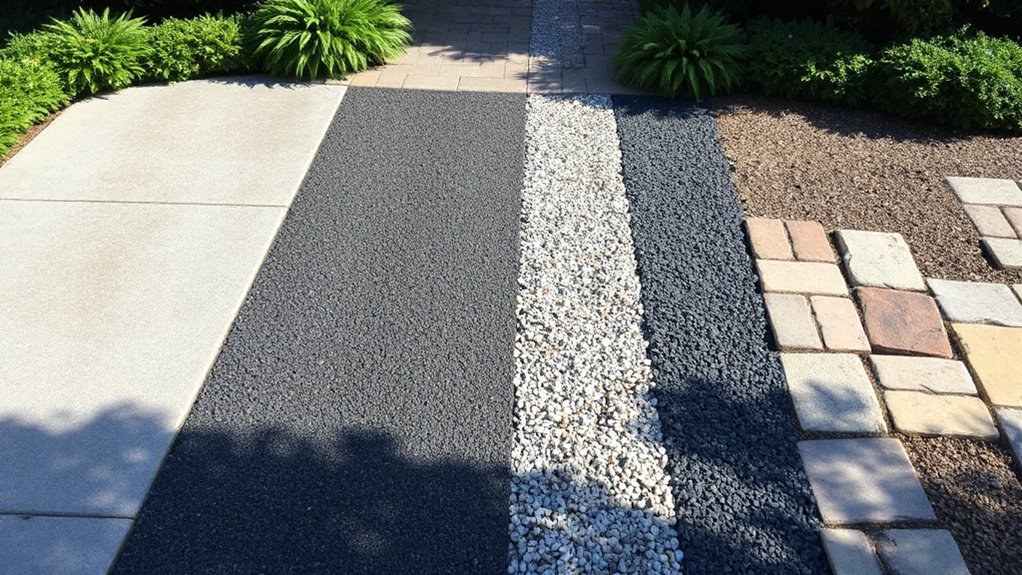
Although each option can create a solid driveway or patio, concrete, asphalt, pavers, gravel, and natural stone differ sharply in upfront cost, base prep, drainage, and how easy (or expensive) they’re to repair later.
Concrete costs midrange, gives clean Design aesthetics, and lasts long, but cracks can look bad and patching rarely matches.
Asphalt is usually cheaper and more forgiving in freeze-thaw areas, yet it needs periodic sealing and has shorter material longevity.
Pavers cost more, but you can lift and reset small areas, and you get flexible patterns and edging.
Gravel is the lowest cost, drains well, and you can top it off, but it migrates and needs raking.
Natural stone is premium, highly durable, and repairable piece-by-piece, though matching can be costly.
Installation Realities: Timeline, Disruption, and Pro vs. DIY
Cost and durability matter, but your schedule and tolerance for mess often decide the winner once installation starts. Concrete and asphalt go down fast, but you’ll deal with forms, trucks, and cure time before parking.
Pavers and natural stone take longer because crews excavate deeper, add base, and set pieces; you get stronger Design aesthetics and easier spot repairs.
Gravel installs quickest and cheapest, yet it kicks up dust and needs periodic top-ups and edging.
DIY works if you can rent a plate compactor, manage slope for drainage, and accept rework costs.
Pros cost more upfront but reduce callbacks, handle permits, and compact properly.
If you care about environmental impact, ask about permeable pavers or recycled aggregate, and plan access routes.
Frequently Asked Questions
Can I Match My Driveway or Patio Materials to My Home’s Exterior Style?
Yes, you can match your driveway or patio materials to your home’s exterior style, and you should. You’ll get better Aesthetic compatibility by echoing your siding, trim, and roof colors in the paver tone or aggregate.
Keep costs controlled by choosing locally available stone or concrete finishes that mimic pricier looks.
Don’t sacrifice Material durability: pick surface textures and sealers suited to your climate, traffic, and drainage needs.
Do I Need Permits or HOA Approval for a New Driveway or Patio?
Like laying tracks before the train arrives, you should check first: you may need permits and HOA approval for a new driveway or patio.
Start by calling your city/county building office to confirm Permit requirements for paving, grading, drainage, setbacks, and curb cuts.
Then review your HOA’s CC&Rs and submit drawings, material specs, and a site plan.
Budget for fees, surveys, and revisions to avoid rework and fines.
How Will the Material Choice Affect My Home’s Resale Value?
Your material choice can raise resale value if it looks premium, lasts, and fits local comps. It can hurt value if it cracks, stains, or feels out of place.
Prioritize curb appeal and landscaping integration—pavers or stamped concrete often photograph well and signal quality.
Also weigh maintenance requirements: buyers discount high-upkeep gravel or sealing-heavy finishes.
Choose durable, low-maintenance options with solid warranties to protect ROI and keep upfront costs reasonable.
Are There Eco-Friendly or Recycled Material Options for Driveways and Patios?
Yes—you’ve got several eco-friendly options for driveways and patios. You can use recycled concrete for a solid base or even as aggregate in new slabs, cutting landfill waste and often lowering material costs.
You can also choose eco friendly pavers made from recycled glass or plastics, or permeable pavers that reduce runoff. You’ll spend more upfront sometimes, but you’ll save on drainage fixes and maintenance over time.
What Color and Finish Options Are Available for Each Material?
Over 60% of curb-appeal value comes from exterior surfaces, so you’ll want smart Color options and Finish textures.
Concrete gives you gray, tan, charcoal, or integral stains; choose broom, smooth, stamped, or exposed aggregate.
Asphalt stays black but you can seal to satin.
Pavers offer wide blends (earth tones to modern grays) with tumbled or polished faces.
Gravel varies naturally; pick pea, crushed, or resin-bound for smoother.
Conclusion
Choose your driveway or patio material by matching it to how you’ll use it, your climate, and how much upkeep you’ll actually do. Think beyond the upfront price: base prep, drainage, and sealing often decide lifetime cost. If you park cars, prioritize strength and traction; if you lounge, prioritize comfort and looks. Like checking a pocket watch before a road trip, plan for disruptions, then pick the option you can afford to maintain.