
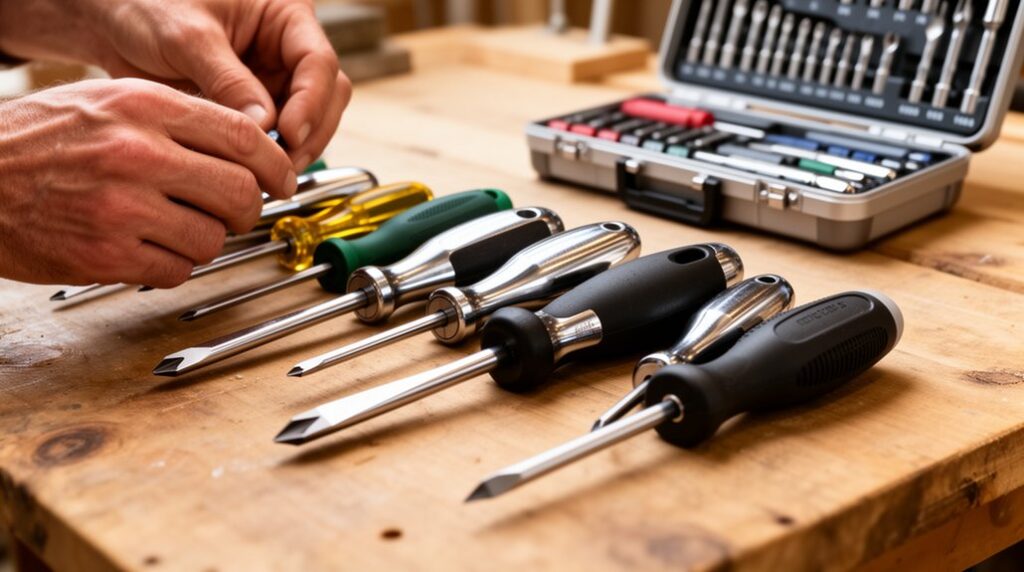
Choose screwdrivers by matching the tip type and exact size to the screw head so you get full engagement and don’t strip fasteners. Keep a #2 Phillips and 1/4-inch slotted driver for most home jobs, plus a stubby for tight spots and a long-shank for recessed screws. Add Torx (often T20/T25) and Robertson for furniture and deck hardware. Use an ergonomic, grippy handle, keep the shaft in line, and replace worn tips. Next up, you’ll see a simple home kit.
Key Takeaways
- Start with essentials: #2 Phillips, 1/4-inch slotted, plus a stubby and long-shank driver for tight or recessed screws.
- Add common modern types: Torx (T20/T25) and square-drive (Robertson) to reduce stripping on deck hardware, appliances, and furniture.
- Match the driver size exactly; the tip should seat fully with no wobble to prevent cam-out and damaged screw heads.
- Choose ergonomic, durable handles with good grip and a palm swell; larger handles help high-torque jobs, slimmer ones fit tight spaces.
- Prefer hardened, corrosion-resistant, clean tips; replace worn drivers or bits when slipping starts, and consider a multi-bit set for versatility.
The Screwdriver Types You’ll Use Most at Home
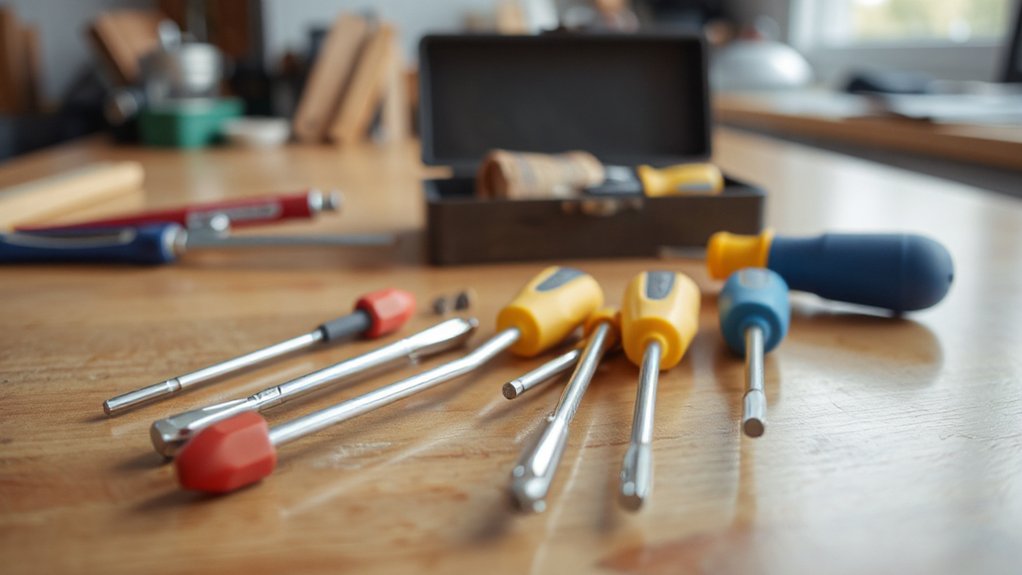
Before you buy a full set, it helps to know which screwdriver types you’ll actually reach for during everyday repairs. Keep a #2 Phillips and a medium slotted driver close; you’ll use them on outlet covers, cabinet hinges, and battery doors.
Add a stubby driver for tight clearances and a long-shank driver for recessed screws. A square-drive (Robertson) and Torx driver help with deck hardware and modern appliances, reducing cam-out that can cut your hand or strip fasteners.
Prioritize Screwdriver ergonomics: a grippy handle, a defined finger stop, and a comfortable palm swell so you can apply torque without slipping.
Check Material durability too; choose hardened, corrosion-resistant tips and a strong shaft so the tip won’t twist under load.
Match Screwdriver Sizes to Screw Head Markings
Although screw heads can look similar at a glance, the markings and size codes tell you exactly which driver fits, and using the right match prevents cam-out, stripped recesses, and knuckle-busting slips. Check Screw head markings on the fastener or packaging, then choose the driver labeled the same number or letter.
For slotted screws, match blade width to the slot and pick a thickness that fills the depth without bottoming out. For hex and star recesses, select the exact metric or SAE size; “close enough” rounds corners fast.
Seat the tip fully, keep it straight, and apply firm, controlled pressure. If the driver wiggles, rocks, or won’t seat flush, stop and switch—matching sizes protects the screw and your hands.
When to Use Phillips vs Flathead Screwdrivers
You’ll choose Phillips when you see a cross-shaped recess and flathead when you see a single straight slot, because matching the head prevents cam-out and damage.
You’ll get safer, cleaner results when you use the right driver to keep full contact, maintain a firm grip, and apply controlled torque.
Next, you’ll compare where each type shows up most—electronics and appliances often use Phillips, while simple fixtures and older hardware commonly use flathead.
Screw Head Recognition
When you can identify a screw head at a glance, you’ll pick the correct driver and avoid cam-outs that strip the fastener or send the tool slipping into your hand. Phillips heads show a cross recess; use a Phillips driver that fully seats without wobble.
Flathead screws have a single straight slot; choose a blade that matches the slot width and thickness so it doesn’t ride up and skate.
Confirm screw head compatibility before you start: if the recess looks rounded, painted over, or shallow, clean it and test-fit the tip.
Use magnetic screwdrivers to hold small screws steady, especially overhead or near delicate surfaces, so you’re not chasing dropped hardware.
If the head doesn’t match, switch drivers immediately to prevent damage.
Proper Torque And Grip
A properly matched tip only helps if you control torque and keep a firm, straight grip. Seat the driver fully, align your wrist with the shank, and press down before turning so you don’t cam out and shred the head.
With Phillips, expect the tip to climb if you over-torque; use steady downward force and stop once resistance spikes. If you need more torque, switch to a larger Phillips rather than muscling it.
With flathead, keep the blade centered and fill the slot edge-to-edge; any tilt will slip and gouge nearby surfaces. Choose an ergonomic design that lets you grip without white-knuckling, and rely on material durability so the tip stays sharp and true.
Work slow near hands and wiring always.
Common Use Cases
Although both drive fasteners, Phillips and flathead excel in different situations, and picking the right one prevents cam‑out, stripped heads, and nearby damage.
Use a Phillips when you’re driving cross‑recess screws in furniture kits, appliance panels, drywall anchors, and most modern hardware; it centers itself and transfers torque efficiently when you keep firm, straight pressure.
Choose a flathead for slotted screws on outlet covers, older cabinetry, small adjustments, and light prying only if the handle allows it—never twist near energized wiring.
Match blade width to the slot, and select precision tips for electronics so you don’t chew soft heads.
Before starting, check for worn edges, clean the tip, and follow maintenance routines like light rust prevention and safe storage.
How to Stop Cam-Out and Stripped Screws
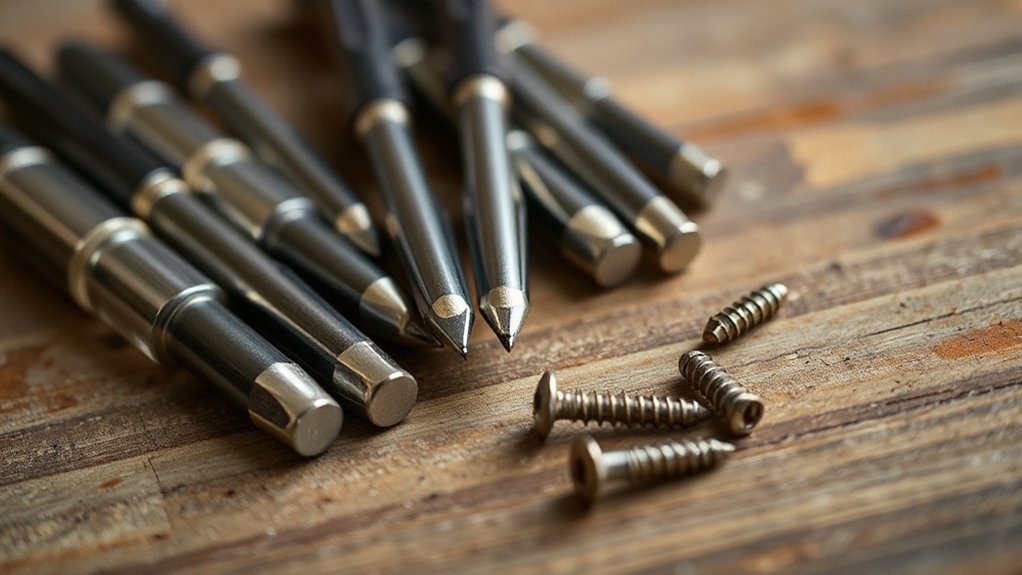
If you’ve ever felt a bit slip out of the screw head mid-turn, you’ve experienced cam-out—and it doesn’t just slow you down, it chews up the recess, ruins fasteners, and can send the driver skittering into your knuckles or the work surface.
Prevent it by matching the tip to the screw: full engagement, no wobble, and a sharp, unworn profile. Keep the driver straight in line, apply firm downward pressure, and turn with controlled torque instead of speed.
Use an Ergonomic design handle so you don’t overgrip and twist off-angle. For Screwdriver safety, brace the work, wear eye protection, and stop when the head starts deforming.
If a screw’s stubborn, pre-drill, add penetrating oil, or switch to a new fastener.
Why Torx Screwdrivers Matter for Furniture
When you’re assembling furniture, a Torx screwdriver gives you better grip and transfers torque cleanly, so you’re far less likely to strip the head or slip and gouge the surface.
You’ll see Torx fasteners all over flat-pack kits, so having the right driver on hand saves time and prevents rework.
Don’t guess the size—match the Torx number (like T20 or T25) exactly so the bit seats fully and you can tighten securely and safely.
Better Grip, Less Stripping
Because furniture fasteners often sit in tight pockets and softer materials, you’ll get cleaner, safer torque control with a Torx screwdriver. The star-shaped tip bites evenly, so you won’t cam out and chew the head when you lean in at an awkward angle. That means fewer slips that can gouge panels or jab your knuckles.
Choose an ergonomic design with a grippy, slightly oversized handle so you can apply steady pressure without wrist strain.
Look for material durability: hardened, precisely machined tips stay crisp, fit the recess fully, and reduce rounding over repeated use. Seat the bit completely, keep the shaft straight, and turn slowly at first to confirm engagement. If it resists, stop and reset before you strip anything.
Common Flat-Pack Fasteners
Clean torque control starts to matter even more once you see what most flat-pack furniture uses: cam locks and cam screws, confirmat screws, and pocketed machine screws that sit recessed in particleboard or MDF.
With these fasteners, Torx drivers help you keep the bit engaged while you apply steady pressure, so you’re less likely to cam out, chew the head, or split the panel. Use a long-shank driver when a recess blocks your knuckles, and stop driving as soon as the joint seats to avoid crushing fibers.
Keep your free hand clear of pinch points as panels draw together. For DIY projects, a clean, undamaged Torx tip also protects finishes.
Prioritize tool maintenance: wipe bits dry, replace rounded tips, and store them so edges don’t nick.
Choosing Correct Torx Size
Although Torx screws look forgiving, you’ll strip heads fast if you grab the wrong size bit, so match the driver to the fastener before you apply torque.
For flat-pack furniture, check the screw’s marking (T10, T15, T20) or test-fit: the bit should seat fully, with no wobble and no need to force it. If it rocks, go up a size; if it won’t enter, go down.
This size compatibility protects the star points and preserves torx durability through repeated assembly.
Use a straight, in-line grip, and keep pressure centered so the bit doesn’t cam out and cut your hand.
Stop if you see dusting metal or rounded lobes; replace the screw or bit.
When You Need a Robertson (Square) Screwdriver
When your fastener has a square recess, you’ll get the safest, most controlled drive by reaching for a Robertson (square) screwdriver or bit. You’ll see these screws often in decking, cabinetry, and electrical boxes, where cam-out can damage wood or slip into live components.
Match the bit size (commonly #1, #2, #3) so the tip seats fully; if it rocks or sits proud, stop and swap.
Keep the tip sharp and clean as part of Screwdriver maintenance, because rounded corners increase slip risk. Apply straight, in-line pressure and keep your wrist aligned.
Choose a tool with an Ergonomic grip so you won’t over-squeeze and lose control. If the recess is packed with paint or debris, pick it out first.
Choose a Screwdriver Handle for Grip and Torque
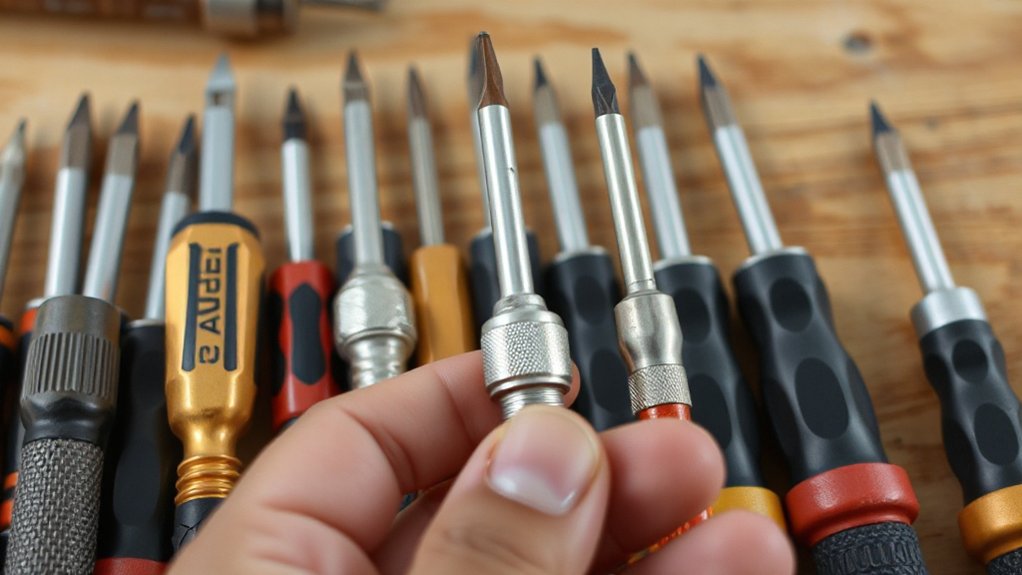
Because the handle is where you apply force, its shape and material directly control how much torque you can deliver without slipping or straining your hand. Choose an Ergonomic design with a palm-filling contour and a flared end so you can push and twist without your hand riding up the shaft.
For high-torque work, pick a larger, hexagonal or tri-lobe handle that lets your fingers lock in. For tight spaces, a slimmer handle improves control.
Prioritize Material durability: look for tough acetate or high-impact polymer cores, plus rubber overmolds for grip when your hands are sweaty or oily. Check for a textured surface and a smooth, snag-free progression to the shank.
Avoid cracked handles; they can pinch, slip, or fail under load.
Buy a Screwdriver Set or Single Drivers?
How do you decide between buying a screwdriver set and picking up a few single drivers? Start by looking at the variety of fasteners you actually face. If you work on mixed household items, a set keeps you prepared and reduces the temptation to “make it fit,” which can strip heads and slip into your hand.
If you repeatedly handle the same screws, single drivers let you choose higher-quality handles and shafts without paying for extras you won’t use. Compare ergonomic design across options, because fatigue and poor control lead to injuries.
Also check material durability: hardened, corrosion-resistant shafts and tips hold shape, bite better, and need less force. Whatever you buy, avoid worn tips and stop when a driver cams out.
A Small Home Screwdriver Kit (What to Buy)
Which few screwdrivers cover most home repairs without turning your drawer into a cluttered hazard? Start with three: a #2 Phillips, a 1/4-inch flathead, and a multi-bit driver with security bits (Torx, square, and small Phillips/flat).
Add a stubby #2 Phillips for tight cabinets and a precision set for batteries, outlets, and electronics. Choose hardened, magnetized tips so they don’t cam-out and chew fasteners.
Prioritize screwdriver ergonomics: a cushioned, non-slip handle, a defined palm cap, and a shaft length that keeps your knuckles off sharp edges.
For safety, pick an insulated driver rated for household electrical work and test it before use.
Keep storage and organization simple: a small case or rail, labeled bits, and a single “go-to” pouch.
Frequently Asked Questions
How Do I Magnetize a Screwdriver Tip Safely at Home?
Magnetize a screwdriver tip by stroking it in one direction along a strong magnet 20–40 times, keeping the shaft aligned.
For Magnetizing tips, don’t rub back and forth; lift off and repeat the same direction.
Follow Safety precautions: wear eye protection, keep magnets away from electronics and pacemakers, and don’t use heat.
Test with a screw; if weak, repeat strokes or use a commercial magnetizer/demagnetizer.
Are Insulated Screwdrivers Necessary for Basic Household Electrical Work?
Yes, you should use insulated screwdrivers for basic household electrical work—unless you enjoy “surprise fireworks” from a loose hot wire.
Insulation safety isn’t a luxury; it’s cheap insurance when you’re tightening outlets or switches.
Choose VDE-rated, 1000V tools for real electrical protection, and still shut off the breaker, verify with a tester, and keep one hand away.
Insulated handles reduce risk, not consequences.
What’s the Best Way to Remove a Screw With a Broken Head?
Start with a rubber band or valve-grinding compound for grip, then use a correctly sized bit and slow torque.
For stripped screw removal, cut a new slot with a Dremel and drive it with a flathead.
If that fails, drill a pilot hole and use a screw extractor for broken screw extraction.
Wear eye protection, clamp the work, and stop if you’re slipping to avoid injury.
How Should I Store Screwdrivers to Prevent Rust and Tip Damage?
Store screwdrivers in a dry, organized rack or case so tips don’t bang together. Use storage techniques like tip covers or foam slots, and keep them off concrete floors.
For rust prevention, wipe shafts after use, apply a light oil or corrosion inhibitor, and add silica gel packs to drawers. Don’t store them wet after cleaning.
Inspect tips for nicks and regrind or replace before they slip. Wear gloves.
When Should I Use a Manual Screwdriver Instead of a Power Driver?
You should use a manual screwdriver when you need maximum precision control, low torque, or you’re working near delicate parts.
The theory that power drivers always save time doesn’t hold up: stripped heads, cracked plastic, and over-driven screws cost more time.
Choose manual for small fasteners, final snugging, and tight spaces.
An ergonomic grip reduces fatigue and slipping. You’ll also avoid sudden kickback and better feel thread engagement.
Conclusion
You’ve got the right drivers, but the real test comes at the last turn. Match the tip to the screw’s marking, pick Phillips or flathead with intent, and keep Torx and Robertson ready for “mystery” hardware. Seat the bit fully, press straight, and slow down to prevent cam-out and stripped heads—your knuckles will thank you. Choose a handle that won’t slip under torque. Now open your drawer… is your kit ready when the next screw fights back?