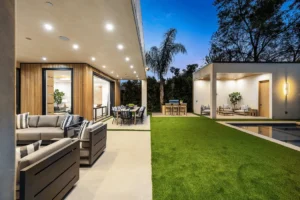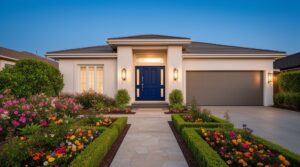
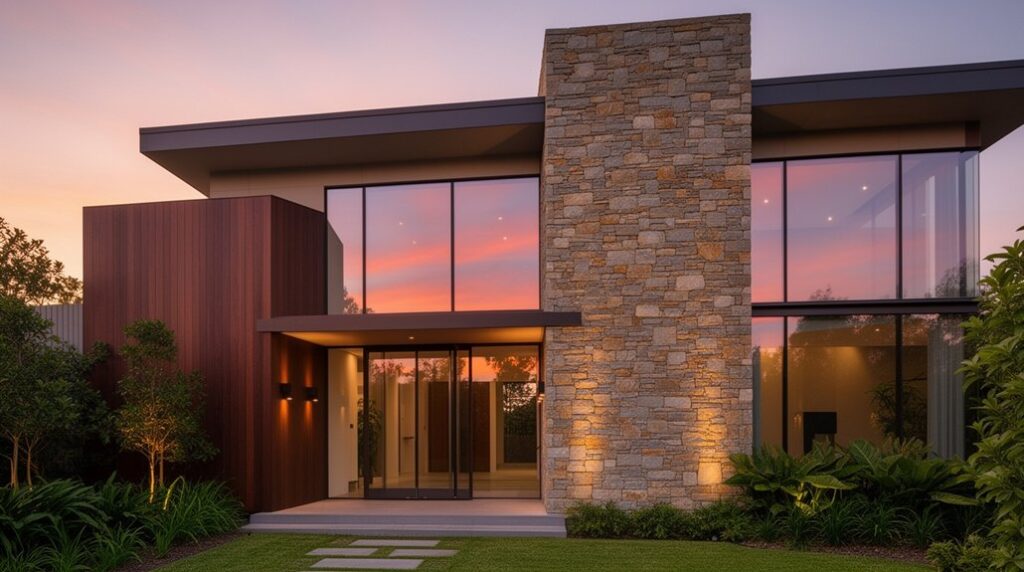
You’ll transform your home’s look fastest by choosing a modern exterior finish that fits your climate, drainage, and upkeep tolerance. Fiber cement panels deliver crisp reveals with minimal maintenance, especially when factory-finished and installed over a vented rainscreen. Wood adds warmth, but you’ll need rot-resistant species, proper clearances, and scheduled recoats. Stone veneer brings depth at entries and plinths, while stucco offers smooth or acrylic textures with control joints. Metal panels add sleek fire-resistant lines—keep going to compare systems.
Key Takeaways
- Choose finishes that match your climate—UV, salt air, wind, freeze-thaw, and heavy rain—to keep a modern look longer.
- Use fiber cement panels for crisp reveals, rot resistance, and low maintenance; favor factory-finished options for consistent color.
- Add warmth with rot-resistant or engineered wood over a ventilated rainscreen, and plan for periodic washing and recoating.
- Create depth with stone veneer plinths or entry wraps, or select stucco textures with control joints and on-site color sampling.
- Consider metal panels or insulated cladding for sleek, fire-resistant façades; specify durable coatings and detail proper flashing, drainage, and venting.
How to Choose Modern Exterior Finishes (Climate, Cost, Upkeep)
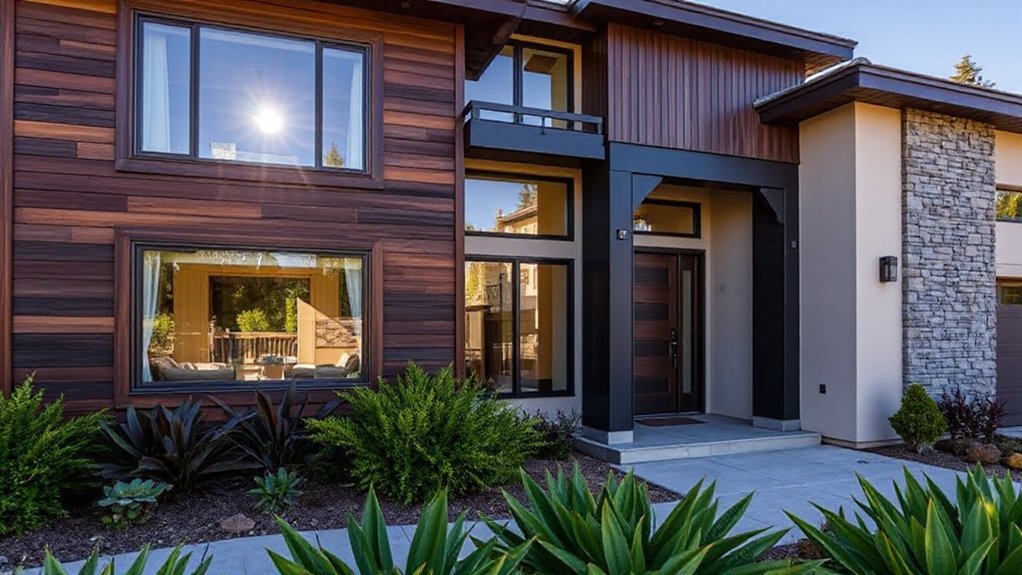
Before you pick a modern exterior finish, you need to match the material to your site conditions and performance targets—because climate exposure, total installed cost, and maintenance demands will dictate whether it looks sharp in year one or still performs in year twenty.
Start by mapping sun, wind, salt air, freeze-thaw cycles, and rainfall intensity; then choose assemblies with tested UV stability, corrosion resistance, and robust drainage/ventilation gaps.
Price the full system: substrate prep, flashings, trim, fasteners, labor complexity, and scaffolding—not just the cladding unit cost.
Set an upkeep schedule you’ll actually follow: washing frequency, recoating intervals, joint sealant inspections, and impact repair.
Finally, align Color palettes with Architectural styles so reflectance, sheen, and texture support your massing and neighborhood context.
Fiber Cement Panels: Crisp Modern Lines, Low Maintenance
Because fiber cement resists rot, insects, and UV-driven degradation, you can use it to achieve crisp, modern panel reveals without signing up for constant upkeep. Specify factory-primed or prefinished panels to reduce field painting and guarantee consistent Color palettes across elevations.
For clean shadow lines, you’ll lay out a module grid, align joints to window heads, and use vertical or horizontal battens or expressed reveals with metal Z-flashing behind every seam. Install over a drained rainscreen: furring strips, WRB, and vented top/bottom gaps, so moisture can exit instead of driving paint failure.
Use stainless or hot-dip fasteners, keep required edge distances, and back-prime cut edges. Pair panels with slim trims and soffits as Architectural accents.
Routine care: rinse, inspect sealants annually.
Modern Exterior Finishes With Wood: Warmth Without Rot
Fiber cement gives you sharp reveals with minimal upkeep, but wood brings a warmer, tactile grain that still reads modern when you control moisture. Choose rot-resistant species like cedar, cypress, or thermally modified ash, or use factory-finished engineered wood for consistent color and tight tolerances.
Detail for drainage: install a ventilated rainscreen, maintain 6–8 inches of clearance above grade, and flash every horizontal junction.
Specify a penetrating stain or high-quality opaque finish with UV blockers, and back-prime all sides to reduce cupping. Keep end grain sealed, and use stainless fasteners to prevent staining.
You’ll preserve wood grain and natural textures while avoiding swelling, checking, and decay. Plan inspections yearly and recoat on schedule.
Stone Veneer: Depth, Texture, and Realistic Detailing
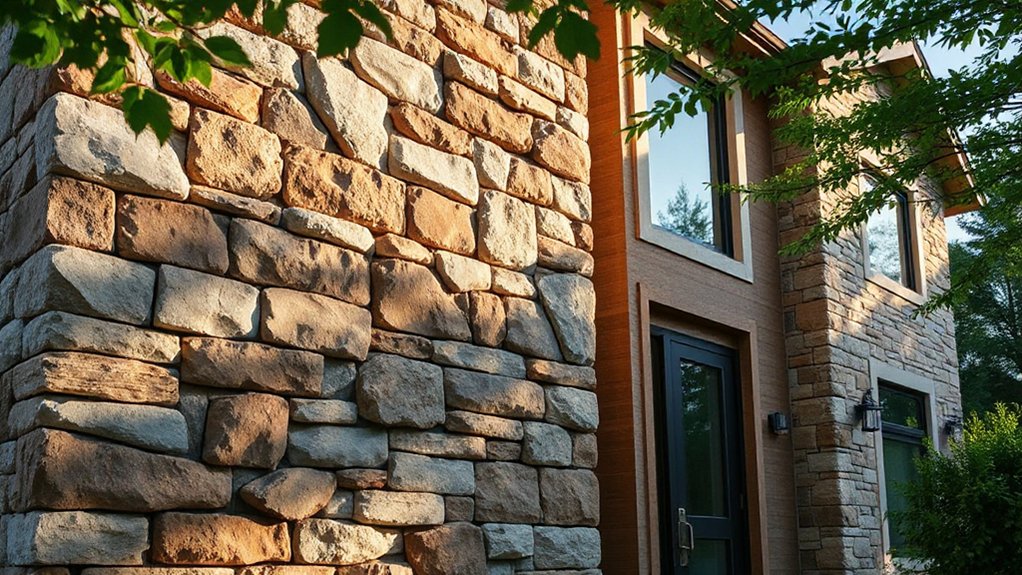
While flat cladding can look crisp, stone veneer adds shadow lines and tactile depth that make modern exteriors feel grounded without the mass of full-bed masonry.
You’ll get crisp Architectural detailing by wrapping entry volumes, chimneys, or low plinths, then terminating cleanly at reveals and window returns. Specify panelized or hand-set units with consistent thickness so coursing stays tight and corners align.
Install over a drained, ventilated rainscreen with metal lath, scratch coat, and manufacturer-approved mortar to control moisture and freeze-thaw stress.
For Material durability, choose color-through manufactured stone or high-density natural splits; seal only when required by exposure.
Use weeps, flashings, and movement joints at progressions, and keep veneer 6–8 inches above grade to prevent wicking.
Modern Stucco Finishes: Smooth, Sand, and Acrylic Options
Modern stucco gives you a clean, monolithic skin that reads distinctly contemporary, and you can tune the look by selecting smooth, sand-float, or acrylic finishes.
Choose smooth if you want sharp shadow lines at reveals and crisp progressions at trimless openings; specify tight tolerances and expect surface prep to show.
Pick sand-float when you need subtle texture to hide minor substrate variation and reduce glare on sunny elevations.
Use acrylic when you want integrated color, higher crack-bridging, and better water shedding; confirm vapor permeability, mesh weight, and coating thickness.
Coordinate Color palettes by sampling in situ, since light shifts tone.
Detail architectural accents with control joints, recessed bands, and returns so movement doesn’t telegraph through the finish.
Plan maintenance and touch-up access.
Metal Siding and Trim: Sleek Looks, Fire Resistance
Because metal cladding stays dimensionally stable and noncombustible, you can use it to get crisp, planar elevations and improve wildfire performance at the same time. Specify steel or aluminum panels with a PVDF or SMP coating for corrosion control and long-term gloss retention.
Use standing-seam profiles for clean vertical lines, or flat-lock shingles when you want tighter joints and Artistic patterns. For trim, form brake-bent flashings with hemmed edges, and integrate drip kerfs, Z-girts, and ventilated rainscreen gaps to manage water.
Demand noncombustible closure strips, metal soffits, and screened vents to reduce ember entry. You’ll also get strong color customization: choose matte black, warm metallics, or custom coil-coated batches, and match fasteners for a seamless facade.
Insulated Cladding Systems: Efficiency + Moisture Performance
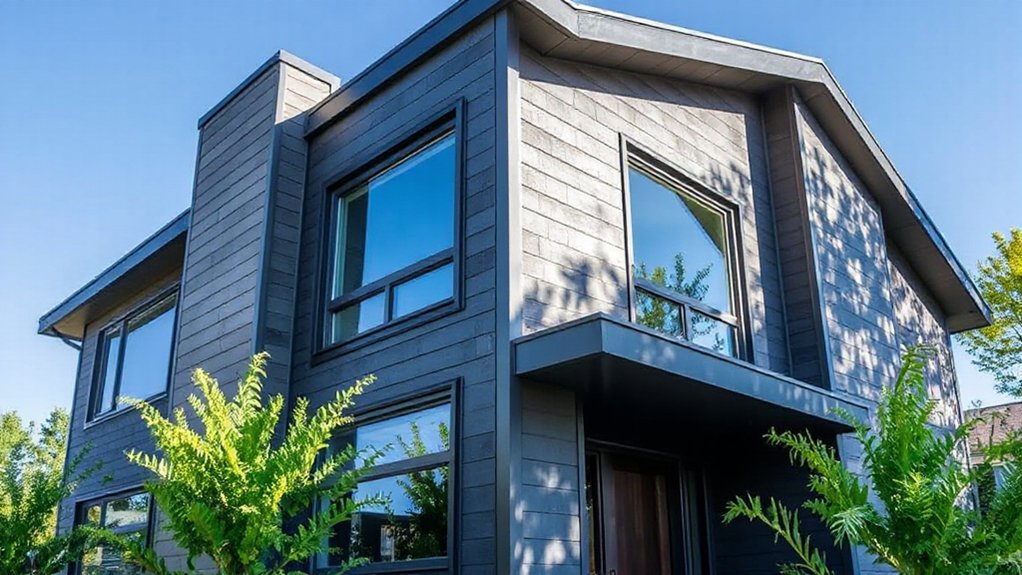
If you want higher R-values without thickening your wall assembly, specify an insulated cladding system such as continuous exterior mineral wool, EPS/XPS-backed panels, or metal-faced insulated panels (IMPs) over a drained, ventilated rainscreen.
You’ll cut thermal bridging at studs and improve whole-wall thermal insulation, especially when you tape panel joints and align seams with the air-control layer.
Detail a continuous water-resistive barrier behind the insulation, then add properly lapped flashings at openings and terminations so bulk water can’t bypass your moisture barriers.
Keep a 3/8–3/4-inch cavity for drainage and drying, and vent top and bottom.
Use corrosion-resistant fasteners with thermal breaks, and verify attachment loads and fire ratings per product data.
Frequently Asked Questions
Do Modern Exterior Finishes Increase Resale Value and Curb Appeal?
Yes, you’ll typically increase resale value and curb appeal with modern exterior finishes, because buyers notice updated surfaces first.
You improve color coordination between siding, trim, and roofing, which makes the facade read cleaner and more intentional.
You also signal lower maintenance by choosing finishes with proven material durability, like fiber cement, engineered wood, or high-performance coatings.
If you match local comps and climate demands, you’ll reduce objections and support stronger offers.
Which Finishes Meet Local Fire Codes or HOA Design Restrictions?
You’ll meet local fire codes and HOA restrictions by choosing finishes documented for fire safety and aligned with material regulations.
Specify noncombustible claddings like stucco, fiber-cement, brick, stone, or metal panels, and request the listed ASTM E84/UL fire rating from the manufacturer.
For HOAs, match approved color palettes, reveal patterns, trim profiles, and roof-to-wall progressions.
Submit product cut sheets, mockups, and an installer’s scope to your AHJ/ARC.
Can I Mix Multiple Exterior Finishes Without Looking Mismatched?
Yes—you can mix multiple exterior finishes without looking mismatched. Like a shipwright blending oak and iron, you’ll unite materials through disciplined rules:
Set a primary finish (about 60–70%), a secondary (20–30%), and a restrained accent.
Use Color coordination to lock undertones across siding, trim, and stone.
Apply texture matching by pairing one coarse surface with one smooth, and repeat each texture at least twice for visual rhythm.
How Long Does Installation Take, and Can I Stay Home During Work?
Installation timeline depends on scope: a small façade can take 2–5 days, while full siding or multi-finish installs often run 1–3 weeks, including prep, flashing, and cure times.
You can usually stay home; prioritize staying home safety by keeping windows closed, isolating work zones, and planning around noise, debris, and power shutoffs.
Confirm daily access needs, ladder locations, and cleanup protocols with your crew.
What Warranties Are Typical, and What Can Void the Coverage?
You’ll typically get a 1–10 year workmanship warranty and a 20–50 year manufacturer warranty on siding, coatings, or roofing, often prorated. Read coverage limitations: labor may exclude tear-off, trim, and flashing.
Common Warranty exclusions include improper installation, unapproved cleaners/paints, poor ventilation, trapped moisture, impact damage, and storms beyond design ratings.
You can void coverage by skipping maintenance, altering assemblies, using non-certified installers, or failing to document defects quickly.
Conclusion
When you choose modern exterior finishes, you’re balancing performance, maintenance, and aesthetics. Fiber cement and metal deliver clean lines with low upkeep; engineered wood and stone veneer add warmth and depth without constant repairs; stucco and acrylic systems fine-tune texture and crack resistance; insulated cladding boosts efficiency while managing moisture. One useful benchmark: the U.S. DOE estimates about 25–30% of home heating/cooling losses come from air leaks—tight, well-detailed cladding helps cut that.