
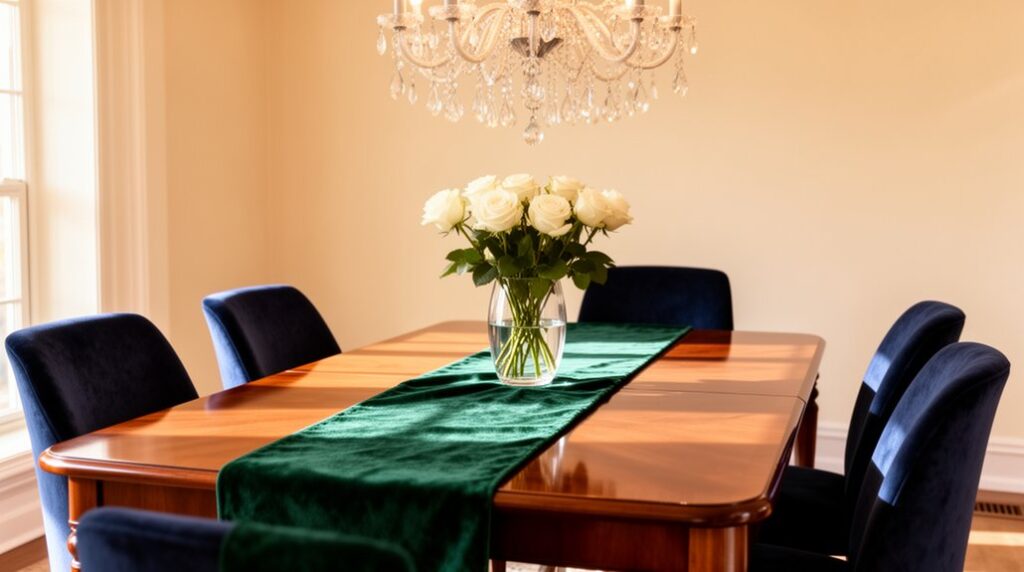
Pick one big focal point—an oversized mirror, art, or vintage sideboard—and keep your palette tight (two neutrals plus one accent). Hang a statement chandelier 30–34 inches above the table and add dimmable sconces or buffet lamps with warm 2700K bulbs. Mount curtains high and wide in linen-blend panels for a custom look. Layer a large, low-pile rug under the table, mix chairs intentionally, and style a low centerpiece with matching candleholders—there’s more you can do next.
Key Takeaways
- Add a large focal piece (mirror, art, or sideboard) and build around it with a cohesive palette and one consistent metal finish.
- Hang a 24–36-inch mirror opposite a window or near the chandelier to reflect light and make the room feel larger.
- Upgrade to a statement chandelier and add dimmable sconces or buffet lamps using 2700K LEDs for warmer, layered ambiance.
- Install high, wide curtains in linen blends or velvet-look panels to instantly create a taller, custom, luxe window treatment.
- Layer a large low-pile rug under the table, mix chair styles with one shared element, and keep surfaces curated with grouped decor.
Start With One Luxurious Dining Room Focal Point
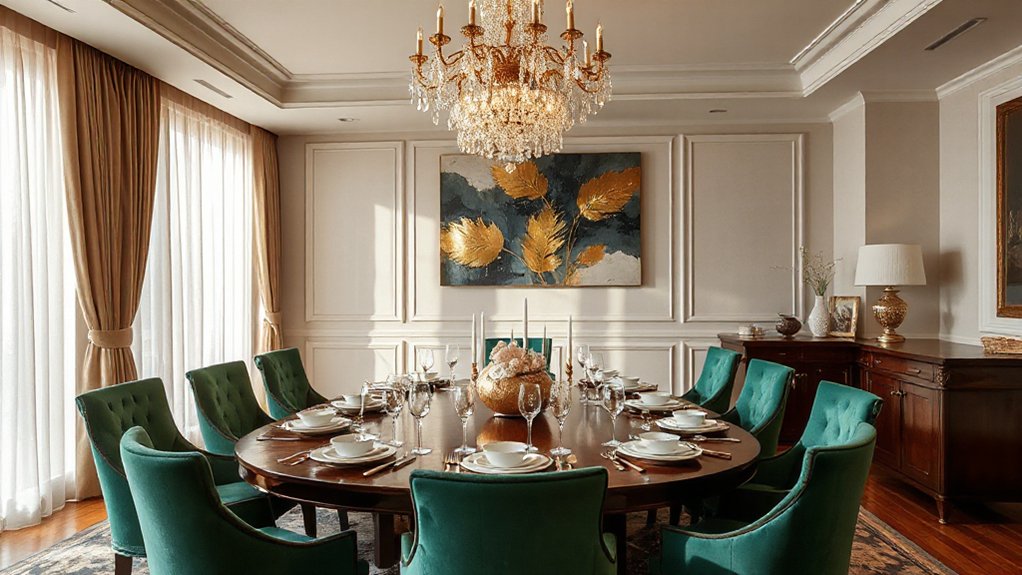
If you want your dining room to look high-end without redoing everything, start by choosing one luxurious focal point you’ll build the rest of the room around. Pick a large mirror, an oversized art piece, or a vintage sideboard you can source secondhand, then spend your budget there and keep everything else simple.
Support it with luxury color palettes: warm whites, inky navy, charcoal, or muted olive, paired with one metal finish you repeat on frames and hardware. Add statement wall treatments only where they’ll matter most—behind the table—using peel-and-stick grasscloth, applied molding, or a single painted arch.
Keep furnishings consistent and edit clutter, so your focal point reads intentional, not busy.
Upgrade Dining Room Lighting for Instant Drama
Once you’ve anchored the room with a single luxe focal point, let your lighting do the heavy lifting for instant drama. Swap a dated chandelier for one of today’s statement fixtures—look for warm metals, opal glass, or a sculptural silhouette, even in big-box stores or resale shops. Hang it 30–34 inches above the table (or about 60–66 inches from the floor) so it feels intentional, not awkward.
Then layer in ambient lighting: add two dimmable wall sconces or a pair of slim buffet lamps on a sideboard to soften shadows. Put everything on inexpensive dimmers or smart bulbs, and choose 2700K LEDs for a richer glow.
Finally, hide cords with paintable raceways for a cleaner, pricier look fast.
Add Dining Room Curtains That Look Custom
You can make your dining room curtains look custom by choosing elevated fabrics like linen blends, cotton twill, or velvet-look panels that still fit your budget.
Hang the rod high—close to the ceiling—and extend it 8–12 inches past each side of the window so the fabric stacks neatly and the glass looks larger.
These two moves instantly sharpen the room’s lines and give you that tailored finish without custom pricing.
Choose Elevated Curtain Fabrics
While color and pattern set the mood, the fabric does the heavy lifting for curtains that look custom. Start by upgrading from thin polyester to lined cotton, cotton-linen blends, or textured slub weaves; they hang straighter, block light better, and hide seams.
If you want instant richness, consider velvet drapes in deep neutrals—they look tailored even with simple panels and standard hardware.
Love the sheen of silk curtains but not the price? Choose faux silk, dupioni-look polyester, or a cotton sateen with a soft luster, then add a separate blackout or flannel interlining for weight.
Before you buy, order swatches and test them in daylight and evening light.
Spend on fabric, save on trim. Always machine-washable.
Hang High And Wide
Great fabric looks even more expensive when you hang it like a pro. Mount your rod 4–8 inches above the window trim, or halfway to the ceiling for height. Extend it 8–12 inches past each side so panels stack off the glass; you’ll gain light and the window looks larger, boosting spatial harmony.
Choose 1.5–2 times the window width in total fabric for a tailored, custom ripple without designer prices. Hem panels to kiss the floor or hover 1/2 inch above for easy cleaning; avoid puddling in dining rooms.
Use ring clips to fake perfect pleats, or add inexpensive drapery hooks. Keep hardware simple and matte to let the textile read as artistic expression.
Layer a Rug to Make the Dining Room Feel Rich
If the dining room feels a little bare or echo-y, layering a rug under the table is one of the fastest ways to make it look richer without a full makeover. Start with a low-pile, easy-clean base rug that’s larger than your table by at least 24 inches on all sides, so chairs stay on the rug when pulled out.
Then add a slightly smaller top rug for Pattern layering: try a muted vintage-style print over a solid jute or flatweave.
Mix Rug textures to boost depth—think sisal plus wool, or a thin cotton kilim over a neutral synthetic. Use rug tape or a thin pad to prevent slipping and protect floors.
Shop end-of-season sales or vintage resale for value.
Swap Dining Chairs for a High-End Mix
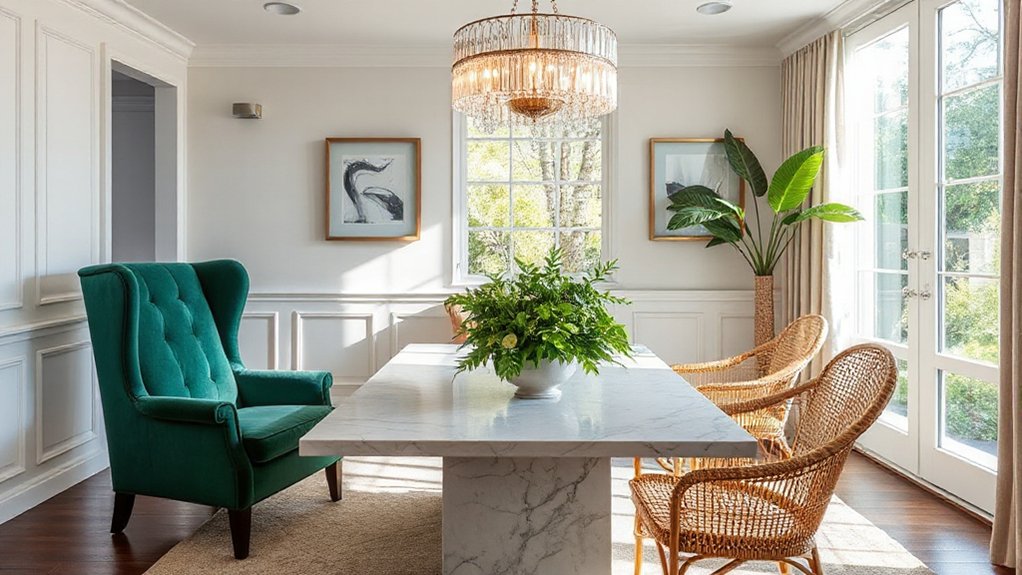
You don’t need a full matching set—swap in a high-end mix by pairing upholstered chairs with wood ones to add texture and comfort without replacing everything.
Put your statement chairs (like bold upholstery or sculptural backs) on the ends, then use simpler, affordable side chairs to keep costs down.
Stick to one shared element—finish, color tone, or seat height—so the mix looks intentional, not random.
Mix Upholstered And Wood
While a fully matched dining set can feel flat, swapping a couple of chairs for upholstered pieces instantly adds depth and a higher-end look without buying a whole new table.
Start with two end chairs or two on one side, then keep the rest in wood to highlight contrast. Choose Upholstered accents in a durable performance fabric or faux leather so spills wipe clean and wear stays minimal.
Match chair-leg stain to your table or floor, then let Wooden textures vary slightly (oak with walnut undertones works) for a collected feel.
Shop secondhand for solid frames and reupholster with a staple gun to save. Keep seat height consistent, and measure arm clearance under the tabletop before you buy.
Add felt pads for quieter, smoother movement.
Pair Statement And Simple Chairs
Because a row of identical chairs can read showroom-basic, pairing two statement chairs with simpler side chairs gives your dining setup a custom, high-end mix without replacing the table.
Put the statement chairs at the heads for instant impact; keep the remaining seats as simple chairs in a matching tone (black, walnut, or oak) so the look stays intentional.
Choose one “hero” detail—curved cane, bouclé, leather, or a sculptural back—and echo it subtly with hardware, a runner, or a centerpiece.
Before you buy, measure seat height, arm clearance, and how chairs tuck in; mismatched proportions look cheap fast.
Save money by buying statement chairs new and sourcing simple chairs secondhand, then refinishing with durable satin paint.
Add felt pads to protect floors.
Use Luxe Dining Room Textiles on the Table
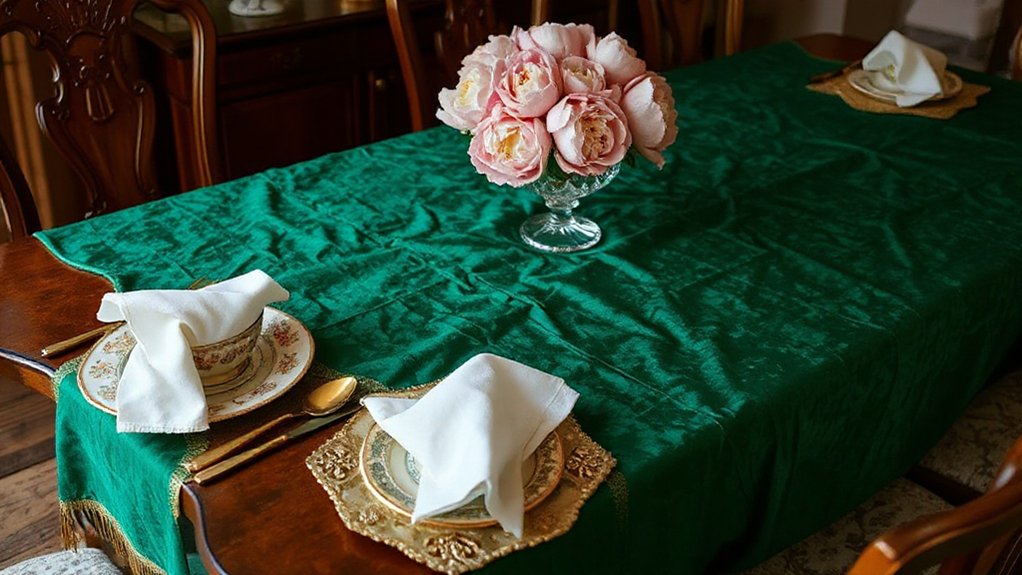
Even if you’re not replacing furniture, luxe textiles can make your dining table feel instantly upgraded for a modest cost. Start with luxury table linens: a crisp cotton or linen tablecloth in white, oatmeal, or charcoal hides mismatched chairs and makes everyday dishes look intentional.
If you don’t want a full cloth, use a runner to protect the surface and add contrast.
Layer in plush textile accents that feel rich but wash easily: thick hemmed napkins, textured placemats, and a soft, low-pile table pad for extra fullness.
Choose one “hero” texture (waffle weave, slub linen, or velvet-look) and keep the rest simple.
Buy sets on clearance, then rotate seasonally to reduce wear. Stick to two colors for a clean, pricey look.
Style a Dining Room Centerpiece Like a Pro
Once your table linens and napkins look pulled together, the fastest way to make the whole dining room feel styled is a centerpiece that matches that polished base. Keep it low and narrow so you can still talk across the table; aim for 8–12 inches tall, or go taller only if it’s very slim.
Use one “hero” vessel (a thrifted ceramic bowl, a clear cylinder, or a small tray) to anchor your centerpiece arrangements, then repeat one material—glass, brass, or matte black—for instant cohesion.
Shop your home first: clip greenery, group three candles, or stack two books under a bud vase.
Finish with tight tableware styling: align place settings, add one accent color, and leave serving space.
Add a Mirror to Double Dining Room Glow
If your dining room feels a little dim or flat, hang a mirror where it can bounce light back into the space—ideally across from a window or near a chandelier. You’ll instantly amplify daylight and make your decorative lighting look brighter without swapping fixtures.
Choose a medium-to-large mirror (at least 24–36 inches wide) so it reflects more than a small patch of wall. Keep it centered on the wall you want to expand, and hang it at eye level (about 57–60 inches to the center).
For tight budgets, check thrift stores, marketplace listings, or reuse a mirror you already own with a quick frame paint. Treat it like wall mounted decor: match metal tones to hardware for a cohesive, upscale finish.
Finish With Dining Room Styling Details That Elevate
After you’ve boosted light with a well-placed mirror, lock in that upgraded feel with a few styling details that make the room look finished, not fussy.
Tighten your color palettes: pick two neutrals plus one accent, then repeat that accent in napkins, art, or a simple vase.
Next, refine furniture arrangements so the room reads intentional. Center the table under the fixture, keep chairs evenly spaced, and leave a clear path to doors and buffets.
Add a low centerpiece (a bowl of lemons or greenery) that doesn’t block sightlines.
Swap in matching candleholders or budget chargers for instant polish.
Finally, edit surfaces: group items in threes, hide clutter in a tray or lidded box, and keep one “breathing” spot empty.
It’ll look curated, not crowded.
Frequently Asked Questions
How Can I Make a Dining Room Look Luxurious on a Tight Budget?
You can make your dining room look luxurious on a tight budget by focusing on high-impact swaps. Add upscale lighting: install a dimmer, change to warm bulbs, or hang a thrifted chandelier with new shades.
Use elegant tableware by mixing inexpensive white plates with gold-toned flatware and cloth napkins.
Upgrade visuals with a large mirror, a simple centerpiece, and consistent curtain panels.
Keep surfaces clutter-free and polished daily.
What Paint Colors Make a Dining Room Feel More Upscale Instantly?
You’ll get an instant upscale feel with deep, saturated hues like navy, charcoal, forest green, or warm espresso, balanced by crisp white trim. If you want brighter, choose soft greige or creamy ivory for a tailored look.
Use Accent walls to add drama without repainting everything. Pair paint with Metallic finishes—bronze, brass, or brushed nickel—on a mirror frame or light fixture so the color reads richer, even on a budget.
How Do I Choose Dining Room Art That Looks Expensive, Not Generic?
Pick pieces with purpose, polish, and provenance—even if they’re prints. Choose one large work or a tight trio, then commit to art framing: oversized mat, simple wood or black frame, and real glass if you can.
Use color coordination by pulling two room colors and one accent from textiles. Avoid tiny, busy sets.
Buy from local artists, vintage shops, or online archives; reframe thrift finds.
What Are the Best Ways to Hide Dining Room Clutter Without New Furniture?
Hide dining room clutter by zoning and containing what you already own. Corral keys, candles, and remotes into decorative trays on a buffet or console so surfaces read intentional.
Use baskets or lidded bins under a bench or in a corner for linens and games.
Add removable wall decals near a drop zone to define hooks or shelves you already have.
Store extras in labeled boxes in a nearby closet.
How Can I Make a Small Dining Room Feel Grander Without Remodeling?
You can make a small dining room feel grander by drawing the eye up and simplifying what you see. Swap in Elegant lighting with a taller pendant or chandelier on a dimmer to add height and mood.
Hang curtains high and wide, and use a large mirror to expand light.
Add Statement textiles—an oversized rug and crisp table linen—to anchor the room. Keep one bold centerpiece, not many.
Conclusion
Now you’ve got a dining room that looks expensive without spending like you did. Anchor the space with one standout focal point, then turn up the drama with better lighting and tailored-looking curtains. Layer a rug, mix chairs, and add upgraded linens for quiet polish. Keep your centerpiece simple but intentional, and use a mirror to amplify warmth. Finish with small styling edits—candles, trays, fresh stems—until it feels a million times more luxurious.