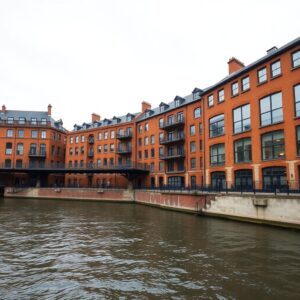

You’ll get long‑term stability from premium UK locations where demand stays deep, supply stays constrained, and resale liquidity holds up. In London prime streets, you’ll lean on global buyers, planning limits, and irreplaceable architecture. In Surrey and Hampshire commuter postcodes, you’ll back fast rail links, top schools, and low crime. Oxford, Cambridge, Bath, and Bristol stay scarce through conservation and lifestyle pull, while Manchester/Cheshire track job hubs. Edinburgh’s New/Old Town adds international demand and festival-driven rents. Keep going to see the quick checklist.
Key Takeaways
- Premium UK locations combine deep demand, constrained supply, and strong resale liquidity, not just a prestigious postcode.
- Prime London areas offer global buyer depth, planning constraints, and “replaceability” factors like architecture, views, and cultural proximity for downside protection.
- Surrey and Hampshire commuter postcodes stay resilient through fast, reliable rail links, strong schools, low crime, and family-led demand.
- Oxford, Cambridge, Bath, and Edinburgh sustain stability via conservation limits, green belts, heritage scarcity, and high-income employment anchors.
- Long-term stability improves where amenities are scarce and maintained, prices are stress-tested by £/sq ft, and exits are supported by short time-to-sell.
What “Premium” Means in UK Property

Although “premium” often gets used as shorthand for “expensive,” in UK property it’s better understood as a bundle of measurable advantages that lowers risk and supports long‑term value. You’re paying for depth of demand, not just a postcode label: resilient buyer and tenant pools, constrained supply, and reliable liquidity when markets soften.
Premium also shows up in build quality and stewardship—better maintenance regimes, stronger management, and clearer service-charge accountability in prime blocks. You typically get access to luxury amenities that widen the renter base and reduce voids, such as concierge, secure parking, gyms, and communal workspaces.
Historical significance can matter too, because conservation protections and enduring prestige support pricing power, while thoughtful upgrades preserve character without compromising efficiency. You’re buying stability, not hype.
How to Judge a Premium Area Fast (Checklist)
Once you treat “premium” as a set of risk‑reducing features rather than a price tag, you can screen an area quickly by looking for signals that demand stays deep and supply stays tight. Check liquidity: steady transaction volume, low fall‑throughs, and short time‑to‑sell across cycles.
Test affordability resilience: buyers can still stretch, yet you can point to Affordable alternatives nearby that cap downside without killing demand. Verify constrained supply: conservation zones, limited developable land, and planning refusal rates.
Measure income strength: diverse, high‑skill employers within commuting range and rising median earnings. Audit amenities: schools’ long‑run performance, safety trends, and daily retail density.
Finally, watch the pipeline: regeneration that improves basics without overbuilding; that’s where Emerging neighborhoods can mature into premium.
London Prime Areas: Where Value Holds Up
When you look past headlines and focus on downside protection, London’s prime pockets tend to hold up because they combine global liquidity with structurally tight supply. You’re buying into markets where international demand can reprice quickly, while planning constraints and conservation areas cap new stock.
To assess resilience, you track transaction depth, not asking prices: frequent high-value deals signal a steady buyer pool. You also test “replaceability”—period architecture, protected views, and proximity to flagship cultural assets anchor Historical significance that’s hard to replicate.
Check building-level fundamentals: service charges, lift/porter quality, EPC trajectory, and lease terms can quietly erode returns. Finally, prioritise streets that bundle Luxury amenities—top schools, private clubs, high-end retail, green space—within walkable distance, sustaining rents and exit liquidity.
Surrey & Hampshire: Best Commuter Postcodes

In Surrey and Hampshire, you’re buying commuter efficiency: fast rail links into London that keep demand resilient even when wider markets cool.
You’ll see the strongest pricing power in high-demand family postcodes where schools, green space, and low-crime profiles compress supply.
To assess stability, you should compare peak-time journey times, service frequency, and historical sales liquidity at the postcode level.
Fast Rail Links To London
Although headline house prices can dominate the conversation, your long‑term stability in Surrey and Hampshire often hinges on how quickly and reliably you can reach London by rail. You’ll want stations with frequent peak services, limited stops, and resilient timetables when disruption hits. Check fastest journey times, but also the spread of departures across the hour, last‑train options, and platform capacity at interchanges like Woking and Guildford.
Target postcodes near direct South Western mainline services to Waterloo or fast Great Western links into Paddington via Reading. You can balance door‑to‑door time with premium daily living: luxury amenities in town centres and historic charm in nearby villages.
Verify parking, cycle storage, and walkability, because the “first mile” often decides whether a commute stays sustainable year‑round.
High-Demand Family Postcodes
Because school catchments, day‑to-day commute friction, and resale liquidity all stack up over time, you should treat high‑demand family postcodes in Surrey and Hampshire as a data problem, not a vibe.
Build a shortlist around stations with reliable peak timetables (Guildford, Woking, Farnham, Winchester), then overlay Ofsted outcomes, admissions distance bands, and recent boundary shifts.
Check sold‑price dispersion street by street: tight ranges signal deep demand; wide spreads flag overpricing or compromised micro‑locations.
Stress‑test by counting comparable four‑bed listings, average days on market, and transaction fall‑through rates.
Finally, verify liveability: walkable high streets, green space access, and Luxury amenities like leisure clubs or independent schools that don’t erode commute time.
You’ll capture a Community vibe, but you’ll price it rationally.
Oxford & Cambridge: Why Homes Stay Scarce

Even when the market cools, Oxford and Cambridge keep homes scarce because demand rarely lets up while supply can’t respond quickly. You’re competing with academics, hospital staff, science-park employees, and global buyers who prioritise certainty and proximity over bargains.
Tight conservation rules protect historical architecture, limiting redevelopment, subdivision, and extensions, so stock turnover stays low.
You’ll also find constraints on new building: green belt boundaries, slow planning timelines, and infrastructure bottlenecks cap volume.
When listings do appear, walkability to colleges, stations, and strong local amenities concentrates bids into a few streets, compressing days on market.
If you’re investing, focus on EPC potential, lease terms, and school catchments, and budget for surveys—older terraces hide costly defects and restrictions.
Bath & Bristol: Lifestyle-Led Premium Hotspots
While other regional cities chase price-led demand, Bath and Bristol hold their premiums through lifestyle pull: heritage streets, green space, strong dining and culture, and commutable access to London and the wider South West. You’ll see pricing resilience where scarcity meets strict planning, conservation zones, and limited central stock that can’t be replicated.
Target areas with proven Local reputation: Bath’s Georgian core and riverside, or Bristol’s Clifton, Redland, and harbourside. You’ll protect downside risk by buying walkable streets near parks, schools, and transport, where rental demand stays deep.
Prioritise homes with quiet frontage, period integrity, and efficient upgrades, or premium apartments with concierge-style Luxury amenities. Stress-test service charges, parking, and flood risk. If you time upgrades between tenancies, you’ll maintain yield without eroding long-term capital growth.
Manchester & Cheshire: Prime Areas Powered by Jobs
If you want long-term stability in the North West, Manchester and the prime Cheshire corridor stand out because jobs keep demand anchored. You’re buying into an economy led by finance, tech, life sciences, and higher education, which supports steady tenant demand and resale liquidity.
Focus on transport-adjacent neighbourhoods where employers cluster, and you’ll reduce vacancy risk: city-centre fringe, Salford Quays, and key tram or rail lines.
In Cheshire, target Wilmslow, Alderley Edge, Hale, and Knutsford for executive commuting and constrained supply.
You’ll also see pricing resilience where Luxury amenities are walkable—premium gyms, dining, private healthcare—and where a strong community vibe boosts retention.
Stress-test yields against service charges, commute times, and school catchments before you commit.
Edinburgh Prime Property: Global Demand Drivers
In Edinburgh’s prime market, you’re competing with sustained international buyer appetite that targets scarce New Town and Old Town stock and reinforces pricing.
You’ll also see demand anchored by a financial-services base and a growing tech cluster, which supports high-income renters and resilient exit liquidity.
Add festival-city prestige and year-round cultural draw, and you get a global profile that keeps top-tier addresses in consistent focus.
International Buyer Appetite
Because Edinburgh pairs globally recognised universities, a resilient finance-and-tech base, and year-round cultural pull with a comparatively tight prime housing stock, international buyers continue to treat the city’s best addresses as a stability play rather than a speculative punt.
You’ll see demand led by US, Middle East, and European purchasers seeking sterling-denominated assets, political certainty, and a transparent legal process. They prioritise turnkey condition, strong EPCs, and walkable proximity to the Old Town, New Town, and key schools, then pay premiums for lift access, concierge, secure parking, and other luxury amenities.
If you’re evaluating investment potential, focus on scarcity: trophy terraces, limited new-build supply, and conservation constraints that cap competing stock. You’ll also benefit from deep lettings demand for quality homes in central postcodes.
Financial And Tech Magnet
Why does Edinburgh’s prime market keep finding a floor even when sentiment turns? You’re buying into a deep employment base anchored by global banks, asset managers, insurers, and a fast-scaling tech cluster. These sectors pay reliably, hire internationally, and support year-round lettings, so demand doesn’t rely on a single cycle.
You’ll also see limited prime supply: conservation rules, tight plots, and a planning regime that slows new build. That scarcity helps prices hold.
For resilience, target walkable neighbourhoods near financial districts and university-linked innovation hubs, where executives and founders compete for quality. Prioritise buildings that pair historic charm with modern retrofits—efficient heating, soundproofing, security—and look for luxury amenities such as concierge services, private parking, and shared wellness space.
That mix keeps liquidity high and downside contained.
Festival City Prestige
Edinburgh’s stability doesn’t just come from balance sheets and payrolls; it also comes from status. When you buy prime property here, you’re buying into a global brand reinforced by Cultural festivals that pull recurring, high-spend visitors and international media attention.
That visibility tightens rental demand, supports premium nightly rates, and keeps vacancy risk lower across cycles.
You can map prestige to micro-markets: Old Town, New Town, and West End benefit from proximity to Historic landmarks, walkability, and strict conservation controls that limit competing supply.
Those constraints protect character and underpin long-term pricing power.
Practically, you’ll prioritise units with strong EPC potential, noise resilience, and flexible layouts suited to executive lets.
You’ll also price in event-season cashflow volatility but expect resilient annual absorption.
Choosing Your Premium Location: Match Goals to Place
If you’re paying a premium, you should treat location choice like a portfolio decision: start with your objective, then select the place that best fits the risk, demand, and liquidity profile you can live with.
If you want capital preservation, prioritise low supply, conservation controls, and proven resale depth.
If you want income, target transport-linked hubs with year-round tenant demand and tight void rates.
Validate demand drivers: top schools, major employers, and resilient tourism.
Stress-test pricing by comparing £/sq ft to nearby streets and recent reductions.
Luxury amenities can support pricing, but only when they’re scarce and maintained.
Neighborhood reputation anchors valuations; check crime trends, planning disputes, and local sentiment.
Finally, match exit routes: domestic families, international buyers, or corporate lets.
You’ll reduce regret and improve long-term stability.
Frequently Asked Questions
What Stamp Duty Changes Could Impact Premium UK Locations Over the Next Decade?
You’ll likely face stamp duty reforms that raise top‑rate bands, extend surcharges for additional homes, and tighten reliefs for mixed‑use, corporate, or non‑resident buyers.
You should also watch for regional rebalancing or temporary holiday cliffs that shift timing and pricing.
If rates climb, you’ll see buyers renegotiate around Luxury amenities and nearby Cultural attractions, prioritising turnkey value.
You’ll hedge by modelling scenarios and structuring purchases early.
How Do Short‑Term Lets and Licensing Rules Affect Prime‑Area Investment Returns?
Short‑term lets and licensing rules can compress your prime‑area returns by cutting occupancy, raising costs, and increasing void risk.
You’ll face short term let restrictions like night caps, planning consent, or ban zones, so you can’t always pivot to higher‑yield nightly pricing.
You’ll also absorb licensing compliance spend—fire safety upgrades, inspections, agent fees, record‑keeping—which lowers net yield and delays cashflow.
You should stress‑test returns under worst‑case limits.
What Insurance and Flood‑Risk Issues Should Buyers Check in Premium Postcodes?
You’ll want to treat flood risk as a “seasonal inconvenience” that can still hit premiums hard. Check the property’s Flood Re eligibility, EA flood maps, surface‑water risk, and any history of claims.
Confirm buildings and contents cover includes high‑value Luxury amenities, alternative accommodation, and trace‑and‑access.
For historic architecture, verify listed‑building reinstatement costs, specialist materials, and subsidence/ground‑movement terms.
Get written insurer quotes before exchange.
How Do Leasehold Reforms and Service Charges Influence Prime Flat Values?
Leasehold reforms can lift prime flat values if they cut ground rents, simplify enfranchisement, and reduce extension premiums. They can depress values if uncertainty delays lending or sales.
You should price in Leasehold reform implications by checking term length, ground rent review clauses, and pending legislation impacts.
Service charges matter because buyers discount opaque or rising costs. Demand Service charge transparency: audited accounts, reserve funds, major works schedules, and managing agent performance.
Which Renovation Upgrades Add Value Without Harming Conservation‑Area Permissions?
You’ll add value safely by prioritising reversible, like‑for‑like upgrades: repair sash windows, insulate lofts internally, restore original doors, and use lime plaster for breathability.
Upgrade kitchens and bathrooms without relocating drainage stacks, and improve lighting with discreet fittings.
For Historic preservation, keep façades untouched and match materials.
In renovation budgeting, allocate for heritage surveys and pre‑app advice, and document every change for planners and buyers.
Conclusion
When you choose a premium UK location, you’re not buying hype—you’re buying resilience. Picture steady footfall on a prime London street, clipped hedges along Surrey lanes, and the tight ring of supply around Oxford and Cambridge. You’ll spot it fast: scarce stock, strong schools, transport links, and deep buyer pools. Let your goal steer you—commute, lifestyle, or growth—and you’ll anchor value where demand keeps returning, even as markets shift.