
Table of Contents
Key Takeaways
- Cornwall property for sale spans one of England’s most varied and emotionally compelling markets — from sub-£200,000 terraces in inland towns to multi-million-pound coastal estates on the Fal Estuary and the Roseland Peninsula.
- Average sold prices across Cornwall sit at around £333,000 according to Rightmove data for the year to March 2026, with detached properties averaging £460,000 and terraced homes around £254,000 — figures that represent a 4% correction from the 2022 pandemic-era peak.
- Cornwall Council introduced a 100% council tax premium on second homes from April 2025, doubling the annual tax liability for non-primary residences that do not qualify as commercial holiday lets — a material cost that every second home buyer must factor in before purchasing.
- The county divides into distinct property markets: the premium coastal hotspots of St Ives, Padstow, Fowey, and the Roseland; the city market centred on Truro; the university town and estuary market in Falmouth; and the more affordable inland and north Cornwall markets.
- Cornwall’s price-to-earnings ratio of 8.4 — meaning a median-income resident needs over eight years’ gross salary to buy a median-priced home — underlines the structural affordability tension that is reshaping both the market and its regulatory environment.
- The county’s remoteness from major employment centres has historically been its biggest constraint on primary buyer demand; improving transport links, the expansion of Newquay Cornwall Airport, and the normalisation of hybrid working have collectively weakened that argument in ways that are still feeding through into buyer demographics.
Why Cornwall’s Property Market Is Different From Every Other in England
There is no property market in England quite like Cornwall’s. The combination of genuinely world-class coastline, a deeply distinctive regional identity, 300-plus miles of coastal footpath, and a tourism economy that attracts around 24 million visitors a year has created a property market operating under pressures that rarely apply elsewhere. Primary buyers, second home purchasers, lifestyle relocators, and holiday let investors all compete for the same housing stock — in a county where new development has historically been constrained by planning policy, infrastructure limitations, and landscape designations.
Cornwall property for sale has reflected that structural tension for decades, but the last five years have amplified it significantly. The pandemic triggered a wave of relocations from London and other major cities as hybrid working unlocked the ability to live somewhere extraordinary rather than somewhere merely convenient. Prices surged — peaking in 2022 at an average of around £358,000 — before moderating as interest rates rose and some of the speculative heat left the market. The correction since that peak has been measured rather than dramatic: prices are around 4% down on the 2022 peak, with detached properties averaging £460,000 and terraced homes around £254,000.
What that correction has not done is resolve the fundamental supply-demand tension. Cornwall remains acutely short of affordable housing for local residents, with a price-to-earnings ratio of 8.4 — meaning a median-income Cornwall resident needs over eight years’ gross salary to buy a median-priced property. That tension is what drives the second homes policy, the council tax premium, and the ongoing debate about use class reform for holiday lets. Buyers of all types need to understand it, because it directly shapes the regulatory environment they are buying into.
Cornwall’s Property Market: The Key Areas and What They Offer
St Ives and West Penwith
St Ives is the most iconic property address in Cornwall and, for many buyers, the most desired. The combination of the Tate St Ives, the Barbara Hepworth Sculpture Garden, extraordinary light, white sand beaches on multiple aspects, and the tight lanes of Downazlong and the warren of fishermen’s cottages behind the harbour creates a place of genuine global reputation. Average property prices in St Ives comfortably exceed £500,000, with sea-view cottages and harbour-facing properties commanding substantial premiums above that.
The surrounding West Penwith peninsula — taking in Zennor, St Just, Cape Cornwall, Sennen, and the Lands End plateau — attracts buyers seeking the most dramatically remote end of the Cornish market. Granite farmhouses, miners’ cottages, and isolated cliff-top properties here offer something genuinely rare: a landscape largely unchanged for generations, walking from the doorstep, and a sense of being at the edge of something. Prices vary considerably by condition and accessibility, but the best positioned properties here are competed for by buyers who have been watching West Penwith for years.
Padstow and the North Cornish Coast
Padstow’s reputation as a food destination — built on the global profile of Rick Stein’s restaurants and Paul Ainsworth at No6 — has translated directly into property demand and prices. The town itself is compact, the harbour-facing stock is limited, and anything with a view or a period character attracts serious interest. Three-bedroom homes in Padstow typically require budgets of £400,000–£500,000 or more for anything well-positioned, though occasional terraced properties appear at lower price points.
The wider north Cornwall coast — Rock (accessible by ferry from Padstow), Polzeath, Wadebridge, and the Atlantic Highway corridor through Bude — covers a range of buyer profiles. Rock is among the most expensive addresses in Cornwall, particularly for holiday use, while Bude and the north Devon border area offers considerably more affordability with a strong surf community and long stretches of beach that attract year-round outdoor buyers.
Falmouth and the Fal Estuary
Falmouth has emerged as one of the most compelling all-round property markets in Cornwall over the past decade. The combination of the University of Exeter’s Penryn Campus, a year-round working port economy, the Fal Estuary — designated as a National Landscape — and a direct rail branch line to Truro connecting to the main line toward London Paddington creates a more diverse and economically active base than most Cornish towns.
Average house prices in Falmouth are around £400,000, and compared with St Ives, buyers often get more space for their budget alongside a stronger off-season economy. The town has a genuine population of young professionals, creative businesses, and maritime workers that gives it energy and amenity independent of the tourist season — something not all Cornish coastal towns can claim.
Fowey, on the south coast between Falmouth and Plymouth, attracts a different buyer: sailing-focused, slightly more affluent, and drawn to the deep-water harbour and the Georgian architecture of one of Cornwall’s most characterful small ports. Its position within a National Landscape designation adds planning complexity for works, but reinforces the long-term scarcity case.
Truro: The City Market
Truro is Cornwall’s only city and the county’s primary service and retail centre. Its three-spired Gothic Revival cathedral, its independent shops, restaurants and bars, and its position as the hub of Cornwall’s transport network make it the obvious base for buyers who need year-round amenity rather than seasonal charm. Schools — including the well-regarded Truro School and Richard Lander School — are a significant draw for relocating families.
Property in Truro spans a wide range, from modest terraced houses in the residential streets behind the centre to substantial Victorian and Edwardian villas on the better roads, and newer build estates on the outskirts. City centre properties commonly range from £300,000 to £400,000 for standard house types, with the best positioned period properties above that. Villages within a short drive of Truro — Probus, Devoran, Carnon Downs, Playing Place, Malpas — are consistently popular with buyers wanting the city’s amenity within a quieter, more rural setting.
Newquay
Newquay occupies a unique position in the Cornwall property market. Its reputation as the surfing capital of England, combined with its beach resort character and the presence of Newquay Cornwall Airport, gives it a buyer profile quite different from the more sedate south coast towns. It attracts younger buyers, holiday let investors, and lifestyle relocators who want an active outdoor life over the more refined character of Fowey or Padstow.
Property values in Newquay are generally more accessible than the south coast hotspots, with three-bedroom homes available across a wide range depending on proximity to the beaches and condition. The airport is increasingly significant — European connections and an improving domestic service via Newquay Cornwall Airport have meaningfully changed the commuter calculus for buyers prepared to travel by air rather than by car or rail.
Penzance and the Far West
Penzance is the most westerly major town in mainland England and has a character entirely its own — working harbour, ferry terminal for the Isles of Scilly, strong independent food and arts scene, and a community that has historically been more economically diverse than the premium coastal villages nearby. The Art Deco Jubilee Pool is a landmark; the hinterland toward the Lizard and the Penwith moors is accessible within minutes.
Property values in Penzance are generally more affordable than St Ives or Padstow, making it consistently appealing to buyers whose budget does not extend to the premium coastal market but who want the far west lifestyle. Period terraces, Edwardian semis, and occasional granite cottages are available at prices that represent genuine value by south Cornwall standards.
Inland Cornwall: Bodmin Moor, the Tamar Valley, and Rural Mid-Cornwall
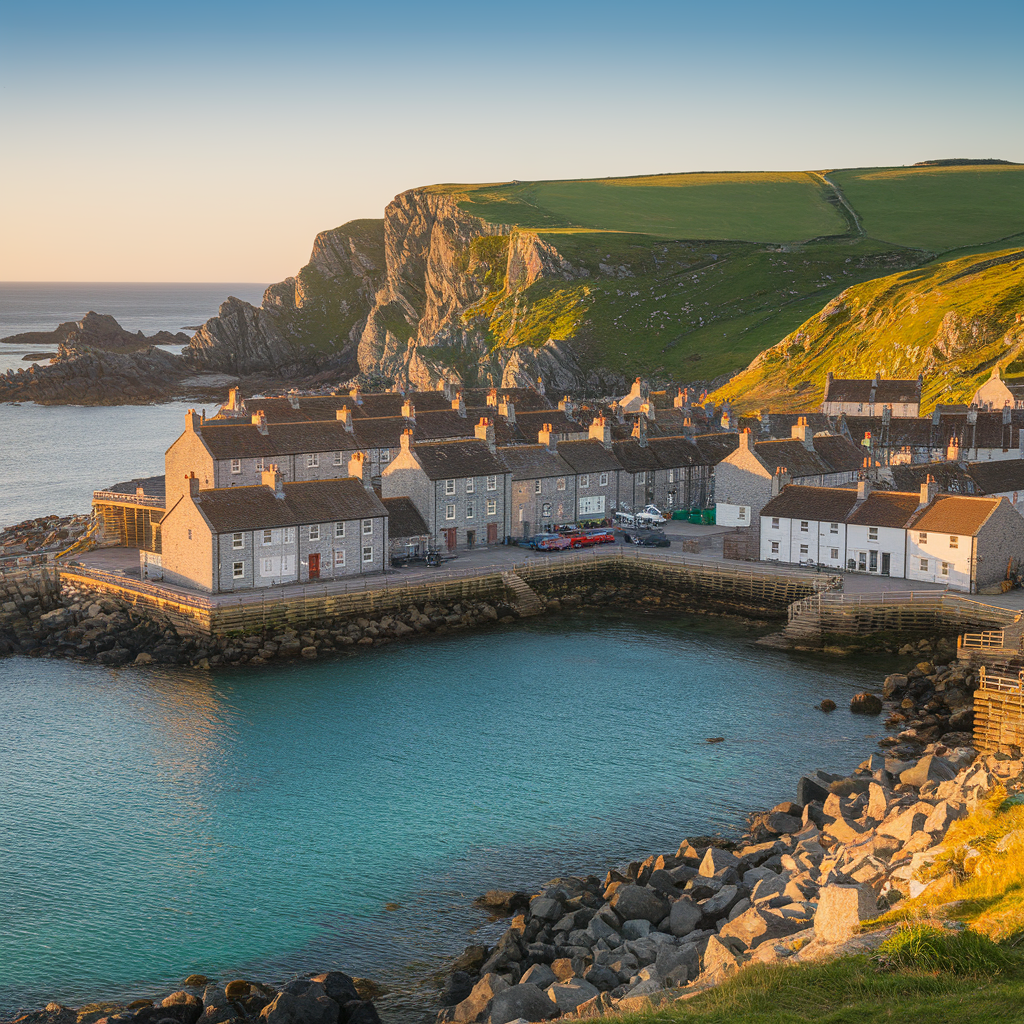
The inland market — Bodmin Moor, the Camel Valley, the Tamar Valley along the Devon border, and the mid-Cornwall agricultural hinterland — offers a fundamentally different proposition from the coastal hotspots. Prices are substantially more affordable, with the most affordable postcodes such as TR14 in the Camborne and Redruth area averaging around £183,000, and buyers with rural ambitions — smallholdings, barn conversions, large gardens, or properties with land — find considerably more for their budget inland than on the coast.
Launceston, Bodmin, Liskeard, and the Tamar Valley communities provide practical town bases with good local services and access to the A30 and A38 corridors. For buyers relocating from more expensive parts of England who want a rural Cornish lifestyle without the coastal premium, these areas offer a compelling combination of space, value, and landscape.
Where to Search for Cornwall Property
The Major Portals
Rightmove, Zoopla, and OnTheMarket all carry Cornwall listings and are the standard starting points. Setting up saved searches with specific area and price parameters and enabling instant email alerts is essential in the coastal hotspots, where desirable stock can receive viewing enquiries within hours of listing.
Supplement portal searches with the UK House Price Index from HM Land Registry to understand what properties have actually sold for in specific Cornish postcodes. The gap between asking prices and achieved prices matters considerably in a market that has corrected from its 2022 peak, and the Land Registry data provides the objective comparison point the portals do not.
The ONS Local Housing Data for Cornwall is equally useful for understanding broader market trends: average sold prices across Cornwall were £268,000 in March 2026, with private rents averaging £1,002 per month in April 2026 — a 4.6% annual increase.
Going Beyond the Portals
As with any market where supply is structurally constrained and demand from motivated buyers is consistent, registering directly with local agents and making yourself known as a proceedable buyer improves your position significantly. Some Cornish properties — particularly in the premium coastal villages and at the higher end of the rural market — are introduced to registered buyers before public listing, or sold with a very short window on the portals before going under offer.
All agents in England are regulated through the National Trading Standards Estate and Letting Agency Team (NTSELAT) and must be members of a redress scheme — either The Property Ombudsman (TPO) or the Property Redress Scheme (PRS). If you encounter difficulties with an agent at any point in the process, these are the bodies to contact.
The Regulatory and Tax Environment: What Every Cornwall Buyer Must Understand
The 100% Council Tax Premium on Second Homes
This is the most significant regulatory development in the Cornwall property market in recent years and cannot be overlooked by any buyer considering a non-primary residence purchase. Cornwall Council introduced a 100% council tax premium on second homes from 1 April 2025, under powers granted by the Levelling Up and Regeneration Act, meaning that second home owners who do not qualify for business rates pay double the standard council tax rate.
The premium continues to apply in 2026 to qualifying second homes that are not commercially let. Exceptions include properties actively marketed for sale or let, job-related accommodation, seasonal homes with planning conditions limiting occupation, and occupied caravan pitches or boat moorings.
The alternative route available to second home owners is reclassification as a commercial holiday let for business rates purposes. To qualify for business rates rather than council tax, a property must be available for short-term letting for more than 140 nights per year, actually let for at least 70 days, and continue to be available for letting going forward. Properties meeting this threshold can apply to the Valuation Office Agency for reclassification, and in many cases small business rate relief significantly reduces the overall liability. However, buyers should take professional advice on the current position before relying on this route, as the rules have been subject to change and political pressure to tighten further.
Stamp Duty and Transaction Costs
Second home buyers pay the additional 3% stamp duty surcharge on top of standard residential rates. Use the HMRC stamp duty calculator to calculate the precise liability for any purchase price. For primary residence buyers, standard rates apply. Legal fees, survey costs, and mortgage arrangement fees typically add £3,000–£6,000 to total transaction costs, more for complex rural, listed, or coastal properties.
Planning in Designated Areas
Significant portions of the Cornwall coast and some inland areas fall within National Landscape designations (previously Area of Outstanding Natural Beauty). The Cornwall Area of Outstanding Natural Beauty covers substantial stretches of the coastline and has implications for planning consent — permitted development rights under the Town and Country Planning (General Permitted Development) (England) Order 2015 can be restricted within these designations, and extensions or alterations that would be straightforward elsewhere may require full planning permission.
Grade II listed buildings — common among the older granite and stone stock in the premium coastal villages — require listed building consent for any works affecting their character. Buyers planning alterations to listed properties should confirm the consent position with Cornwall Council’s planning team before committing, and should expect that works requiring consent take longer and cost more in professional fees than equivalent works in unlisted properties.
Practical Buying Considerations
Survey Requirements
Granite and stone-built properties dominate the Cornish vernacular, and the survey considerations are specific. A full RICS Level 3 Building Survey is recommended for all older stock — the Level 2 Homebuyer Report is too limited for the range of issues that solid wall construction can present. Particular attention should be paid to: damp penetration through solid granite walls or deteriorating pointing; roof condition (traditional slate requires specialist contractors and can be expensive to repair or replace); drainage arrangements; and the condition of any timber elements, which are susceptible to moisture damage in Cornwall’s humid coastal climate.
Drainage and Services
Many rural and coastal Cornish properties rely on private drainage. Septic tanks and package treatment plants are common, and their condition, capacity, and compliance with Environment Agency regulations need to be established before exchange. Properties heated by oil or LPG rather than mains gas are also common across the county — running costs are higher, and the EPC ratings of solid-wall granite properties can be challenging to improve without significant expenditure.
Coastal and Flood Risk
For any coastal property, or any property near one of Cornwall’s river valleys or estuaries, checking the Environment Agency flood risk maps before proceeding is essential. The Environment Agency’s Flood Map for Planning allows buyers to identify flood zone designations for any property in England, and lenders’ requirements around flood risk insurance can significantly affect both mortgageability and ongoing insurance costs for higher-risk properties.
Frequently Asked Questions
Is Cornwall a good place to buy property in 2026?
The long-term structural case for Cornwall property remains intact, though the short-term market is more nuanced than the pandemic-era growth story suggested. Prices are around 4% down from the 2022 peak and 7% below the high watermark of £357,558 reached at that time. That correction has largely been absorbed without distress in most price points, and transaction volumes — while below the pandemic spike — remain at healthy levels.
For primary buyers, the quality of life case is obvious and well-evidenced: Cornwall consistently performs strongly in quality of life surveys, and the expanding reach of Newquay Cornwall Airport and improving digital infrastructure have reduced the practical isolation that historically deterred long-term relocators. For second home and investment buyers, the council tax premium and the evolving holiday let regulatory environment require careful financial modelling before committing, but do not make the investment case unworkable for the right property in the right location.
The most honest assessment is that Cornwall rewards buyers who buy for the right reasons — for the place itself and what it offers over the long term — rather than those chasing short-term yield or capital appreciation on a specific timeline.
Which parts of Cornwall offer the best value for buyers?
Value is relative to what you are prioritising, but the areas that consistently offer more property per pound than the coastal hotspots include: Penzance and the far west market for buyers who want a working town base in West Penwith without the St Ives premium; the Bodmin and north Cornwall inland market for buyers prioritising space and land; Launceston and the Tamar Valley for buyers with East Cornwall or Devon connections; and the Camborne-Redruth corridor for buyers prioritising affordability above landscape position.
Within the coastal market, Bude and the far north Cornwall coast generally offers better value per square metre than Padstow or Rock for similar property types, with the added benefit of consistent Atlantic surf and a strong year-round community.
How has the second home council tax premium affected the Cornwall market?
The 100% council tax premium introduced in April 2025 has had a measurable effect on the market, primarily at the entry and mid-range levels of the second home market rather than at the premium end. Some second home owners responded to the announcement by selling, which contributed modestly to supply in some coastal areas through 2024 and into 2025. At the upper end — St Mawes, Rock, the Roseland Peninsula — demand from buyers with the financial resources to absorb the premium has remained robust.
For the mid-market second home buyer — someone considering a £350,000–£500,000 cottage in a popular coastal village — the premium materially changes the financial equation. At Band D council tax rates of roughly £2,200 per year, the premium adds £2,200 annually in additional holding cost, on top of the existing stamp duty surcharge. That is a real number that needs to feature in any investment or lifestyle calculation before proceeding with a purchase.
What is the Cornwall property market like for first-time buyers?
First-time buyers face a structurally difficult market in Cornwall. The average price paid by first-time buyers was £228,000 in March 2026, which — relative to average local wages — represents a significant challenge without substantial parental support or a gifted deposit. The price-to-earnings ratio across the county as a whole is among the most stretched in England outside the South East.
The most realistic first-time buyer markets in Cornwall are the inland and post-industrial towns — Camborne, Redruth, Hayle, and the Bodmin and Launceston areas — where entry-level stock at accessible prices still exists. For buyers determined to be on or near the coast, Newquay and Penzance offer the broadest range of entry-level opportunities within reach of the sea.
Do I need a specialist survey for a Cornish cottage or granite farmhouse?
Yes, without question. Granite and Cornish stone construction presents a specific set of survey challenges that standard residential valuations and Level 2 Homebuyer Reports are not designed to address adequately. A full RICS Level 3 Building Survey, ideally carried out by a surveyor with specific experience of traditional Cornish construction, is the appropriate standard for any older stone property.
The issues most commonly identified in these properties — damp through solid walls, roof condition, drainage compliance, timber decay in humid conditions, and the condition of any slate or granite outbuildings — can range from minor maintenance items to structurally significant and expensive defects. Understanding the full picture before exchange, rather than discovering problems post-completion, is the most important single step a buyer can take in this market.
Conclusion
Cornwall property for sale represents one of England’s most genuinely compelling long-term property propositions — but it is a market that rewards buyers who understand its specific dynamics rather than those who approach it with assumptions formed elsewhere. The regulatory environment around second homes has become meaningfully more demanding, the pricing correction from the 2022 peak requires careful comparable analysis, and the survey and legal due diligence on the county’s older stone stock requires more rigour than equivalent purchases in more straightforward markets.
The buyers who navigate it successfully are those who know exactly which part of Cornwall they are buying into and why, who have their finance and legal team in place before the search begins, and who are prepared to act decisively when the right property comes to market. For those buyers — whether primary residents, lifestyle relocators, or carefully underwritten second home purchasers — the reward is access to somewhere that genuinely justifies the effort.
For a broader view of how the UK property investment market is performing and how national trends are affecting Cornwall and beyond, the guide on how UK property investors are thriving in a changing market is worth reading alongside this local focus.