Table of Contents
Key Takeaways
- Beach houses for sale in the UK span one of the widest price ranges of any property category — from £120,000 terraces in County Durham seaside towns to £1 million-plus waterfront properties in Sandbanks, Dorset, which retains its position as Britain’s most expensive coastal location with an average house price of £965,708.
- Across Britain, the average price of a coastal home stands at £295,991 according to Land Registry data — but this figure masks enormous geographic variation, with the premium South West locations commanding two to three times the national coastal average and the most affordable northern and Scottish seaside towns sitting well below £200,000.
- The South West dominates the premium beach house market: Sandbanks, Salcombe, Padstow, Lyme Regis, and St Ives collectively represent the aspirational end of British coastal property and the locations most consistently competed for by second home and lifestyle buyers.
- North Norfolk’s coastline — the stretch from Wells-next-the-Sea to Cromer — has become one of the most fashionable and fastest-appreciating coastal markets in England, with Aldeburgh in Suffolk averaging £619,693 and the north Norfolk coastal villages not far behind.
- Scotland’s coastline offers the most dramatic value for money in UK coastal property — Ayr in Ayrshire averages £157,754 and much of the Argyll and Highlands coast remains accessible for buyers seeking genuine seaside living without the South West premium.
- Flood risk, coastal erosion, and specialist insurance are non-negotiable considerations for every beach house purchase — the Environment Agency Flood Map for Planning must be checked before committing to any property close to the shoreline.
Why Beach Houses Occupy Their Own Market
The desire to live beside the sea is one of the most universal and enduring forces in the British property market. It shapes buying decisions across every income bracket — from first-time buyers drawn to affordable northern seaside towns to high-net-worth purchasers competing for Sandbanks waterfront or Salcombe estuary positions. And unlike most property ambitions, it is anchored in something that cannot be manufactured or relocated: the specific combination of salt air, light, proximity to water, and the particular quality of life that coastal living delivers.
Beach houses for sale in the UK represent the physical expression of that ambition — and the market for them operates by its own rules. Scarcity of genuine waterfront and beachfront positions, the combined demand of primary buyers and second home purchasers, and the planning constraints that prevent new development on most undeveloped coastline all contribute to a market where the best positions are competed for more fiercely than almost any other residential category.
This guide covers the ten best UK locations to find beach houses, what to expect at each end of the market, how to search effectively, and what every buyer must understand about the specific risks and due diligence requirements of purchasing a home beside the sea.
The UK Coastal Market in 2026: What the Data Shows
Lloyds Bank’s Coastal Homes Review — tracking house price movements across 197 coastal locations using Land Registry data — provides the most authoritative picture of where the UK beach house market sits. The national coastal average of £295,991 is down 1% year-on-year, reflecting the broader market correction that has moderated prices from the pandemic-era peak of 2022. But within that correction, the picture is sharply divided.
The most expensive seaside locations — Sandbanks at £965,708, Salcombe at £826,159, Padstow at £715,974 — remain substantially elevated relative to the national average, sustained by structural demand from buyers who specifically want these addresses and a planning framework that prevents new coastal supply. The most affordable — Peterlee in County Durham at £120,657, Grimsby at £133,706, Ashington in Northumberland at £133,775 — offer genuinely accessible coastal living at prices that represent real value for buyers whose priority is sea proximity rather than fashionable postcode.
The UK House Price Index from HM Land Registry allows buyers to drill into specific coastal postcodes and understand what comparable properties have actually achieved in recent transactions — the most reliable anchor for any coastal property offer.
1. Sandbanks and Poole Harbour, Dorset
Sandbanks is the most famous and most expensive beach house address in the UK — a narrow sand spit extending into Poole Harbour with water on three sides and some of the finest sandy beach in Britain on its outer face. The average house price of £965,708 reflects what buyers pay to occupy a position where beachfront is not a feature of the address but the literal substance of the plot.
The Sandbanks peninsula holds a limited number of waterfront properties at any time, and true beachfront houses — those where the garden runs directly to the sand — are competed for by buyers from across the UK and internationally. Properties here are predominantly detached, often substantial, and frequently modernised to a high specification; the land value so dominates that the building itself is almost secondary to its position.
The wider Poole and Bournemouth conurbation offers the full spectrum below the Sandbanks apex. Canford Cliffs, with an average of £1,045,533, sits immediately adjacent. Branksome Park, Westbourne, and the clifftop roads above Bournemouth provide sea views at meaningfully more accessible prices. For buyers who want the Dorset coast at a more realistic entry point, the market around Swanage — average £455,347 — or the Purbeck villages inland from the Jurassic Coast offers the same landscape character at a fraction of the Sandbanks price.
The Jurassic Coast UNESCO World Heritage Site designation covers the Dorset and east Devon coastline, and its planning implications reinforce the scarcity of buildable coastal land that underpins values across this stretch.
2. Salcombe and the South Hams, Devon
Salcombe sits at the mouth of the Kingsbridge Estuary on the south Devon coast, and its combination of sparkling turquoise water, steep wooded hillsides, and a village of independent shops and restaurants has made it one of the most consistently aspirational coastal addresses in Britain. With an average house price of £826,159, it is the second most expensive coastal location in the UK — a position it has held for much of the past decade.
Beach houses in Salcombe itself are predominantly hillside properties with estuary views rather than direct beach frontage — the geography of the estuary means most properties look across water to the beaches at South Sands and North Sands rather than sitting directly on them. This distinction matters: the beach access is excellent, but buyers expecting to walk from their garden directly onto the sand should view properties carefully for what the specific position delivers.
The wider South Hams — taking in Dartmouth, Kingsbridge, Hope Cove, and the dramatic clifftop stretch toward Plymouth — offers beach house buying at a range of price points. Properties directly above Hope Cove or overlooking the beaches at Torcross on Slapton Sands represent some of the most dramatic coastal positions in Devon at prices below the Salcombe apex. The South Devon National Landscape designation covers much of this coastline and carries planning implications for any buyer considering works on properties within its boundary.
3. North Cornwall: Padstow, Rock, and the Atlantic Coast
North Cornwall’s beach house market is defined by its Atlantic-facing character — big surf beaches, dramatic cliff scenery, and the specific quality of light that the north Cornish coast delivers. Padstow with its foodie reputation and harbour setting, Rock directly across the Camel Estuary (accessible by foot ferry), and the surf beaches of Polzeath, Harlyn Bay, and Constantine Bay form a cluster of addresses that attract a particular type of buyer: affluent, lifestyle-focused, and often drawn from creative or media industries.
Padstow averages £715,974 — the third most expensive coastal location in Britain — and the best positioned properties command considerably more. Rock, despite its small size, consistently produces some of the highest coastal property prices in Cornwall. For buyers seeking the north Cornwall beach house experience at a more accessible price point, Bude and the beaches around Widemouth Bay and Crackington Haven offer a wilder, less polished version of the Atlantic coast at prices substantially below the Padstow premium.
Cornwall Council’s 100% council tax premium on second homes — introduced in April 2025 — applies across the county and must be factored into the annual holding cost of any non-primary residence purchase. The premium doubles the standard council tax liability for properties not qualifying as commercial holiday lets.
4. The Jurassic Coast: Lyme Regis and West Dorset
Lyme Regis sits at the western end of the Jurassic Coast and has a character unlike almost any other British seaside town — ancient, characterful, with its famous Cobb harbour wall, fossil beaches that attract visitors year-round, and an artistic community that gives it genuine cultural energy independent of the summer season. Average house prices of £474,417 put it firmly in the premium coastal bracket, but the quality and variety of housing — Georgian townhouses, Victorian seafront terraces, cliff-top detached properties — gives buyers a range of entry points within that market.
The wider west Dorset coast — Charmouth, West Bay (famous from Broadchurch), Bridport, and the Chesil Beach lagoon shore — offers beach house buying across a broad range. Properties with views across Chesil Beach and the Fleet Lagoon are among the most distinctive coastal positions in England, combining an extraordinary geological landscape with a tranquil character that stands apart from the more visitor-heavy resorts. The entire stretch falls within or immediately adjacent to the Jurassic Coast UNESCO World Heritage Site, which reinforces long-term value through the planning constraint it imposes.
5. St Ives and West Cornwall
St Ives has an international reputation as an arts destination — the Tate St Ives, the Barbara Hepworth Sculpture Garden, and the extraordinary quality of light that has drawn painters since the 19th century — and its beach house market reflects that global profile. An average house price of £461,959 across the town covers an enormous range: fishermen’s cottages in the warren of lanes behind Porthmeor Beach, seafront properties looking directly across Carbis Bay, and elevated positions above the town with views across multiple beaches simultaneously.
True beachfront properties in St Ives — those with direct beach access or unobstructed front-row sea views from the principal rooms — are scarce and command substantial premiums. The competing beaches of Porthmeor (surf-facing), Porthminster (south-facing, sheltered), Carbis Bay, and Porthgwidden each attract buyers with slightly different lifestyle priorities, and the position of a property relative to a specific beach significantly affects both its price and its usability through the seasons.
6. North Norfolk: Wells, Blakeney, and the Coastal Villages
North Norfolk’s coastal strip — running from Hunstanton in the west through Wells-next-the-Sea, Blakeney, Cley next the Sea, and Sheringham to Cromer — has established itself as one of the most fashionable and fastest-appreciating beach house markets in England. It sits within the Norfolk Coast National Landscape, which covers the entirety of this stretch and has kept new development tightly constrained.
The specific character of the north Norfolk coast — vast tidal saltmarshes, creeks, pinewoods, wide sandy beaches at Wells and Holkham, and flint-and-brick village architecture — attracts buyers from London and the East who value its difference from the more crowded south coast resorts. Burnham Market is frequently described as Chelsea-on-Sea, reflecting the demographic it consistently attracts; Wells-next-the-Sea has a slightly more working community feel; Blakeney and Cley attract a quieter, more discerning buyer who values the birdwatching and sailing character of the saltmarsh coast.
Beach house prices in north Norfolk vary enormously by village and position. Burnham Market properties command a premium that reflects its fashionability; Wells and Sheringham offer more accessible price points for comparable property types. Aldeburgh in Suffolk — the continuation of this East Anglian coastal character further south — averages £619,693, giving a sense of where the most sought-after positions in this market trade.
7. Pembrokeshire and the Welsh Coast
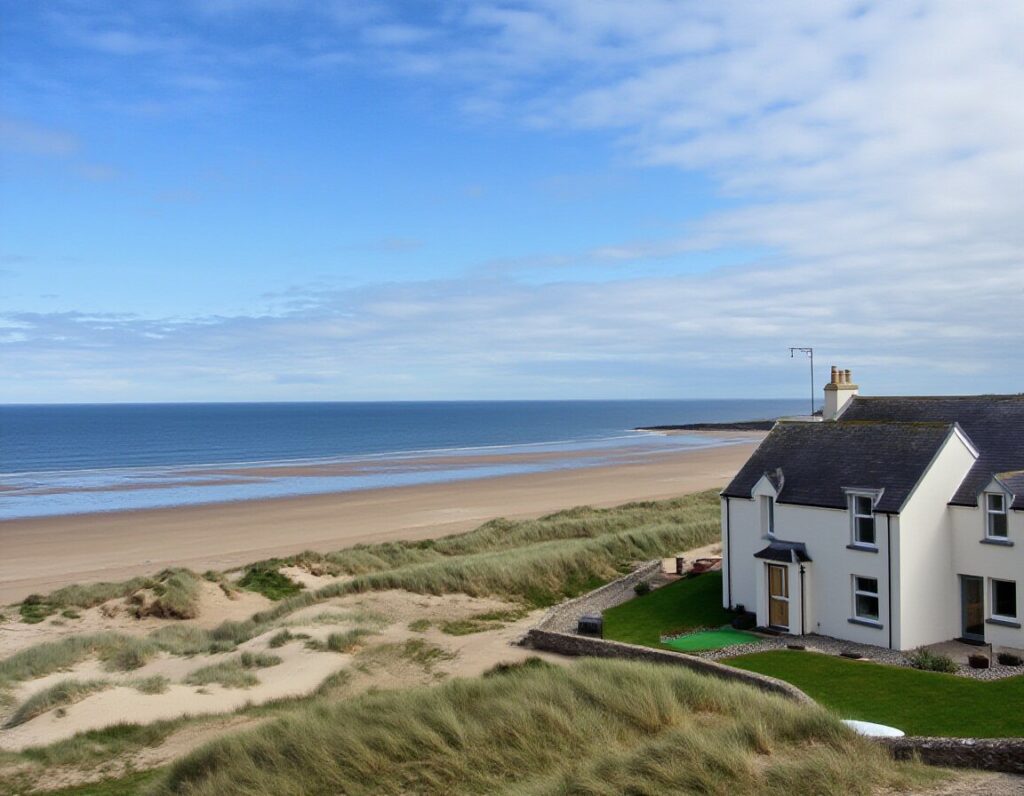
Pembrokeshire’s coastline — enclosed almost entirely within the Pembrokeshire Coast National Park, the only National Park in the UK designated primarily for its coastline — contains some of the finest beach scenery in Britain. Barafundle Bay, Freshwater West, Broad Haven, and the dramatic cliffs of the St David’s Peninsula have drawn buyers seeking a genuinely different coastal experience from the crowded south-west English resorts.
Beach house prices in Pembrokeshire are generally more accessible than equivalent quality properties in Cornwall or Dorset, reflecting the greater distance from English cities and the less fashionable profile of Welsh coastal property relative to its actual quality. Well-positioned four-bedroom properties in coastal villages with sea views can be found from £450,000 to £700,000 — and the most dramatic positions with direct beach access or cliff-top outlooks typically sit below the Salcombe or Sandbanks equivalent.
The planning environment within the National Park is tightly managed by the Pembrokeshire Coast National Park Authority, and buyers should verify the position on permitted development rights before purchasing any property where works form part of the buying rationale. Note that in Wales, planning policy is governed by Planning Policy Wales rather than the English framework.
8. The Suffolk Coast: Aldeburgh, Southwold, and Walberswick
The Suffolk coast has a mood entirely its own — flat, wide-skied, with the particular quality of North Sea light that has attracted painters from Constable to Lucian Freud. Aldeburgh, Southwold, and the tiny village of Walberswick (accessible from Southwold by rowing boat ferry) form the triumvirate of the most sought-after Suffolk coastal addresses, each with its own specific character and buyer profile.
Aldeburgh at £619,693 is the most expensive — combining the Aldeburgh Festival’s international profile with a genuine year-round community, independent shops, and some of the finest seafood restaurants in East Anglia. Southwold’s lighthouse, lighthouse-keeper’s cottages, and pastel-painted beach huts are among the most photographed scenes on the English coast, and the town’s independent brewery, shops, and pier give it a distinctive character that resists genericisation. Walberswick is smaller and quieter, drawing a more discerning and less visible buyer who values exactly that.
The Suffolk Coast and Heaths National Landscape covers this stretch, adding planning constraint and long-term value support. Properties directly on the seafront or with unobstructed sea views command very significant premiums over the village average.
9. The Northumberland Coast
Northumberland’s coastline is one of the most underrated and underpriced in England — a 40-mile stretch of National Landscape coastline running from Berwick-upon-Tweed south through Bamburgh, Seahouses, Craster, and Low Newton-by-the-Sea to Amble, with a quality of scenery that rivals anything in the country. Bamburgh Castle dominates the beach at Bamburgh; Dunstanburgh Castle crumbles magnificently into the sea at Craster; and the beaches at Low Newton and Embleton are among the least crowded Blue Flag beaches in Britain.
Beach house prices on the Northumberland coast represent some of the best value of any quality coastal location in England. Ashington, one of the coastal towns in the broader Northumberland area, averages just £133,775. More specifically, the coastal villages of the designated Northumberland Coast National Landscape — Bamburgh, Seahouses, Beadnell, and Embleton — have higher price points than the nearby inland towns, but properties with sea views or close beach proximity typically remain well below £500,000 for substantial family homes. This represents extraordinary value relative to the quality of the coastline.
The relative affordability reflects Northumberland’s distance from major employment centres — it is around 50 miles north of Newcastle. For buyers with remote working flexibility, retired buyers, or those with North East connections, it represents a coastal lifestyle opportunity with few genuine rivals in England for the price.
10. The Scottish Coast: Ayrshire, Argyll, and the Highlands
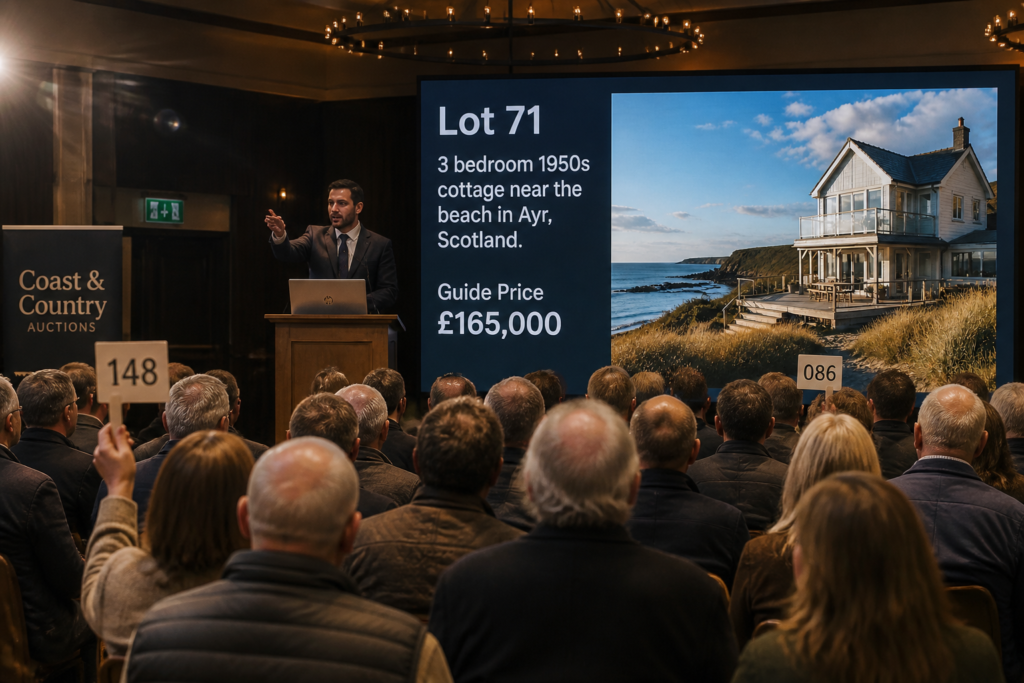
Scotland’s coastline is the longest in Britain and offers the most diverse range of coastal property in the UK — from the accessible Ayrshire towns south of Glasgow, through the sea lochs and islands of Argyll, to the dramatic cliff and bay scenery of the Highland and Northern coastlines.
Ayr in Ayrshire averages £157,754 — one of the more affordable seaside averages in Britain, offering proper beach town amenity with good Glasgow connectivity. The Clyde coast towns of Largs, Helensburgh, and Gourock provide similar accessibility to the Glasgow employment base with coastal character and sea views across to the islands.
Moving west and north, the Kintyre Peninsula, the Isle of Arran, Oban, and the Argyll sea loch communities offer a profoundly different and more remote version of Scottish coastal living — where the beach is often a ten-minute walk rather than a viewing backdrop, and where the sea, the islands, and the surrounding mountain landscape are the daily context rather than a weekend escape. Properties in these communities are broadly accessible for buyers who can accept remoteness, and the quality of the natural landscape is exceptional.
The far north — Caithness, Sutherland, the north coast from Durness to Thurso — remains the most affordable genuine coastal property market in Britain for buyers who seriously prioritise landscape over amenity. Traditional stone houses and former crofts with beach or cliff access occasionally come to market here at prices that would be genuinely extraordinary in any other coastal context.
What Every Beach House Buyer Must Know Before Committing
Flood Risk and Coastal Erosion
No beach house purchase should proceed without a thorough assessment of flood risk and, where relevant, coastal erosion risk. The Environment Agency Flood Map for Planning provides flood zone designations for any property in England — Flood Zone 3 indicates the highest risk of flooding from rivers or the sea. For Scotland, the equivalent is available through SEPA’s flood maps, and for Wales through Natural Resources Wales.
Coastal erosion is a separate but related risk. The National Coastal Erosion Risk Mapping data, maintained by the Environment Agency, indicates the projected erosion of coastal land over 20, 50, and 100-year timeframes. For properties on cliff tops, eroding beaches, or soft sediment coastlines, this data can be the difference between a sound long-term purchase and one that loses physical ground beneath it over the ownership period.
Specialist Insurance
Properties within 100–150 metres of the coast — and particularly those in Flood Zones 2 or 3 — typically require specialist buildings insurance rather than standard home insurance. Premiums are higher, excess levels are greater, and some flood-risk properties are becoming harder to insure on standard terms. Flood Re — the government-backed scheme to make flood insurance more affordable for high-risk properties — provides cover for eligible properties built before 2009, but capped at specific rebuilding cost levels. Check the Flood Re eligibility criteria before purchasing a high-risk coastal property, and obtain insurance quotes before exchange rather than after — the cost and availability of insurance is material information that can affect the viability of a coastal purchase.
Planning in Coastal Designated Areas
The most desirable stretches of UK coastline sit within National Parks, National Landscapes, or Heritage Coast designations that constrain new development and restrict permitted development rights. The Town and Country Planning (General Permitted Development) (England) Order 2015 provides the baseline permitted development framework, but this is frequently curtailed within designated coastal areas. Any buyer planning extensions, alterations, or outbuildings should verify the planning position with the relevant Local Planning Authority before committing.
Survey Requirements for Coastal Properties
Coastal properties require survey attention beyond the standard residential inspection. Specific areas of focus include: the condition of any boundary walls, retaining structures, or coastal defences adjacent to the property; evidence of salt damp penetration, which differs from standard damp and requires specific treatment; the condition of external joinery and finishes, which deteriorate faster in salt air than inland; and the structural condition of any decking, balconies, or terraces exposed to marine weather. A full RICS Level 3 Building Survey from a surveyor with coastal property experience is the appropriate standard.
Frequently Asked Questions
What is the most affordable seaside location to buy a beach house in the UK?
Based on Rightmove asking price data, Peterlee in County Durham averages £120,657 — the most affordable seaside town in Britain. Grimsby at £133,706 and Ashington in Northumberland at £133,775 follow closely. In Scotland, Ayr averages £157,754. These are genuine coastal towns with real beach access, not inland locations — the affordability reflects distance from major employment centres rather than any compromise on the physical coastal setting. For buyers with remote working flexibility or retired buyers who prioritise cost of living over fashionability, these markets represent extraordinary value.
Is Sandbanks really worth the price?
Sandbanks represents a specific and genuinely unique proposition — a freehold beachfront position on some of the finest sandy beach in Britain, within easy reach of Bournemouth and its transport connections, and on a peninsula where the total number of properties is permanently fixed by geography. Whether that specific combination justifies an average of £965,708 is a personal judgement, but the structural argument for its value — irreplaceable position, absolute supply constraint, consistent demand — is coherent. It is not a market for buyers whose priority is yield or capital growth on a short timeframe; it is a market for buyers who want a specific and extraordinary coastal lifestyle and have the capital to access it.
How do I search specifically for beach houses for sale?
The major portals — Rightmove, Zoopla, and OnTheMarket — all allow searches filtered by proximity to specific locations, with radius searches and map-based browsing that make coastal area searches straightforward. Drawing a search zone on the map along a specific stretch of coastline, filtered by property type and price, is more effective than a text-based location search for identifying all available stock in a coastal area. Setting up saved searches with email alerts on multiple platforms is essential for locations where genuinely positioned coastal stock comes to market infrequently.
What second home tax considerations apply to beach house purchases?
Second home purchases attract a 5% stamp duty surcharge on top of standard residential rates — use the HMRC stamp duty calculator for the precise liability on any given purchase price. In Cornwall, the Isles of Scilly, and other areas where local councils have introduced council tax premiums for second homes, the annual council tax liability can be double the standard rate.
In Wales, similar powers have been used by several councils. The holiday let business rates route — where properties available for letting for 140+ days and actually let for 70+ days qualify for business rates rather than council tax — is an alternative route for some buyers, but the rules are subject to change and professional tax advice is essential before relying on it.
Is coastal property a good long-term investment?
The long-term track record of premium UK coastal property is strong. Lloyds Bank data shows coastal home prices across Britain rose by 56% between 2012 and 2022, outperforming the national average over that period. The structural case — genuine scarcity of coastal frontage, planning constraint preventing new supply, consistent and deep lifestyle demand — supports long-term value preservation in the best locations.
The key distinctions are between locations with structural demand (the premium South West and fashionable East Anglian coast) and those with more cyclical or seasonal appeal where values have proved more volatile. For context on how UK property investment is performing more broadly, the guide on how UK property investors are thriving in a changing market is worth reading alongside the specific coastal market picture.
Conclusion
Beach houses for sale in the UK represent one of the most varied and emotionally compelling property categories in Britain — a market that spans a tenfold price range from affordable northern seaside towns to the extraordinary waterfront of Sandbanks, and that serves buyers across every lifestyle profile from primary residents to second home purchasers and holiday let investors.
The locations covered in this guide between them capture the full breadth of what UK coastal property offers: the premium South West markets where planning constraint and deep buyer demand sustain values through every market cycle; the fashionable East Anglian coast where National Landscape designation and cultural cachet have driven a decade of strong growth; the underrated Northumberland and Scottish coastlines where genuine beach access can still be achieved at prices that feel almost anachronistic given the quality of the landscape; and the Welsh coast where National Park designations protect some of the finest beach scenery in Britain at prices below the equivalent English markets.
Across all of them, the due diligence requirements are specific and non-negotiable: flood risk checked, coastal erosion risk assessed, insurance confirmed as available and affordable, survey conducted by someone who understands coastal construction, and legal searches completed by a solicitor who knows what the local planning designation means for the property in question.
Get those fundamentals right, and buying a beach house in the UK remains one of the most rewarding property decisions a buyer can make — a daily return on investment that no spreadsheet can fully capture.