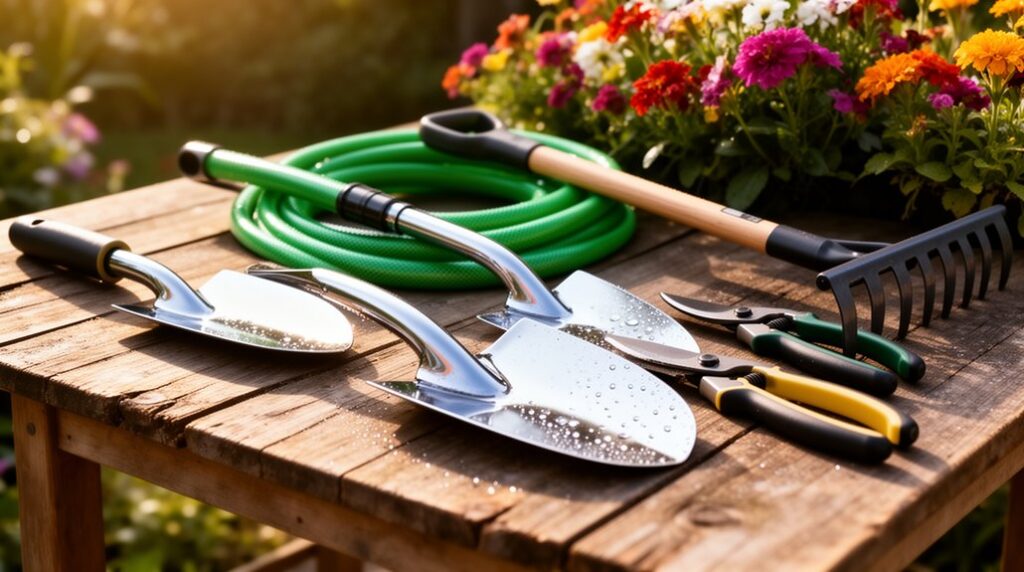
To make landscaping easier and more efficient, you’ll get the biggest ROI from a long-handled spade or round-point shovel, a metal bow rake, and a wheelbarrow or heavy-duty cart to cut trips and save your back. Add a depth-marked trowel, a fishtail weeder, and a small cultivator for fast bed work. For pruning, use bypass pruners, loppers, and a folding saw with replaceable blades. Keep going to see what to buy first and why.
Key Takeaways
- Invest in a long-handled spade and round-point shovel for faster digging, edging, and moving soil with less strain.
- Use a metal bow rake for leveling and a leaf rake for cleanup to keep beds smooth and debris-free quickly.
- Choose bypass pruners, long-handle loppers, and a folding pruning saw for clean, efficient cuts on stems and branches.
- Add a wheelbarrow or heavy-duty garden cart to move mulch, soil, and plants efficiently while protecting your back.
- Pick ergonomic, durable tools with replaceable parts, and maintain them by cleaning, oiling, and sharpening for lasting performance.
The Must-Have Garden Tools (Biggest ROI First)
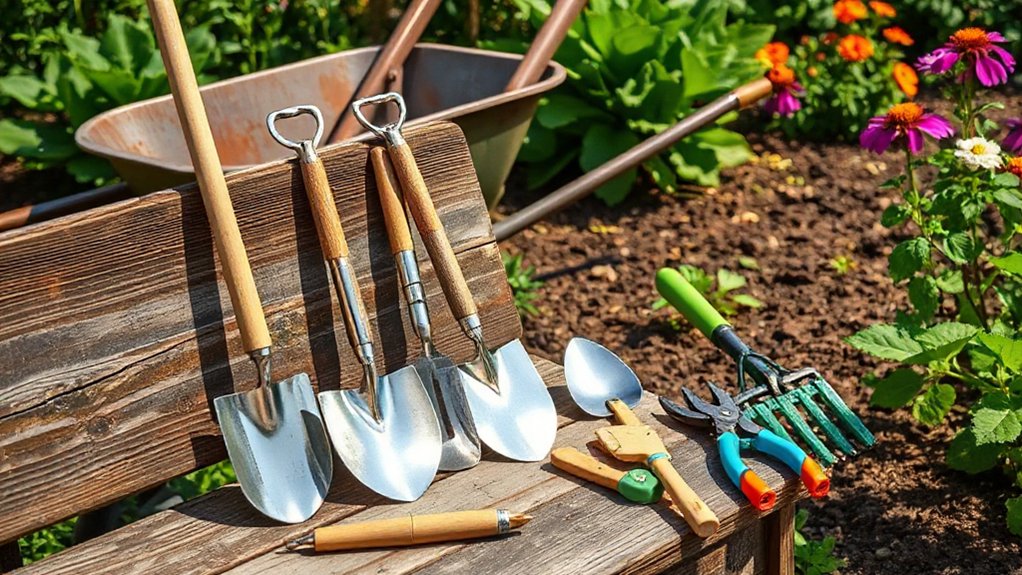
If you’re building a landscaping kit from scratch, you’ll get the biggest return by buying a few high-use, durable tools before anything specialized. Start with a long-handled spade and a round-point shovel for digging, edging, and moving soil; choose steel heads and fiberglass or hardwood handles.
Add a metal bow rake for grading and debris, plus a leaf rake for cleanup. A quality bypass lopper and folding pruning saw handle most woody cuts without a power tool.
Buy a wheelbarrow or heavy-duty garden cart to save time and your back.
Prioritize Garden tool ergonomics: padded grips, correct handle length, and balanced weight reduce fatigue. Look for eco friendly gardening tools with replaceable parts and responsibly sourced materials.
Best Hand Tools for Beds: Trowel, Weeder, Cultivator
Where do you get the most day-to-day control in flower and veggie beds? In your hand tools: a trowel, a weeder, and a cultivator.
Buy a trowel with a depth-marked, narrow blade for transplanting and a slightly cupped scoop for moving compost without wasting it.
For weeds, skip bargain forks that bend; choose a fishtail or dandelion weeder that slides under crowns and pries roots cleanly, saving time and chemicals.
Add a small 3‑tine cultivator to break crusted soil, mix in fertilizer, and loosen around seedlings without disturbing roots.
Look for ergonomic design (comfortable grip, balanced weight) and material durability (stainless or boron steel).
These three cover most bed tasks cheaply.
Long-Handled Tools That Reduce Bending and Strain
Although hand tools give you precision, long-handled tools save your back on the repetitive jobs that wear you down—hoeing, edging, raking, and turning soil.
Choose a hoe with an oval steel shaft and an ergonomic design that keeps your wrists neutral.
For edging, a half-moon edger on a long handle lets you cut crisp borders while standing tall; add a step plate so you use body weight, not your joints.
A bow rake levels soil and pulls debris fast, while a leaf rake clears beds without constant crouching.
Look for ergonomic handles with textured grips and a diameter that fits your hand to prevent hotspots.
Buy one sturdy tool per task instead of cheap multipacks; it’ll last.
Pruning Tools That Cut Faster (Pruners, Loppers, Saws)
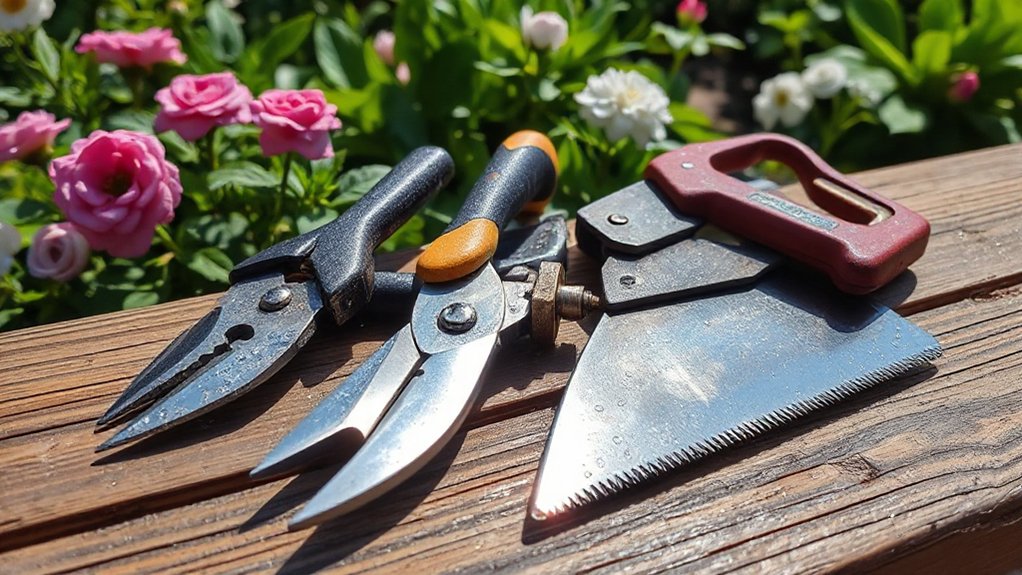
When you need faster pruning without wasting money, start with sharp bypass pruners for clean, quick cuts on green stems.
Add long-handle loppers to reach higher limbs and get more leverage on thicker branches without buying a powered tool.
Keep a folding pruning saw in your kit for the tough stuff—it stores safely, costs less than a full-size saw, and cuts through bigger wood fast.
Bypass Pruners For Speed
If you want faster, cleaner pruning without spending on power tools, grab a good pair of bypass pruners.
For speed pruning, the scissor action of bypass blades slices live stems instead of crushing them, so plants heal quicker and you waste less time recutting ragged ends.
Choose a model rated for the branch sizes you actually cut, and don’t pay extra for oversized capacity you won’t use.
Look for a comfortable grip, a replaceable spring, and a locking latch you can flip one-handed.
Keep costs down by sharpening regularly and wiping sap off after each session.
A drop of oil at the pivot keeps cuts smooth.
Carry a holster so you don’t misplace them.
Long-Handle Loppers For Reach
Bypass pruners handle quick, close-in cuts, but long-handle loppers let you clear thicker branches and higher growth without dragging out a ladder or a saw. That extended reach saves time and keeps your feet planted while you thin shrubs, shape small trees, or remove crossing limbs.
Choose bypass loppers for live wood and look for a cutting capacity that matches your yard (typically 1–2 inches). For value, prioritize hardened blades, replaceable parts, and sturdy pivot bolts over flashy grips.
Telescoping handles add flexibility, but fixed handles cost less and often last longer. Use safety features like non-slip grips, bump stops that reduce hand shock, and a reliable locking mechanism for storage.
Keep blades clean and lightly oiled so every cut stays fast and controlled.
Folding Pruning Saws For Power
Although loppers handle plenty of mid-size work, a folding pruning saw powers through thicker limbs faster and with less strain, especially once you’re past the 2-inch mark.
Choose a saw with a hardened, replaceable blade for better blade durability and long-term value. Look for aggressive, triple-ground teeth and a slight curve, so you can cut on the pull stroke and stay in control.
Prioritize safety features: a lock that won’t collapse mid-cut, a grippy handle, and a sheath or pocket clip for carry.
For clean cuts, start with short strokes to set a kerf, then let the teeth do the work.
Keep it sharp, wipe sap off, and oil the pivot to prevent binding.
Power Tools Worth It for Big Yards and Tough Soil
When you’re working with a big yard or dense, clay-heavy soil, the right power tools don’t just save time—they prevent burnout and cut down on costly do-overs. Start with a cordless string trimmer with solid battery efficiency, so you’re not swapping packs mid-edge. Choose brushless motors for longer runtime and less heat.
For soil work, a compact rear-tine tiller or cultivator beats a shovel on tough ground, especially if you’re mixing compost into clay. If you’re renovating beds, rent a sod cutter for a day instead of buying one you’ll rarely use.
For cleanup, a blower with good noise reduction keeps you productive without annoying neighbors. Buy tools that share one battery platform.
Storage and Maintenance to Keep Tools Working Longer
If you want your tools to last and stay safe to use, treat storage and maintenance like part of the job, not an afterthought. Start with tool organization: hang long-handled tools on a wall rack, keep pruners in a labeled bin, and store power-tool batteries on a shelf away from heat. You’ll waste less time searching and you’ll avoid bent tines and cracked handles.
After each use, knock off soil, rinse if needed, then dry everything. For rust prevention, wipe metal with a rag and a few drops of light oil, especially joints and blades. Sharpen cutting edges regularly; a cheap file beats replacing dull tools.
Tighten loose bolts, replace worn cords, and keep manuals in a zip bag for quick reference later.
Frequently Asked Questions
What Garden Tools Are Safest for Children to Use With Supervision?
You’ll keep kids safest with child proof tools like rounded-edge trowels, blunt hand cultivators, plastic hand rakes, and small, lightweight watering cans. Choose beginner friendly gardening gear with non-slip grips and bright colors so you spot it fast.
Skip sharp pruners and heavy hoes. Buy a kid-sized glove set and safety glasses, even on a budget.
You’ll supervise, set a tool zone, and store everything locked up.
How Do I Choose Ergonomic Tools for Arthritis or Weak Grip?
Choose tools that reduce strain: prioritize an ergonomic grip design with soft, non-slip, oversized handles that let you keep a neutral wrist.
Pick lightweight gardening tools (aluminum, fiberglass, or plastic heads) to cut fatigue.
Test spring-assisted pruners and ratcheting cutters for weak grip.
Check balance by holding the tool at mid-handle.
Buy one tool first, compare comfort, then build a set during sales.
Are Stainless-Steel Tools Worth the Extra Cost Over Carbon Steel?
Yes—stainless-steel tools are worth it if you want low-maintenance performance.
Carbon steel wins when you need the lowest upfront price.
You’ll get stainless steel durability: it resists rust, cleans fast, and stays presentable with minimal oiling.
You’ll get carbon steel affordability: it cuts well and costs less, but you’ll spend time drying, sharpening, and preventing corrosion.
Choose stainless for damp climates; choose carbon if you’ll maintain it.
Which Garden Tools Are Best for Working in Sandy Versus Clay Soil?
For sandy soil, you’ll do best with a broadfork, lightweight shovel, and wide rake for fast soil preparation without over-loosening.
Use a dibber or bulb planter for precise planting techniques that don’t collapse holes.
For clay soil, choose a digging fork, narrow spade, and mattock to cut and lift dense blocks.
Add a soil knife for tough roots.
Buy forged heads, skip gimmicks, and sharpen regularly.
Can I Bring Garden Tools on an Airplane or in Checked Luggage?
Yes, you can bring some garden tools, but you’ll usually need to pack them in checked luggage.
Follow Airline safety regulations: don’t carry on sharp tools like pruners, trowels, or shears; small plastic items may pass, but rules vary.
Use travel packing tips: clean off soil, oil blades, cap edges, and wrap tools in cardboard to avoid damage and fees.
Check your airline’s limits before you fly.
Conclusion
With the right garden tools, you’ll landscape faster and spend less time fighting your soil. Start with high-ROI basics—trowel, weeder, and cultivator—then add long-handled tools to save your back. Keep sharp pruners, loppers, and a saw so every cut is clean and quick. For big yards or hard ground, invest in a reliable power tool only when it pays off. Store tools dry, clean, and oiled—your toolbox becomes a well-tuned engine.