Table of Contents
Key Takeaways
- Houses for sale in High Wycombe offer one of the most competitive value propositions in the Home Counties — with train services to London Marylebone taking under 30 minutes, direct M40 access, and an average house price of around £401,000, the town consistently undercuts equivalent-journey commuter locations on the Chiltern and Metropolitan lines.
- The High Wycombe market divides between the premium hilltop and village addresses — Downley, Sands, Flackwell Heath, Tylers Green, and Penn — and the more accessible town centre and valley communities, with the most affordable postcodes (HP12) averaging around £313,000 and the most expensive (HP15) around £507,000.
- House price growth has been modest but positive — averaging 4% in the year to November 2025, with prices rising from £295,000 in 2015 to around £401,000 in 2025, a 32.9% increase over the decade, broadly in line with the wider South East.
- Grammar school catchment is among the most significant drivers of buyer demand in specific High Wycombe postcodes — Buckinghamshire’s selective secondary system attracts families from across the county, and proximity to the catchment for Royal Grammar School and John Hampden Grammar School is consistently reflected in property values.
- The Chiltern Hills AONB — surrounding much of the town to the north, west, and south — constrains new residential development significantly, supporting long-term values in the hilltop suburbs and villages that sit within or adjacent to the designated landscape.
- The most significant regeneration investment in High Wycombe town centre in years is under way, with the ongoing Eden development and associated retail and leisure investment reshaping the commercial core — a positive signal for residential values in the town centre and immediate surroundings.
Why High Wycombe Is Worth a Serious Look From Any Home Counties Buyer
High Wycombe does not always appear at the top of Home Counties wish lists — overshadowed by the more immediately glamorous addresses of Marlow, Henley, Beaconsfield, or Amersham. But for buyers who look beyond the brochure and assess the fundamentals, it consistently delivers more property per pound than most of the towns competing for the same London commuter audience, without meaningful sacrifice on connectivity or quality of life.
The town sits in a chalk river valley — the Wye Valley — at the foot of the Chiltern Hills, approximately 30 miles from central London. The Chiltern Railways service to London Marylebone takes under 30 minutes from High Wycombe station, and the M40 motorway runs through the edge of town, providing direct access to the M25 orbital, the M4 toward Reading and the west, and the A404 to Marlow and Maidenhead. Oxford is 30 minutes by road; Reading and Slough are similarly accessible.
Beyond connectivity, High Wycombe offers the Chiltern Hills on its doorstep — Chilterns National Landscape walks and cycling immediately accessible from many of the town’s hilltop suburbs — alongside a competitive state school system anchored by one of the strongest grammar school networks in England, a substantial retail offer in the town centre, and a housing market where the same budget buys considerably more than in Beaconsfield, Gerrards Cross, or Marlow.
Houses for sale in High Wycombe cover the full range — from entry-level flats and terraces in the town centre and valley floor postcodes at £200,000–£300,000 to substantial four and five-bedroom detached family homes in Flackwell Heath, Penn, and the Downley hilltop above £600,000. Understanding which part of this range matches your priorities is the starting point for an effective search.
The High Wycombe Market in Numbers
The average property price in High Wycombe over the past year sits at approximately £401,000 according to Land Registry-based analysis, with the median closer to £380,000 — a useful distinction in a market where larger detached properties in the premium postcodes pull the mean upward. The most affordable postcode sector, HP12 3, averages around £313,000; the most expensive, HP15 7 covering the Penn and Tylers Green area, averages around £507,000.
The UK House Price Index from HM Land Registry is the most reliable source for researching what specific streets and postcodes have achieved in recent transactions. This is particularly important in High Wycombe, where the variation between adjacent areas can be significant — a buyer calibrating their offer on borough-wide averages rather than specific local comparables risks either overpaying or misjudging their negotiating position.
Semi-detached properties are the most commonly traded type, accounting for the majority of transactions, with an average sold price of around £423,000. Terraced properties average approximately £354,000, detached houses considerably more at £462,000 and above, and flats at a notably lower level of around £217,000 — providing the most accessible entry points in the town for first-time buyers.
Key Areas and What Each Offers Buyers
Downley
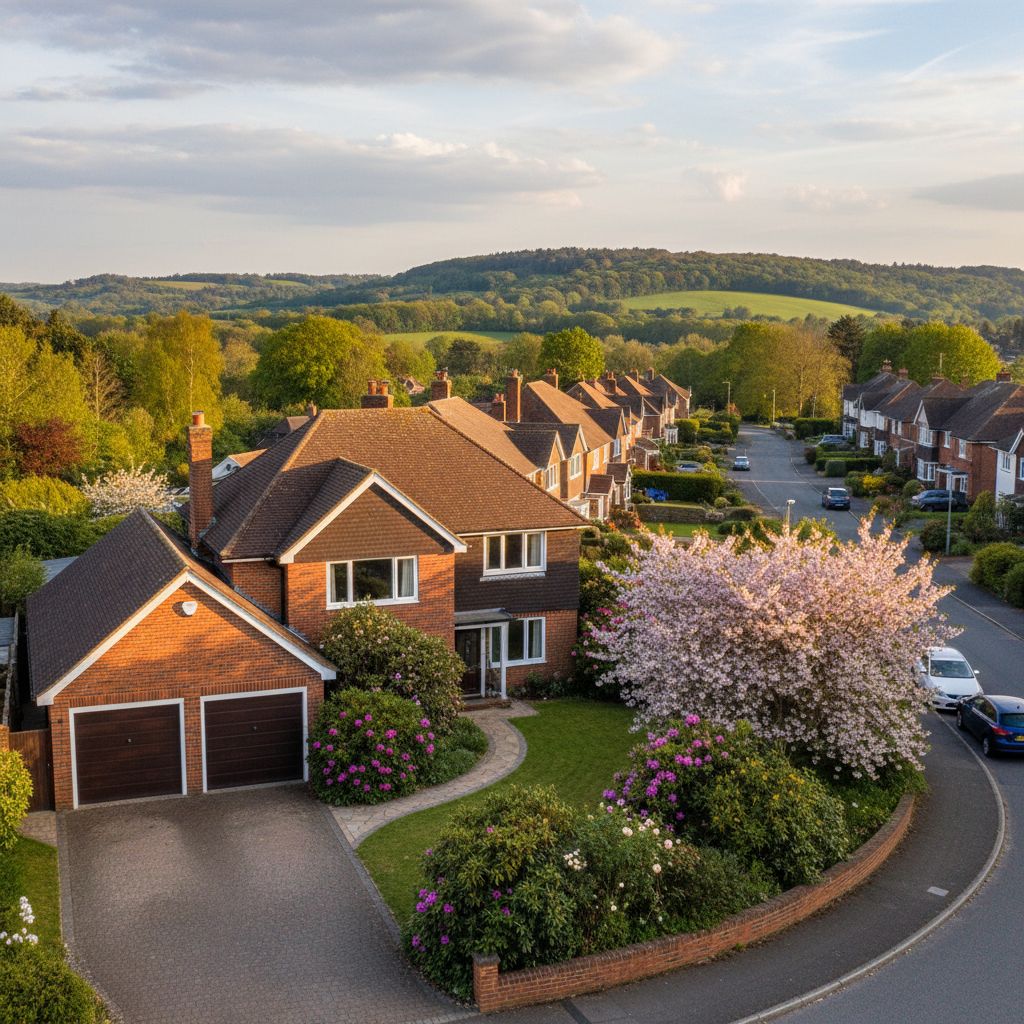
Downley sits on the hilltop above High Wycombe to the northwest, with a semi-rural character defined by Downley Common — a large area of National Trust common land that gives the neighbourhood its distinctive open-air feel. Despite being just a seven to ten-minute drive from the town centre, Downley has a quieter, more village-like atmosphere that appeals strongly to buyers seeking the Chilterns lifestyle without being far from the M40.
The housing stock in Downley is predominantly post-war — a mix of semi-detached and detached family homes from the 1950s through to the 1980s, alongside some period properties including the Grade II listed Downley Farmhouse, a former West Wycombe Estate property, and newer infill development. The common itself gives residents extensive walking and cycling from the doorstep, and the outlook across the Chilterns valley from the higher ground is genuinely attractive.
Downley is in catchment for the grammar school system, which makes it consistently attractive for families. Property prices here have historically been slightly above the borough average, reflecting the amenity premium of the common and the school catchment position.
Sands and Booker
Sands is a suburban area to the south of the town centre, with average prices around £485,000 — among the higher averages in the borough — reflecting its established character, good schools, and accessibility to the M40 junction. The housing stock includes a mix of interwar and post-war semis alongside some larger detached properties on the more established roads.
Booker, adjacent to Sands and close to the M40, is a quieter residential area favoured by buyers prioritising road connectivity and out-of-town retail access. The combination of John Lewis, ASDA, and other major retail anchors on the commercial corridor between Booker and the town centre gives this part of High Wycombe a practical convenience that family buyers frequently cite. Booker is within grammar school catchment and offers more affordable detached family homes relative to some of the more fashionable hilltop addresses.
Flackwell Heath and Loudwater
Flackwell Heath is one of the most consistently desirable residential addresses in the wider High Wycombe area — a hilltop community east of the town with views across the Thames Valley toward Marlow and the Chilterns. It has an established village feel, a strong community character, and a housing stock of substantial detached and semi-detached family homes that regularly commands prices at or above the HP15 postcode average.
The most sought-after roads in Flackwell Heath — particularly those on the south-facing slopes with Thames Valley views — regularly produce transactions above £700,000 for well-presented four and five-bedroom detached houses. Proximity to Beaconsfield (with its own Chiltern Railways station) adds a transport dimension that gives Flackwell Heath buyers two potential station options.
Loudwater, below Flackwell Heath in the valley, is more accessible in price and more mixed in character — a combination of period and post-war housing alongside the River Wye, with quicker road access to the town centre.
Tylers Green and Penn
Tylers Green and Penn sit on the hilltop to the west of Flackwell Heath, in an area of the Chilterns that combines the most affluent residential character in the borough with proximity to the Chilterns AONB landscape. The HP15 7 postcode — covering much of this area — is the most expensive in High Wycombe at an average of approximately £507,000, and the individual transactions at the top of this market regularly exceed £800,000 to £1.5 million for the largest properties on the best roads.
Penn village itself — with its historic church, village green, and deeply rural Chilterns setting — has an address quality that draws buyers willing to pay a premium for the combination of landscape beauty, architectural character, and proximity to Beaconsfield and the M40. For buyers whose budget extends to this level and who want the full Chilterns countryside experience within commuter reach of London, Penn and Tylers Green represent one of the most coherently attractive propositions in Buckinghamshire.
The Town Centre and Valley Floor
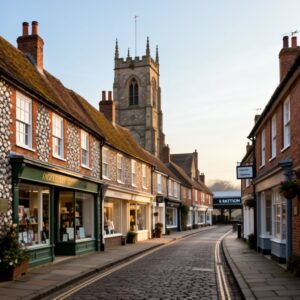
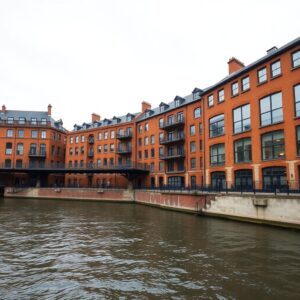
The town centre and immediate valley floor — the HP11, HP12, and HP13 postcodes — contain the widest range of property types and the most accessible price points in the High Wycombe market. Victorian and Edwardian terraces, purpose-built flats, converted period properties, and modern apartment developments collectively provide options for first-time buyers, investors, and downsizers at prices significantly below the hilltop suburbs.
The town centre has undergone — and continues to undergo — meaningful regeneration. The Eden development, which includes retail, leisure, and food and beverage anchors, is reshaping the commercial core in ways that support the longer-term residential case for living within walking distance of the station and town amenities. Buyers who are prepared to accept the urban character of the valley floor in exchange for walkable station access and the most competitive entry prices in the borough will find the widest choice of properties here.
Buyers specifically targeting investment should note that town centre flats carry the lowest average prices in the market — around £217,000 for flats across the borough — but also the most complex leasehold and service charge landscape. Checking the lease length, annual service charge, and sinking fund status before committing to any flat purchase is essential.
West Wycombe and the Western Villages
West Wycombe village — owned almost entirely by the National Trust and one of the most intact historic villages in Buckinghamshire, sitting below the famous Hell Fire Caves and St Lawrence’s Church — lies two miles west of the town centre on the A40. Properties within the village are rare on the market, historically significant in their architecture, and carry the specific planning framework of National Trust ownership and conservation area designation.
The wider western approach to High Wycombe — along the A40 toward Stokenchurch and into the Chilterns — provides access to villages including Bradenham, Radnage, and Bledlow Ridge, all offering deeply rural Chilterns living within practical reach of the town and the M40.
Grammar Schools and the Buckinghamshire Selective System
Buckinghamshire is one of only a handful of English counties to retain a fully selective state secondary system, and High Wycombe is its academic heart. The Royal Grammar School — a selective state boys’ grammar with an outstanding academic record — and the Wycombe High School for Girls are both located in High Wycombe and attract applications from across the county and beyond.
Admission to grammar schools in Buckinghamshire is based on the Buckinghamshire Test at Year 5/6, and is not directly tied to residential address in the way that most comprehensive school catchments work. However, feeder primary schools in High Wycombe and the surrounding area have historically produced strong pass rates, and proximity to the grammars is consistently valued by family buyers in the borough.
For buyers with grammar school ambitions, consulting Buckinghamshire Council’s school allocation information before committing to a purchase is worthwhile — the specific primary school a child attends, and the preparation available in that area, are more material to grammar school outcomes than the postcode of the family home.
Transport: High Wycombe’s Core Competitive Advantage
The town’s transport infrastructure is its most significant competitive advantage as a London commuter base. Chiltern Railways operate a frequent and reliable service from High Wycombe station to London Marylebone, with journey times of 25–30 minutes on the fastest services — comfortably within the threshold that most commuters consider viable. Services run early and late, and the station’s location in the town centre valley means it is walkable from a significant portion of the borough’s housing stock.
By road, the M40 provides direct motorway access to the M25 (Junction 1a, approximately eight miles south-east), enabling car commuters to reach Heathrow in around 30 minutes in off-peak conditions, and central London in under an hour from the town. The A404 Marlow bypass connects High Wycombe directly to the M4 at Maidenhead, opening up the Thames Valley employment corridor. Oxford is approximately 25 miles on the A40.
Beaconsfield — with its own Chiltern Railways station serving a slightly different timetable pattern — is accessible by road from the eastern parts of High Wycombe, giving buyers in Flackwell Heath and the southern HP9 postcodes an additional station option.
The Chilterns National Landscape: Constraint and Opportunity
The Chilterns National Landscape designation covers substantial land immediately surrounding High Wycombe — to the north, west, and south, the designated boundary comes within a short distance of the built-up area. This has two direct consequences for property buyers.
The first is planning constraint: new residential development within the National Landscape is strictly controlled, and the supply of housing in the premium hilltop suburbs is consequently limited. What exists is largely what will continue to exist, which is one of the structural reasons why Downley, Penn, and Flackwell Heath values are supported despite the town’s broader accessibility.
The second is lifestyle opportunity: the National Landscape is accessible from the back garden of many High Wycombe properties on the higher ground, with an extensive network of footpaths, bridleways, and cycling routes within minutes of suburban streets. This proximity — Chilterns walking from your doorstep, London in under 30 minutes by train — is the essence of the lifestyle proposition that keeps High Wycombe in serious consideration for buyers who might otherwise focus entirely on the overtly fashionable Chilterns addresses.
Buyers purchasing properties within or adjacent to the National Landscape should note that permitted development rights may be restricted. The Town and Country Planning (General Permitted Development) (England) Order 2015 provides the baseline framework, but National Landscape designation frequently curtails these rights. Confirming the permitted development position with Buckinghamshire Council’s planning service before purchasing any property where planned works are part of the buying rationale is essential.
Where to Search for High Wycombe Houses
The major portals — Rightmove, Zoopla, and OnTheMarket — all carry the full range of High Wycombe listings. Setting up saved searches by specific area rather than the whole town produces a more manageable and targeted feed of relevant properties.
All estate agents in England are regulated through NTSELAT and must be members of a redress scheme — either The Property Ombudsman or the Property Redress Scheme.
Use the UK House Price Index to check what comparable properties have actually sold for in the specific postcodes you are targeting — particularly important in a market where the spread between the most and least affordable postcodes is around £200,000, and where a thorough understanding of local comparables is essential for grounding any offer.
Frequently Asked Questions
Is High Wycombe a good place to buy property in 2026?
The fundamentals are solid. The train service to London Marylebone in under 30 minutes remains the core competitive advantage, and it is one that is structurally unlikely to deteriorate — Chiltern Railways has consistently operated one of the more reliable and well-regarded commuter services in the London commuter belt. House price growth of 32.9% over the decade to 2025 is modest compared to the dramatic gains of the pandemic era in some locations, but the absence of a significant correction from the 2021 peak means the market is trading on rational fundamentals rather than overheated expectations. For buyers prioritising London commutability, Chilterns access, and a competitive entry price relative to the journey time, High Wycombe consistently delivers.
What are the most affordable areas of High Wycombe for buyers?
The most affordable postcodes are in the HP12 sector — the westerly and south-westerly parts of the town including Cressex and Daws Hill — where the average price sits around £313,000. Town centre flats and the lower-value terraces of the valley floor also provide entry points well below the borough average. For buyers wanting a conventional family house in a suburban setting at the accessible end of the market, Booker and parts of the lower Sands area offer three-bedroom semis at prices that remain competitive relative to the wider South East.
Are High Wycombe properties suitable for London commuters?
High Wycombe has previously been described as the South East’s best commuter town for its combination of reliable rail access, road connectivity, and competitive pricing. The Chiltern Railways service to Marylebone is one of the most consistent performers in the London commuter rail network, and journey times under 30 minutes — with services running throughout the day and into the evening — make it a genuinely practical daily commute from most of the borough. Buyers who need Heathrow access will find the M40/M25/M4 road network particularly useful; those travelling to the City or Canary Wharf will typically change at Baker Street or Bond Street from Marylebone.
How does High Wycombe compare to Beaconsfield or Marlow for buyers?
Both Beaconsfield and Marlow have stronger lifestyle reputations and higher average house prices than High Wycombe. Beaconsfield averages around £850,000–£950,000 for family homes in the established residential areas, and Marlow trades at broadly similar levels on the Thames. High Wycombe’s average of £401,000 is therefore substantially more accessible — and for buyers who prioritise train speed over postcode prestige, the High Wycombe to Marylebone journey is comparable to or faster than Beaconsfield. The lifestyle trade-off is a more urban town centre and less of the boutique village character that defines Marlow and Old Beaconsfield — but within ten minutes’ drive of either location, the distinction diminishes considerably.
What should I check when buying a leasehold flat in High Wycombe?
Leasehold flats in High Wycombe — as elsewhere — require careful due diligence beyond the standard residential search. Key areas to check include: the unexpired lease length (lenders typically require a minimum of 70–85 years remaining, and a lease below 80 years triggers statutory extension rights that add cost); the annual service charge and the breakdown of what it covers; the sinking fund balance, which indicates whether adequate reserves are in place for major works; the managing agent’s track record; and any major works planned or underway that could result in a significant special levy.
Your solicitor should obtain a management information pack from the freeholder or managing agent and advise on any terms in the lease that are unusual or potentially onerous.
Conclusion
Houses for sale in High Wycombe offer a genuinely compelling proposition for buyers who take the time to understand the market properly. The combination of sub-30-minute London Marylebone rail access, direct M40 connectivity, Chilterns National Landscape on the doorstep, a competitive grammar school system, and house prices that consistently undercut equivalent-journey commuter towns makes it one of the most coherently argued cases in the Home Counties for a buyer whose priority is value relative to London access.
The key is knowing which part of the town suits your priorities. The hilltop suburbs of Downley, Flackwell Heath, Penn, and Tylers Green deliver the premium Chilterns lifestyle at prices above the borough average; the town centre and valley floor offer the most competitive entry points and the best station access; and the Sands and Booker areas provide the most balanced combination of suburban family living, school catchment, and road connectivity.
Get that geographical fit right, anchor your offer in Land Registry sold price data, and have your mortgage agreed in principle before you start viewing — High Wycombe rewards buyers who are prepared and positioned to act.
For broader context on how the UK property market is performing and where buyers and investors are finding the best opportunities nationally, the guide on how UK property investors are thriving in a changing market is worth reading alongside this local focus.