
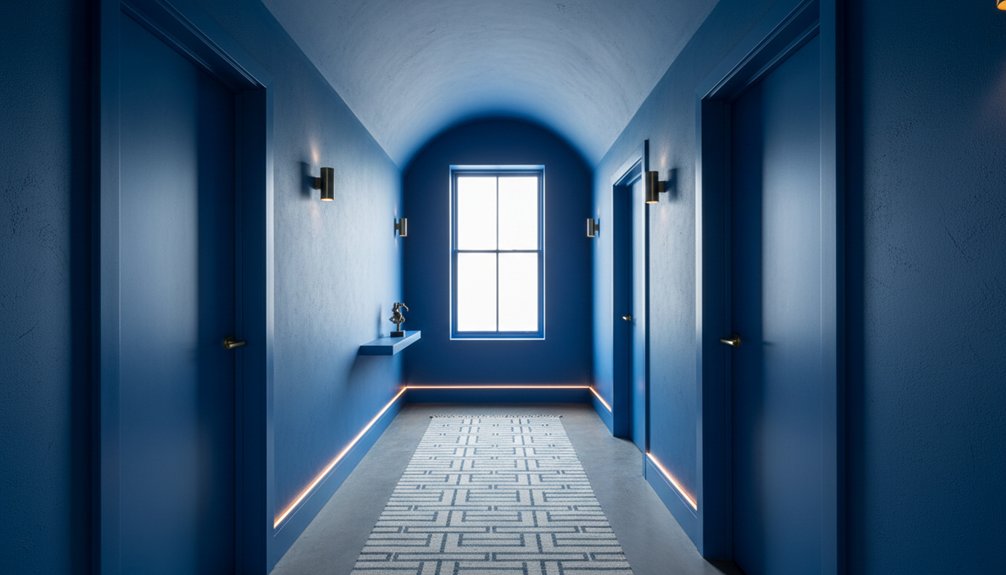
If your hallway feels narrow, gloomy and easily overlooked, colour drenching can give it a more considered sense of space. By carrying one carefully chosen shade across the walls, ceiling, doors and woodwork, you’ll reduce harsh visual breaks and create a calmer, more enveloping effect. The right finish can also help bounce light through the corridor, but choosing the colour without considering your lighting could undermine the result.
Key Takeaways
- Colour drenching creates a continuous visual flow, making narrow hallways feel wider, calmer, and more cohesive.
- Paint walls, ceilings, skirting boards, doors, and architraves in related shades to soften awkward angles and boundaries.
- Choose colours according to natural light: warm neutrals and muted greens suit north-facing hallways, while cooler shades work in sunnier spaces.
- Light-reflective tones, mirrors, and layered warm lighting can brighten dark corridors without resorting to stark white.
- Test large paint samples in changing light, and balance saturated colours with streamlined furniture and carefully varied finishes.
Why Colour Drenching Works in Dark Hallways
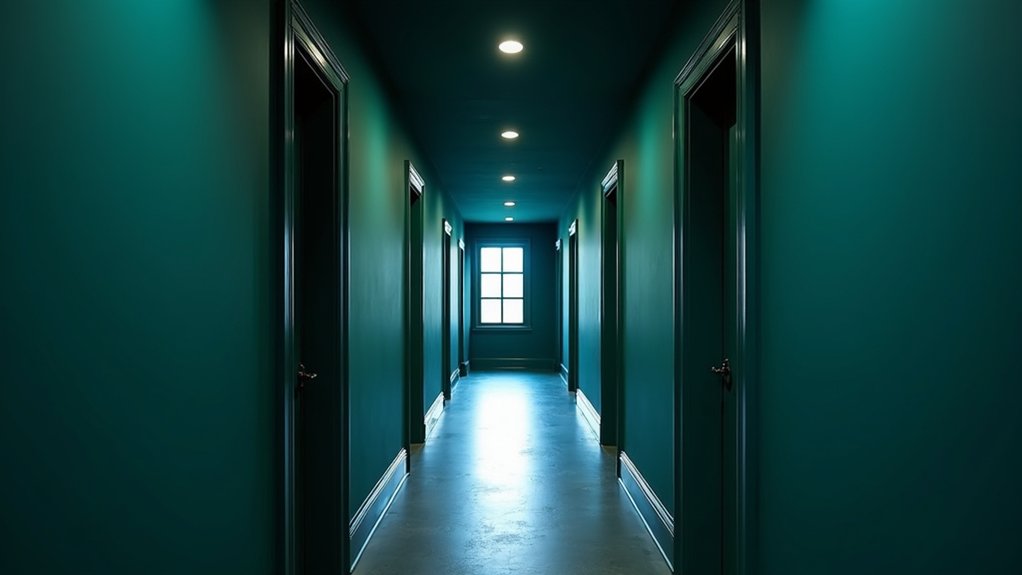
Colour drenching works in dark hallways because it replaces harsh contrast with a continuous wash of colour, making the space feel more cohesive and considered. Paint the walls, ceiling, skirting boards and doors in one related shade to soften visual breaks and help the corridor appear wider. This approach also makes awkward angles feel intentional rather than cramped.
Use Color psychology to guide your choice: a muted blue can create calm, while a warm clay or soft olive adds comfort without overwhelming the passage. Consider paint texture, too. A durable matt finish disguises minor imperfections and absorbs distracting glare, while consistent sheen across woodwork maintains a unified effect.
Test samples in your hallway, then assess how the colour behaves beside adjoining rooms before committing to the full scheme.
Use Lighting to Choose the Right Colour
Light changes how a hallway colour looks, so assess samples in the space at different times of day before choosing one.
North-facing hallways usually receive cool, limited daylight, which can make blue or grey paint feel colder. Test warmer neutrals, muted greens, or softened terracotta to add balance.
South-facing spaces can handle cooler shades, though strong sunlight may bleach pale colours.
Consider your existing bulbs, too. Colour temperature affects paint dramatically: warm white lamps bring out red and yellow undertones, while cool white bulbs emphasise blue and green.
Use layered lighting techniques, such as wall lights, ceiling fixtures, and low-level illumination, to check the shade under realistic conditions.
Paint large sample boards rather than small patches, and move them along the corridor. Review them at morning, afternoon, and evening before committing.
Extend Colour Drenching Across Walls and Trim
Once you’ve assessed the shade in changing light, carry it across the walls, skirting boards, door frames, and doors for a fully drenched effect. This continuous treatment blurs visual boundaries, so your narrow hallway feels considered rather than interrupted.
Use the same finish throughout, or choose a slightly tougher satin for woodwork while keeping the colour consistent. Don’t reserve the deepest tone for Accent walls: colour drenching works best when every surface contributes to the scheme.
If you prefer definition, introduce subtle Trim contrast by shifting the paint one step lighter or darker, rather than defaulting to white. Sample both options beside your flooring and hardware, then check how the junctions read at eye level.
Paint doors open and closed to ensure edges remain neat and cohesive.
Make a Narrow Hallway Feel Brighter
To make a narrow hallway feel brighter, choose a light-reflective colour with a soft, warm undertone rather than a stark white that can appear cold. Use colour psychology to guide your choice: pale buttery yellow, gentle blush, or warm stone can lift the mood while making walls feel more open.
Continue the shade across skirting boards, doors, and architraves to create a seamless, expansive effect. For ceiling painting, use the same hue in a lighter finish, or carry the wall colour overhead for a cocooning look that avoids harsh visual breaks.
Choose eggshell or satinwood for woodwork, as subtle sheen helps bounce light without appearing glossy. Pair the scheme with a well-placed mirror and warm, layered lighting to amplify brightness throughout the passage.
Avoid Colour Drenching’s Biggest Mistakes
Colour drenching can make a narrow hallway feel considered and spacious, but poor planning may create a cramped or overpowering result. Before choosing a shade, test large samples in daylight and artificial light.
Consider Color psychology: deep blues can feel cocooning, while warm neutrals may keep the passage welcoming rather than gloomy. Don’t ignore the ceiling, skirting boards or doors; leaving one element white can interrupt the enveloping effect.
Instead, vary sheen carefully to add definition without breaking continuity. Check the paint texture, too: heavy finishes may highlight uneven walls, whereas a smooth, durable eggshell creates subtle light reflection and withstands traffic.
Avoid using too many competing tones, patterns or fixtures. Finally, balance saturated colour with streamlined furniture, reflective details and warm lighting, so your hallway feels intentional, not visually crowded.
Frequently Asked Questions
Can Colour Drenching Work in Hallways With Patterned Wallpaper?
Yes, you can colour drench a hallway with Patterned wallpaper. Choose a paint shade from its design, then repeat it on woodwork and ceiling. This colour blending creates cohesion without overwhelming your narrow space.
How Often Should Colour-Drenched Hallway Surfaces Be Repainted?
Repaint colour-drenched hallway surfaces every five to seven years—unless your walls resemble a fingerprint museum sooner. Check high-traffic areas annually; clean gently, repair scuffs promptly, and choose durable paint to maximise maintenance frequency and colour longevity.
Is Colour Drenching Suitable for Rental Properties?
Yes, you can colour-drench a rental property, but check Rental restrictions first. Choose reversible finishes and prioritise paint durability. Ask your landlord, document approval, and select washable, low-sheen products for practical hallway maintenance and easy future restoration.
Which Flooring Styles Complement a Colour-Drenched Hallway?
You’ll complement a colour-drenched hallway with pale timber, patterned encaustic tiles, or polished stone flooring. Balance bolder floors with restrained lighting options and furniture choices, ensuring finishes enhance your palette without making the space feel overcrowded.
Can Artwork and Mirrors Be Incorporated Into a Colour-Drenched Hallway?
Yes, you can—dark walls won’t overwhelm carefully chosen pieces. Plan artwork placement at eye level, and select mirror styles with slim frames to reflect light without disrupting your colour-drenched hallway’s cohesive, sophisticated finish.