
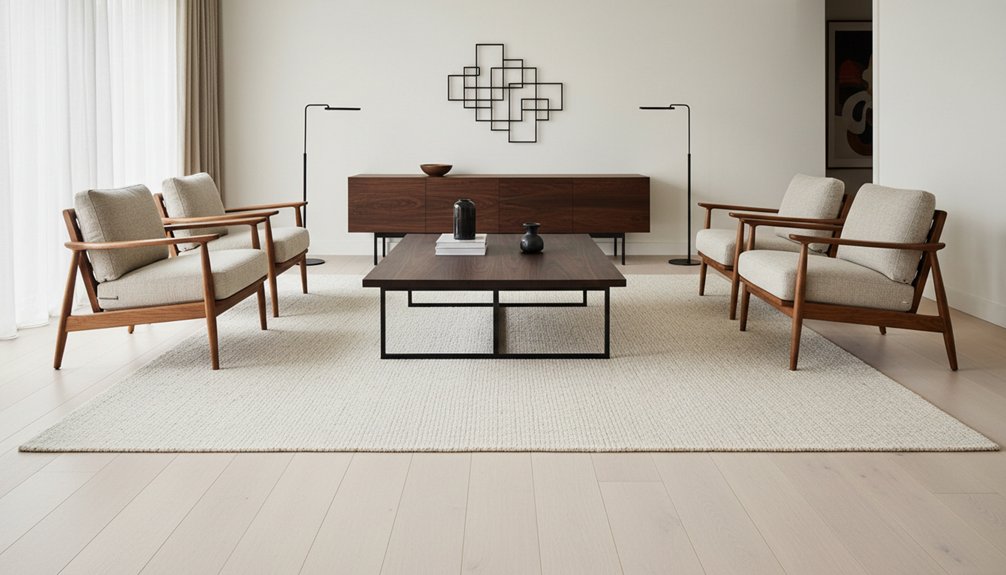
Contrasting wood tones can make a room feel collected rather than mismatched, but only when you give the eye a clear visual order. Start by choosing one dominant wood for roughly 60% of the space, then layer lighter or darker pieces with compatible undertones. Repeat each tone deliberately, balance bold grain with quieter surfaces, and vary finishes with restraint. The right hierarchy matters—but avoiding the most common clashing mistakes matters even more.
Key Takeaways
- Choose one dominant wood tone for the largest surfaces, then use contrasting woods as intentional accents.
- Match supporting woods by undertone, comparing warm, cool, or neutral finishes in the room’s natural light.
- Create purposeful contrast by pairing light and dark finishes while balancing bold grain with quieter patterns.
- Repeat each wood tone in at least two locations to establish cohesion and visual rhythm.
- Correct clashes by removing conflicting undertones, varying sheen thoughtfully, and connecting isolated pieces through color or repetition.
Choose a Dominant Wood Tone
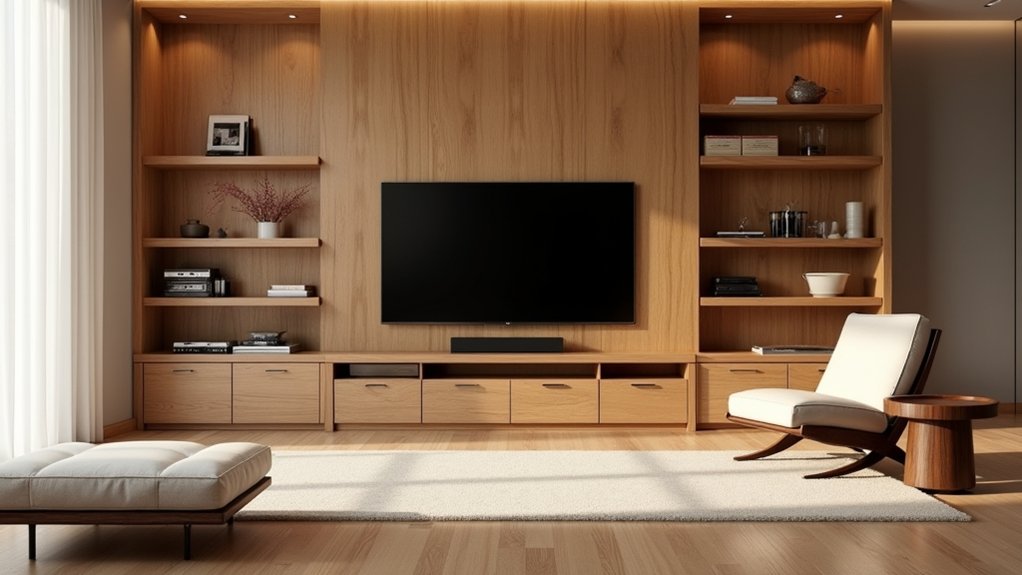
Start by choosing one dominant wood tone to anchor the room and guide your other finishes. Use it on the largest visual element, such as flooring, cabinetry, or a substantial dining table. This primary tone should occupy roughly 60 percent of the room’s wood surfaces, creating order before you introduce contrast.
Evaluate its grain patterns and color saturation in the room’s actual light, since both affect how strongly the wood reads. Keep secondary woods to smaller, intentional accents: a sideboard, chair frames, shelving, or decorative objects.
Vary scale and placement so contrasting finishes look curated rather than scattered. Repeat the dominant tone at least twice to establish rhythm, then let one or two supporting woods add depth.
You’ll create a cohesive foundation without making every piece match.
Match Wood Tones by Undertone
Once you’ve established a dominant wood tone, compare each supporting finish by its undertone—the subtle warm, cool, or neutral cast beneath the surface color.
Warm woods, such as cherry, walnut with red notes, and honey oak, generally relate well to finishes carrying golden, amber, or reddish hints.
Cool woods, including ash, maple, and gray-washed oak, pair more naturally with smoky or blue-gray undertones.
Neutral finishes offer flexibility, but check them beside your dominant piece in daylight; surrounding paint and artificial light can distort perception.
Don’t rely on color alone. Study grain patterns, sheen, and the way wood grain directions reflect light.
If two finishes share an undertone, their differences will feel considered rather than accidental.
Sample boards or removable swatches help you verify the relationship before committing to furniture, flooring, or cabinetry.
Mix Wood Tones With Intentional Contrast
Intentional contrast keeps a mixed-wood room from looking accidental: pair a light finish with a markedly darker one, rather than combining several nearly identical shades. Use contrast to establish hierarchy: let one dramatic piece, such as a walnut table, anchor the scheme while lighter oak chairs or shelving provide relief.
Consider grain patterns before choosing finishes; a bold, linear grain can energize a smooth, quiet surface, while two highly active patterns may compete. Vary finish textures thoughtfully, too. Matte wood beside a subtly polished piece creates dimension without making the room feel busy.
Keep silhouettes simple when tones differ strongly, so the color relationship remains the feature. Before committing, view samples in your room’s natural and artificial light; contrast can intensify or soften throughout the day.
Repeat Wood Tones for Room-Wide Balance
After establishing contrast, repeat each wood tone in at least two or three places to give the room a cohesive rhythm. Echo a dark walnut finish through a coffee table, picture frame, and cabinet hardware, while a pale oak tone can appear in shelving, stools, or woven accents. You don’t need exact matches; aim for visual relationships.
Repeat similar grain patterns to reinforce continuity, or balance a strongly figured piece with quieter surfaces elsewhere. Consider finish types, too: pair matte wood with other low-sheen elements and use polished timber sparingly as an intentional highlight.
Distribute repeated tones across the room rather than grouping them on one wall. As you layer furniture and accessories, step back periodically. You’ll see whether each wood tone contributes to a balanced, connected composition.
Fix Common Wood-Tone Clashing Mistakes
Wood tones usually clash when there’s too much competition in color, grain, or finish. Start by identifying the room’s dominant wood, then treat other pieces as supporting accents. If every surface has a different undertone, remove or refinish one item so the palette feels intentional.
Balance bold grain patterns with quieter woods rather than placing several dramatic pieces together. You should also vary finish textures thoughtfully: pair a matte, wire-brushed table with polished elements, but avoid stacking multiple glossy finishes.
Don’t match every wood exactly; aim for connection through temperature, value, or repetition. If a piece still feels isolated, echo its tone in a frame, shelf, or accessory.
Finally, step back from the room’s entrance. Distance reveals visual clutter and shows which adjustment will restore balance.
Frequently Asked Questions
Can Painted Furniture Be Mixed With Natural Wood Tones?
Yes, you can mix painted furniture with natural wood tones. Use color coordination to connect pieces, while texture blending balances finishes. Repeat one accent color, vary wood grain thoughtfully, and maintain consistent proportions throughout your room.
How Do Lighting Conditions Affect the Appearance of Different Wood Tones?
You’ll notice lighting effects dramatically alter color perception: warm bulbs deepen honey and red undertones, while cool daylight emphasizes gray or yellow notes. Test wood samples throughout the day before finalizing your furniture arrangement or finishes.
Should Wood Tone Choices Change Between Open-Plan and Separate Rooms?
Yes, you should adapt wood tones: pursue Open plan harmony by repeating undertones across connected spaces, while embracing Separate room contrast with bolder variation, letting each room establish its own distinct visual rhythm.
What Finishes Best Protect Mixed Wood Furniture From Scratches and Fading?
Choose UV-resistant varnish or lacquer for mixed wood furniture. Varnish durability handles scratches and moisture, while lacquer protection creates a smooth, hard barrier. Add coasters, felt pads, and curtains to reduce daily wear and fading.
Can Metal, Glass, or Upholstered Pieces Help Transition Between Contrasting Woods?
Yes, you can bridge contrasting woods with metal accents, glass decor, upholstered textiles, and decorative accessories. Let these elements break the ice, repeat shared colors, and create visual rhythm while preserving each wood’s character.