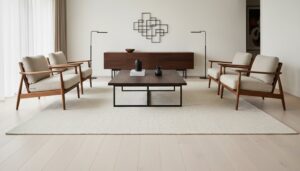
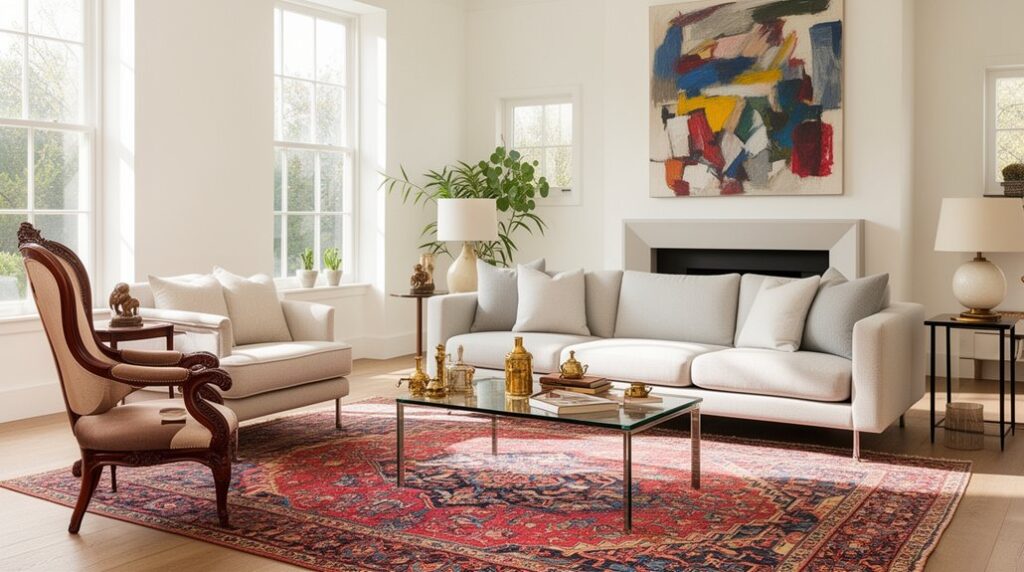
Pick a modern baseline (Scandi, midcentury, minimalist) and keep a tight palette of two neutrals plus one accent. Start with one sturdy antique anchor, measure clearances, and give it breathing room with clean-lined pieces and uncluttered surfaces. Repeat one or two materials (wood tone, brass/black metal) to make the mix feel intentional, and use bold, simple art to balance ornate details. Refresh function on a budget with new foam, durable fabric, or updated pulls—more smart swaps ahead.
Key Takeaways
- Choose one sturdy antique “anchor” piece, measure carefully, and give it 18–24 inches of clearance so it feels intentional, not crowded.
- Keep a modern base style with a tight palette: two neutrals plus one accent repeated in paint, rugs, and upholstery.
- Create cohesion by repeating materials and limiting wood tones to three, with one dominant “anchor” wood and two supporting tones.
- Balance ornate antiques with clean-lined modern art and minimal accessories, keeping 30–40% of tabletops clear for a lighter look.
- Use modern, warm high-CRI lighting (2700K, 90+ CRI) with dimmers and directional beams to highlight patina and texture.
Pick a Modern Style for Antiques to Play Off
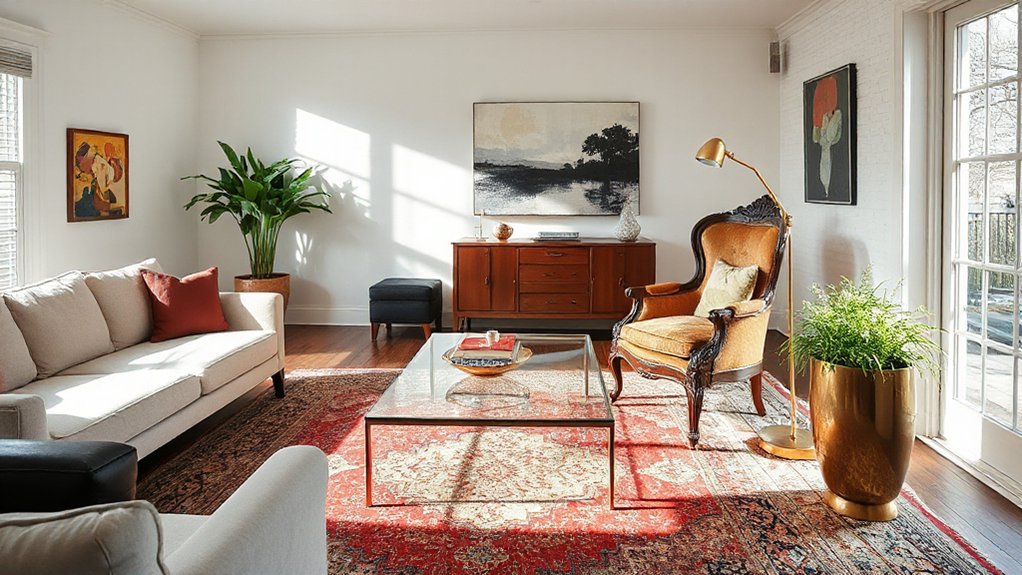
Before you bring an antique piece into a room, choose one modern style to anchor the space—midcentury, Scandinavian, industrial, or minimalist—and stick to it. You’ll shop faster, waste less, and avoid that “everything’s old” look.
Set a tight palette (two neutrals plus one accent), then repeat it across paint, rugs, and upholstery so the antique reads as intentional.
Use clean-lined, budget-friendly staples—flat-front cabinets, simple sofas, matte black hardware—then layer in Vintage textiles like a worn kilim runner or linen drapes to soften edges without adding clutter.
Limit Antique accessories to a small, curated cluster: one brass lamp, a framed etching, or a single ceramic vase.
Keep modern lighting consistent to unify the mix.
Choose Antique Pieces That Earn Their Spot
Although antiques can add instant character, you’ll get the best results (and protect your budget) by choosing only pieces that truly pull their weight—either because they solve a practical need, bring standout craftsmanship you can’t afford new, or deliver a clear focal point that modern basics can’t.
Before you buy, measure your space, confirm storage or seating capacity, and check stability, joinery, and drawer action. Inspect for repairs that affect safety or function: loose legs, wormholes, water damage, missing hardware. Ask for provenance and look for consistent patina to support Antique authenticity, then price it against a quality new equivalent plus any restoration.
Prioritize items you’ll use weekly, not just admire. For Vintage preservation, avoid pieces that require stripping, heavy sanding, or irreversible alterations.
Start With One Antique “Anchor” Piece
When you start with a single antique “anchor” piece—like a dining table, sideboard, or upholstered chair—you give the room a clear focal point and keep your spending (and styling) under control.
Choose one item with solid construction, usable dimensions, and a finish you can live with; minor wear is fine, major repairs aren’t budget-friendly. Do your focal point selection by mapping sightlines from the entry and main seating position.
Then plan antique placement with measurements: leave enough clearance for drawers, doors, and walkways, and confirm it won’t block outlets or vents.
Build the rest of the room with simple, affordable modern pieces in calm colors so the anchor reads intentional.
Add only one supporting vintage accent (like a lamp) after you’ve lived with it a week.
Balance Antique Scale With Modern Negative Space
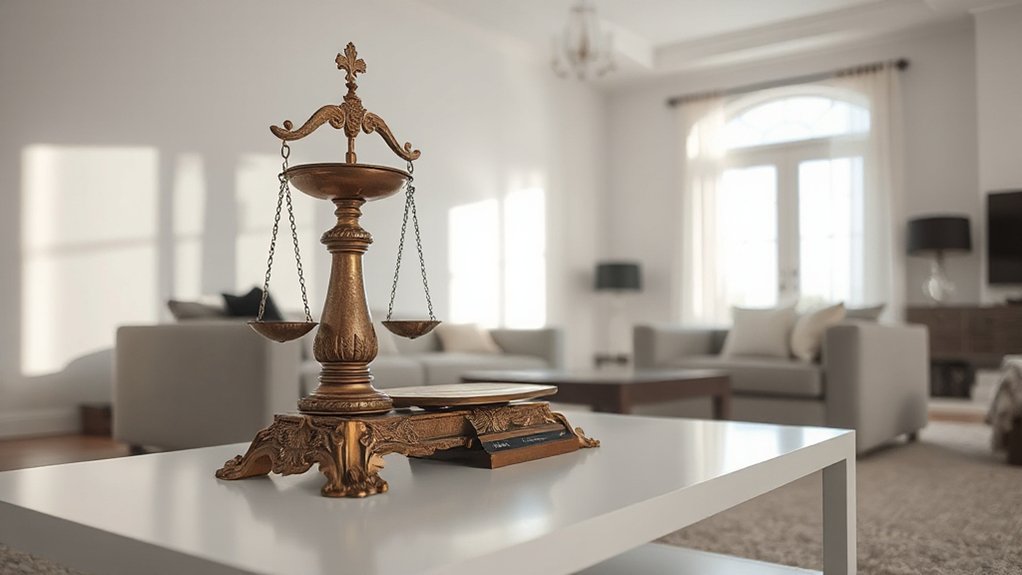
When you bring a substantial antique into a modern room, you’ve gotta give it breathing room so it reads intentional, not crowded. Keep the walls and surrounding surfaces simple—fewer accessories, more clear floor space, and a calm backdrop—so the antique’s scale feels anchored by negative space.
You can do this on a budget by editing what you already own and using low-cost basics (plain curtains, neutral paint, minimal hardware) instead of buying more décor.
Let Antiques Breathe
Because antiques often carry visual weight through carved details and darker finishes, you’ll get a cleaner, more modern look by giving each piece room to breathe. Pull a cabinet or settee a few inches off the wall, and keep at least one side visually open so the silhouette reads crisp.
Limit what sits on top: choose one tray, one lamp, or a single ceramic instead of a cluster. Use light, plain backdrops—white walls, linen curtains, or a simple rug—to highlight vintage charm without adding cost.
Protect surfaces for antique preservation with felt pads, coasters, and UV-filtering window film; it’s cheaper than refinishing.
Edit nearby decor too: leave a clear path and a bare patch of floor to make the antique feel intentional.
Anchor Scale With Space
Giving antiques room to breathe sets the stage; now you’ve got to balance their scale so they don’t overpower the room. Start by measuring: note your ceiling height, wall width, and the antique’s footprint.
Aim for scale harmony by pairing one large antique with low, clean-lined pieces and plenty of open floor. Leave at least 18–24 inches of walking clearance around bulky furniture, and keep tabletops 30–40% open so the eye can rest.
Use space proportion on walls: hang an ornate mirror or painting, then flank it with plain sconces or blank space instead of more frames. If a piece feels too heavy, lift it visually with light rugs, slim legs, or a budget-friendly glass side table.
Repeat Materials to Blend Antiques and Modern
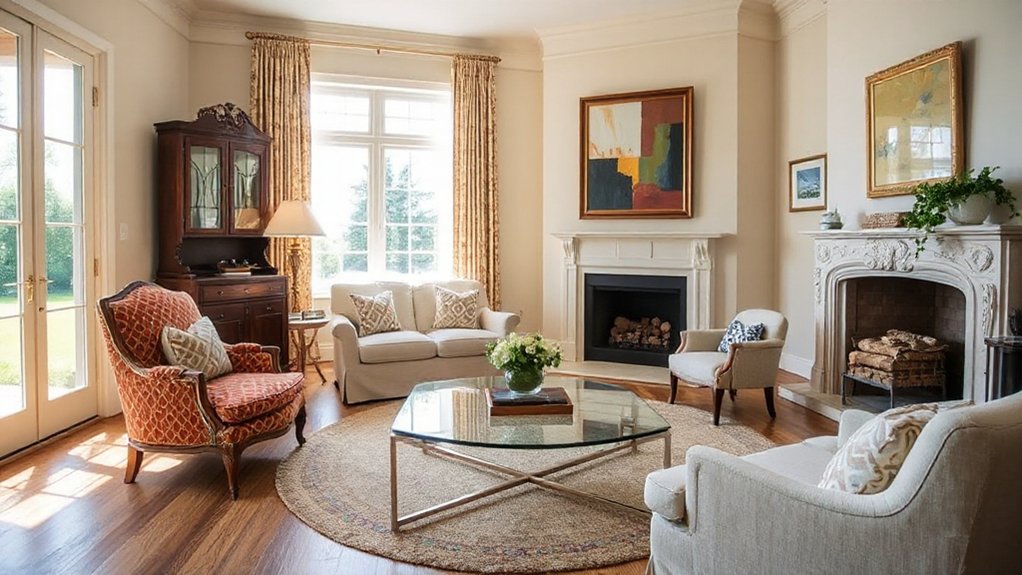
Although your antiques and modern pieces may come from different eras, repeating the same materials across the room makes them feel like they belong together. Start with Material repetition: if you’ve got an oak antique dresser, echo wood elsewhere with a simple oak shelf, picture frames, or even a wood tray from a thrift store. If your antique is brass, repeat that metal in cabinet pulls, a floor lamp, or inexpensive hardware swaps. Keep finishes in the same family so nothing looks accidental.
Then build Texture contrast for balance: pair a carved wood table with a smooth glass top nearby, or set a sleek sofa against a nubby linen throw and a worn leather trunk. You’ll get cohesion without matching sets or pricey replacements.
Use Color to Connect Antique Pieces to Modern Rooms
Start by echoing your antique’s key tones—like warm brass, aged oak, or deep burgundy—in small, low-cost touches such as pillows, frames, or a simple rug.
Then pick one modern color anchor (a crisp white wall, charcoal sofa, or muted green accent) that repeats across the room so the old piece reads intentional, not random.
You’ll get a cohesive look without repainting everything or buying a full matching set.
Echo Antique Tones
When your antique piece feels like it’s floating in a too-modern room, color can pull everything back into sync without a big spend. Start by sampling two or three tones already living in the antique—warm walnut, tarnished brass, oxblood leather, faded indigo—and repeat them in small, easy swaps for vintage harmony.
You’ll get the best Antique echoes through textiles: a $20 pillow cover that matches the wood undertone, a throw that mimics a rug’s muted reds, or linen curtains with a tea-stained warmth. Add one framed print that repeats the antique’s dominant shade, and choose bulbs (2700K–3000K) so the finish reads rich, not gray.
Keep repeats subtle: aim for three touches per color, spread across the room, so the antique looks intentional, not staged.
Use Modern Color Anchors
Echoing your antique’s tones builds harmony, but a modern room often needs one clear color anchor to make the piece feel grounded. Pick a contemporary shade already in the space—charcoal, crisp white, or a muted green—and repeat it near the antique to create Color harmony. Do it cheaply: swap pillow covers, add a solid throw, or hang one graphic print with that hue.
Then build small accent palettes around the anchor: two supporting colors plus one metal. Example: navy anchor, ivory and tan supports, brushed brass hardware. Keep the anchor consistent across at least three touchpoints (textiles, art, and a vase).
If the antique is dark, choose a lighter anchor to sharpen contrast; if it’s ornate, keep the anchor matte.
Mix Antique Woods Without Visual Chaos
Although mixing antique woods can feel like you’re inviting clutter, you can keep it cohesive by choosing one “anchor” tone (say, warm walnut or honey oak) to dominate the room and letting the other woods act as supporting players.
Aim for Color contrast with intention: pair one dark, one medium, and keep the rest in a tighter range so your eye knows where to rest.
For Material harmony, repeat one detail across pieces—similar leg shape, carved edge, or brass hardware—so mismatched grains still relate.
Use a cheap sample board or peel-and-stick stain swatches to compare undertones in your actual light.
If a piece clashes, soften it with a neutral runner, felt pads, or a matte wax finish instead of refinishing.
Keep wood counts to three. Max.
Pair Antique Furniture With Modern Lighting
You can make antique furniture feel current by pairing it with modern lighting that matches its scale—try an oversized arc floor lamp beside a petite side table, or slim pendants over a hefty buffet.
Aim warm, adjustable LEDs to rake across wood grain and carvings so the patina reads rich, not dull, and you won’t need pricey refinishing.
Keep the mix cohesive by repeating one metal tone (black, brass, or nickel) across fixtures and hardware, and use affordable swap-in shades or spray paint to bridge any finish gaps.
Contrast Eras With Scale
When an ornate antique dresser or dining table anchors the room, modern lighting can keep the space from feeling heavy by adding clean lines and the right scale overhead. Choose a fixture that’s slightly larger than you’d pick for a fully modern room, so it visually “stands up” to carved legs and thick silhouettes.
Use the antique’s historical context and cultural significance as your sizing cue: formal pieces tolerate bolder pendants, while simpler farmhouse furniture pairs best with slimmer linear lights.
Keep costs down by swapping in an oversized paper lantern, a basic drum shade, or a track head kit, then upgrade bulbs for better color.
Hang pendants 30–36 inches above tables, and center them to the furniture, not the ceiling box.
Highlight Patina Using Light
Right-size lighting can balance an antique’s heft, but the real magic comes from using light to bring out patina—the softened sheen, worn edges, and layered finish that make old wood and metal feel alive. Aim for angled, directional beams instead of flat overhead wash.
Place a slim floor lamp 18–24 inches from a dresser, then tilt the shade so light skims across the surface; you’ll reveal texture without glare. Choose warm LEDs (2700K) and a high CRI (90+) so color reads true on aged finishes.
Add a plug-in dimmer to control mood for under $20. For Patina lighting, use one bright task light and one softer ambient source. Antique illumination shines when you light details, not the whole room at once.
Blend Finishes And Metals
Although antique furniture often carries warm brass, dark iron, or mellowed wood tones, modern lighting can still look intentional if you echo one finish and contrast the other. Start by picking one “bridge” finish from the antique—brass pulls, iron hinges, or a bronze escutcheon—and repeat it in your fixture’s canopy, chain, or shade hardware.
Then keep the main light body in a clean contemporary tone like matte black or brushed nickel. This controlled approach to metal finishes prevents chaos while still giving you mixed metals.
If you’re on a budget, swap bulbs and shades first: a linen drum softens sleek pendants; clear glass keeps carved pieces from feeling heavy.
Finally, keep all metals within one temperature family—warm with warm, cool with cool.
Style Antiques With Contemporary Art and Objects
If you want antiques to feel intentional in a modern space, pair them with contemporary art and objects that echo their scale, color, or texture. Hang a bold, minimal print above an ornate console so the clean lines “frame” the curves. Match undertones: a cool abstract works with gray-washed oak, while warm photography flatters honey maple.
Use small, affordable accents to bridge eras. Stack matte ceramic vases beside a carved box, or add a simple acrylic tray to corral keys on an antique table. Layer Vintage textiles—like a flatweave runner or indigo pillow—near traditional wood to soften the contrast without adding clutter.
Let Antique symbolism guide choices: repeat a crest’s color in a modern sculpture, or echo floral motifs in a graphic rug. Keep groupings to three or five items.
Modernize Antiques With Upholstery and Hardware
Once you’ve balanced antiques with contemporary art and accents, update the pieces themselves so they work harder in daily life. Start with Upholstery updates: replace sagging foam, add webbing, and choose performance fabric or leather-look vinyl for durability. Keep silhouettes classic, but pick solid colors or tight modern patterns to prevent a “theme” vibe. If you’re saving money, re-cover seat cushions first and leave frames original.
Next, swap tired pulls, knobs, and hinges for crisp hardware accents. Match metal finishes to your room’s lighting—brass warms, nickel cools, black adds contrast. Use backplates to cover old screw holes, and measure center-to-center spacing before ordering.
For cabinets, install soft-close adapters instead of replacing boxes. You’ll keep character while improving function.
Shop Smart for Antiques: Sources and Red Flags
Before you hand over cash, decide where you’ll shop and what deal-breakers you won’t accept, because the right source saves you money and the wrong one can lock you into costly repairs. Start with estate sales and local dealers for negotiable prices; use auction houses when you’ve researched buyer’s premiums, shipping, and return terms.
Online marketplaces can work, but only if listings show joints, drawer bottoms, backs, and maker’s marks. Ask for provenance, receipts, and restoration notes, then run basic authenticity checks: consistent wear, period-appropriate screws, intact labels, and matching patina across parts.
Walk away from fresh stain smells, wobbling frames, swapped hardware, newly glued cracks, active woodworm, or “too perfect” distressing. Budget for inspection time and transport.
Avoid These Antique-in-Modern Decorating Mistakes
Smart buying keeps you from inheriting repairs, but styling choices can still make a great antique look awkward or out of place in a modern room. Don’t crowd every surface; Antique clutter makes even valuable pieces read like thrift overflow.
Pick one hero antique per zone, then give it breathing room with clean-lined seating and simple textiles. Avoid Modern overstatement: if your room already has bold art or high-contrast finishes, choose a quieter antique silhouette and let patina be the “pattern.”
Match scale, not era—tiny side chairs disappear next to deep sofas, while oversized hutches can choke narrow walls. Limit mixed wood tones to two, and repeat metal finishes.
Finally, budget-proof with felt pads, LED bulbs, and UV shades to protect surfaces.
Frequently Asked Questions
What’s the Best Way to Insure Valuable Antiques in a Modern Home?
You’ll insure valuable antiques best by scheduling each piece on a rider or standalone policy, not relying on basic homeowners coverage.
Start with an Antique valuation from a certified appraiser and keep dated photos, receipts, and condition notes.
Compare Insurance policies for agreed-value coverage, low deductibles, and worldwide protection.
Ask about exclusions (water, theft, breakage) and security discounts.
Reappraise every 3–5 years to avoid underinsurance. Review annually too.
How Do I Transport and Move Antiques Safely Without Damaging Them?
Treat it like glass, move it like furniture: you’ll prevent damage by planning every lift.
For antique handling, photograph pieces, remove hardware, and wrap with blankets plus acid-free paper (avoid newspaper ink).
Use corner protectors, bubble wrap only over padding, and rigid boxes.
Label “this side up.”
Apply moving precautions: two-person lifts, dollies, tie-down straps, and climate control.
Pack small parts in zip bags, tape to item.
Don’t stack.
Do Antique Pieces Need Special Climate or Humidity Control Year-Round?
Yes—you’ll protect most antique pieces better with steady conditions year-round, but you don’t need a museum setup.
Keep humidity around 40–55% and avoid big swings. Use humidity monitoring with an inexpensive digital hygrometer, and adjust with a small humidifier/dehumidifier as needed.
Basic climate control matters: keep items away from vents, radiators, fireplaces, and sunny windows.
If you can’t control a whole room, use sealed bins with silica gel.
How Can I Verify an Antique’s Authenticity Before Buying?
Picture you in a trench coat, interrogating a “Louis XV” chair that still smells like last week’s factory varnish. To verify authenticity, you’ll demand paperwork and proof, not vibes:
do Provenance research (bills of sale, labels, exhibition records), compare maker’s marks, construction, and wear to period references, and request condition photos.
Get an independent Antique valuation or appraisal; it’s cheaper than regretting a “rare” repro. Buy with return rights.
What Permits or Restrictions Apply When Renovating a Home With Antiques?
You’ll face permits mainly for structural, electrical, plumbing, and exterior changes. Plus, there are stricter rules if your home’s in a Historic preservation district.
Check local Restoration regulations before you refinish floors, alter windows, or remove original trim. You might need approvals, inspections, or matching-material requirements.
Call your building department early, request written guidance, and budget for permit fees and specialty labor.
Keep photos and receipts to document compliant work.
Conclusion
You test the “new vintage” theory by pairing one strong antique with clean modern lines and watching the room click into focus. If it feels heavy, you pull back and add negative space; if it feels cold, you repeat wood tones, brass, or patina to connect pieces. You keep costs down with reupholstery, updated pulls, and thrift or estate finds—while skipping wobbly joints and fresh “antique” stains. Done right, old looks intentional.