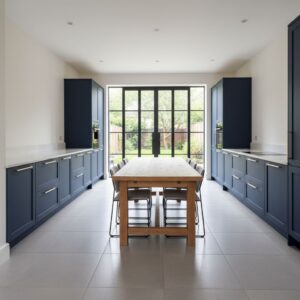
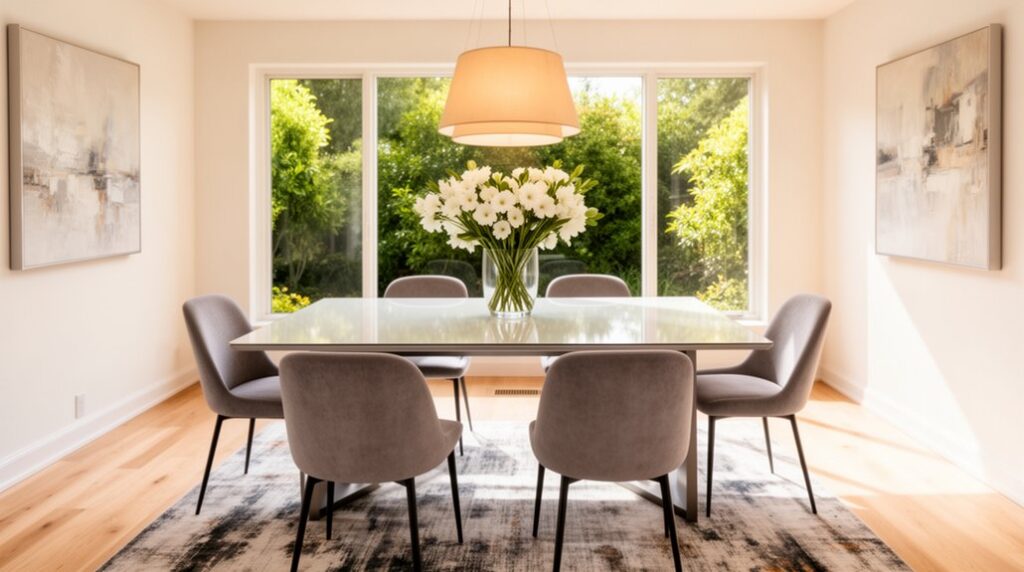
Define “clean, contemporary” for your dining room, then measure and sketch a simple plan so you keep 36 inches of circulation. Paint with a calm neutral (warm white, soft gray, or greige) and stick to one wood tone plus one metal finish. Choose slim, open-base furniture and a single statement pendant hung 30–34 inches above the table. Declutter surfaces, style one low centerpiece, and add warmth with linen, wood, and a low-pile rug. Keep going for easy art and window upgrades.
Key Takeaways
- Define a streamlined style, measure the room, and plan one statement element while keeping other décor minimal.
- Declutter surfaces, keep one “hero” item per area, and store duplicates or seasonal pieces out of sight.
- Use a cohesive neutral palette with consistent undertones, limiting accent colors to one or two small, intentional touches.
- Choose clean-lined furniture with slim legs, maintain one wood tone and one metal finish, and preserve 36-inch circulation paths.
- Add a simple centerpiece, one bold art piece, a low-pile rug, and high-and-wide window treatments to maximize light and negative space.
Define Your Clean, Contemporary Dining Room Look
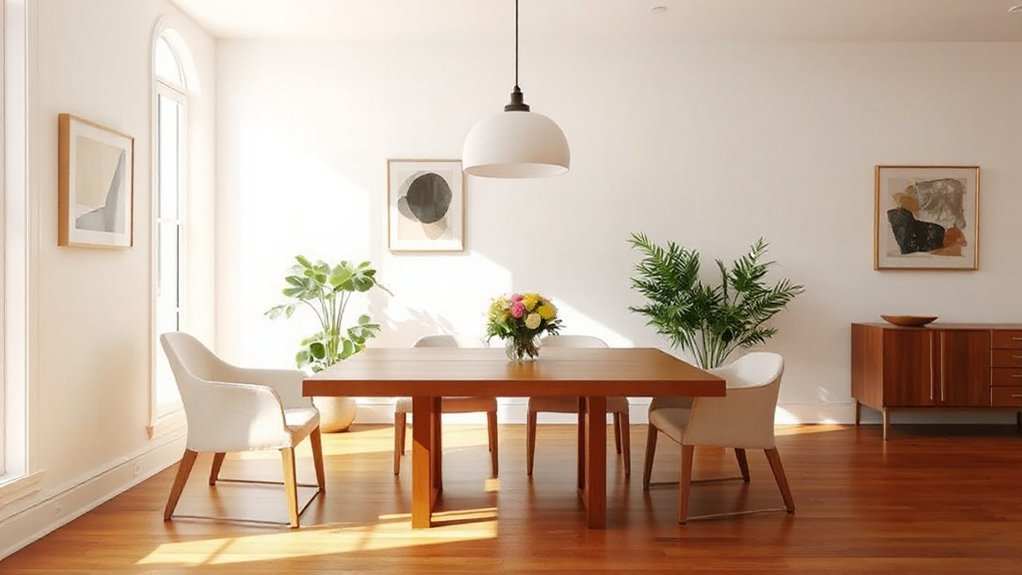
Before you buy anything, decide what “clean, contemporary” means in your home: a streamlined silhouette, a tight color palette (think warm white, soft gray, or greige), and a few intentional contrasts like black metal, light oak, or brushed brass.
Next, set simple rules you’ll follow while shopping: choose one table shape, one chair style, and one finish family so you don’t mix trends.
Measure your room and sketch a quick floor plan; you’ll avoid costly returns and keep circulation clear.
Pick one statement element—like a linear pendant or slim credenza—then keep everything else quiet.
If you want Vintage charm, add it in small doses: a single thrifted mirror or art.
Use rustic accents sparingly, like a raw-wood bowl.
Start With a Calm, Contemporary Color Palette
Although contemporary spaces can handle bold moments, you’ll get the cleanest, most timeless dining room by starting with a calm base: warm white, soft gray, or greige on the walls, paired with one to two supporting neutrals in upholstery and rugs.
Keep your undertones consistent for easy color coordination: if your wall color reads warm, repeat warm beiges and brass; if it reads cool, lean into crisp blacks, chrome, and blue-grays.
Limit accent colors to one (two max) and use them in small, repeatable doses—art, a centerpiece, or window panels—so the room feels intentional, not busy.
Choose washable, low-VOC options when you can.
For paint finishes, use eggshell or satin on walls for wipeability, and semi-gloss on trim to sharpen edges.
Choose Streamlined Dining Room Furniture
Choose dining furniture with clean-lined silhouettes so the room looks crisp without costing more. You’ll also want lightweight-looking pieces—slim legs, open bases, and low-profile chairs—to keep the space feeling airy, especially in smaller rooms.
To stay budget-friendly and cohesive, stick to a minimal material mix, like one wood tone paired with one metal finish across the table and seating.
Prioritize Clean-Lined Silhouettes
To get a clean, contemporary dining room, start by focusing on furniture with crisp, simple lines and minimal ornamentation. Choose a dining table with a straight apron, tidy joinery, and an uncomplicated top; skip heavy carving and ornate trim.
For chairs, look for squared or gently curved backs and slim, uniform legs that match the table’s geometry.
Keep your palette restrained so silhouettes read clearly: matte black, warm oak, or soft gray finishes hide wear and stay affordable. Add interest through organic textures—like a wool seat pad or linen slipcover—without breaking the clean outline.
If you love vintage accents, limit them to one controlled piece, such as a simple mid-century sideboard with clean hardware.
Measure clearances so everything fits and flows.
Choose Lightweight Visual Forms
When your dining room feels heavy or crowded, lightweight visual forms instantly open it up without changing the footprint. Choose a table with slim legs, an open base, or a pedestal that leaves more floor visible.
Pick dining chairs with narrow frames, low-profile backs, and no bulky skirts, tufting, or nailhead trim—aim for minimal ornamentation.
If you need storage, swap a massive hutch for a narrow console or wall-mounted shelves that keep sightlines clear.
Use benches sparingly; they can look dense if fully upholstered.
Before you buy, measure clearance: leave about 36 inches to walk around and 10–12 inches between chair seats.
You’ll spend less by choosing simple, lightweight furniture that doesn’t require extra tailoring.
Select Minimal Material Mixes
Lightweight shapes feel even cleaner if you keep the material palette tight. Pick two core materials and one accent, then repeat them across the table, chairs, and lighting. For example, pair oak or walnut with matte black metal, then add a small touch of glass or leather. You’ll get material contrast without visual clutter.
Use mixed textures on purpose: a smooth tabletop with lightly grained chairs, or upholstered seats against a powder-coated base. Keep finishes consistent—one wood tone, one metal sheen—so pieces look related even if they’re from different brands.
On a budget, prioritize the table, then choose simple chairs and upgrade later with seat pads. Skip fussy inlays, heavy gloss, and busy patterns that date fast.
Pick Contemporary Dining Room Lighting That Pops
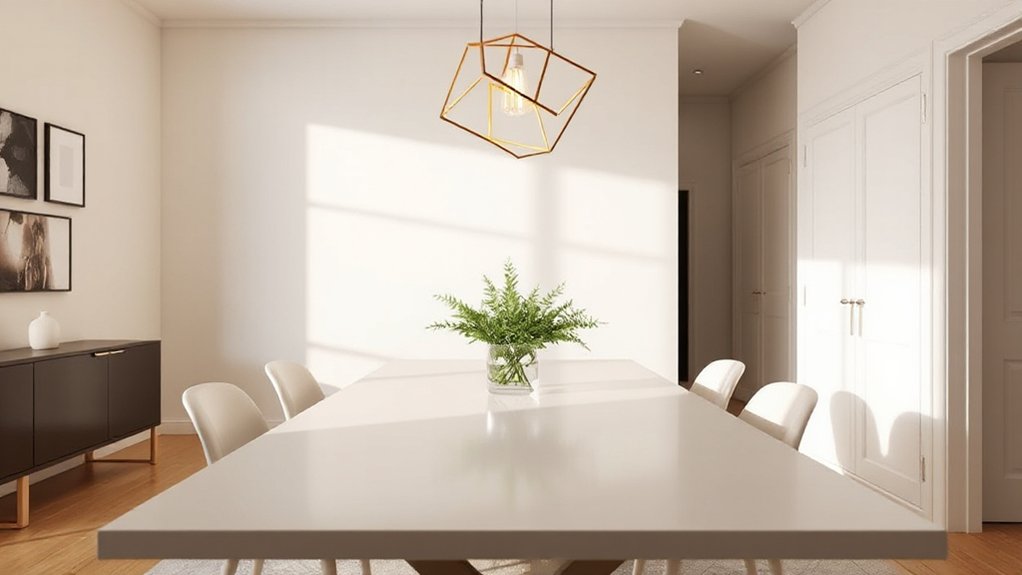
Choose one statement pendant or chandelier to anchor the room, and size it to your table so it looks intentional without overspending.
Then layer in budget-friendly wall sconces, a slim buffet lamp, or discreet recessed lights to soften shadows and create a relaxed mood.
Put everything on dimmers so you can shift from bright meals to low-key evenings without changing a single fixture.
Statement Lighting As Focal Point
How do you make a contemporary dining room feel intentional without spending a fortune? Choose one statement fixture and let it do the heavy lifting.
Start with chandelier design: clean lines, matte black, brass, or white finishes, and an open frame that won’t visually clutter the room. Shop outlet sections, lighting resale, or swap shades on a basic fixture for a custom look.
Dial in pendant placement so it reads professional. Center the fixture over the table, not the room. Hang it about 30–34 inches above the tabletop for standard 8-foot ceilings, adjusting slightly higher for taller guests or taller ceilings.
Keep the diameter roughly half to two-thirds the table width. Pick a dimmable, warm-white bulb so food looks inviting.
Layered Lighting For Ambience
Three layers of lighting make a contemporary dining room feel finished: overhead for general brightness, task lighting for serving and cleanup, and softer accent light for mood.
Start with a simple LED pendant or slim chandelier sized to your table; hang it about 30–34 inches above the tabletop to cut glare.
Add task lighting with a discreet buffet lamp, a plug-in sconce, or under-cabinet strips if you serve from a sideboard.
Then build ambience with accent lighting: a small uplight in a corner, picture lights, or LED tape behind a floating shelf.
Install Dimming controls on each layer so you can shift from dinner to homework to entertaining without swapping bulbs.
Choose warm 2700–3000K LEDs to keep skin tones flattering and energy bills low.
Add Warmth With Texture, Not Extra Décor
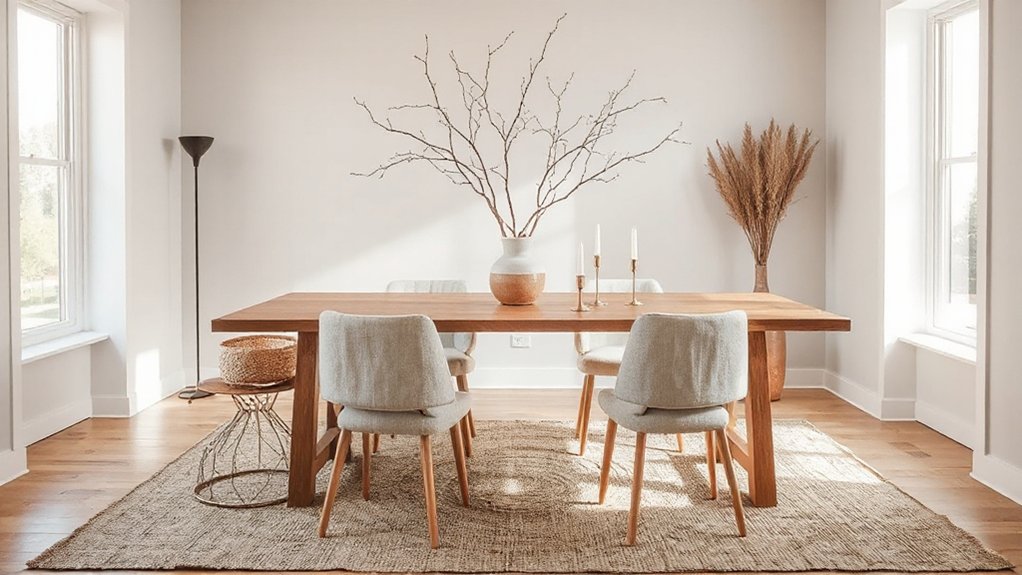
Even if you’re keeping the décor minimal, you can still make a contemporary dining room feel inviting by layering a few tactile materials you already need. Start with Textured fabrics: slipcover your chairs, add a low-pile rug under the table, or swap in linen-cotton napkins that wash well and hide wrinkles. Choose one weave and repeat it twice for a cohesive look without buying extras.
Next, bring in Warm wood accents through functional pieces—an oak tabletop, walnut chairs, or a simple wood serving board you’ll actually use.
If you can’t replace furniture, refinish a thrifted side chair or add wood-toned placemats. Keep finishes matte so they read modern, not rustic, in your space.
Style a Clean Contemporary Dining Room Centerpiece
While a centerpiece can anchor the table, it shouldn’t block sightlines or turn into clutter. Keep it low and simple: a shallow bowl, a slim tray, or a single vase centered lengthwise. Limit your palette to two tones that match your room—clear glass plus white, matte black plus greenery—so it reads modern, not busy.
For a centerpiece floral moment, choose one variety (tulips, mums, or eucalyptus) and trim stems to sit just above the rim. Buy grocery-store bunches and split them between rooms to save money.
Add no more than two decorative accessories, like taper candles or a small sculptural object, and stick to clean lines. Use felt pads under everything to protect the table.
Edit Your Dining Room Décor for a Clutter-Free Feel
Because clean contemporary style relies on negative space, you’ll get the biggest impact by editing what’s already in your dining room before you buy anything new. Start with a quick sweep: clear the tabletop, sideboard, and window ledges, then put everything in one box so you can decide intentionally.
Use clutter management rules that cost nothing: keep only one “hero” item per surface, and group smaller Decorative accessories in sets of three on a single tray. Remove duplicates (extra candleholders, spare vases), and store seasonal pieces out of sight.
Limit chair-back draping and relocate loose papers to a lidded file box. If you can’t name where an item lives, it doesn’t belong. Reassess weekly for five minutes.
Finish With Modern Art, Rugs, and Window Treatments
Once you’ve cleared the visual clutter, lock in a clean contemporary look with three finishing moves: modern art, a streamlined rug, and simple window treatments.
Choose one statement piece, not a gallery wall; hang bold wall art at eye level and keep the palette tight (black, white, one accent). If you prefer dimension, place abstract sculptures on a sideboard, but limit it to one or two forms and leave negative space.
Anchor the room with a low-pile rug in a solid or subtle geometric pattern; size it so front chair legs stay on it when pulled out.
For windows, skip fussy valances. Install affordable roller shades or linen-look panels, mounted high and wide to elongate walls and boost light.
Frequently Asked Questions
What’s the Ideal Dining Room Table Height for Comfortable Seating?
You’ll feel most comfortable with a dining table height of 28–30 inches paired with chairs that seat you 17–19 inches high.
Leaving about 10–12 inches between seat and tabletop is ideal.
When you plan furniture arrangement, keep at least 36 inches of clearance for walking space, or 42 inches in busy zones.
Stick to a simple color palette so mismatched budget chairs and tables still look cohesive and intentional.
How Many Inches Should I Leave Between the Table and Surrounding Walls?
Like giving your room a deep breath, leave 36 inches between your table and surrounding walls. Bump it to 42–48 inches if you’ll often pass behind seated diners.
Measure from the table edge to the wall, or to the farthest point of a chair when pulled out.
If space is tight, use lighter wall color and slimmer lighting fixtures to keep it open without expensive remodels.
Avoid bulky chairs, too.
Which Materials Are Easiest to Clean for Everyday Family Dining?
You’ll find the easiest-to-clean options are Easy care surfaces like sealed quartz, laminate, and glazed ceramic, plus metal or powder-coated chairs.
Choose solid wood only if it’s well-sealed with polyurethane.
For seating, pick Stain resistant fabrics such as performance polyester, microfiber, or treated canvas, or go with wipeable faux leather/vinyl.
Skip open-grain stone and untreated linen.
Use washable slipcovers to cut replacement costs and keep cleanup fast.
How Do I Reduce Echo and Improve Dining Room Acoustics?
You’ll cut echo by adding soft, sound-absorbing surfaces and breaking up hard reflections. Start with a dense rug and pad, then hang lined curtains and add upholstered chairs.
For Soundproofing techniques, seal door gaps with weatherstripping and add felt pads under furniture.
Explore Acoustic panel options like DIY fabric-wrapped mineral wool or budget PET panels on the largest bare wall. Bookshelves, art canvas, and plants also diffuse sound.
What’s the Best Way to Childproof a Contemporary Dining Room?
Start with what you can’t see: the tipping risk. Anchor your buffet and shelving to studs, then add corner guards to sharp edges for child safety.
Choose heavy, stable chairs and a table with rounded corners; skip glass.
Use non-slip rug pads and route cords behind covers.
Lock drawers with simple latches, and store breakables up high.
These furniture tips cost little, yet prevent big accidents fast.
Conclusion
You’ve built a dining room that feels like a deep breath—clean lines, calm color, and furniture that works hard without showing off. Let lighting be your exclamation point, then layer texture like a soft sweater: a woven rug, linen napkins, warm wood. Keep the centerpiece simple and low so conversation stays front and center. Do one last edit pass, and spend where it shows—art, bulbs, and curtains.