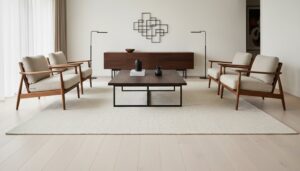
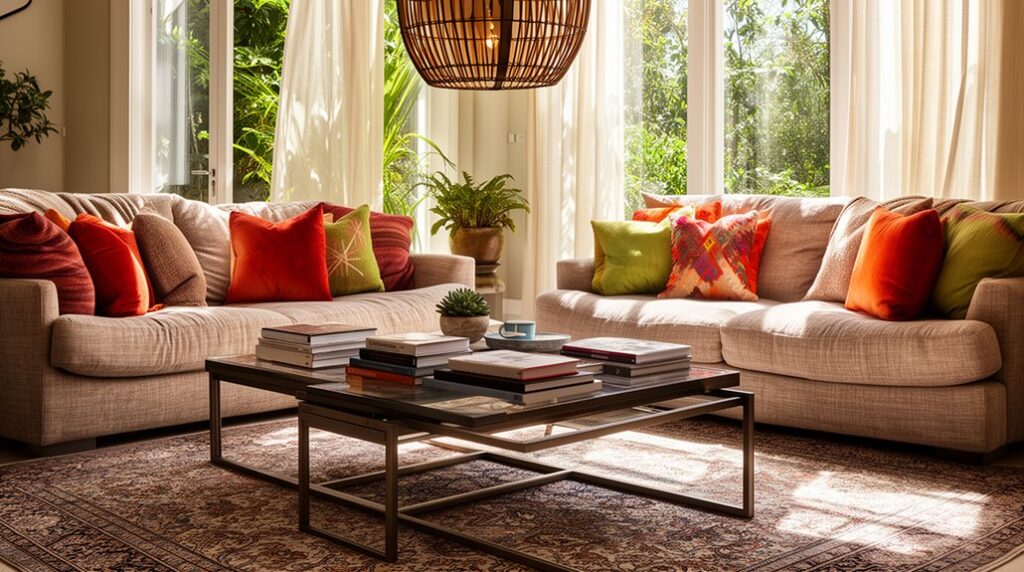
Designers get a pulled-together living room by choosing one clear style and a tight palette (neutral, mid-tone, accent, plus one metal). You’ll sketch a quick floor plan, then set your focal point and center the sofa and rug on it. Keep flow easy with 30–36 inches for walkways and 14–18 inches to the coffee table. Size art to about two-thirds of the furniture width, layer warm 2700K lighting, and edit shelves to 60–70% full—next you’ll see how to finish it flawlessly.
Key Takeaways
- Choose a clear style and tight palette: neutral base, mid-tone, accent color, and one consistent metal finish.
- Measure the room and plan a floor layout; keep 30–36 inches for walkways and 14–18 inches to the coffee table.
- Establish a focal point and center the sofa and rug on it; float chairs to face it while preserving traffic flow.
- Layer lighting at four levels—overhead, task, mid-level, and accent—using warm 2700K bulbs and dimmers for flexibility.
- Style surfaces with restraint: group decor in odd numbers, vary heights, use a tray, and leave 30–40% empty space.
Pick a Living Room Style Direction Fast
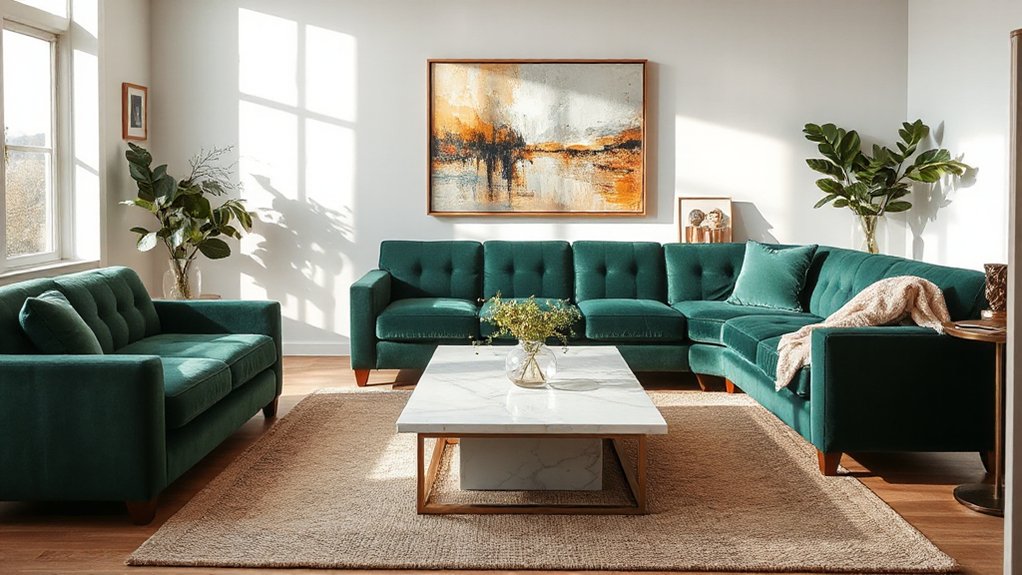
If you pick a style direction early, you’ll make faster decisions and waste less money on “maybe” pieces. Start by choosing one anchor vibe—modern, traditional, coastal, or eclectic—and commit to it for this room only.
Save 8–12 reference photos, then list repeated elements: leg shapes, wood tones, metals, and fabric textures.
Build tight color palettes: one neutral base, one mid-tone, and one accent, plus a single metal finish. This keeps sale finds compatible.
Next, set rules for scale: sofa depth, rug size, and maximum number of patterns.
When you shop, measure before you click and compare to your rules. You’ll also avoid costly returns and awkward furniture placement.
Start Living Room Styling With a Floor Plan
Before you buy a single pillow or side table, sketch a simple floor plan so you’re styling the room you actually have, not the one in your head. Measure wall lengths, door swings, window trim, and outlet locations, then mark them on graph paper or a free app.
Cut paper “furniture” to scale so you can test layouts without lifting a sofa or wasting money on pieces that won’t fit.
Next, do quick Mood board creation using screenshots of affordable items you already own or can source secondhand. Note sizes beside each image.
Use your plan to set realistic clearances: 30–36 inches for walkways, 14–18 inches between sofa and coffee table.
Finally, map Artwork arrangement on the plan—frame widths, spacing, and hanging heights—so purchases stay intentional.
Use the Living Room Focal Point Rule
Pick one main focal point—your fireplace, TV wall, or a standout window—so you’re not buying decor for every corner.
Then anchor your biggest pieces around it (sofa facing it, rug centered, chairs angled in) to make the layout feel intentional without extra spending.
Finish by layering lighting—an overhead, a floor lamp, and a small table lamp—to spotlight the focal point and balance the room’s glow.
Identify The Main Focal
Once you spot the room’s main focal point, every other styling decision gets faster and cheaper because you stop buying décor that fights for attention. Your focal point is the element your eyes land on first from the doorway: a fireplace, picture window, built-in shelves, a standout art piece, or even the TV wall.
Test it: stand in each entry and take a quick phone photo; the item centered most naturally becomes your visual anchor. If nothing reads clearly, choose the strongest existing feature and amplify it with zero-cost moves—clear clutter, simplify competing patterns, and edit small objects to a tight group of three to five.
Use one bold “hero” piece there, then keep supporting items quieter so the room feels intentional and calm.
Anchor Furniture Around It
Even if you don’t change a single piece you own, you can make the whole room feel “designed” by aiming your biggest furniture at the focal point. Start with the sofa: center it on the fireplace, TV wall, or best window, then square the rug under the front legs to lock the layout.
Float chairs to face the same target, keeping a clear walkway (about 30–36 inches) behind seating. Place a coffee table within easy reach (16–18 inches from the sofa) and align side tables to arm height so everything feels intentional.
If your focal wall needs help, use simple wall treatments—paint, peel-and-stick panels, or a large art piece—to strengthen it. Then angle artificial lighting toward that zone so the arrangement reads cohesive after dark, without buying new furniture.
Enhance With Layered Lighting
While your furniture sets the layout, layered lighting makes the focal point feel deliberate day and night. Start with an overhead fixture on a dimmer (or a plug-in dimmer for rentals) to create an even ambient glow that doesn’t flatten the room.
Next, add two mid-level lamps that “point” toward your focal area—your fireplace, art wall, or media console—so your eye lands there first.
Then build task focus where you sit: a swing-arm floor lamp by the sofa for reading, or a small table lamp near the chair you actually use.
Finish with an accent: a picture light, LED strip behind the TV, or an uplight in a corner to lift shadows.
Keep bulb temperatures consistent (2700K–3000K) to avoid mismatched glare.
Get Living Room Scale Right (Sofas, Rugs, Art)
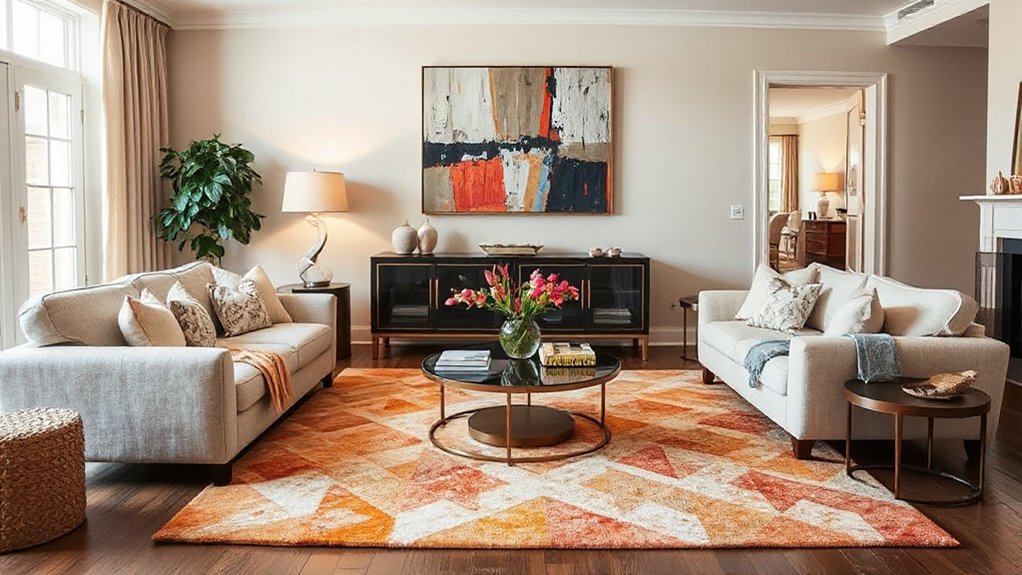
If your living room feels “off,” chances are the scale is wrong—not your taste. Start with the sofa: it should match the room’s width, leaving clear walk paths and not swallowing side tables. If you can’t replace it, fake better proportion with a slimmer-arm slipcover or exposed legs.
Next, set art scale to furniture, not wall size. Over a sofa, aim for one large piece or a tight grid that spans about two-thirds the sofa’s width. Use painter’s tape to map wall art arrangements before you hang.
Keep frames consistent to save money, then add personality with Vintage accents like an antique frame or thrifted brass sconce. Finally, vary heights: tall floor lamp, mid-level plants, low trays.
Anchor Living Room Styling With the Right Rug
You anchor the whole room when you pick a rug that’s properly sized—aim for front legs of your seating to sit on it so the layout feels intentional without wasting money on extra footage.
You can layer a low-cost flatweave over a larger natural-fiber base to add texture and subtle pattern while keeping wear-and-tear manageable.
Tie it all together by pulling one or two key colors from your sofa, curtains, or art so the rug supports your decor instead of fighting it.
Choose Proper Rug Size
One rug-size rule does most of the heavy lifting in a living room: go bigger than you think. If your rug looks like a “postage stamp,” the whole room feels chopped up. Aim for area rugs that let at least the front legs of your sofa and chairs sit on the rug, not just hover around it. That single move fixes rug proportions and makes furniture groupings feel intentional.
Measure before you buy. Use painter’s tape to mark candidate sizes on the floor, then walk the paths you use most.
In tighter rooms, leave 6–10 inches of bare floor between rug and walls; in larger rooms, 12–18 inches can look cleaner.
On a budget, prioritize width over length, and shop off-standard sizes, remnants, or sales.
Layer Textures And Patterns
Although size sets the foundation, texture and pattern make a rug actually *anchor* the living room. Start by choosing a low-pile base rug that can take traffic and vacuuming without fuzzing up.
Then add interest with fabric combinations: a flatweave under a nubby wool, or a jute layer topped with a softer cotton kilim. Keep the top layer smaller so edges of the base show as a deliberate frame.
For pattern mixing, vary scale: pair a large, simple motif with a tight stripe or micro-geo, and stick to one “busy” rug at a time. Use rug pads to stop sliding and protect floors.
If you’re on a budget, layer an inexpensive natural-fiber base with a thrifted or vintage-look topper.
Align Colors With Decor
Texture and pattern set the mood, but color is what ties the rug to everything else in the room. Start by pulling two or three shades you already own—your sofa fabric, curtains, or a favorite artwork—and match the rug’s background to the dominant one.
Then use the rug’s secondary colors to build Color harmony across pillows, throws, and books.
If you’re on a budget, buy the rug first and let it dictate your accent palettes; swapping accessories costs less than replacing furniture. Keep undertones consistent: pair warm creams with camel and rust, cool grays with navy and emerald.
Test at home with paint chips and fabric scraps under daytime and lamp light. If it clashes, return it quickly.
Arrange Living Room Furniture for Easy Flow
Before you buy anything new, map out how you actually move through the room and place furniture to protect those paths. Aim for 30–36 inches of clear walkway from doorways to seating, and don’t force traffic between a sofa and coffee table.
Float the sofa if it opens circulation; anchor it with a rug that reaches at least the front legs. Keep side tables within arm’s reach, and leave 14–18 inches between seating and the coffee table.
Use one flexible piece, like an ottoman, instead of extra chairs.
Hang wall art centered over the main seating zone to visually “stop” the arrangement, and choose window treatments that stack back fully so they don’t steal usable corners.
Measure first, then shop smarter.
Layer Living Room Lighting Like a Designer
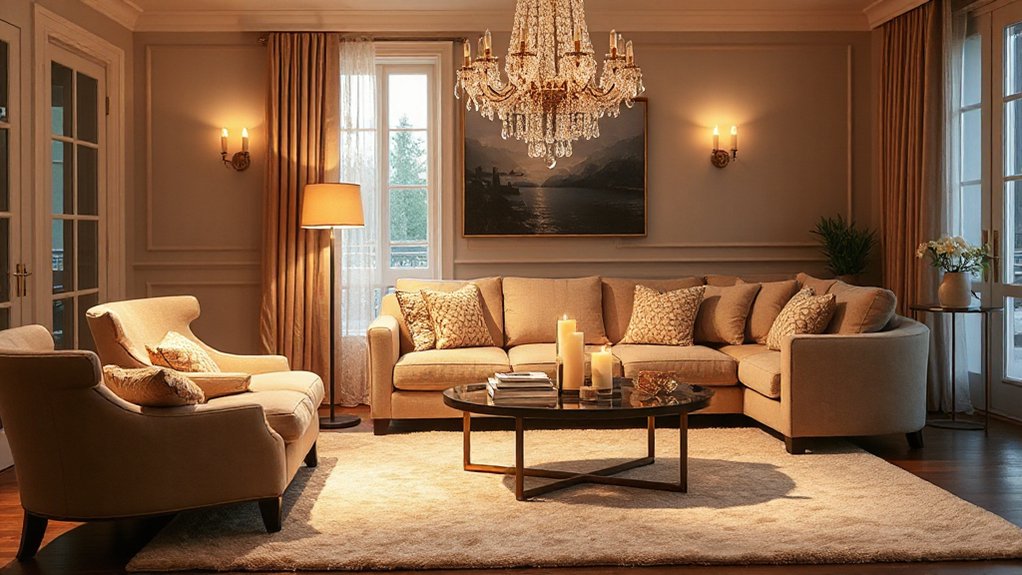
When you layer lighting instead of relying on one overhead fixture, you can make your living room feel bigger, warmer, and more functional without a full redesign.
Start with ambient light: keep the ceiling fixture on a dimmer or swap to a brighter LED bulb for eco-friendly lighting.
Add task lighting where you read or work—an adjustable floor lamp beside the sofa or a plug-in sconce above a chair.
Finish with accent light: a small table lamp on a console or an LED strip behind the TV to reduce glare.
Put every lamp on smart plugs or smart bulbs for Smart home control, then set scenes for “Movie,” “Guests,” and “Night.”
Use warm 2700K bulbs, and match shades to hide mismatched bases.
Mix Living Room Textures for Instant Depth
To give your living room instant depth, you’ll want to layer soft and hard textures—think a chunky throw on a structured sofa and a woven basket beside a sleek table.
Balance matte and shine on a budget by mixing a flat-finish rug with a couple of glossy accents like a ceramic lamp base or metal tray.
Then blend natural and synthetic materials—linen-look pillows, real wood, and performance fabric—so the space feels rich, durable, and pulled together.
Layer Soft And Hard
Even if you’re working with a tight budget, layering soft and hard textures instantly makes your living room feel deeper and more finished. Start with Soft layering: add a throw, two varied pillow covers, and a low-pile rug to warm up seating without buying new furniture.
Then bring in Hard accents to keep the space crisp. Stack two coffee-table books on a sturdy tray, swap one lamp for a thrifted metal base, and add a small stone or wood bowl for keys and remotes.
If you’ve got open shelving, mix fabric baskets with a couple of ceramic pieces so storage looks intentional. Repeat each texture twice—soft, hard, soft, hard—so the room reads cohesive, not cluttered.
Keep sizes varied: one large, one medium, one small.
Balance Matte And Shine
Once you’ve got soft and hard layers working together, the next tweak that makes a living room look designer-finished is balancing matte and shine. Start by choosing one “quiet” base: walls, sofa, and large rug in matte finishes so the room feels calm, not busy.
Then add controlled shine accents to catch light and create depth. Aim for a 70/30 split: mostly matte, a few glossy hits. Try a glass vase, a lacquer tray, a pair of metal candlesticks, or a mirror—small items are cheaper and easier to swap.
Keep shine clustered (on one coffee table or console) instead of scattered everywhere. If a surface already reflects a lot, dial back with a matte lamp shade or textured throw nearby.
Blend Natural And Synthetic
Because your living room has to handle real life, mixing natural and synthetic textures gives you depth without blowing your budget or sacrificing durability.
Start with natural materials where they’ll shine: a wood coffee table, a jute rug, linen-look curtains, or woven baskets for storage.
Then layer in synthetic textiles for the hard-working pieces—performance velvet pillows, stain-resistant upholstery, and an indoor-outdoor throw that can take spills and pets.
Keep it intentional: pair one rough texture (rattan, sisal) with one smooth one (microfiber, faux leather) in the same color family.
Use texture, not more decor, to add interest.
Finish with one “bridge” item, like a cotton-blend blanket, to tie both worlds together seamlessly.
Choose Living Room Colors That Feel Cohesive
If you want your living room to look pulled together without spending a lot, start by choosing a tight, repeatable color palette. Aim for three core hues: a base neutral, a mid-tone, and a small-dose accent. This simple Palette selection builds Color harmony across the whole room without new furniture.
Pull your colors from what you already own: a rug, artwork, or sofa fabric. Repeat each hue at least three times—pillows, a throw, curtains, or a lamp shade—so nothing feels random. Keep undertones consistent (warm with warm, cool with cool) and test paint chips in morning and evening light before committing.
If you crave variety, swap textures, not colors, and you’ll keep the space cohesive on a budget.
Style Living Room Shelves Without Clutter
Even though open shelves invite you to show everything you own, they look best when you edit hard and give each item breathing room. Pull everything off, wipe down surfaces, then return only what you use weekly or truly love.
Group objects in odd numbers, and vary height with stacked books, a small framed print, and one taller vase. Use one color thread—matching ceramics or consistent metals—so the mix feels intentional.
Add affordable storage solutions like lidded baskets, magazine files, or matching boxes to hide cords, remotes, and loose papers. Limit decorative accessories to a few repeatable types: greenery, a candle, and a sculptural object.
Leave 30–40% of each shelf empty, and keep the front edge clear for a calmer look.
Coffee Table Styling Tricks That Look Polished
Although a coffee table sits at the center of everything, it looks polished only when you style it with a tight edit and a clear “job” for each item. Start with a tray to corral clutter; it’s your Table centerpiece and makes remotes feel intentional.
Stack two books (library or thrift finds) to add height, then top them with one small Decorative accessories piece, like a candle or ceramic bowl. Add a low vase with fresh grocery-store stems or clipped greenery, keeping sightlines open.
Balance with one functional item: coasters in a lidded box. Stick to three materials (wood, glass, metal) and one color accent for cohesion.
Leave 30% empty space so it’s usable and calm.
Use Living Room Curtains to Add Height
Once your coffee table looks intentionally edited, tackle the biggest “eye trick” in the room: curtains. Mount your rod 4–8 inches below the ceiling (or crown) and extend it 6–12 inches past each window side. You’ll visually raise the ceiling and make the window look wider, even with standard panels.
Choose extra-long lengths so the fabric just kisses the floor; if you’re on a budget, buy longer and hem with iron-on tape. For small rooms, keep curtain patterns simple: solids, tonal stripes, or subtle textures read taller.
Pick curtain materials with enough drape—linen blends or cotton twill—while sheers brighten without adding bulk. Use clip rings for easy height tweaks.
Add Finishing Touches That Make Living Room Styling “Done”
What makes a living room look “done” instead of merely decorated? It’s the micro-edits: a tight color story, repeat materials, and intentional gaps.
Start by grouping objects in threes on your coffee table—one low tray, one vertical piece, and one organic element. Use books you already own as risers. Add a small lamp or candle to warm corners and balance overhead light.
Then bring in Personalized accents: framed snapshots, a thrifted vase that matches your palette, or a bowl that holds keys. Finish with seasonal accessories you can swap cheaply—pillow covers, a throw, or a stem bundle.
Step back, remove one extra item, and straighten edges for a crisp finish.
Frequently Asked Questions
How Do I Kid-Proof a Styled Living Room Without Sacrificing Design?
You kid-proof a styled living room by choosing durable pieces first, then layering decor. Pick Child safe fabrics like tight-weave microfiber or performance velvet, and add stain resistant finishes on tables and cabinets.
Anchor furniture, pad sharp corners, and use a washable rug with a non-slip pad.
Store breakables up high, swap glass for acrylic, and hide cords.
Buy slipcovers and thrift sturdy side tables to save money.
What’s the Best Way to Hide TV and Speaker Wires Neatly?
Like tucking loose threads into a hem, you’ll hide TV and speaker wires best by routing them behind furniture and along baseboards with adhesive raceways.
Use concealed wiring only where it’s safe: run cords through a wall-rated kit, not loose drywall holes.
For cable management on a budget, bundle leads with Velcro ties, label each end, and mount a power strip behind the console to keep everything tight and hidden.
How Can I Reduce Echo and Improve Acoustics in a Large Living Room?
Reduce echo by adding soft, irregular surfaces that break up sound.
Start with Rug layering: place a thick pad under a large rug, then add a smaller textured rug on top to trap reflections.
Hang curtains that reach the floor, not short panels.
Add bookcases and upholstered seating.
Install Sound absorbing panels on the wall opposite the biggest windows or TV; even DIY fabric-wrapped insulation works well.
Which Materials and Finishes Are Easiest to Clean With Pets?
Choose surfaces that shrug off fur like rain on a slicker. You’ll get the easiest cleanup with durable fabrics like microfiber, solution-dyed acrylic, and performance polyester; they wipe fast and resist claw snags.
Pick leather or faux leather for quick vacuuming, but avoid aniline.
Use stain resistant finishes on upholstery and rugs, and choose tight, low-pile carpets or washable flatweaves.
For floors, sealed LVP or glazed tile beats porous wood.
How Do I Make Mismatched Hand-Me-Down Furniture Look Intentional?
You make mismatched hand-me-down furniture look intentional by repeating a few cues: commit to Color coordination with a tight palette (2–3 neutrals plus one accent), then echo it in pillows, throws, and art.
Create Antique pairing by grouping one “old” piece with one simpler modern item and matching their hardware or wood tone. Unify with slipcovers or paint, and anchor everything with one large rug and consistent lighting.
Conclusion
Step back and picture your living room at dusk: the rug grounds the seating, the sofa fits the plan, and the focal point pulls your eye in like a quiet fire. Your shelves feel edited, not stuffed. On the coffee table, you’ve got a small stack, a tray, and one candle—nothing pricey, just intentional. Curtains kiss the ceiling, making walls look taller. Add a plant, one textured throw, and you’re done.