Table of Contents
Key Takeaways
- Reclaimed wood furniture carries a depth of character — grain, patina, nail holes, and weathering — that no new timber product can genuinely replicate.
- Every piece is unique, making reclaimed wood furniture a natural choice for homeowners who want an interior that feels personal rather than showroom-assembled.
- The environmental case is compelling: reclaimed furniture keeps timber in use, avoids the need for new felling, and reduces the embodied carbon of your home.
- Quality varies considerably between makers and suppliers — knowing what to look for will save you money and disappointment.
- Reclaimed wood furniture works across a wide range of interior styles, from industrial and rustic through to clean contemporary spaces where it provides warmth and contrast.
- With the right care, a well-made piece of reclaimed wood furniture will outlast almost anything produced from new commercial timber.
There Is Something Different About Reclaimed Wood Furniture
Walk into a room furnished with pieces made from reclaimed wood and you notice it immediately. Not because it announces itself — the best reclaimed furniture rarely does — but because something in the room feels settled. Grounded. Like the furniture belongs there rather than having arrived from a warehouse last Tuesday.
That quality is difficult to manufacture, and believe us, plenty of people have tried. The distressed finishes and artificial ageing techniques that have flooded the furniture market over the past decade are a direct response to demand for that feeling. But there is a fundamental difference between timber that has been artificially distressed and timber that has genuinely lived — and once you know what you are looking for, the difference is obvious.
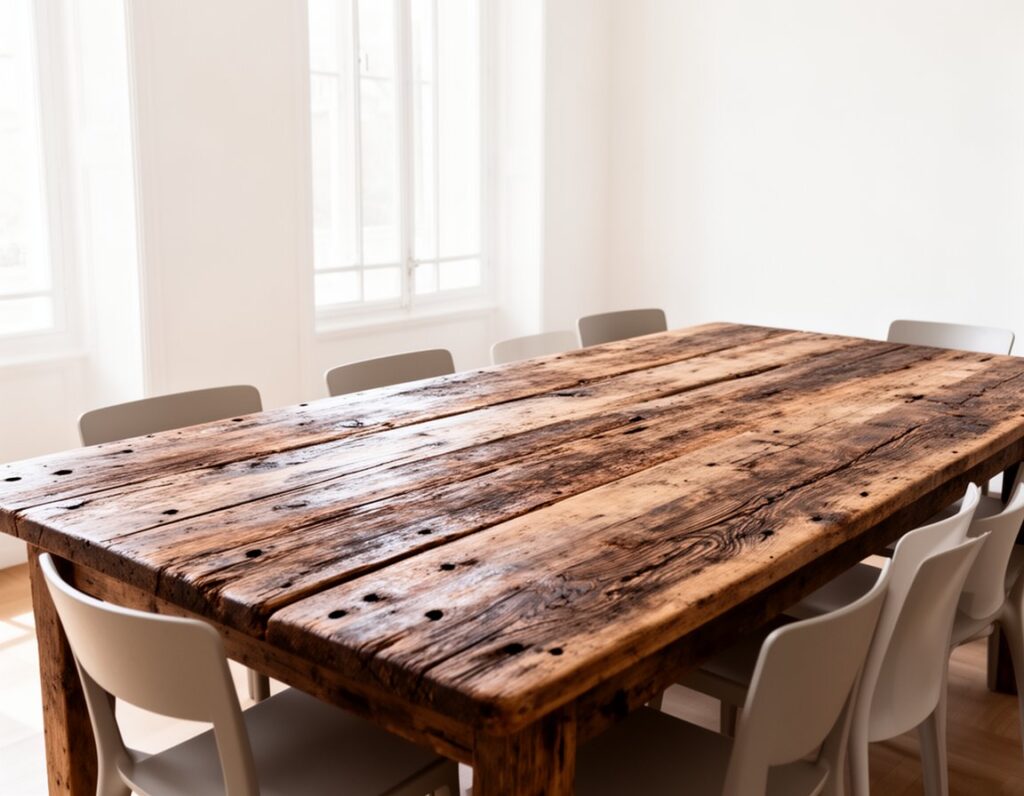
Reclaimed wood furniture is made from timber salvaged from old buildings, barns, factories, and other structures. The wood has already served one life before becoming a dining table, a sideboard, or a bed frame. That history shows in the grain, the patina, the irregular surface, the occasional nail hole that a maker has chosen to leave rather than fill. It is honest furniture, and in an era of mass production, that honesty resonates.
Why Reclaimed Wood Furniture Has Such Strong Appeal
The Character Cannot Be Faked
New timber, however well selected, is essentially a blank canvas. It has grain and natural variation, but it lacks the layered quality that comes from decades of use, exposure, and movement. Reclaimed timber has that quality built in — literally. The surface tells a story that goes back further than the furniture itself.
This matters more than it might sound. Interior design trends come and go, but the desire for spaces that feel genuinely lived-in and personal is consistent. Reclaimed wood furniture delivers that without effort or affectation.
Each Piece Is One of a Kind
Because no two sections of reclaimed timber are identical, no two pieces of furniture made from it are identical either. The particular combination of species, grain pattern, colouration, and surface marks in your dining table will not exist in anyone else’s dining room. For homeowners who have spent years frustrated by seeing their carefully chosen furniture appear in other people’s homes and on every other interiors Instagram account, that genuinely matters.
The Environmental Credentials Are Real
Using reclaimed timber for furniture extends the working life of wood that has already been felled and processed. It avoids the energy cost of producing new timber, keeps carbon locked in the material rather than releasing it through rot or burning, and reduces demand for virgin forest resources. For buyers who take sustainability seriously — and increasingly that is a significant proportion of the furniture market — reclaimed wood is not a compromise. It is often the most responsible choice available.
It Ages Well
This is perhaps the most underappreciated quality of reclaimed wood furniture. Timber that has already been through decades of expansion, contraction, and weathering has largely stabilised. It is less prone to the splitting and warping that can affect new timber as it adjusts to its environment. The surface, already marked by time, will absorb the knocks and scratches of daily life without looking damaged — because the marks simply become part of the ongoing story of the piece.
The Most Popular Types of Reclaimed Wood Furniture
Dining Tables
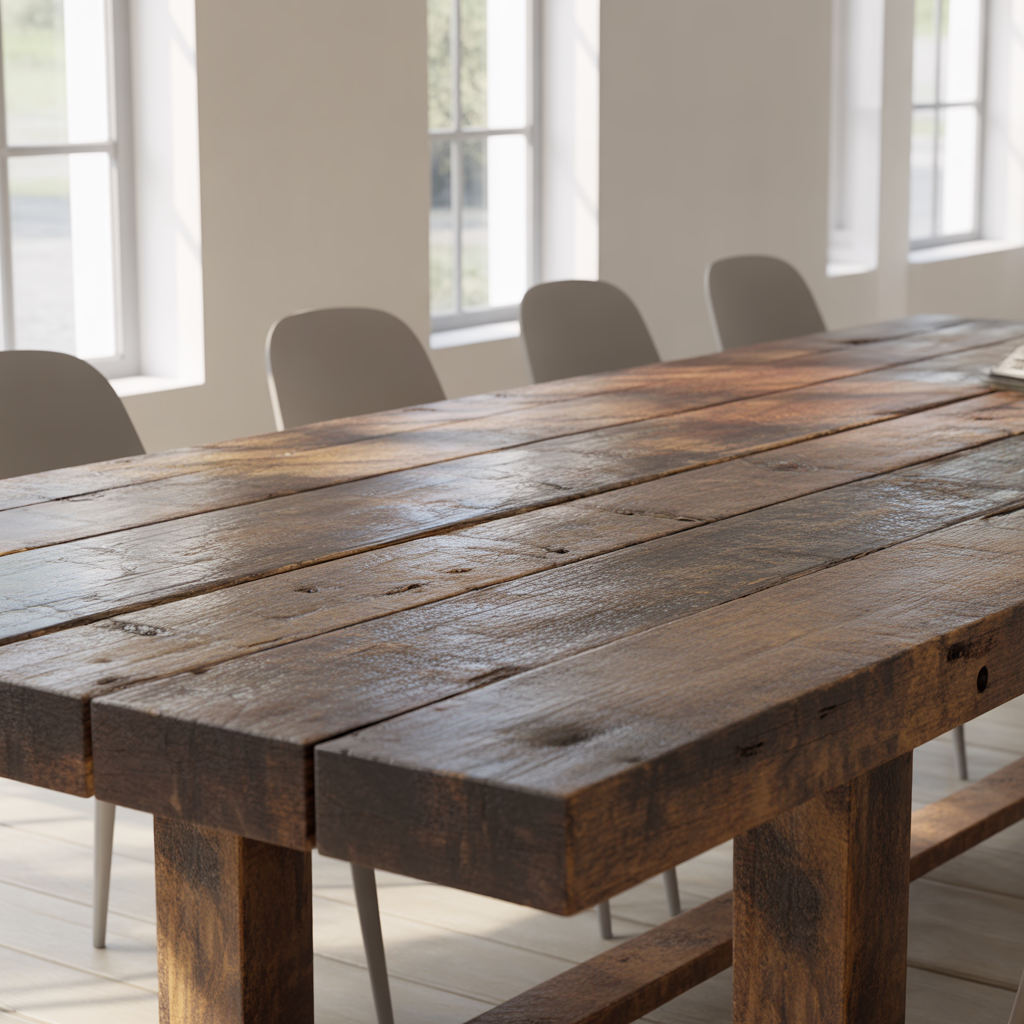
The dining table is where reclaimed wood furniture makes its strongest case. A large, solid-top table in old oak, pitch pine, or elm becomes the natural centrepiece of a room — the piece everything else is arranged around. The scale allows the full character of the timber to show, and the robustness of genuinely old, dense wood means a reclaimed dining table is built for a lifetime of use.
Matching a reclaimed top with a simple steel or iron base is one of the most enduringly popular combinations in contemporary furniture design. The contrast between the raw, weathered wood and the clean lines of metal works across a surprisingly wide range of interior styles.
Coffee Tables and Side Tables
Smaller pieces give reclaimed wood an opportunity to add character without dominating a room. A coffee table with a reclaimed top and simple hairpin legs, or a side table cut from a single thick section of salvaged timber, can anchor a living room without competing with it. These pieces also tend to represent better value, since the quantities of timber required are smaller and the craftsmanship involved is often less complex.
Sideboards and Storage
A sideboard or media unit in reclaimed timber brings warmth and weight to a room that low-line furniture in pale new wood rarely achieves. The depth of colour in aged oak or pine, combined with the visual texture of the grain, gives a sideboard a presence that modern alternatives often lack. Reclaimed sideboards work particularly well in dining rooms and living rooms where they are seen from a distance — the character of the timber reads clearly across the space.
Shelving and Bookcases
Floating shelves in reclaimed timber are one of the most accessible entry points into reclaimed furniture — relatively simple to make or commission, highly effective, and endlessly versatile. A run of reclaimed pine or oak shelving across a chimney breast or alcove adds instant warmth and personality. For full bookcases, the heft and solidity of reclaimed hardwood makes for storage that looks as permanent as it feels.
Bed Frames and Bedroom Furniture
The bedroom is perhaps the most personal space in the home, and reclaimed wood furniture works especially well there. A bed frame in old oak or elm has a quietness and solidity that feels right in a room designed for rest. Reclaimed timber headboards — whether a single thick plank, a panel of boards, or a more architectural frame — have become a staple of considered bedroom design.
What to Look for When Buying Reclaimed Wood Furniture
Ask About the Timber’s Provenance
A reputable maker or supplier should be able to tell you where the timber came from — at least in general terms. Barn oak, factory pitch pine, Victorian floorboards — these distinctions matter both aesthetically and practically. Timber from different sources has different density, grain character, and potential contaminant history. A maker who cannot tell you anything about the origin of their timber is a maker who does not know it themselves, which should give you pause.
Check the Construction Quality
The quality of reclaimed wood furniture varies enormously. At the better end of the market, makers will have properly dried and prepared the timber, used appropriate joinery, and finished the piece in a way that protects without obscuring the natural character. At the lower end, you will find furniture assembled from poorly prepared reclaimed timber that has been given a fashionable surface treatment and not a great deal more.
Check that joints are tight and well-made. Look at the underside and back of a piece — a maker who cares about their work finishes it properly even where it will not be seen. Ask what moisture content the timber was at before construction. Furniture built from insufficiently dried timber will move, and not in a good way.
Understand What You Are Paying For
Good reclaimed wood furniture costs money. The timber has to be sourced, inspected, cleaned, dried, and prepared before a single cut is made. Skilled makers charge appropriately for their work. A reclaimed oak dining table priced at the same level as its mass-produced equivalent is almost certainly not what it appears to be — either the timber is not genuinely reclaimed, the construction is poor, or the maker is cutting corners elsewhere.
This does not mean reclaimed furniture has to be beyond reach. Small independent makers, regional furniture producers, and direct-to-buyer workshops often offer genuinely excellent value at prices significantly below the premium end of the market. Do your research, ask questions, and do not be seduced by the aesthetic alone.
Consider Bespoke vs Ready-Made
Many makers who work with reclaimed timber will produce bespoke pieces to order. This is often worth considering, since reclaimed wood’s inherent variability means a good maker can work with a specific piece of timber and design a piece around its natural character. A bespoke reclaimed dining table, designed to the dimensions of your room and finished to your specification, will almost always be a better result than buying off the shelf — and the price difference is frequently smaller than people expect.
How Reclaimed Wood Furniture Works Across Different Interior Styles
Industrial and Warehouse Aesthetics
This is the most obvious pairing — reclaimed timber and exposed brick, steel, and concrete have a natural affinity. The rough, worked quality of salvaged wood fits naturally in a space that celebrates honest materials and the marks of use. Factory pitch pine or scaffold board furniture is particularly well suited here.
Rustic and Country Interiors
Old oak, elm, and pine have always been at home in country kitchens, farmhouse dining rooms, and cottage living spaces. Reclaimed wood furniture in these settings does not feel like a design statement; it feels like the room has always looked this way. The key is choosing pieces that reflect the scale and weight of the space — chunky, well-proportioned furniture rather than fussy or over-designed pieces.
Contemporary and Minimalist Spaces
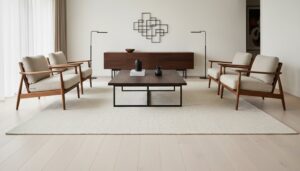
This is perhaps where reclaimed wood furniture is most interesting, because the contrast works so well. A clean, minimal interior — white walls, simple lines, restrained colour palette — is transformed by a reclaimed dining table or a pair of worn oak stools. The timber provides all the warmth and texture the room needs without competing with the architecture. The contrast between old and new, rough and refined, is one of the most effective tools in considered interior design.
Eclectic and Layered Interiors
Reclaimed wood furniture is naturally at home in spaces that mix periods, styles, and materials. Its inherent variety and the sense of history it carries mean it sits comfortably alongside antiques, modern upholstery, and contemporary lighting without looking out of place. In a layered interior, a reclaimed piece often becomes the anchor point around which other elements are arranged.
Caring for Reclaimed Wood Furniture
Reclaimed wood furniture does not require excessive maintenance, but it does benefit from regular, simple care.
Oiling and Waxing
Most reclaimed furniture finished with a penetrating oil or wax will benefit from re-application once or twice a year. This keeps the timber hydrated, protects against minor moisture ingress, and refreshes the surface without building up a film that obscures the natural character of the grain. Use a product suited to the specific finish applied by the maker — applying oil over a lacquered surface, for example, will not penetrate and will simply sit on top.
Protecting Against Heat and Moisture
Old timber that has been properly finished is reasonably resilient, but no wood surface is completely immune to heat and moisture damage. Use coasters under hot drinks, trivets under hot dishes, and avoid leaving wet objects sitting directly on the surface for extended periods. Water rings and heat marks can often be addressed with a light sand and re-oil, but prevention is always preferable.
Embracing New Marks
This is perhaps the most important piece of advice. Reclaimed wood furniture was not made to be preserved in a pristine state. A new scratch, a fresh ring from a glass, a knock from a chair leg — these things do not damage reclaimed wood furniture in the way they might damage a polished veneer or a lacquered finish. They become part of the ongoing story of the piece. The table your children ate every meal at for twenty years, marked and worn and irreplaceable, is exactly what reclaimed wood furniture is supposed to become.
Frequently Asked Questions
Is reclaimed wood furniture suitable for homes with children?
Genuinely reclaimed wood furniture is often better suited to family life than many of its alternatives. The surface is already marked by history, which means new marks are absorbed into the character of the piece rather than standing out as damage. A solid reclaimed oak dining table is far more forgiving of the daily reality of family life than a glass-topped or veneer alternative. The key is choosing furniture with an appropriate finish — a hardwax oil or penetrating oil is more repairable than a lacquer — and accepting that the furniture will continue to age in use. That is, after all, the point.
How do I know if furniture is genuinely made from reclaimed wood?
The most reliable indicators are provenance information from the maker, visible characteristics of genuinely aged timber (oxidation around nail holes, consistent ageing through the depth of the wood rather than just on the surface), and price. Genuinely reclaimed furniture made by skilled craftspeople costs money. If a piece is priced at the same level as mass-produced alternatives, it is worth asking detailed questions. Request information about the timber source, ask to see the workshop if you are buying locally, and look at the underside and back of any piece — a maker who uses genuine materials and takes pride in their work finishes it properly throughout.
Can reclaimed wood furniture be used outdoors?
Some reclaimed timber species are well suited to outdoor use — oak and teak in particular have good natural weather resistance — but the suitability of any specific piece depends on the finish applied and the conditions it will be exposed to. Indoor reclaimed furniture finished with an oil or wax is not appropriate for outdoor use without re-finishing with a suitable exterior product. Railway sleeper furniture, already impregnated with preservatives, is often used outdoors but is not appropriate indoors. If you are specifically looking for outdoor reclaimed furniture, source it from a maker who works with exterior applications and uses appropriate finishes.
What is the difference between reclaimed wood and reclaimed wood effect furniture?
Reclaimed wood furniture is made from timber that has genuinely been salvaged from a previous use. Reclaimed wood effect furniture is new timber that has been artificially distressed, stained, or treated to approximate the look of aged wood. The distinction matters aesthetically — as noted above, the genuine article has a depth and consistency that artificial ageing does not replicate — and it matters environmentally, since reclaimed effect furniture does not carry the same sustainability credentials. It also matters financially: you should not pay reclaimed prices for effect products.
How should I clean reclaimed wood furniture?
Day-to-day cleaning is straightforward: a lightly damp cloth for surface dust and minor marks, followed by a dry cloth. Avoid soaking the surface with water, and do not use harsh chemical cleaners or spray polishes, which can strip the finish and raise the grain. For stubborn marks, a small amount of mild soap on a damp cloth is usually sufficient, again followed by thorough drying. For furniture finished with oil or wax, an occasional application of the appropriate maintenance product — following the maker’s instructions — will keep the surface in good condition and continue to protect the timber.
Conclusion
The appeal of reclaimed wood furniture is not complicated, even if the reasons behind it are layered. It is furniture with a past, made from a material that carries genuine character, built to be used rather than preserved, and designed to improve with age rather than deteriorate.
In a furniture market saturated with products that look good in a showroom and disappoint at home, reclaimed wood offers something different: the real thing. Timber with history, craftsmanship that takes that history seriously, and pieces that will still be worth talking about in thirty years.
If you are considering reclaimed wood furniture for your home, take the time to find a maker who knows their material and can speak honestly about it. Ask questions. Understand what you are buying. And choose pieces that work for the way you actually live — not just the way a room looks in a photograph.
For a deeper understanding of the material itself — where it comes from, how to identify quality, and what the preparation process involves — read our full guide to reclaimed wood.