Table of Contents
Key Takeaways
- Ribble Valley houses for sale span one of Lancashire’s most desirable property markets, with average prices around £287,000 according to the ONS — well above the wider North West average and rising at more than double the regional rate.
- Clitheroe is the borough’s main market town and natural starting point for most buyers, offering the widest range of property types and the strongest local agent presence.
- Longridge, Whalley, and the rural villages of the Forest of Bowland each serve different buyer profiles — understanding which suits your lifestyle is as important as understanding the price points.
- Rightmove, Zoopla, and OnTheMarket all carry Ribble Valley listings, but the most sought-after properties frequently sell through local independent agents before reaching the portals — registering directly with them matters.
- New build activity has increased significantly, with Story Homes, Miller Homes, Bellway, and Taylor Wimpey all active in the borough, offering structured reservation processes and Help to Buy-style incentives.
- Buyers should instruct a solicitor familiar with rural property, particularly for anything involving land, access rights, agricultural ties, or properties within the Forest of Bowland Area of Outstanding Natural Beauty.
Why Ribble Valley Attracts Serious Buyers
There is a reason Ribble Valley consistently appears near the top of Lancashire’s most desirable places to live lists. The borough covers around 580 square kilometres of some of the most genuinely beautiful countryside in northern England — the Trough of Bowland, the Ribble and Hodder valleys, Pendle Hill, and a string of stone-built villages that look much as they have for centuries. Set that against its practical accessibility — Clitheroe is roughly 35 minutes from Preston, 45 minutes from Manchester, and within commutable distance of multiple major employment centres — and the sustained buyer demand starts to make obvious sense.
The property market here reflects that desirability. According to the ONS Local Housing Data for Ribble Valley, the average house price stood at £287,000 in October 2025, representing annual growth of 6.4% — more than double the North West average of 3.1% over the same period. Semi-detached properties led the growth, with values rising 8.1% year-on-year. For buyers, that pace of appreciation reinforces the long-term case for buying here; for sellers, it underlines why stock moves quickly when priced correctly.
Understanding where to look, which towns and villages suit different buyer priorities, and how to work the local market effectively is what separates buyers who find and secure the right property from those who spend months chasing listings.
Understanding Ribble Valley: Towns, Villages, and What Each Offers
Clitheroe: The Market Town Hub
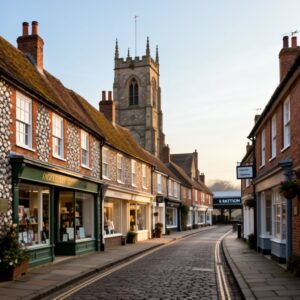
Clitheroe is the undisputed centre of the Ribble Valley property market — the largest settlement in the borough, the location of most local estate agent offices, and the town that draws the widest range of buyers. The 800-year-old castle dominates the skyline, the high street is genuinely independent and characterful, and the schools — including Clitheroe Royal Grammar School — are a significant draw for families relocating from larger towns and cities. Speaking to leading Clitheroe estate agents such as Hilton and Horsfall, ensures you get the expert, local knowledge.
Property in Clitheroe ranges from Victorian terraces and Edwardian semis in the town centre streets to detached family homes on the surrounding roads, and a growing number of new build developments on the outskirts. For buyers wanting town centre convenience, a manageable commute, and good local amenities, Clitheroe is the natural anchor point. Prices reflect its popularity, but compared to equivalent-quality stock in the south of England, the value proposition remains compelling.
New build completions are active in and around Clitheroe, with Miller Homes building at Pendleton Grange and Taylor Wimpey’s Half Penny Meadows development both offering entry-level and mid-range options from the high £200,000s into the £400,000s.
Longridge: The Gateway to the Ribble Valley
Longridge sits at the southern edge of the borough, technically on the boundary with Preston but firmly part of the Ribble Valley character. It has grown substantially in recent years and now offers a broad mix of period stone terraces, larger detached homes, and new build developments — Story Homes’ Ribble Meadows development, for instance, offers three and four-bedroom properties from around £299,995 to £449,995.
Buyers drawn to Longridge tend to prioritise its slightly easier access to the M6 and Preston, making it the preferred base for those with regular business travel or commitments in the south. The high street has a solid range of independent shops, cafés, and bars, and the views from the fell above the town — across to the Lake District, the Welsh mountains, and on a clear day the Isle of Man — are genuinely remarkable.
Whalley: Village Life at a Premium
Whalley is one of those villages that estate agents describe as “highly sought-after” with complete justification. The 14th-century abbey ruins, the independent shops and restaurants on the main street, and the general sense that life here runs at a pace slightly removed from the urban grind make it a consistent target for buyers relocating from cities. It is also notably well-connected by rail — Whalley station sits on the Blackburn to Clitheroe line, with services into Manchester Victoria that make it a plausible commuter base.
Property in Whalley commands a premium, and rightly so. Period cottages, converted barns, and substantial detached houses sit alongside Bellway’s Whalley Manor development and Taylor Wimpey’s The Ridings, which have added more accessible price points to the village. Expect to pay more per square foot here than almost anywhere else in the borough outside the prime rural market.
The Rural Villages and Forest of Bowland
For buyers whose priority is space, privacy, and landscape, the rural villages scattered across the Forest of Bowland — Chipping, Slaidburn, Bolton-by-Bowland, Dunsop Bridge, Sabden, and others — represent a fundamentally different proposition. The Forest of Bowland AONB designation covers a substantial part of the northern borough, protecting the landscape character but also placing constraints on new development that have kept supply genuinely limited.
Properties here range from renovated farmhouses and stone cottages to working farms and country houses with significant acreage. The prices at the top of this market are substantial — several properties regularly list above £1 million, with exceptional examples reaching £3 million or more — but for buyers with the budget and the lifestyle aspiration, these are genuinely rare assets. Because supply is structurally constrained and demand from wealthy relocators has been consistently strong, rural Ribble Valley property has proved resilient even in flat national market conditions.
Where to Search for Ribble Valley Houses for Sale
The Major Property Portals
The three main portals — Rightmove, Zoopla, and OnTheMarket — are the obvious starting points and between them carry the vast majority of publicly listed stock. Setting up saved searches with email alerts is worth doing early; the Ribble Valley market moves quickly on the right properties, and being notified the same day a listing goes live can make a material difference to whether you can arrange a viewing before competing buyers.
Use the portals to build market knowledge as much as to find specific properties. Browse sold prices alongside current listings to calibrate what realistic offers look like; the UK House Price Index from Land Registry provides transaction-level detail that helps buyers understand whether asking prices reflect recent comparables or aspirational vendor expectations.
OnTheMarket tends to see some listings appear there first before syndication to Rightmove and Zoopla — worth checking independently rather than assuming all portals carry identical stock simultaneously.
Local Independent Estate Agents
This is the part of the Ribble Valley search process that buyers from outside the area most commonly underestimate, and it can cost them significantly in terms of missing good properties. The local agent network in Clitheroe, Longridge, and Whalley collectively handles a substantial volume of the market, and some of the most desirable properties are introduced to registered buyers before they ever reach the portals.
Key local agents active in the market include Armitstead Barnett, Mortimers, Honeywell Estate Agents, and Stones Young in and around Clitheroe; Holdens and Dewhurst Homes covering Longridge; and Miller Metcalfe and Keenan’s Estate Agents active across the wider borough. Fine & Country and Knight Frank handle the upper end of the rural and prestige market.
Register with as many of these as is practical, be specific about your requirements, and make yourself memorable as a proceedable buyer. In a market with motivated sellers and limited stock, agents prioritise buyers they know can move.
All estate agents operating in England are regulated through the National Trading Standards Estate and Letting Agency Team (NTSELAT), and must be members of a redress scheme — either The Property Ombudsman (TPO) or the Property Redress Scheme (PRS). If you have a dispute with an agent at any point in the process, these are the bodies to approach.
New Build Developments
New build activity in Ribble Valley has been notably active in recent years, and for buyers who want a modern, energy-efficient home — particularly relevant given incoming EPC minimum standards for rental stock, and increasingly relevant for owner-occupiers thinking about running costs — there are credible options across multiple price points.
Story Homes is building at both The Pastures in Rimington and Ribble Meadows in Longridge. Miller Homes’ Pendleton Grange in Clitheroe, Bellway’s Whalley Manor, and Taylor Wimpey’s Half Penny Meadows and The Ridings developments collectively offer a range from entry-level two-bedroom homes into the £260,000s up to substantial five-bedroom family houses above £800,000.
New builds carry their own process considerations — reservation fees, plot selection, construction timelines, and incentive packages all require careful scrutiny. The developer’s own sales team represents the developer’s interests, not yours; instructing an independent solicitor with new build experience is essential.
What to Budget For: Ribble Valley Property Prices in Context
The ONS data cited above reflects the most authoritative picture of where the Ribble Valley market sits. An average of £287,000 for October 2025 places the borough as the fourth highest in the North West — above both Preston and Burnley, and reflecting the premium that buyers consistently attach to the area’s landscape, schools, and quality of life.
Within that average, the variance is significant. Entry-level two-bedroom terraced cottages in Clitheroe or Longridge can still be found below £200,000, while at the other end of the spectrum, prestige rural properties with acreage reach into the millions. The practical middle of the market — three and four-bedroom detached homes in sought-after villages — now sits comfortably in the £350,000–£550,000 range depending on condition, location, and plot size.
First-time buyers paid an average of £225,000 in October 2025, up 6.9% year-on-year — a significant rate of increase that underlines the importance of acting with pace once finance is in place.
Stamp Duty and Purchase Costs
At current rates, buyers should budget for stamp duty on top of the purchase price. For a primary residence purchase at the Ribble Valley average of £287,000, the standard residential stamp duty charge applies at graduated rates — check the current thresholds on HMRC’s stamp duty calculator as rates are subject to change. Investors purchasing additional properties pay a surcharge on top of standard rates. Legal fees, survey costs, and mortgage arrangement fees typically add a further £2,500–£5,000 to total purchase costs, more for complex rural properties.
Navigating the Buying Process in Ribble Valley
Getting Mortgage-Ready Before You Search
In a market where well-priced properties attract multiple viewers quickly, being mortgage-ready before you find the right property is not optional — it is the baseline. That means having a decision in principle from a lender, understanding the deposit you have available, and being clear on your maximum borrowing capacity based on current stress-tested lending criteria.
Buyers relocating from more expensive markets sometimes underestimate that Ribble Valley agents receive serious interest quickly on the right stock, and an unconfirmed position can mean losing a property to a buyer who was simply better prepared. An independent mortgage broker familiar with the Lancashire market is worth consulting; some properties in the rural market may require specialist lenders if they involve significant land, agricultural elements, or non-standard construction.
Survey and Legal Due Diligence
For rural and period properties — which account for a significant proportion of Ribble Valley’s most desirable stock — instructing a full building survey rather than the more basic homebuyer report is money well spent. Stone-built properties, older farmhouses, converted barns, and properties with significant outbuildings all carry quirks and potential defects that a homebuyer report may not adequately surface.
Properties within or adjacent to the Forest of Bowland AONB deserve additional legal scrutiny around planning restrictions, permitted development rights, and any conditions attached to previous consents. The Town and Country Planning (General Permitted Development) (England) Order 2015 sets out what works can be undertaken without planning permission, but AONB designations can restrict certain permitted development rights that would apply elsewhere.
Your solicitor should check for rights of way, access arrangements, drainage responsibilities, and any agricultural occupancy conditions that might affect your ability to use or resell the property freely. These are more common in rural Lancashire than in suburban markets, and missing them can create serious problems post-completion.
Frequently Asked Questions
Is Ribble Valley a good place to buy property in 2026?
Ribble Valley has consistently demonstrated strong property market fundamentals, and the picture in 2026 is no different. Price growth of 6.4% in the year to October 2025 — more than double the North West average — reflects sustained demand against constrained supply, particularly in the desirable market towns and rural villages where new development is limited by planning policy and AONB designations.
For buyers purchasing a primary residence, the quality of life case is as strong as the financial one. The combination of outstanding natural landscape, good schools, genuine independent retail and hospitality, and practical access to major northern cities makes the Ribble Valley one of the most coherently attractive places to live in northern England. That attractiveness is widely recognised, which is precisely why prices have held up well through periods of national market uncertainty.
For investors, the yield arithmetic is more challenging than in higher-yield northern markets — the purchase prices are higher relative to achievable rents than in, say, parts of east Lancashire or West Yorkshire. However, for landlords focused on long-term capital preservation and quality tenant profiles rather than pure monthly yield, Ribble Valley still makes a defensible case.
How competitive is the Ribble Valley property market for buyers?
Competition varies by price point and property type, but the overall market is more competitive than average for the North West. Well-presented family homes in Clitheroe, Whalley, and Longridge at realistic prices regularly attract multiple viewings within the first week of listing, and sealed bid or best-and-final processes are not uncommon on the most sought-after properties.
Rural properties in the AONB move more slowly when priced at the premium end, partly because the pool of buyers at those levels is smaller. But exceptional properties — renovated farmhouses, properties with significant land, or historic homes in rare village locations — can still attract competitive interest from buyers who have been searching the area for a long time and move quickly when the right thing appears.
The practical implication for buyers is to register early with local agents, have finance arranged, and be genuinely ready to move to offer stage quickly when the right property comes up. Expressing hesitation or conditional interest in a competitive situation generally results in losing the property.
What are the best villages to buy in Ribble Valley?
The answer depends entirely on what you are looking for. For buyers who prioritise village amenities, community atmosphere, and a characterful high street, Whalley and Hurst Green both offer excellent quality of life at different price points — Whalley at a meaningful premium, Hurst Green rather more accessibly priced for what it offers.
Families with children prioritising schools tend to gravitate toward Clitheroe itself for access to the Grammar School, or toward the villages with strong Church of England primaries such as Waddington, Chatburn, and Grindleton. Chipping is widely regarded as one of the most visually attractive villages in Lancashire, with a genuine community feel, though its remoteness makes it more practical for those who work locally or from home.
For buyers whose priority is landscape, privacy, and space above all else, the villages of the Trough of Bowland — Slaidburn, Newton, Dunsop Bridge — offer something genuinely rare: working countryside, complete peace, and the Forest of Bowland AONB on the doorstep. These are not commuter villages, but for buyers with flexibility on location, they represent some of the most authentically beautiful places to live in the North of England.
What should I look out for when buying a stone cottage or period property in Ribble Valley?
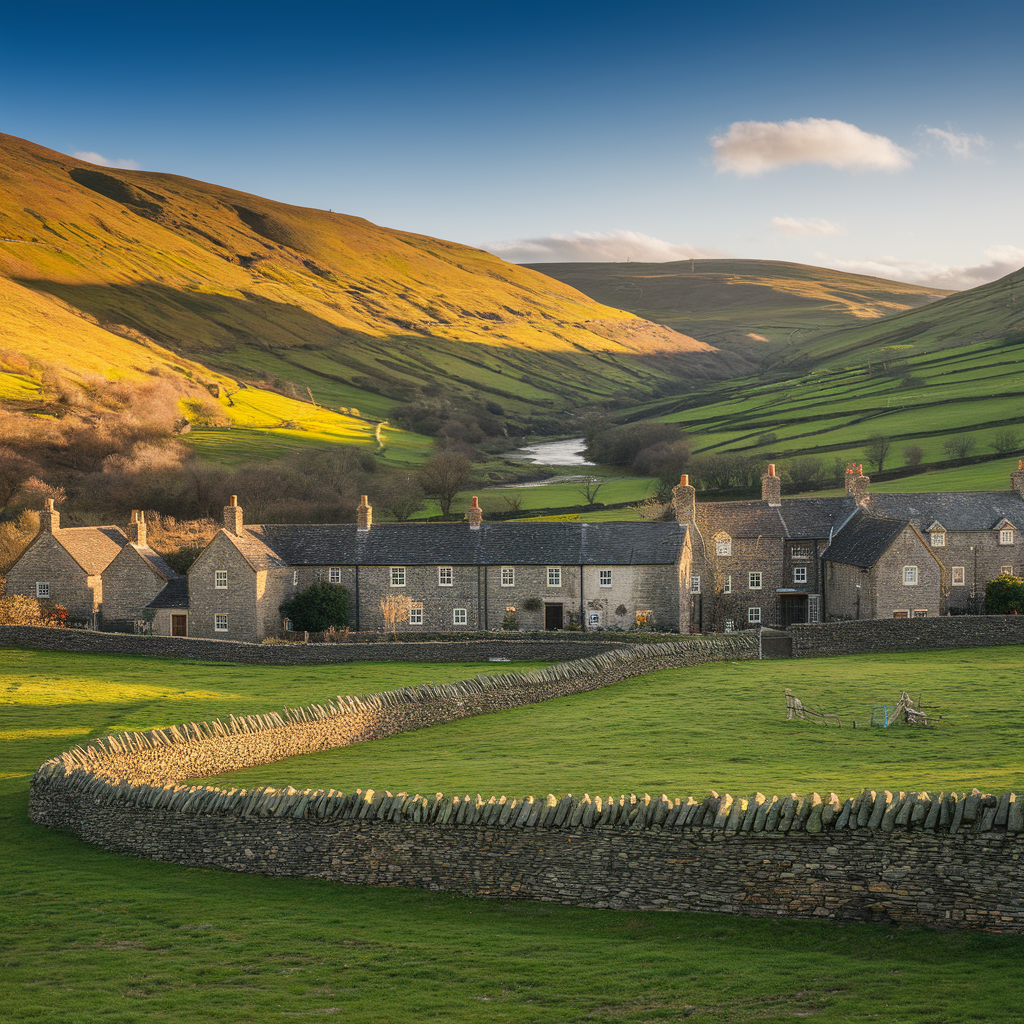
Stone-built properties are the dominant vernacular across most of rural and semi-rural Ribble Valley, and they come with a set of considerations that differ from more modern construction. Damp — whether penetrating damp through poorly repointed stonework or rising damp related to the absence of a modern damp-proof course — is the most common issue, and one that a homebuyer report may understate. A full structural survey by a RICS-qualified surveyor with rural property experience is strongly recommended.
Drainage arrangements outside the mains sewer network are common in rural locations; septic tanks and private drainage systems require regular emptying and maintenance, and the condition of the existing system should be established before exchange. Similarly, oil or LPG heating — standard in areas without mains gas — needs to be costed into running expense projections, and the EPC rating of older stone properties often reflects the energy efficiency challenges of solid wall construction.
Planning history is worth examining carefully on any property that has been extended or altered, and on any barn conversion or outbuilding with potential for further work. The Planning Portal allows you to search the relevant local authority records for previous applications and consents, and your solicitor should review these as part of standard conveyancing.
Can I find good value property in Ribble Valley under £300,000?
Yes, though the options have narrowed as values have risen. Two-bedroom terraced cottages and Victorian semis in Clitheroe and Longridge remain broadly accessible below £250,000 in many cases, and new build two-bedroom properties — particularly on the over-55 developments at Half Penny Meadows — are available from the high £260,000s. Stone terraces in smaller villages like Waddington, Chatburn, and Sabden can represent good value relative to equivalent stock in Clitheroe itself, particularly where condition is good and the village has strong amenity.
The under-£200,000 market is thin and typically reflects a combination of smaller size, less desirable location within a town, or condition that requires significant investment. Buyers in this bracket should be realistic about the trade-offs, and ensure that any required renovation budget is factored into affordability calculations before proceeding.
Conclusion
Finding the right property in Ribble Valley is partly a question of knowing where to look and partly a question of understanding what makes this market move at the pace it does. The combination of genuine landscape beauty, strong schools, an active local economy, and practical northern transport links has created a sustained level of demand that keeps prices supported and the best properties competitive.
The buyers who succeed here are the ones who register early with local agents rather than relying solely on portals, have their finance arranged before they find the right property, and are prepared to act decisively when something meets their requirements. The due diligence on period and rural stock deserves more rigour than in suburban markets, and the planning and legal landscape around AONB-adjacent properties rewards careful solicitor instruction.
The Ribble Valley property market rewards preparation and rewards buyers who take the time to understand it properly — which, in a market growing at 6.4% a year, is a commitment that consistently proves worthwhile.
For a broader view of how the UK property market is performing and where investor opportunity sits nationally, the guide on how UK property investors are thriving in a changing market provides useful context alongside this local focus.