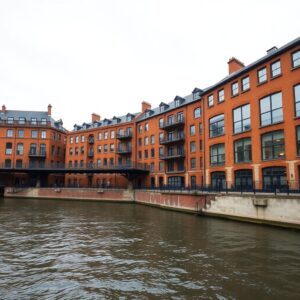

In 2026, you’ll want to watch luxury-led UK developments where scarcity and operations drive value: Zone 1 mixed-use and South Bank riverside towers with branded, hotel-grade service; conservation-limited Mayfair schemes; and tightly held Edinburgh New Town infill (Stockbridge, West End) with strong liquidity. You’ll also track Manchester and Birmingham’s prime-core skyline towers with wellness, security, and sustainability, plus Glasgow’s Finnieston/West End upgrades. Keep going to see how to verify winners.
Key Takeaways
- Focus on scarcity-driven prime sites: Zone 1 mixed-use towers, South Bank riverside blocks, and Edinburgh New Town infill.
- Prioritise conservation-protected Mayfair schemes, where limited new supply supports long-term pricing and discretion.
- Watch Manchester and Birmingham prime-core towers offering hotel-grade amenities, strong executive rental demand, and sustainability-led design.
- Track Edinburgh (Stockbridge, West End) and Glasgow (Finnieston, West End, Merchant City) for liquid, design-upgraded stock and cultural pull.
- Validate developments with Land Registry, EPC, planning data, sales velocity, and build-progress triangulation using satellite imagery, contractors, and utilities.
UK Luxury Developments Worth Watching in 2026

Five UK luxury developments stand out heading into 2026 because they combine scarce prime locations, top-tier design, and real end-user demand—not just glossy marketing.
You’ll watch Zone 1 mixed-use towers that trade on transport adjacency and capped supply; Mayfair refurb-to-new schemes where conservation limits protect pricing; and riverside South Bank blocks that monetise views and cultural footfall.
You’ll track Manchester and Birmingham prime cores too, where limited best-in-class stock meets executive rental demand and corporate relocations.
In Scotland, Edinburgh’s New Town infill stays tight and liquid.
Apply Market segmentation: overseas capital targets turnkey security, while domestic buyers prioritise schools, wellness, and service.
Check Luxury branding through operator partnerships, finish schedules, and aftercare budgets.
Finally, stress-test delivery risk, service charges, and resale comparables before you commit.
What “Luxury-Led” Means in UK Property Now
Because prime buyers now pay for outcomes, not just square footage, “luxury-led” UK property means the scheme’s design and operations are engineered around day-to-day performance—privacy, security, wellness, acoustic control, air quality, storage, and reliable concierge/service delivery—rather than a marble-heavy brochure.
You’ll judge it by lift-to-lobby privacy, parcel handling, resident-only access, backup power, and whether the HVAC is quiet, filtered, and individually controlled. You’ll look for sensible layouts, generous utility space, and amenities that reduce friction, not inflate service charges.
Indispensably, you’ll see market segmentation: super-prime buyers want discretion and staffing; aspirational buyers want luxury affordability through shared facilities and efficient running costs. If the operator can’t maintain standards at scale, it isn’t luxury-led.
How We Picked These UK Luxury Developments
You want picks you can trust, so you’ll see clear selection criteria and the market signals that separate genuine prime schemes from pricey branding.
We pressure-test each development against pricing and absorption trends, build quality, amenity depth, and location fundamentals like connectivity, schools, and constrained supply.
You’ll also see where the data comes from—Land Registry, planning records, agent comps, rental benchmarks, and on-the-ground verification—and how we validate it before it makes the list.
Selection Criteria And Signals
Before any address made the list, we stress-tested each luxury development against the signals that matter in the UK’s prime market. You’ll see us prioritise Luxury branding that’s credible, consistent, and value-protective, plus property aesthetics that age well: proportions, natural light, material integrity, and façade discipline.
Next, you’ll notice we weight micro-location hard: walkable prime streets, transport resilience, school catchments, and planning protections that limit future oversupply.
You’ll also see scrutiny of the developer’s delivery record, build specification, warranties, and post-completion management—because service charge discipline and concierge quality shape resale.
We favour schemes with scarce unit mixes, strong privacy, and amenities that reduce friction (parking, storage, gyms, security) without gimmicks.
Finally, you’ll spot signs of buyer depth: international appeal, lender comfort, and lettability at the top end.
Data Sources And Validation
Those signals only matter if the underlying facts hold up, so we validated every shortlisted scheme against multiple independent data points.
You’ll see each development cross-checked through Land Registry price records, EPC databases, local authority planning portals, and Companies House filings for delivery history and financial resilience.
We verified sales velocity and achieved pricing via agent transaction logs, not just asking figures, and matched absorption to nearby comparables.
To keep data accuracy high, you’ll triangulate build progress using satellite imagery, site photography, and contractor updates, then test timelines against Section 106 obligations and utility connections.
Finally, you’ll sanity-check claims against market trends: prime rental demand, mortgage availability, and supply pipelines by postcode.
If one source disagreed, it didn’t make the cut.
London: Branded Residences and Design-Led Schemes
While London’s prime market keeps recalibrating around value and scarcity, branded residences and design-led schemes are setting the pace by bundling standout architecture with hotel-grade services, tight management, and predictable buyer appeal. You’ll want to track who’s behind the flag: Luxury branding can lift pricing, but only if the operator controls staffing, concierge, housekeeping, and resident amenities end to end.
Scrutinise service charges, sinking funds, and capex schedules so the lifestyle promise doesn’t erode yields. Prioritise design innovation that’s measurable—daylight, ceiling heights, layouts, and durable spec—over headline interiors.
Check planning risk, delivery timelines, and warranty coverage, then benchmark against nearby prime comparables and lettability. In London, the best schemes sell certainty as much as prestige.
Manchester & Birmingham: Prime City-Centre Towers

In Manchester and Birmingham, you’re looking at skyline-defining luxury towers that anchor prime city-centre postcodes and signal long-term confidence.
You’ll want to track transport-led regeneration, major employer catchments, and tightly managed amenity packages that justify premium rents and resale demand.
If you’re investing, you can target best-in-class schemes with proven developers, strong lease-up data, and clear exit liquidity in these high-velocity urban markets.
Skyline-Defining Luxury Towers
As luxury buyers keep pushing for hotel-grade amenities without sacrificing a central postcode, Manchester and Birmingham’s prime city-centre towers have become the clearest markers of where the market’s heading. You’ll see architectural innovation in slimmer cores, higher ceilings, and wind-tested terraces that keep views usable, not just impressive.
You should benchmark schemes by the operator-grade stack: 24/7 concierge, residents’ lounges, treatment rooms, and bookable private dining that actually functions at peak times.
Track sustainability trends through fabric-first façades, low-carbon materials, heat-pump systems, and smart metering that cuts service-charge volatility.
In Manchester, proximity to St Peter’s Square and Spinningfields shapes demand for walkable convenience; in Birmingham, the Colmore and Paradise edges reward buildings that pair skyline presence with genuinely quiet, well-insulated interiors.
Investment Hotspots In City-Centres
Skyline presence and operator-grade amenities may sell the brochure, but investment performance in Manchester and Birmingham comes down to micro-location, tenant depth, and how resilient the building’s running costs stay over the hold period.
In Manchester, you’ll price in proximity to Spinningfields, St Peter’s Square, and Deansgate transport nodes, where higher-income renter demand and corporate lettings reduce void risk. Track market trends: build-to-rent supply, rent caps in competing schemes, and employer hiring cycles.
In Birmingham, favour Colmore Row, Paradise, and the Snow Hill corridor, where Grade A office growth supports premium apartments and serviced formats. Stress-test service charges, ESG retrofit pathways, and concierge staffing.
Your property valuation should reflect net yields after utilities, sinking funds, and leasing incentives, not headline rent. Prioritise schemes with credible operators and transparent reserve schedules.
Edinburgh & Glasgow: New Luxury Districts to Watch

While London still captures most headline deals, Edinburgh and Glasgow now reward buyers who track neighbourhood-level shifts, not just citywide averages. In Edinburgh, you’ll spot value where Historical architecture meets modern amenity: New Town conversions, West End apartments, and Stockbridge terraces with upgraded glazing and concierge-lite services. Follow school catchments, short-let controls, and walkable retail when you price units.
In Glasgow, Cultural influences drive demand in Finnieston and the West End, while Merchant City’s loft-style refurbishments pull international tenants. You’ll do best by comparing per-square-foot gaps between renovated and “tired” stock, then budgeting for EPC upgrades.
Watch pipeline clues: boutique hotel openings, high-spec build-to-rent, and public domain spending. Move early on corner units and top floors.
Coastal and Countryside: UK Resort-Led Developments
Because resort-led schemes trade on lifestyle as much as yield, you’ll price them by seasonality, access, and operator quality—not just postcode. Start by mapping demand windows: school-holiday peaks, shoulder-season corporate offsites, and winter wellness breaks.
For coastal retreats, check rail links, marina capacity, beach access rights, and flood-risk premiums; they move pricing faster than finish specs.
For countryside estates, test drive times from London, spa and F&B credibility, and what the planning consent actually allows: lodges, fractional ownership, or branded residences.
You’ll underwrite like a hotel: occupancy, ADR, and service-charge sensitivity, then stress-test staffing and energy costs.
Finally, follow the management contract—handover standards, sinking funds, and resale restrictions can make or break liquidity.
Frequently Asked Questions
What Mortgage Products Best Suit Luxury-Led UK New-Build Purchases?
You’ll usually suit a specialist jumbo mortgage, a high‑net‑worth lender deal, or a bespoke private‑bank facility for luxury-led UK new‑builds.
Choose a product that accepts complex income, bonus, or offshore assets, and offers interest‑only with a credible repayment plan.
Use fixed rates if you want budget certainty during build completion.
Check developer incentives, valuation approach, and lending caps tied to Luxury amenities and Exclusive concierge services.
How Do Service Charges Typically Escalate in Branded Residence Developments?
In branded residence developments, you’ll usually see service charges rise annually with inflation (often RPI/CPI), plus periodic step-ups when Luxury amenities expand, staffing costs climb, or concierge/valet contracts renew.
You can also face “true-up” adjustments if budgets run short, and larger spikes at major lifecycle replacements (lifts, HVAC, pools).
You should scrutinise caps, sinking-fund policy, and Developer reputation, because weaker operators tend to underbudget then hike later.
Are There Stamp Duty Reliefs Available for High-Value Primary Residences?
Yes, but they’re a narrow key for a heavy door: Stamp duty reliefs for high-value primary homes exist only in specific cases. You’ll usually pay the standard SDLT bands.
True relief eligibility tends to arise through shared ownership, multiple dwellings relief (sometimes), certain acquisitions by first-time buyers (rare at high values), or qualifying property replacements.
You should model scenarios, confirm residency status, and get tax advice before exchange.
What Warranties and Snagging Protections Apply to Luxury New-Build Homes?
You’ll usually get a 10-year new-home warranty (NHBC, LABC, Premier), with a 2-year builder defects period and years 3–10 structural cover.
You should commission an independent snagging survey pre-completion and at month 11, then chase fixes via the developer’s aftercare, escalation, or ADR.
Check appliance, M&E, and waterproofing guarantees too.
Strong luxury property management and bespoke interior design specs help you enforce higher tolerances.
Can Overseas Buyers Open UK Bank Accounts to Pay Deposits and Completions?
Yes—you can, but you’ll face tighter checks. You can open a UK bank account as an overseas buyer if you provide ID, proof of address, source-of-funds evidence, and sometimes a UK tax reference; some banks require UK residency.
If you can’t, you’ll pay via solicitor client account or a UK FX provider.
For international investment, plan currency exchange early to lock rates before deposit and completion dates.
Conclusion
You’ve seen how luxury-led UK developments in 2026 blend brand power, standout design, and operational polish, from London’s serviced residences to regional skyline towers, emerging Scottish quarters, and resort-style coastal schemes. Now’s the time to separate brochure gloss from real value: track delivery risk, management fees, amenities that drive rents, and exit liquidity. If you do your due diligence, you’ll be ahead of the curve—positioned where demand, scarcity, and infrastructure align.