Table of Contents
Key Takeaways
- Lake homes in the UK span some of the most spectacular and structurally supply-constrained waterside addresses in Britain — from the iconic lakefronts of Windermere and Ullswater to the Highland lochs of Scotland and the quieter reservoir shores of the English Midlands.
- Genuine lakefront property with private water access or a jetty is among the rarest residential real estate in the UK — most lakeside areas have only a handful of true waterfront properties at any one time, making patient, relationship-based searches essential.
- The Lake District National Park’s planning constraints and UNESCO World Heritage status mean new waterside development is effectively impossible, locking in the scarcity of genuine lake homes on Windermere, Ullswater, Coniston Water, and the other major lakes.
- Loch Lomond’s proximity to Glasgow — the National Park sits just 15 miles from the city — gives it a unique combination of dramatic lochside landscape and practical daily commutability that no other UK lake area can match.
- Rutland Water offers a compelling and underrated lakeside lifestyle in the East Midlands, with properties around the reservoir delivering the water-facing amenity at prices far below the Lake District or Loch Lomond.
- Wales, Northumberland, and the Norfolk Broads all offer distinct versions of the lakeside or waterside lifestyle that are less competed-for than the headline locations — and correspondingly better value for buyers who do their research.
Why Lake Homes Occupy a Category of Their Own
There is something about a home that sits beside water that defies ordinary property logic. Price per square foot ceases to be the primary measure; scarcity, orientation, outlook, and the specific quality of the water and landscape beyond the window become the dominant variables. A lake home in the UK is not simply a rural property with a pleasant view — it is a fundamentally different living experience, and the market for the best examples operates accordingly.
The UK is home to some of the most extraordinary lakeside and lochside landscapes in Europe. The English Lake District contains sixteen lakes within the boundaries of a single National Park. Scotland has over 30,000 freshwater lochs, with several among the largest and most dramatic bodies of freshwater in Britain. Wales has its own profound lake landscapes, from Bala Lake in Snowdonia to the mirror-flat reservoirs of the Brecon Beacons. And England’s midlands and east offer a quieter, more accessible version of the waterside lifestyle in places like Rutland Water and the Norfolk Broads.
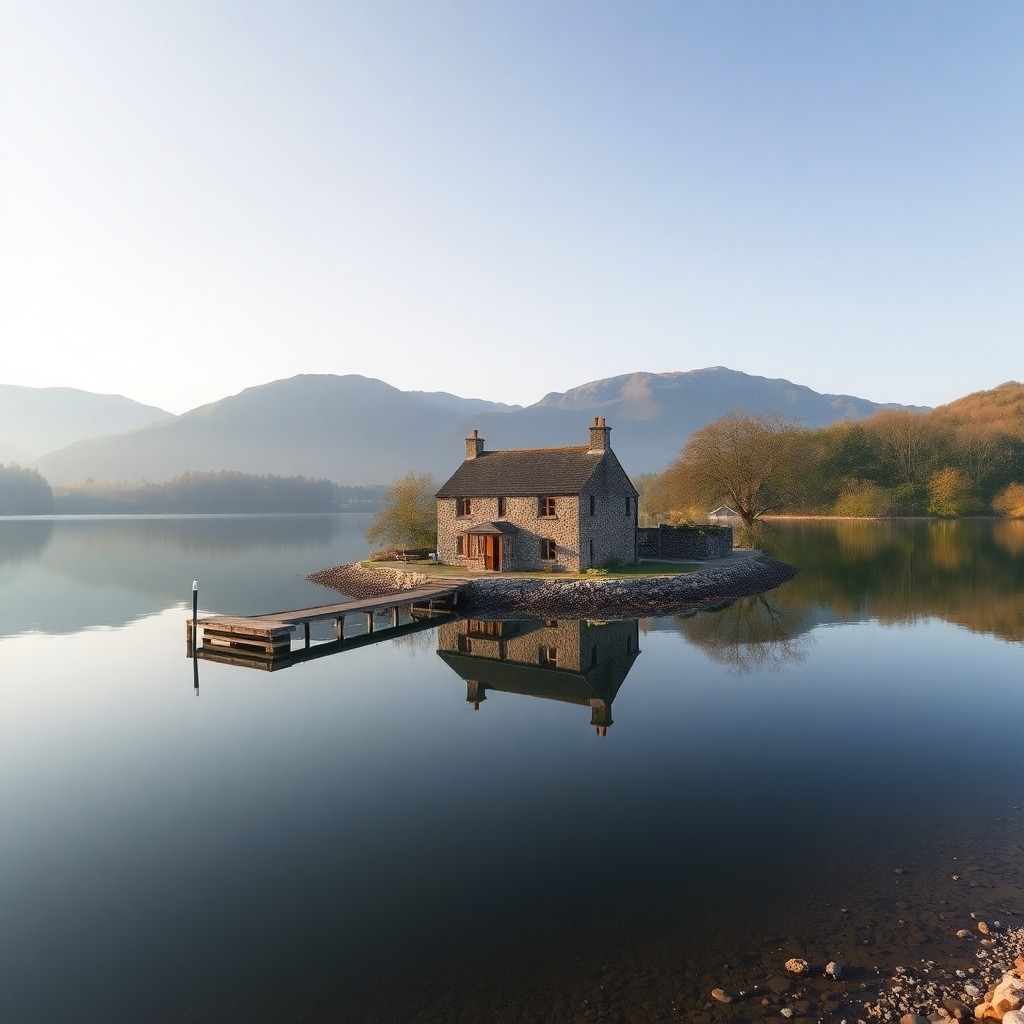
What unites the best lake homes across all these areas is genuine scarcity. True waterfront property — homes with private shore access, moorings, jetties, or unobstructed water views from the principal rooms — exists in very limited numbers, rarely comes to market, and commands prices that reflect both its rarity and the depth of demand from buyers who have been searching for months or years.
1. Windermere, Cumbria
Windermere is England’s largest natural lake and the most iconic address in the UK lake homes market. At 10.5 miles long and up to 220 feet deep, it sits at the heart of the Lake District National Park — and the towns of Windermere and Bowness-on-Windermere on its eastern shore represent the most established and active property market of any UK lakeside location.
True lakefront properties on Windermere — those with private shore access, a jetty, and unobstructed water views — are among the rarest residential addresses in England. They appear on the open market infrequently, and when they do, they attract serious competition from buyers who have often been registered with local agents for years. Properties in the best positions on the western shore, where the aspect looks across to the Coniston fells, regularly list above £2 million and the most exceptional examples reach well into seven figures.
For buyers whose budget does not extend to direct waterfront, the elevated roads above Windermere and Bowness — Helm Road, Brantfell Road, Cragg Brow — offer commanding lake views from period Victorian and Edwardian houses that provide the visual experience of lakeside living without the immediate waterfront premium. These typically range from £600,000 to £2 million depending on size, condition, and the quality of the outlook.
The Lake District National Park Authority’s planning policies mean new waterside development is effectively prohibited, which is precisely what preserves the character and scarcity of the existing stock. Buyers should consult the LDNPA’s planning guidance before making any assumptions about what works would be permissible on any property within the National Park boundary.
2. Ullswater, Cumbria
Many who know the Lake District well will argue that Ullswater, not Windermere, is its most beautiful lake. The serpentine shape of its 7.5-mile length — winding between the fells in three distinct reaches that reveal themselves progressively as you travel its shores — combined with the dramatic backdrop of Helvellyn and the high eastern fells creates a landscape of rare and sustained drama.
The villages of Glenridding at the southern end, Patterdale on the western shore, and Pooley Bridge at the northern tip each provide different characters of lakeside community. Glenridding is the base for walkers tackling Helvellyn; Pooley Bridge has a more village amenity feel with cafés, pubs, and the famous Ullswater Steamers historic boat service. Properties here range from traditional Lakeland farmhouses and stone cottages to contemporary lakeside homes where they exist, and — at the extraordinary end — rare estate properties with significant lakeshore frontage.
One such example that periodically comes to market involves properties with several hundred metres of private beach access to Ullswater at Watermillock on the northern shore — the kind of genuinely rare holding where the lake is effectively part of the private grounds. These are not conventional house purchases; they are the acquisition of a lifestyle position that very few people in England ever have the opportunity to own.
3. Coniston Water, Cumbria
Coniston Water has a character distinctly its own within the Lake District — quieter than Windermere and less visited than Ullswater, but possessed of a particular quality of light and a fell backdrop, dominated by the profile of the Old Man of Coniston, that has drawn artists and writers for generations. John Ruskin lived at Brantwood on the eastern shore; Arthur Ransome drew on the lake for his Swallows and Amazons books; Donald Campbell made his fatal water speed record attempt here in 1967.
The village of Coniston sits on the northwestern shore and functions as the primary community base, with a range of shops, pubs, cafés, and the Ruskin Museum. Properties in and around Coniston village span traditional slate cottages through to larger hillside houses with lake or mountain views. The Brantwood side of the lake — the quieter eastern shore — offers the most dramatic direct outlook across the water but has limited housing stock and even more limited infrastructure.
Coniston Water’s relative quietness compared to Windermere is its defining appeal for buyers who want the full Lakeland landscape experience with fewer visitors and a stronger sense of community.
4. Loch Lomond, Scotland
Loch Lomond occupies a unique position in the UK lake home market — not simply as the largest lake in Britain by surface area at 22.6 miles in length, but as the only significant UK lake that sits within practical daily commuting distance of a major city. The Loch Lomond and Trossachs National Park begins just 15 miles north of Glasgow, and buyers with Glasgow or central Scotland work bases find that the lochside communities of Luss, Balloch, Arden, Balmaha, and Drymen are genuinely accessible for a daily or near-daily commute.
This proximity to Glasgow — combined with reasonable access to Edinburgh and Stirling — gives Loch Lomond a depth of domestic buyer demand that other UK lake markets simply cannot match on a city-commuter basis. The lake itself is magnificent: 23 islands, a backdrop of Ben Lomond rising to 3,196 feet above the eastern shore, and a quality of light and scale that is distinctly Highland despite being within sight of the Central Belt.
Properties around the loch range from Victorian villas and period houses in established communities like Helensburgh and Balloch to substantial modern detached homes on elevated plots above the loch with panoramic water views. At the prestige end, estate properties with private lochshore access — some with 3,500 acres of National Park land — represent serious private wealth purchases in the same category as the finest Windermere waterfront stock.
The Loch Lomond and Trossachs National Park Authority governs planning within the Park boundary — buyers should verify planning status for any works before purchasing.
5. Rutland Water, East Midlands
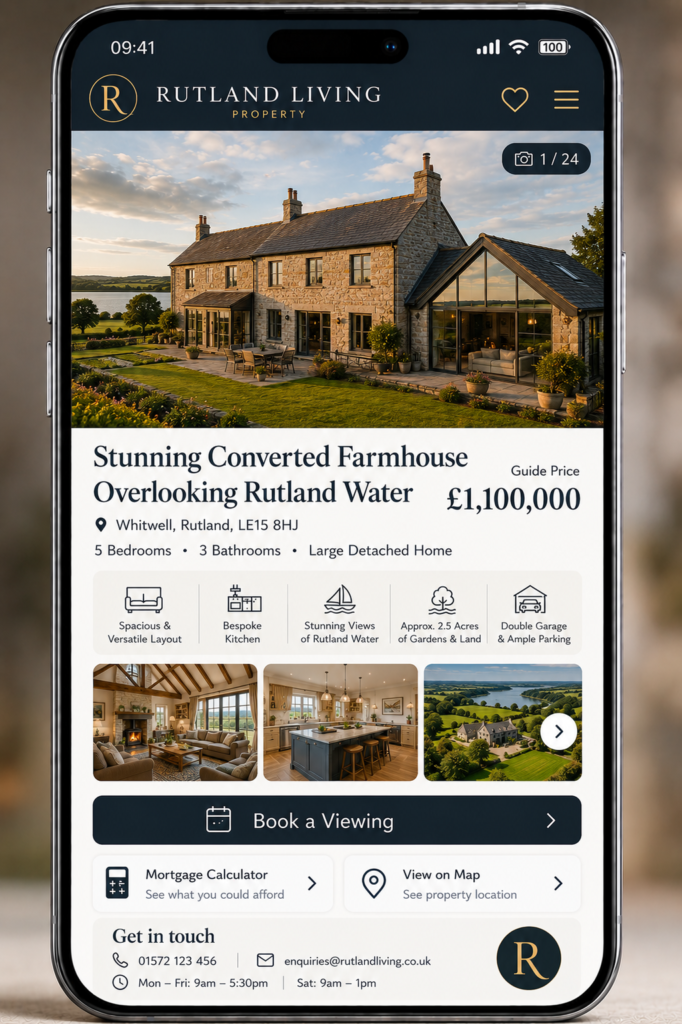
Rutland Water is the most significant and arguably the most underrated lake home market in England. As the UK’s largest reservoir by surface area — covering 3,100 acres on the Leicestershire/Rutland border — it offers a genuine waterside lifestyle in a completely different geographic and price context to the Lake District or Loch Lomond.
The communities around Rutland Water — Oakham (Rutland’s county town), Uppingham, Stamford, and the waterside villages of Empingham, Edith Weston, and Barleythorpe — form one of the most consistently desirable residential areas in the East Midlands. Rutland itself is England’s smallest county and has a strongly protected rural character; new development is tightly managed, and the quality of the existing housing stock — predominantly stone-built period properties in well-kept villages — is high.
Properties with lake views or water proximity around Rutland Water range from stone cottages in the surrounding villages at £400,000–£700,000 to substantial detached houses and converted farmhouses above £1 million. The reservoir supports sailing, cycling (the 24-mile perimeter trail), fishing, and birdwatching, giving it a genuinely active outdoor lifestyle alongside the water views. Critically, prices are substantially lower than Lake District equivalents — buyers who prioritise the waterside lifestyle over prestige postcode find Rutland Water delivers exceptional value.
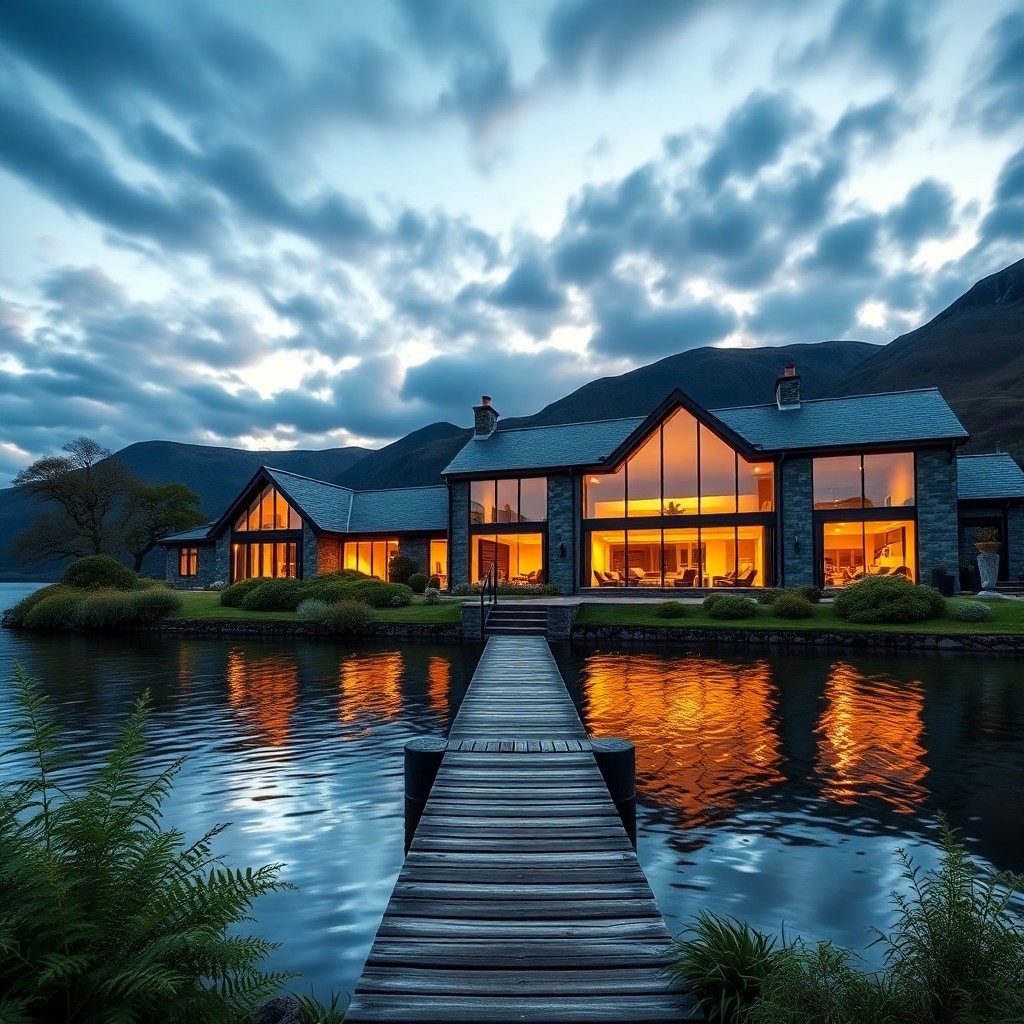
6. Bala Lake (Llyn Tegid), Snowdonia, Wales
Bala Lake — Llyn Tegid in Welsh — is Wales’s largest natural lake and sits within the Snowdonia National Park in a landscape of river valleys, upland moors, and mountain ridges. At nearly four miles long, it occupies a glacially formed basin with the Aran and Arenig mountain ranges as its backdrop, and has been a sailing and watersports destination since the Victorian era.
The town of Bala sits at the northern end of the lake and provides the main service base — independent shops, schools, cafés, and a strong Welsh language community character that gives it an authenticity sometimes absent from more tourism-saturated lake destinations. Properties around the lake range from traditional stone farmhouses and Welsh cottages through to more contemporary lakefront homes where they exist, and occasional barn conversions on the upland fringes.
Bala Lake is substantially less expensive than comparable Lake District or Loch Lomond properties, making it one of the best-value genuine lakeside markets in Britain. Buyers with flexibility on location who have been priced out of Cumbrian or Scottish markets sometimes find that Bala and the wider Snowdonia lake country delivers a quality of landscape and waterside living that stands alongside anything the more famous destinations offer.
7. Kielder Water, Northumberland
Kielder Water is England’s largest reservoir by volume — a man-made lake of over 2,500 acres created in the 1970s by flooding the North Tyne Valley — and sits within Kielder Forest, Europe’s largest planted forest and one of the darkest sky areas in England. The combination of the reservoir, the forest, the Dark Sky Park designation, and the extraordinary remoteness of the Northumberland border country gives Kielder a unique character that attracts buyers seeking genuine solitude and wildness rather than the polished amenity of the Lake District.
The villages and communities of the North Tyne Valley — Falstone, Bellingham, Hexham — form the primary residential base for the area. Properties here are predominantly traditional stone farmhouses, agricultural cottages, and rural homes of substantial character, available at prices that reflect the remoteness rather than any shortage of quality. Buyers who have been priced out of the Lake District sometimes discover that Northumberland’s border country offers a raw quality of landscape and life that, for the right person, is genuinely superior.
Kielder also benefits from proximity to Newcastle-upon-Tyne — around 50 miles to the southeast — which makes it viable as a weekend or semi-permanent base for buyers with Newcastle or North East connections.
8. Grasmere and Rydal Water, Cumbria
Grasmere and the adjacent Rydal Water occupy a very small geographic area at the heart of the Lake District and carry perhaps the deepest cultural resonance of any lake location in England. William Wordsworth lived at Dove Cottage in Grasmere from 1799 to 1808, and the village has been a centre of Romantic literary pilgrimage ever since. The lakes themselves — Grasmere is barely a mile long, Rydal Water smaller still — are intimate rather than grand, but their setting beneath the surrounding fells creates a quality of enclosed, almost dreamlike beauty that has few equals in England.
The village of Grasmere itself has a working community character alongside its tourist trade, with good local amenity and a year-round residential population. Properties here are coveted, rarely available, and priced to reflect their position in one of the most visited and literarily significant landscapes in England. Stone cottages in the village range from £600,000 upward; the occasional more substantial house with fell or water views commands considerably more.
9. The Norfolk Broads
The Norfolk Broads offer a fundamentally different version of the UK lake home experience — one defined by navigable waterways, reed marshes, windmills, and a vast flat landscape that could hardly be more different from the upland drama of the Lake District or Scottish Highlands, yet carries its own profound and distinctive beauty.
The Broads are technically a network of rivers and shallow lakes rather than conventional lakes, but the residential lifestyle they support — with private moorings, navigable access directly from the garden, and a boating culture that is deeply embedded in the local character — is more waterside in character than many conventional lake locations. Communities like Wroxham, Horning, Oulton Broad, and the villages along the rivers Bure, Yare, and Waveney offer a range of properties from thatched Norfolk cottages and converted boathouses to purpose-built waterside homes with direct water access.
Properties with private mooring and direct river or broad frontage attract a significant premium over comparable inland stock, and the best examples — particularly on the more sheltered southern broads — can reach £1 million and above. The Norfolk Broads National Authority manages planning within the Broads area; the Broads Authority provides planning guidance for buyers considering properties within the designated area.
10. Loch Earn and Loch Tay, Perthshire, Scotland
Perthshire’s lochs — Earn, Tay, Rannoch, and the river valley of the Tay itself — represent the quieter, less-marketed end of the Scottish lake home market, and offer some of the best value for lakeside living in Britain for buyers prepared to look beyond the headline names.
Loch Earn sits in a long east-west valley between the villages of St Fillans at the eastern end and Lochearnhead at the west, with a backdrop of surrounding Perthshire hills and an atmosphere of complete Highland calm. Properties on and around the loch range from traditional stone cottages in St Fillans to more substantial detached houses with lochside positions, and occasional conversion opportunities in former agricultural buildings. The village of St Fillans in particular has a small but devoted following of buyers who return repeatedly until the right property becomes available.
Loch Tay — larger, deeper, and framed by the dramatic profile of Ben Lawers above its northern shore — runs through Kenmore at the eastern end to Killin in the west and carries a similar character of quiet Perthshire grandeur. Both lochs sit within the Loch Lomond and Trossachs National Park or in adjacent designated countryside, and buyers should verify the planning position for any property before committing to works.
What to Consider Before Buying a Lake Home in the UK
Water Rights, Access, and Riparian Ownership
One of the most important and frequently misunderstood aspects of lakeside property ownership in the UK is the distinction between having a view of the water and having any legal right to access it. In England and Wales, owning a property adjacent to a lake does not automatically confer any right to use the water, keep a boat, or have a jetty — these rights must be established through the title deeds and any relevant riparian ownership documentation.
Your solicitor should investigate and confirm: whether the property’s title includes any ownership of the lake bed or foreshore; what rights exist to keep a mooring or jetty; whether any access to the water is subject to shared use or management arrangements; and whether any consents are required for a jetty or boat storage from the relevant authority. In Scotland, land access rights operate differently under the Land Reform (Scotland) Act 2003, which provides broad public access rights to land and inland water — buyers should understand how this affects the practical use of any lochside property.
Flood Risk
Properties adjacent to lakes and reservoirs carry specific flood risk profiles that must be assessed before purchase. The Environment Agency Flood Map for Planning provides flood zone designations for any property in England; the equivalent for Scotland is available through SEPA’s flood maps. Lenders’ requirements around flood insurance can significantly affect mortgageability for higher-risk waterside properties, and some specialist insurance is required regardless of mortgage status.
Planning in National Parks and Designated Areas
The majority of the UK’s most desirable lake home locations sit within National Park boundaries or other designated landscapes where planning controls are significantly tighter than in ordinary residential areas. Permitted development rights may be restricted or removed entirely, and any extensions, alterations, or outbuildings that would be straightforward elsewhere may require full planning consent. The relevant National Park Authority — Lake District, Snowdonia, Loch Lomond and Trossachs, Northumberland — should be consulted before any purchase where planned works form part of the buying rationale. Refer to the Town and Country Planning (General Permitted Development) (England) Order 2015 for the baseline framework for England, noting that National Park designations frequently restrict these rights.
Survey Requirements
Lakeside and waterside properties often have specific survey requirements beyond the standard residential inspection. Condition of any jetty, slipway, or mooring infrastructure; drainage and flooding history of the plot; the condition of any retaining walls or bank stabilisation; and the state of any private water supply or drainage where mains connections are absent — all require specific investigation. A RICS Level 3 Building Survey from a surveyor with experience of waterside properties is the appropriate standard for any significant lake home purchase.
Frequently Asked Questions
What is the most beautiful lake in the UK to live beside?
Beauty is inherently subjective, but Ullswater in the Lake District is cited by many who know the lakes well as the most consistently spectacular. Its serpentine shape, the dramatic fell backdrop of Helvellyn and Place Fell, and its relatively less-visited character compared to Windermere combine to create a quality of landscape that has inspired artists and writers since the 18th century. Loch Lomond’s scale and Highland drama is its own kind of extraordinary, particularly on the western shore above Luss. Outside the obvious contenders, Loch Earn in Perthshire and Bala Lake in Snowdonia offer landscapes that rival the headline names for a fraction of the property premium.
How rare is genuine lakefront property in the UK?
Genuinely rare. True waterfront properties — those with private shore access, a jetty or mooring, and direct water frontage as part of the title — exist in very small numbers across all UK lake locations. On Windermere, for example, the most desirable lakefront positions are counted in dozens rather than hundreds. When such properties come to market, they typically do so infrequently and with significant buyer competition. Many change hands off-market through agent networks and buyer registrations. Anyone serious about acquiring genuine lakefront property in the UK should be prepared for a search horizon of one to three years or more.
Are lake homes a good property investment in the UK?
The scarcity of genuine UK lakefront property, combined with the planning constraints that prevent new waterfront development in National Parks and designated landscapes, creates a strong structural case for long-term value preservation. The best-positioned Windermere and Ullswater properties have proved highly resilient through multiple market cycles precisely because they cannot be replicated. Outside the Lake District, Loch Lomond’s proximity to Glasgow supports long-term demand on a different basis — city commutability rather than pure lifestyle. For a broader view of how UK property investment is performing across markets and price points, the guide on how UK property investors are thriving in a changing market provides useful context.
Can I keep a boat at a UK lakeside property?
This depends entirely on the specific property, the nature of the water body, and any rights established in the title. On Windermere, boating is permitted and approximately 10,000 boats are registered to the lake — but a property’s right to keep a mooring or jetty must be confirmed through the title rather than assumed from proximity. On some lakes, particularly those managed as water supply reservoirs, recreational boating may be restricted or tightly regulated. Your solicitor should establish the water use rights for any specific property before exchange.
What are the most affordable areas for lake homes in the UK?
Buyers seeking genuine lakeside living at more accessible price points should look at Rutland Water in the East Midlands — where stone village properties with water views come to market at prices substantially below Lake District equivalents — the Norfolk Broads for a waterside lifestyle with mooring at mid-market prices, Bala Lake in Snowdonia, and Kielder Water in Northumberland. Perthshire’s lochs — Earn and Tay particularly — offer excellent value for Scottish lochside property compared to Loch Lomond’s premium. In all these areas, the landscape is genuinely exceptional; the lower prices reflect geography and relative profile rather than any compromise on the quality of the waterside experience.
Conclusion
Lake homes in the UK represent some of the most genuinely irreplaceable residential real estate in Britain. The combination of planning-protected scarcity, National Park landscape, and a quality of waterside living that cannot be manufactured or replicated makes the best examples among the most resilient assets in the entire UK property market.
Finding the right one requires patience, specific local knowledge, and a realistic acceptance that the search may take considerably longer than a conventional property purchase. The buyers who succeed are those who register early with the agents who know these markets, understand the specific water rights and planning considerations that apply to lakeside properties, invest in proper survey and legal due diligence, and make their move decisively when the right property eventually appears.
The reward for that investment of time and preparation is access to a way of living beside water that very few people in Britain ever experience as owners — and that, once experienced, is rarely given up willingly.