
Table of Contents
Key Takeaways
- Reclaimed wood is timber salvaged from old buildings, barns, factories, warehouses, and other structures that would otherwise be demolished or sent to landfill.
- It is prized for its character, history, and visual depth — qualities that new timber simply cannot replicate.
- Using reclaimed wood is one of the most environmentally responsible choices you can make in a renovation or interior design project.
- It comes with genuine challenges: inconsistent sizing, hidden fixings, potential contaminants, and higher costs than standard new timber.
- Preparation is everything — proper cleaning, drying, and inspection before use will determine the success of your project.
- Reclaimed wood works beautifully for flooring, furniture, wall cladding, beams, and statement pieces, in both traditional and contemporary interiors.
What Is Reclaimed Wood?
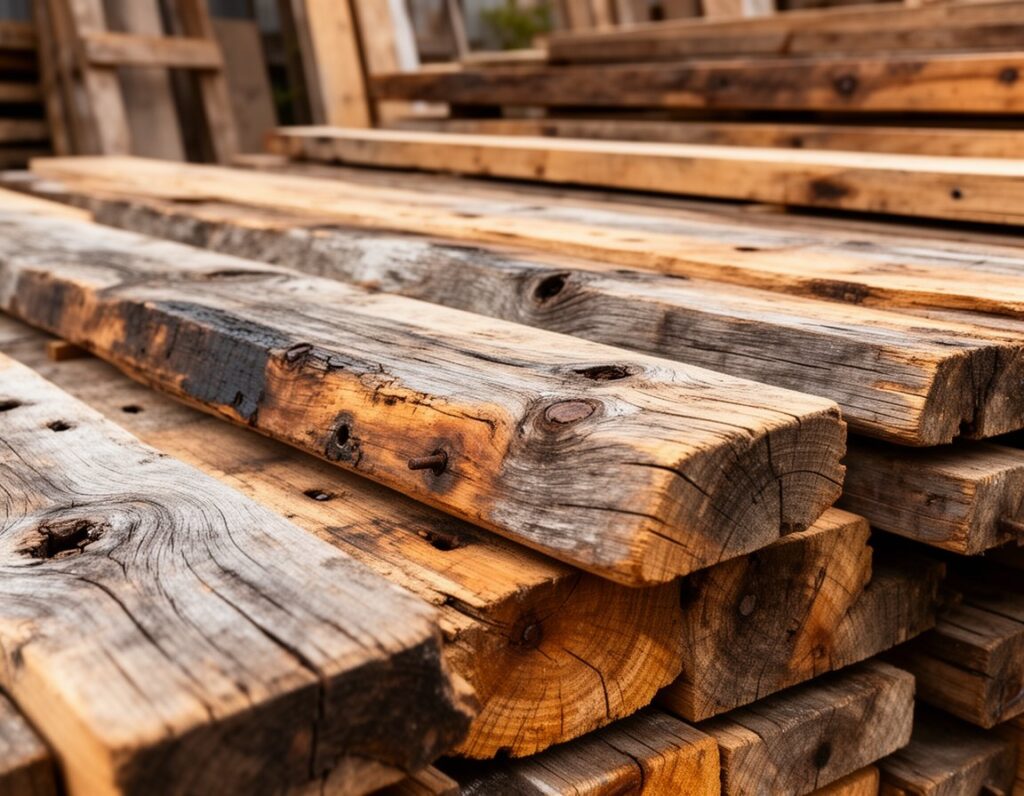
Reclaimed wood is timber that has already lived a previous life. Rather than being felled from a living tree, it has served a purpose — as a barn frame, factory floor, railway sleeper, ship deck, warehouse beam, or the walls of a demolished Victorian terrace. Once that original structure is torn down or abandoned, the timber is recovered, processed, and given a second chance.
It is sometimes referred to as salvaged wood, recycled timber, or repurposed wood, and while these terms overlap, reclaimed wood is the most widely used label in the UK interior design and trade markets. The key distinction from commercially recycled timber is that reclaimed wood has typically been used in a structural or architectural context, rather than simply being offcuts or factory waste.
The appeal is partly aesthetic, partly ethical. Old-growth timber — the kind felled before modern forestry standards changed how we managed forests — was often denser and harder than most commercially grown wood available today. When you salvage a beam from a Victorian warehouse or a board from an Edwardian mill floor, you are frequently working with timber that simply is not being produced any more.
Common Sources of Reclaimed Wood
Agricultural Buildings
Barns and farm outbuildings are among the richest sources of reclaimed wood. Oak, elm, and pine are common finds. Barn timber tends to be substantial — heavy beams, thick planks — and often carries a silvery grey patina from decades of exposure to the elements. Because these buildings were not heated or treated with modern chemicals, the timber is frequently in better structural condition than it appears.
Industrial and Commercial Buildings
Victorian and Edwardian factories, mills, and warehouses used enormous quantities of hardwood for flooring, structural frames, and machinery platforms. Pitch pine was especially popular — a resinous, hard-wearing wood that ages extraordinarily well. When these buildings are converted or demolished, the floors alone can yield thousands of square metres of usable timber.
Domestic Demolitions
Old houses, churches, schools, and civic buildings all yield usable timber. Floorboards, stair treads, window frames, joists, and roof timbers are all candidates for reclamation. Softwoods such as pine and fir are most common here, alongside hardwoods like oak in older or grander buildings.
Railway and Marine Timber
Railway sleepers have become enormously popular in garden design and outdoor furniture, and increasingly appear in industrial-aesthetic interior pieces too. Marine timber — from boats, piers, and dockside structures — is often extremely dense and weather-resistant, though it may have absorbed salt and other compounds that require careful treatment before indoor use.
Demolition Projects
Specialist reclamation companies work directly with demolition contractors to recover usable materials before a building is fully brought down. This is the primary pipeline for large volumes of reclaimed timber, and it is where the biggest variety of species, grades, and sizes tends to be found.
Why Choose Reclaimed Wood? The Environmental Case
The sustainability argument for reclaimed wood is a compelling one. Every plank, beam, or board that is salvaged and reused is one less piece of virgin timber that needs to be felled, processed, and transported. But the environmental benefits go beyond that straightforward equation.
Timber stores carbon. When a tree is cut down, that carbon remains locked inside the wood — unless the wood is burned or allowed to rot. A reclaimed beam that moves from one building to another continues to sequester that carbon rather than releasing it. In contrast, demolishing a building and sending its timber to landfill is an environmental double loss: the wood rots and releases carbon, and new trees must be felled to replace it.
There is also the question of processing. New timber has to be felled, transported, milled, kiln-dried, and transported again before it reaches a merchant or workshop. Reclaimed wood has already been through that process — its embodied energy debt has been substantially paid down. Repurposing it requires far less energy than producing an equivalent new product.
Reclaimed wood is not automatically or unconditionally green. It needs to be transported from its source, which carries a carbon cost. If it requires significant machining or treatment before use, that adds energy. And if it has been treated with hazardous chemicals — certain preservatives used historically are now known to be toxic — safe handling and disposal of those compounds is essential. The sustainability credentials are real, but context-dependent.
The Pros of Using Reclaimed Wood
Character and Visual Appeal
This is the reason most people reach for reclaimed wood in the first place. The knots, nail holes, saw marks, weathering, and patina of old timber create a visual richness that new wood cannot approximate. Even products marketed as “distressed” or “aged” rarely capture the genuinely random, layered quality of wood that has been living and working for eighty years.
Reclaimed wood does not look like a style choice. It looks like a history.
Durability
Old-growth timber is generally denser and harder than its modern counterparts. Trees grown slowly over centuries produce tighter grain and greater structural integrity than fast-grown commercial timber. A pitch pine factory floor or an oak barn beam that has survived a hundred years of industrial use is unlikely to give you trouble as a dining table top or kitchen worktop.
Uniqueness
No two pieces of reclaimed wood are the same. The combination of species, original use, weathering, and grain pattern means that a floor or piece of furniture made from reclaimed timber will be genuinely one of a kind. For homeowners who want an interior that is authentically theirs, that matters.
Environmental Credentials
As covered above, the sustainability case is a genuine one. Using reclaimed wood in a renovation or build can contribute meaningfully to a lower overall carbon footprint, and it aligns with a broader commitment to circular economy principles — keeping materials in use rather than discarding them.
Availability of Rare Species and Dimensions
For certain species of wood that are no longer commercially available in their original dimensions — wide-board pitch pine, large-section elm, or old-growth Douglas fir — reclaimed is often the only route. In those cases, the question is not whether reclaimed wood is cheaper than new. It is whether the material is available at all.
The Cons and Challenges of Working with Reclaimed Wood
Inconsistency of Supply
New timber comes in standardised dimensions and predictable quantities. Reclaimed wood does not. If you need 200 square metres of matching floorboard at 150mm wide, finding it all from the same source in good condition is genuinely difficult. Sourcing reclaimed timber for large projects requires time, flexibility, and often a willingness to accept some variation in colour and size.
Hidden Fixings and Contaminants
Old timber is almost always full of nails, screws, staples, and bolts. Some will be obvious; many will not. A hidden metal fixing can destroy a planer blade or a circular saw in an instant. Responsible reclamation merchants will have run their timber through metal detectors, but you should always check before machining. Use a strong magnet on any batch of reclaimed wood before putting it through a powered tool.
Chemical contamination is a more serious concern in some cases. Timber treated with certain wood preservatives — including older formulations containing arsenic, chromium, or creosote — can pose health risks if cut, sanded, or burned without proper precautions. Railway sleepers in particular are almost always treated with creosote, which is not suitable for indoor use in living spaces. Always ask your supplier about provenance and any known treatments.
Preparation Time and Cost
Getting reclaimed wood into a usable state takes effort. It typically needs to be cleaned, inspected for fixings, air-dried if it has picked up moisture, and then machined — planed, thicknessed, and cut to size. This process adds both time and cost compared to buying new, ready-to-use timber. If you are paying a joiner or workshop to do it, factor those hours into your budget from the outset.
Structural Considerations
Reclaimed timber that has been used structurally in a previous building may have stress damage, rot in hidden pockets, or evidence of past pest infestation that is not immediately visible. Any timber intended for structural use in a new build or renovation — as a beam, joist, or load-bearing element — needs to be assessed by a structural engineer or qualified timber surveyor. Aesthetic and structural reclaimed wood are different categories with very different due diligence requirements.
Moisture Content and Movement
Wood moves. It expands and contracts with changes in humidity, and this is especially important to manage with reclaimed timber, which may have spent years in an unheated barn or outdoor structure before arriving at your project. Timber used before it has acclimatised to its new environment can warp, cup, split, or leave unacceptable gaps. Reclaimed wood should ideally be stored in the space where it will be used for several weeks before installation, and moisture content should be checked with a meter before work begins.
How to Source Reclaimed Wood in the UK
Specialist Reclamation Yards
These are the most reliable source for quality reclaimed timber. A good reclamation yard will have graded, cleaned, and sorted its stock, offer knowledge of provenance, and be able to advise on suitability for different applications. The SALVO directory and similar trade resources list reclamation specialists across the UK. Prices are often higher than DIY salvage, but the quality and consistency of supply are significantly better.
Architectural Salvage Companies
These sit at the premium end of the market. They tend to focus on rare species, historically significant timber, and high-specification architectural salvage. If you are looking for matching boards from a specific period property, or a very particular species and grade, this is where you are most likely to find it.
Online Platforms
Platforms such as eBay, Gumtree, and specialist salvage marketplaces can yield good finds, particularly for smaller quantities. The risk is that you cannot always assess condition, moisture content, or provenance accurately from photographs alone. Always ask specific questions, request additional images, and — where the quantity justifies it — visit in person before committing.
Direct from Demolition
For larger projects, it is worth contacting local demolition companies directly. Buildings earmarked for demolition often contain substantial quantities of usable timber, and contractors are frequently willing to negotiate access in exchange for someone taking material off their hands. This route requires more legwork and the timber will need more preparation, but the cost savings can be significant.
Preparing and Working with Reclaimed Wood
Inspection and Cleaning
Before any machining, go through your timber systematically. Use a strong magnet to sweep for hidden nails and fixings, then remove anything you find with pincers or a nail punch. Wire brush away loose dirt, old lime wash, or plaster. Check for signs of active woodworm — fresh bore dust indicates a live infestation; old holes without dust are typically historical and harmless. Look for rot or structural damage, and set aside anything compromised.
Drying and Acclimatisation
Check moisture content with a calibrated moisture meter. Timber used indoors should ideally be at 8–12% moisture content before use. Stack the timber with spacers (stickers) between each board to allow air circulation on all faces, and store it in a warm, dry space. Rushing this stage is one of the most common reasons reclaimed wood projects fail.
Machining
Once clean and dry, the timber can be planed, thicknessed, and cut to size. If you are doing this yourself, start with a scrub plane or belt sander before moving to a powered planer — the surface irregularities in reclaimed wood can catch and cause kickback if you feed rough material directly into a thicknesser. Take light passes and work with the grain where possible. Expect to sacrifice some thickness in the process.
Finishing
How you finish reclaimed wood depends on the application and the look you are after. Some prefer to leave the surface relatively unworked, preserving the aged character with just a light oiling or waxing. Others prefer to sand back to a smooth, consistent face and treat it more like new timber. A penetrating oil or hardwax oil is generally the best choice — it protects without sitting as a film on the surface, and it suits the texture of aged wood far better than a surface lacquer.
Reclaimed Wood in Interior Design
Flooring
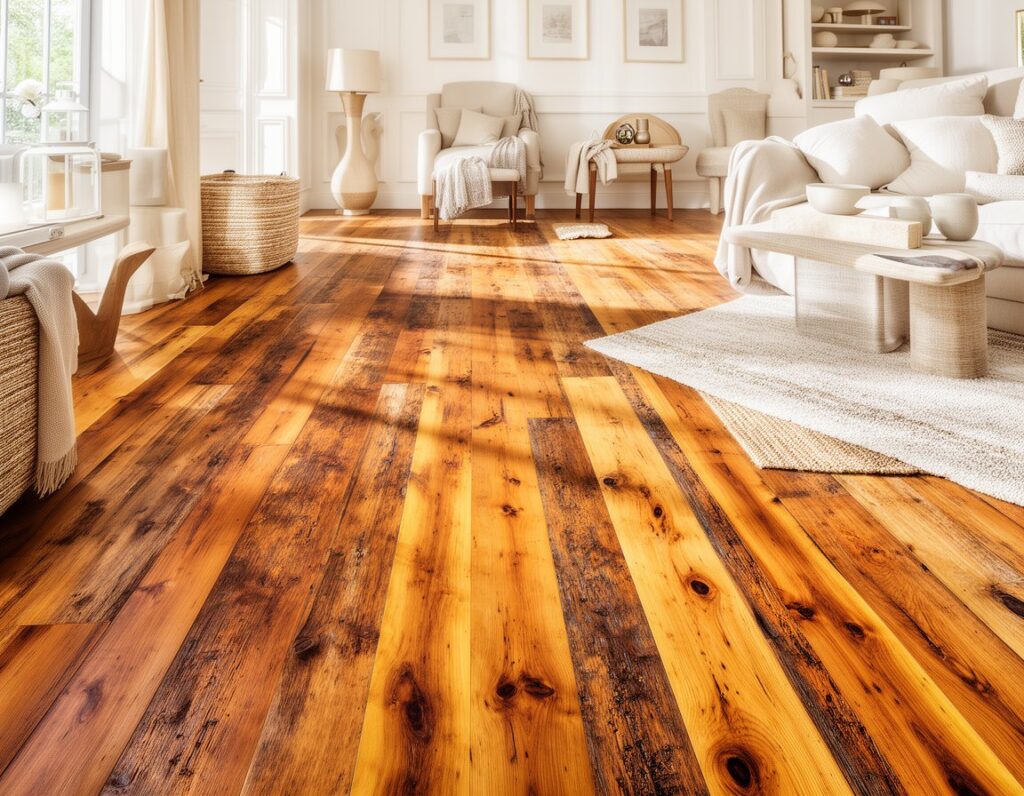
Reclaimed floorboards are one of the most popular applications. Old boards tend to be wider and thicker than modern equivalents, they have a visual warmth that cannot be faked, and in the right setting they anchor an interior brilliantly. The key considerations are consistent thickness for ease of laying, and ensuring moisture content is correct before installation to minimise movement.
Furniture
Dining tables, coffee tables, sideboards, shelving, and bed frames made from reclaimed timber have become a staple of contemporary interior design. The contrast between rough-sawn or lightly worked reclaimed wood and clean modern metalwork or upholstery is particularly effective. Bespoke furniture makers working with reclaimed timber can create pieces that are genuinely impossible to replicate off the shelf.
Wall Cladding and Feature Panels
Thin-sliced or split reclaimed timber applied to a wall — whether as full cladding or an accent panel behind a bed or sofa — adds texture and depth without the structural demands of a full floor or furniture build. This is a relatively accessible DIY project if the timber has been properly prepared and the boards are consistent in thickness.
Beams and Structural Features
Exposing reclaimed beams in a ceiling, or adding decorative beams for visual effect, is one of the most transformative things you can do to a room. Oak, elm, and pine beams carry enormous visual presence. Bear in mind that structurally used beams need proper assessment; decorative beams applied to a ceiling are a different matter entirely and are more straightforward to source and install.
Frequently Asked Questions
Is reclaimed wood more expensive than new timber?
It depends on the species, grade, and source. Premium reclaimed hardwoods — wide-board pitch pine, old-growth oak, or rare species — command prices that can exceed comparable new timber. However, reclaimed softwoods sourced directly from a demolition or bought in quantity from a reclamation yard can be very competitively priced. The hidden costs — preparation, machining, longer sourcing time — should always be factored into any comparison. The question is rarely just about the price per square metre.
How do I know if reclaimed wood has been treated with harmful chemicals?
The single most important question to ask any supplier is where the timber came from and whether it has any known treatments. Railway sleepers, telegraph poles, and marine timber are almost always treated with preservatives — creosote in the case of most sleepers — that are not suitable for enclosed living spaces. Timber from domestic buildings and barns is generally lower risk, but older properties may have been treated with arsenic or chromium-based compounds. If in doubt, ask for documentation, use a reputable supplier who can provide clear provenance, and for large projects consider having a sample tested by a specialist laboratory.
Can I use reclaimed wood in a kitchen or bathroom?
Yes, with the right preparation and finishing. Wood has been used in kitchens, bathrooms, and wet rooms for centuries — it is not inherently unsuitable for humid environments. The key is ensuring it is properly sealed. A penetrating oil or hardwax oil finish will provide moisture resistance without closing off the character of the grain. Avoid water-based polyurethane on reclaimed wood, as it tends to sit on the surface and can peel away from weathered or porous timber. Pay particular attention to areas around sinks and baths where standing water is likely.
How do I tell genuine reclaimed wood from artificially aged new timber?
This is a legitimate concern as the market for “reclaimed look” new timber has grown significantly. Genuinely reclaimed wood tends to show age consistently through its depth — check the end grain, which should show the same weathering and colour as the face. Nail holes in reclaimed timber will have oxidation around them that goes into the wood, not just sits on the surface. The patina of genuine reclaimed wood has a layered, uneven quality that artificial distressing rarely replicates convincingly. When in doubt, ask for provenance information and buy from a yard that is transparent about its sourcing.
Do I need planning permission to use reclaimed timber in a listed building?
Using reclaimed timber inside an unlisted property for flooring, furniture, or decorative features does not require planning permission. However, if your property is listed — or if you are working in a conservation area — any alterations to the fabric of the building may require listed building consent or conservation area consent. This applies to structural work, changes to original features, and in some cases the addition of exposed beams if they were not part of the original design. Always consult your local planning authority before carrying out work on a listed building; the consequences of proceeding without consent can be severe.
Conclusion
Reclaimed wood is not a trend. It has been valued by craftspeople, builders, and homeowners for as long as buildings have been demolished and rebuilt. What has changed is the language around it — sustainability, authenticity, provenance — and the ease with which good-quality reclaimed timber can now be sourced through specialist yards and online platforms.
The challenges are real. Inconsistent supply, hidden fixings, preparation demands, and the occasional contamination risk mean that working with reclaimed wood requires more care and patience than simply buying new. But the rewards are equally real: timber with genuine character, environmental credentials that actually stack up, and finished results that mass-produced alternatives simply cannot match.
Whether you are planning a full reclaimed floor, a bespoke dining table, or a single feature wall, take the time to source carefully, prepare properly, and let the material work for you. Reclaimed wood does not need to be forced into perfection. Its imperfections are the whole point.