Table of Contents
Key Takeaways
- Finding property for sale in Lake District requires going well beyond the portals — the most sought-after properties regularly change hands through local agents before they reach Rightmove or Zoopla, making direct agent registration essential.
- Average house prices within the Lake District National Park sit at around £455,000 according to Land Registry data — more than double the surrounding Cumbrian average — driven by severe supply constraints, second home demand, and the National Park’s strict planning policy.
- The market divides clearly between the lake-facing towns of Windermere and Bowness, the more affordable northern gateway towns of Keswick and Penrith, and the deeply rural interior where genuinely rare properties occasionally come to market.
- Second home buyers must now factor in a 100% council tax premium applied by Westmorland and Furness Council, meaningfully increasing the annual holding cost of any non-primary residence purchase.
- The Lake District National Park Authority’s Local Plan Policy 15 restricts new homes from being used as second homes or holiday lets — a planning control that has direct implications for buyers considering new build options within the Park.
- Stone-built Lakeland properties require specialist survey and legal due diligence, particularly around rights of way, fell access, drainage, and planning history.
Why the Lake District Property Market Is Unlike Any Other in England
There are beautiful parts of England where demand outpaces supply and prices have risen steadily over time. And then there is the Lake District — a market operating under a combination of pressures that makes it genuinely unique in the British property landscape.
The area covered by the Lake District National Park Authority spans around 900 square miles of protected landscape. It is England’s largest National Park and, since 2017, a UNESCO World Heritage Site. Planning policy within its boundaries is designed explicitly to conserve the landscape character, which means new residential development is severely constrained. Supply is structurally limited — not just by current demand, but by a planning framework that has been tightening for years, with the Authority’s Local Plan Policy 15 now requiring that new homes are restricted to primary residence use only, explicitly preventing them being used as second homes or holiday lets.
Into that constrained supply flows sustained and multi-layered demand. Primary residence buyers, second home purchasers from across the UK, lifestyle relocators, retirees, and investors in the holiday let market have all competed for the same limited stock. The result, according to Land Registry data, is an average house price within the National Park boundary of around £455,000 — more than double the surrounding Cumbrian average of approximately £234,000. Property for sale in Lake District is not simply expensive; it is expensive for very specific and deeply structural reasons that show no sign of resolving.
Understanding that market — where to look, what to expect at different price points, how to work with local agents effectively, and what legal and regulatory traps to watch for — is what this guide is designed to provide.
The Lake District Property Market: Towns, Areas, and What Each Offers
Windermere and Bowness-on-Windermere
Windermere and its lakeside neighbour Bowness are the most recognisable addresses in the Lake District property market and, broadly speaking, among the most expensive. The combination of England’s largest natural lake, the surrounding fell scenery, and strong transport links — Windermere has a direct rail connection to Oxenholme and onward to the West Coast Main Line — creates a level of buyer demand that has kept values firmly elevated.
Properties here span Victorian villas and Edwardian semis in the Windermere town itself, lakefront apartments and terraced houses in Bowness, and prestige lake-view homes on the higher roads above the water where the outlook commands a premium. Anything with a genuine lake view or waterfront access enters a different pricing category entirely — lakefront properties on Windermere regularly reach seven figures, and exceptional examples are priced well into the millions.
For buyers seeking a primary residence with town centre convenience, good amenities, and practical connectivity, Windermere and Bowness offer the most straightforward buying experience in the National Park — the agent network is densest here, and stock turns over more regularly than in the more remote parts of the Park.
Ambleside
Ambleside sits at the northern tip of Windermere and functions as the walking and outdoor activity hub of the central Lakes. It has a genuine year-round community in a way that some more tourism-dominated locations do not, with a strong independent retail scene, good cafés and restaurants, and a population that includes long-term residents alongside the seasonal visitor economy.
Property in Ambleside is predominantly traditional stone-built Lakeland stock — terraced cottages, Victorian semis, and detached houses on the surrounding roads — with more modern development appearing on the edges of the town. It attracts buyers who want to be in the heart of the Lake District rather than on its fringes, and is a perennial favourite among buyers relocating from cities for a lifestyle change.
Keswick
Keswick anchors the northern Lakes and has a slightly different character to the central and southern areas of the National Park. It is a working market town as much as a tourist destination, with a resident population of around 5,000 and the widest range of shops, facilities, and everyday amenities of any settlement within the Park. Derwentwater lies immediately to the south, and the Borrowdale valley stretching away from its southern shore is widely considered some of the finest landscape in England.
Property in Keswick tends to be more affordable relative to Windermere, though that is a relative statement — it remains significantly above the national average. The price point is lower partly because the transport connectivity is less strong, requiring buyers to accept a degree of genuine rurality in their daily lives. For buyers who want the full Lake District experience without paying the Windermere premium, Keswick is often the answer.
Local agents with strong Keswick coverage include Hackney & Leigh, who operate across ten Lakeland offices from their base in Keswick, and several independent practices that handle the rural hinterland as well as the town itself.
Penrith: The Eastern Gateway
Penrith sits just outside the eastern boundary of the National Park, straddling the A66 and with direct access to the M6 — which makes it the most commuter-friendly base for anyone needing to travel regularly to Carlisle, the North East, or south toward Manchester. Property values here are noticeably lower than inside the Park boundary, though the landscape around Ullswater, which lies just to the west, is as spectacular as anything within the formal National Park designation.
For buyers who need practical daily connectivity but want to live within reach of the Lakes, Penrith represents genuine value. H&H Land & Estates and Hackney & Leigh both operate in Penrith and carry a mix of town centre residential stock and the rural and agricultural properties that characterise the Eden Valley hinterland.
The Rural Interior: Coniston, Hawkshead, Grasmere, and Beyond
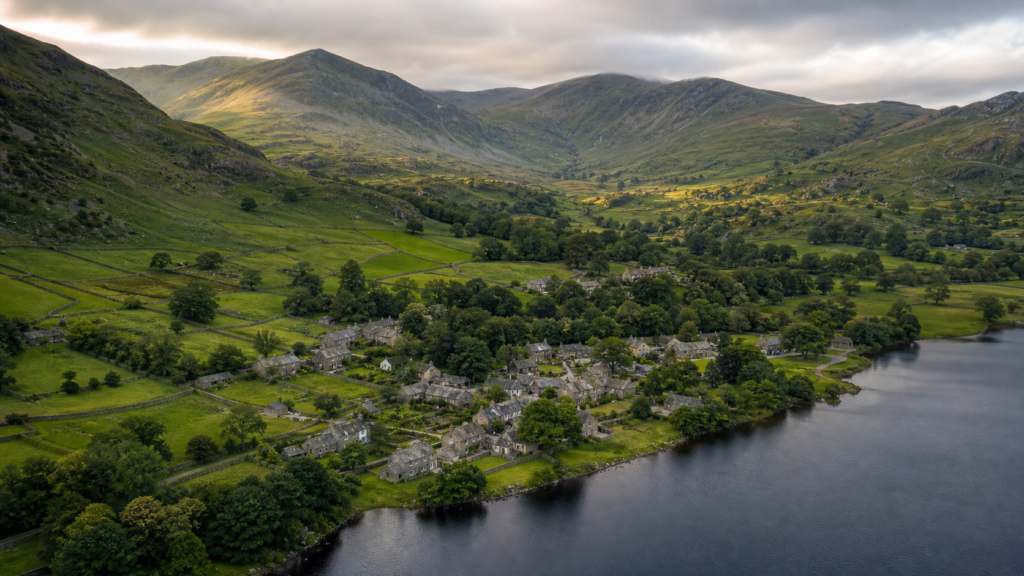
The villages of the Lake District’s interior — Coniston, Hawkshead, Grasmere, Langdale, Elterwater, and the hamlets of Eskdale and Wasdale — represent the most rarefied end of the property market. Supply here is genuinely scarce: planning constraints prevent new development outside settlement boundaries, properties rarely come to market, and when they do the demand from buyers who have been watching and waiting for years can be immediate and competitive.
Prices in these locations do not necessarily follow the town market benchmarks — a characterful stone cottage in Hawkshead or a farmhouse in Langdale is priced according to what buyers will pay for genuine rarity in one of England’s most revered landscapes, not according to any conventional yield or square footage formula. These are aspirational purchases in the truest sense, and buyers pursuing them need patience, a long-term search horizon, and the financial readiness to move quickly when the right thing appears.
Where to Search for Lake District Property for Sale
The Major Portals
Rightmove, Zoopla, and OnTheMarket all carry Lake District listings and are useful tools for building market knowledge, calibrating price expectations, and tracking what has recently sold. Set up saved searches with email alerts — given the pace at which desirable properties can attract interest, being notified on the day of listing matters.
Use the UK House Price Index from HM Land Registry to research specific postcode areas and understand whether asking prices are consistent with recent sold prices in that location. In a market where emotional demand can push offers above comparable evidence, having objective data gives buyers a more grounded position at negotiation stage.
OnTheMarket has historically had an advantage in some locations through exclusive new listings appearing there before Rightmove, so it is worth checking independently rather than assuming the portals are always synchronised.
Local Independent Estate Agents
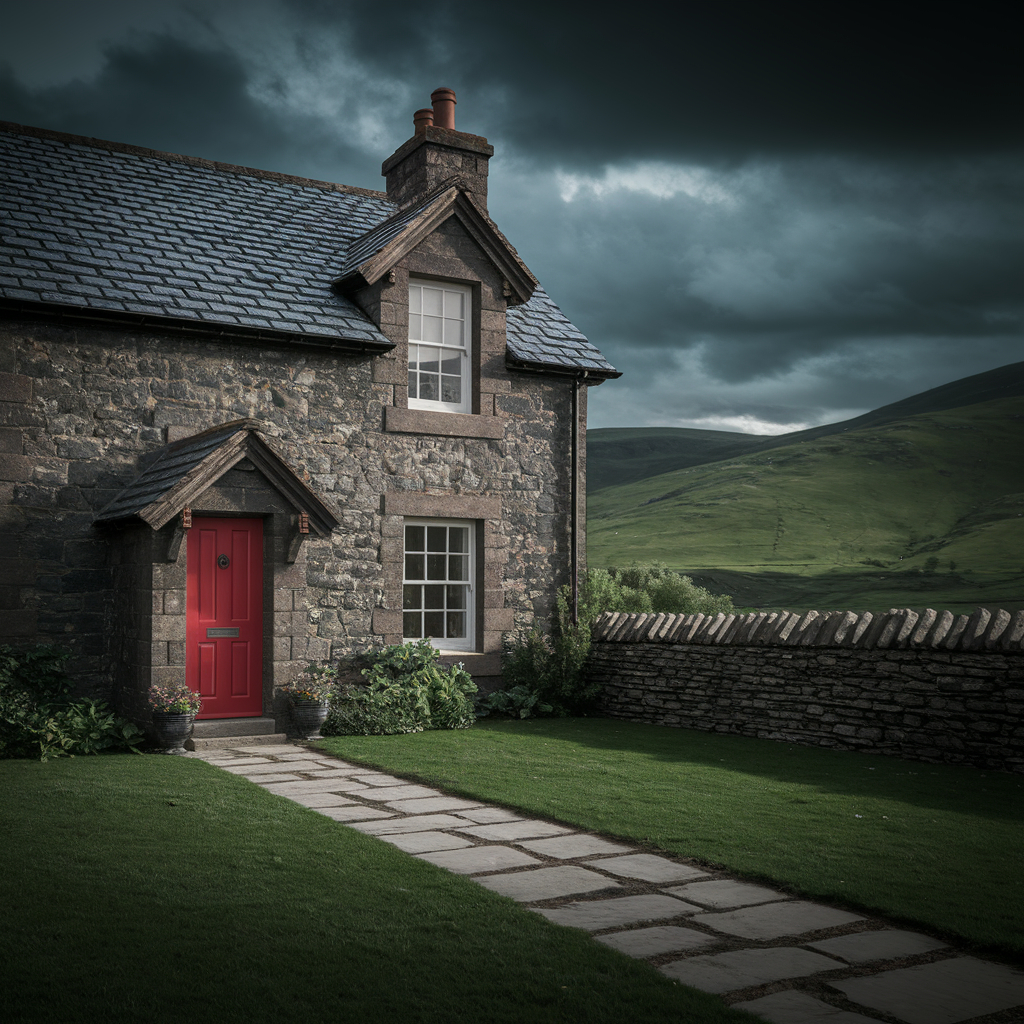
The single most important thing buyers from outside the Lake District can do is register with local agents early and maintain those relationships actively. A significant portion of the best properties in this market are introduced to registered buyers before — or instead of — portal listing. This is not a theoretical possibility; it is a routine feature of how the market operates in a location where sellers often know the agents personally and trust their judgement on introductions.
The dominant independent agency network across the Lake District is Hackney & Leigh, with offices in Ambleside, Keswick, Windermere, Penrith, Kendal, Ulverston, and several other locations — their coverage of the market is broader than any other single agency. Matthews Benjamin covers the central and southern Lakes from offices in Windermere and Ambleside. AshdownJones specialises in prestige Lakeland property and handles a significant share of the higher-value market. Fine & Country operate from Windermere covering the premium end across the wider Lakes and Lune Valley. Thomson Hayton Winkley are active in Windermere and Kendal, and H&H Land & Estates cover the northern Lakes and Eden Valley.
All agents operating in England must be registered with a redress scheme. Verify that any agent you deal with is a member of either The Property Ombudsman (TPO) or the Property Redress Scheme (PRS), and that they are regulated through NTSELAT — the National Trading Standards body responsible for estate agency regulation in England.
Buying Agents
Given the opacity of the off-market in the Lake District, specialist buying agents have become a genuine value-adding service for buyers who can afford the fee. Lake District Relocation is the most established buying agent in the area, with deep relationships across the local agent network and a track record of introducing clients to properties that never reached the portals. If you are relocating from some distance and cannot maintain a regular physical presence in the market, a buying agent can materially improve your chances of securing the right property.
Prices, Budgets, and What to Expect
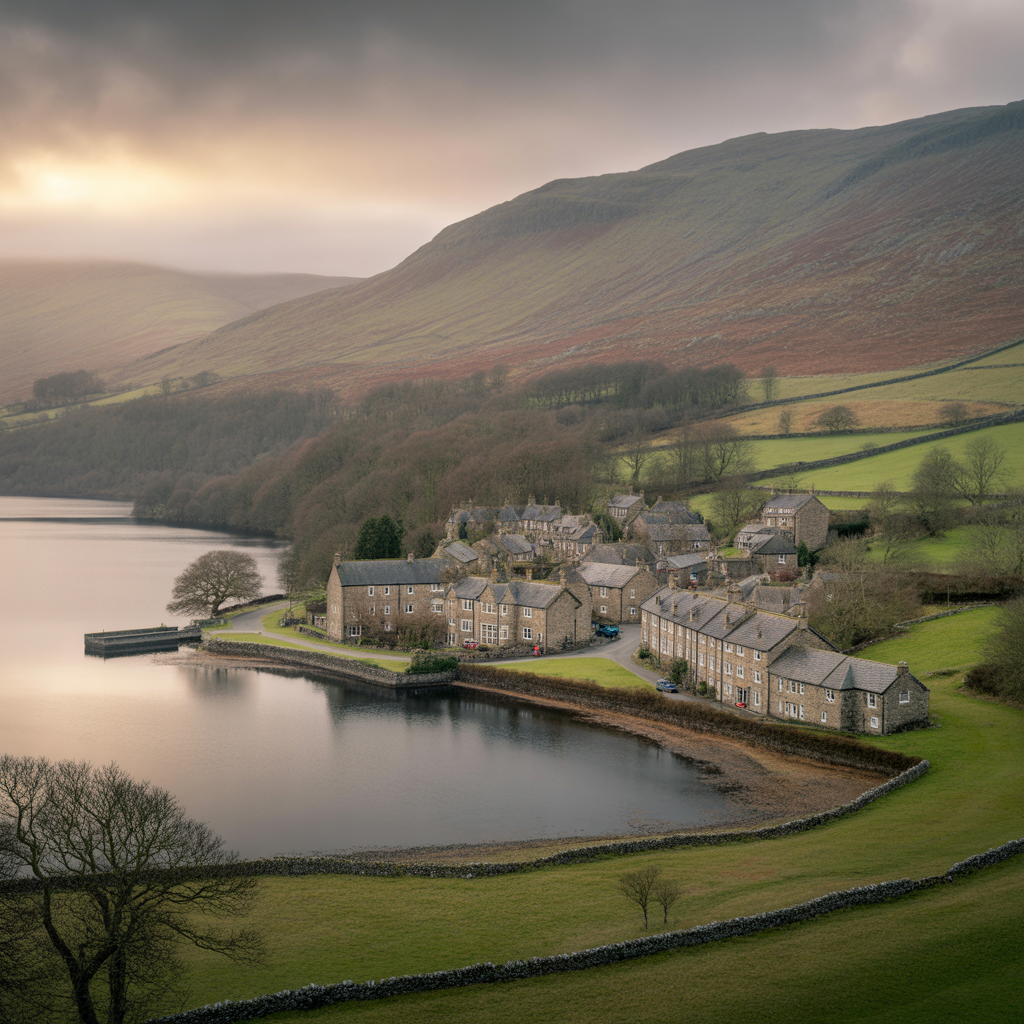
The average house price within the National Park boundary — approximately £455,000 according to Land Registry — is a starting point rather than a ceiling. Within that average, the range is vast. Entry-level terraced cottages in the smaller towns can still be found below £300,000 in some locations, while detached stone houses with fell views, gardens, and characterful period features typically sit between £500,000 and £900,000 depending on condition and position. Lakefront properties, prestige country houses, and anything with significant land enters seven-figure territory.
Understanding the Premium Over Surrounding Areas
The gap between prices inside the National Park and the surrounding Cumbrian market is not an accident — it reflects the compounded effect of planning constraint, UNESCO status, and decades of second home and holiday let demand competing with primary buyers for a fixed stock of properties. The ONS house price data for Cumbria provides context for how individual locations sit relative to the regional picture, and is worth consulting before calibrating your budget expectations.
Outside the National Park boundary — in Penrith, Kendal, Ulverston, and the rural communities of the Eden Valley and South Lakeland — comparable-quality properties cost meaningfully less. Some buyers find that the lifestyle benefits of these edge-of-park locations closely match what they would get inside the boundary, at prices 30–40% lower.
The Regulatory and Tax Environment Every Buyer Must Understand
Second Homes, Council Tax Premiums, and Policy 15
Buyers considering a second home or holiday let purchase in the Lake District face a regulatory environment that has become increasingly demanding over the past several years, and the direction of travel is toward further restriction rather than relaxation.
Westmorland and Furness Council — the local authority covering most of the Lake District — has implemented a 100% council tax premium on second homes, meaning owners pay double the standard rate on any property that is not their primary residence. This is a material increase in the annual holding cost of a second home and must be factored into any financial modelling alongside the purchase price and mortgage costs.
The Lake District National Park Authority’s Local Plan Policy 15 goes further: new homes built within the National Park are now subject to planning conditions restricting their use to primary residences only. This means buyers seeking a new build property within the Park as a second home or holiday let are likely to find themselves unable to use it for that purpose — a planning condition that runs with the land and would affect any future sale too. Existing unfettered properties — those built before Policy 15 was applied — are not subject to this restriction, but buyers should instruct their solicitor to establish with absolute certainty whether any property they are purchasing carries a planning occupancy condition before exchanging.
Parliamentary evidence submitted in connection with the Planning and Infrastructure Bill has made clear that further use class restrictions on second homes and holiday lets in National Parks are under active consideration at a national level. Buyers purchasing for second home or investment purposes should factor this regulatory trajectory into their decision-making.
Planning Restrictions and Permitted Development
Properties within the National Park are subject to tighter planning controls than equivalent properties outside it. Permitted development rights — which allow certain extensions, alterations, and outbuildings without planning permission under the Town and Country Planning (General Permitted Development) (England) Order 2015 — are frequently restricted or removed entirely within the National Park boundary. Any buyer planning to extend, alter, or develop a property should confirm the permitted development position with the LDNPA before purchase, and should not assume that works acceptable elsewhere in England would be permissible here.
The National Park’s Design Code provides detailed guidance on what the Authority expects in terms of materials, scale, and character for any development requiring consent. Planning applications that do not respect the Lakeland vernacular — traditional slate roofs, local stone, appropriately scaled windows — face an uphill battle regardless of technical compliance.
Practical Buying Considerations for Lakeland Property
Survey and Legal Due Diligence
Stone-built Lakeland properties are beautiful, characterful, and frequently expensive to maintain. Before committing to any period property, instructing a full RICS Level 3 Building Survey — rather than the more limited Level 2 Homebuyer Report — is strongly recommended. Issues to look for specifically in this market include damp penetration through solid stone walls or failing pointing, chimney and roof condition (slate roofs require specialist contractors and the material is increasingly costly), and condition of the drainage system.
Many Lake District properties, particularly in rural and fell-edge locations, are not connected to the mains sewerage network. Private drainage — septic tanks, package treatment plants, or soakaways — requires maintenance, can involve Environment Agency regulations, and may require upgrading if the existing system is old or failing. Clarifying the drainage position is essential legal due diligence, not optional.
Rights of way are another Lake District-specific consideration. The area is crossed by an extensive network of public footpaths, bridleways, and fell access routes — some of which pass directly through private property or gardens. Your solicitor should identify and advise on any rights of way affecting the property, and you should physically walk the boundary of any rural property before exchange to understand what public access exists.
Finance and Mortgage Considerations
The Lake District’s higher price points, the prevalence of unusual property types — stone barns, converted mills, agricultural buildings, properties with significant land — and the second home and holiday let market all create specific mortgage considerations. Some mainstream lenders apply stricter criteria or reduced loan-to-value ratios for properties within National Parks. Non-standard construction, unusual tenure arrangements, or agricultural occupancy restrictions can limit the pool of willing lenders significantly.
Using an independent mortgage broker with specific knowledge of the Cumbrian and Lake District market is worthwhile. They will know which lenders are currently active and competitive in this space, and can advise on the implications of second home surcharges and the relevant stamp duty thresholds before you commit.
Frequently Asked Questions
Is it possible to buy a Lake District property as a holiday let investment?
Buying within the Lake District National Park as a holiday let remains legally possible for existing unfettered properties — those without planning occupancy restrictions. However, the regulatory environment has tightened considerably and continues to move in a more restrictive direction. The 100% council tax premium on second homes applies regardless of whether you intend to let commercially, and business rates relief that previously benefited furnished holiday lets has been reformed to close the loophole where owners declared a letting intention to avoid council tax. Buyers should obtain up-to-date professional advice on the current tax and business rates position, and should have their solicitor confirm definitively whether any occupancy condition applies to the specific property before exchange.
Beyond the regulatory picture, the operational economics of Lake District holiday letting have become more complex. The market is well-supplied with holiday stock, average nightly rates have risen but so have management, maintenance, and compliance costs, and the EPC requirements for let properties are tightening alongside the national regulatory picture for landlords outlined in our guide on how UK property investors are thriving in a changing market.
How competitive is the Lake District property market for buyers?
Intensely competitive at any price point where the property genuinely represents good value for its type and location. Well-presented properties in strong Windermere, Bowness, Ambleside, and Keswick locations can attract viewing interest within days of listing and, in some cases, sealed bid situations where multiple buyers are invited to submit best-and-final offers simultaneously.
The more remote and rural the property, and the higher the price point, the more the market slows down — buyers for a £1.5 million farmhouse in Langdale are fewer than buyers for a £400,000 terrace in Windermere, and the process typically involves more negotiation. But across the market as a whole, proceedable buyers with finance confirmed and a solicitor instructed are in a materially stronger position than those who are still at the investigation stage when a good property appears.
What are the best areas to buy for value in the Lake District?
Within the National Park, Keswick and the northern Lakes generally offer better value per square metre than Windermere and Bowness, partly because the transport connectivity is less strong for buyers who need to commute regularly. The Furness Peninsula — Ulverston, Barrow-in-Furness, and the rural communities of the Cartmel and Furness area — offers substantially better value again while remaining within or immediately adjacent to the National Park boundary.
Just outside the National Park, the areas around Penrith, the Eden Valley, and the lower-lying communities to the south and east of the Park represent the best value for buyers who can accept being a short drive rather than walking distance from the lakes and fells themselves. These areas can be 30–40% more affordable for equivalent-quality stock while still offering genuine access to the Lake District landscape.
How do I check if a Lake District property has planning restrictions?
The Lake District National Park Authority’s Planning Application Search Tool allows buyers to search the planning history of any property within the National Park boundary. Your solicitor should conduct a local authority search as part of standard conveyancing, which will reveal outstanding planning conditions, enforcement notices, and any occupancy restrictions.
For properties outside the National Park boundary — in Kendal, Penrith, Ulverston, and other non-Park areas — searches are conducted against the relevant local authority (Westmorland and Furness Council, or Cumberland Council for the northern areas). The Planning Portal allows general searches across England. Buyers should not rely solely on the vendor’s or agent’s representations about planning status — independent verification through the formal search process is essential.
What should I budget for beyond the purchase price?
Beyond the purchase price, buyers should budget for stamp duty at current HMRC rates (use the HMRC stamp duty calculator for the current thresholds; second home purchasers pay the 3% surcharge on top of standard residential rates), legal fees (typically £1,500–£3,000 for a standard residential purchase, more for rural properties with complex titles), survey costs (£700–£2,000 depending on survey level and property size), and mortgage arrangement fees where applicable.
For second home buyers, the ongoing 100% council tax premium must be factored into annual holding costs. Rural properties with private drainage, oil heating, or significant external maintenance requirements carry higher running costs than urban equivalents, and a realistic annual maintenance budget should be established before committing to purchase.
Conclusion
The Lake District property market rewards buyers who approach it with preparation, patience, and a genuine understanding of how it operates. Property for sale in Lake District is not simply found by searching a portal and making an offer — the best properties frequently never reach the portals at all, the regulatory landscape around second homes and planning restrictions has material implications for many buyers, and the due diligence required on stone-built, rural, and fell-edge properties is more demanding than in conventional suburban markets.
The buyers who succeed here are the ones who register early with the established local agents, build relationships over time, have their finance and legal representation ready to move, and understand the specific planning and tax environment before they start making offers rather than discovering it afterwards.
The Lake District’s combination of UNESCO World Heritage landscape, structural supply constraints, and sustained multi-layered demand makes it one of the most resilient and compelling property markets in England over the long term. Getting in requires work — but the reward, for buyers who find the right property and navigate the process correctly, is access to somewhere genuinely exceptional.