Table of Contents
Key Takeaways
- The best place to live in London for families depends on the specific combination of priorities that matter to your household — schools, space, safety, green access, community feel, and budget rarely all point to the same location.
- The outer boroughs consistently outperform central London on every family-relevant metric: larger homes, better value per square foot, stronger school catchments, lower crime rates, and more green space.
- Richmond upon Thames, Wimbledon, Chiswick, Barnet, and Bromley are among the most consistently recommended family areas — each for slightly different reasons and at different price points.
- Safety is the foundation — before considering anything else, understanding the crime profile of any area under consideration is essential. Our guide to the safest London boroughs covers this in detail.
- School catchment areas shift year to year and cannot be assumed from postcode alone — checking the most recent admissions data for specific schools before committing to an area is not optional.
- London’s family property market is competitive at every price point — clarity about your non-negotiables before you start viewing will save time, reduce frustration, and improve the quality of your eventual decision.
What Families Actually Need From a London Neighbourhood
Moving to London as a family — or moving within London to find a better fit — is one of the more complex residential decisions anyone makes. The city is vast, its neighbourhoods wildly varied in character and cost, and the factors that determine whether a neighbourhood works for a family are more numerous and more specific than those that apply to a single person or a couple.
Space is usually the first consideration. Families need bedrooms, and London’s housing market delivers them at a cost that increases steeply as you move towards the centre. The further from Zone 1, the more space a given budget buys — a rule of thumb that holds with remarkable consistency across the city and explains why the best London areas for families are overwhelmingly in the outer zones.
Schools are the second major driver. London’s state school offer is more varied than in any other part of the UK — ranging from some of the highest-performing comprehensives in the country to schools that no parent would choose for their children. Catchment areas are tight, competitive, and not always predictable from postcode alone. Buying or renting in the wrong street relative to a desired school can be a costly mistake that is very difficult to rectify.
Safety, community feel, green space, transport links, and the availability of family-oriented amenity — parks, leisure centres, sports facilities — round out the picture. No London neighbourhood scores perfectly across all of these simultaneously, and the families who find the best fit are almost always those who have been clear-eyed about their priorities before they start looking.
Richmond upon Thames
Best for: Families prioritising green space, safety, schools, and riverside quality of life Typical family home price: £700,000–£1.5m+ for a three or four-bedroom house Commute: 30–50 minutes to central London via South Western Railway or District line
Richmond upon Thames is the borough that appears at the top of almost every best-places-to-live-in-London list, and its consistent presence there reflects genuine merit rather than media habit. It is London’s safest borough — consistently recording the lowest crime rate of any London borough — combined with outstanding green space, strong schools, and a quality of residential environment that is genuinely difficult to improve on within the M25.
Richmond Park — one of Europe’s largest urban parks, home to red and fallow deer and covering 2,500 acres — is the borough’s most spectacular asset. The Thames towpath runs through the borough, Kew Gardens is within the boundary, and Ham Common, Bushy Park, and a network of smaller green spaces fill in the gaps. For families who value outdoor access as a daily reality rather than a weekend treat, Richmond delivers it at a level that no other London borough matches.
The schools in Richmond are strong across the board — both state primary and secondary, with several outstanding-rated schools in regular Ofsted cycles. The 2025 secondary transfer process was among the most competitive in outer London, which is itself evidence of the demand that the borough’s school quality generates.
The principal drawback is cost. Richmond is one of the most expensive boroughs in London, and three and four-bedroom family houses in the most sought-after streets — Richmond Hill, Kew Green, East Sheen, and the roads behind the park in Ham and Petersham — command prices that place them out of reach for many families. Parts of the borough — Twickenham, Teddington, and the southern end of the borough towards Kingston — offer meaningful value relative to the Richmond premium without sacrificing the core qualities that make the area exceptional.
Wimbledon and Merton
Best for: Families seeking the SW London premium at slightly lower entry cost than Richmond Typical family home price: £600,000–£1.2m for a three or four-bedroom house Commute: 25–40 minutes to central London via District line or Thameslink
Wimbledon is one of London’s most recognisable names — globally, for the tennis; locally, for the specific combination of the Common, the village, and the residential streets of Victorian and Edwardian family housing that make up the SW19 postcode. Wimbledon Common — 460 acres of woodland and open grassland immediately accessible from large areas of the residential borough — is the borough’s defining family asset, alongside the more manicured Cannizaro Park adjacent to the Common’s edge.
The family housing stock in and around Wimbledon is excellent. The large Victorian and Edwardian semis and detached houses on the roads between the Common and the town centre — The Ridgeway, Edge Hill, Parkside — are among the finest family homes in south-west London, and they hold their value with the consistency of genuinely desirable addresses. More affordable options appear in Raynes Park and Morden, both within the borough, where the housing is generally more modest but the access to the borough’s schools and amenity remains.
Merton’s schools are strong, with a mixture of well-regarded comprehensives and high-performing primary schools. The secondary picture is more competitive than primary in some catchments — families planning several years ahead should research specific schools carefully rather than relying on the borough’s overall reputation.
The tennis fortnight brings a specific disruption to the Wimbledon village area in June and July — something local families either embrace as part of the neighbourhood’s character or plan around every year. For most, it is firmly in the former category.
Chiswick
Best for: Families wanting west London character, village feel, and strong community Typical family home price: £700,000–£1.4m for a three or four-bedroom house Commute: 20–35 minutes to central London via District line or Overground
Chiswick occupies a specific position in the London family market: it is not quite Richmond, not quite Hammersmith, but shares the best qualities of both while maintaining a distinctly independent character. The stretch of the high road through Chiswick — from Gunnersbury Park in the east to the junction with the A316 in the west — is one of west London’s most pleasant commercial streets, with a concentration of independent restaurants, delis, and shops that generates the kind of daily amenity that makes a neighbourhood feel lived-in rather than simply residential.
The Thames towpath passes through Chiswick, providing riverside access and connecting the area to the annual Boat Race route — a community event that the whole neighbourhood turns out for. Chiswick House and its grounds offer a different scale of green space, formal rather than wild, and the parks and playing fields that dot the residential areas provide a further layer of outdoor access.
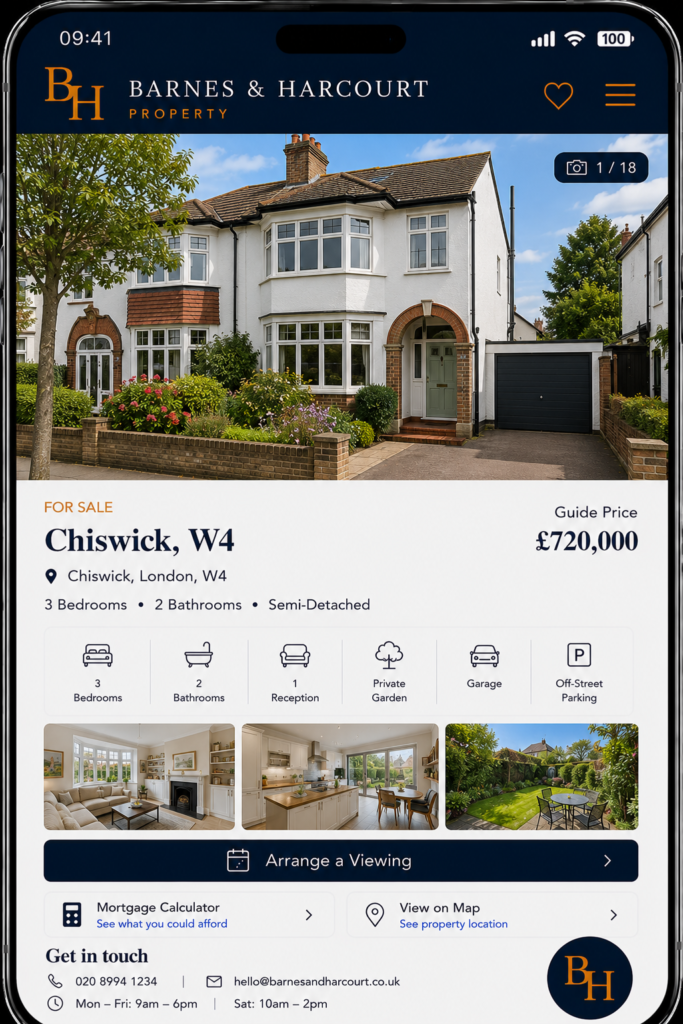
Family housing in Chiswick runs from the generous Victorian semis of Bedford Park — one of London’s earliest planned suburbs, with a distinctive Arts and Crafts architectural character — to the larger detached houses on roads immediately adjacent to the river. Bedford Park is particularly popular with families for its character housing and its community feel; it has its own residents’ society, an active local culture, and a school catchment that has historically been strong.
Transport is one of Chiswick’s genuine strengths — the District line provides rapid access to central London, and the road network connects efficiently to Heathrow for families with frequent international travel requirements.
Barnet
Best for: Families seeking north London’s best combination of schools, space, and safety at reasonable cost Typical family home price: £500,000–£900,000 for a three or four-bedroom house Commute: 25–45 minutes to central London via Northern line or rail
Barnet is north London’s answer to the outer south-west London family boroughs — safe, well-schooled, spacious, and offering considerably more housing for the money than equivalent areas on the other side of the river. The borough is large and varied — the northern extremities of the Northern line (High Barnet and Totteridge & Whetstone) serve some of its most pleasant residential areas — and the family experience of living in Barnet’s leafiest streets is qualitatively excellent.
The schools in Barnet are among the strongest in north London, with a number of consistently high-performing comprehensives alongside a concentration of independent school options for families who choose that route. The borough’s primary school offer is broad and well-regarded, and the catchments for the most sought-after schools drive a familiar pattern of residential concentration in specific streets and postcodes.
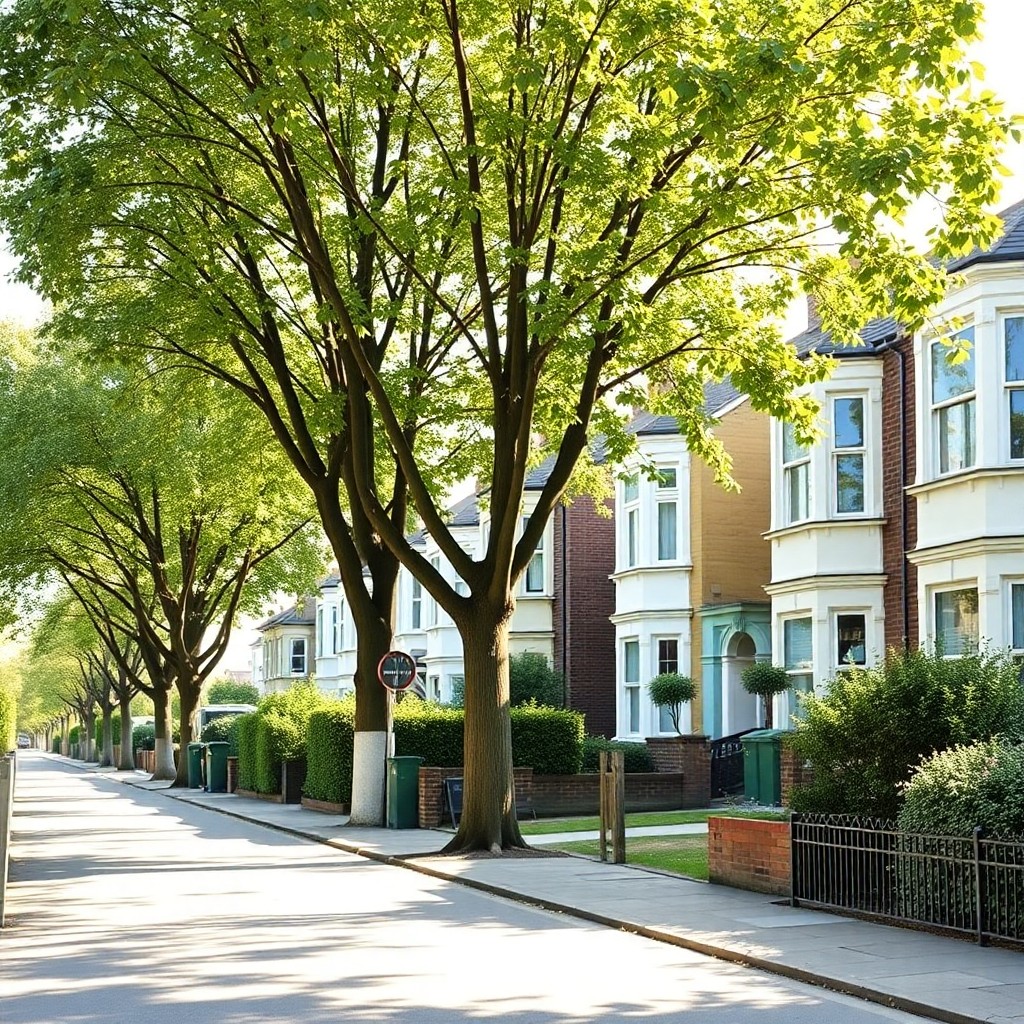
Specific areas within Barnet that consistently attract family buyers include East Barnet, New Barnet, Cockfosters, and the roads immediately around Hadley Wood. These are quiet, established residential environments — tree-lined streets, large gardens, good community infrastructure — that deliver a quality of life that competes directly with the south-west premium boroughs at meaningfully lower price points.
The transport picture is good from most of the borough’s family areas, with the Northern and Piccadilly lines providing tube access and mainline rail connections serving the eastern parts of the borough.
Bromley
Best for: Families prioritising space, value, and suburban quality in south-east London Typical family home price: £450,000–£850,000 for a three or four-bedroom house Commute: 25–45 minutes to central London via Southeastern rail to London Bridge or Victoria
Bromley is south-east London’s most consistently family-friendly borough, combining low crime rates, strong schools, generous residential housing, and some of the best value per square metre of any outer London borough. For families who are prepared to accept a rail commute rather than a tube-dependent one, the trade-off in terms of space, quality, and affordability is compelling.
Chislehurst — Bromley’s most distinctive residential area — is one of outer London’s genuinely lovely places to live. The common, the caves, the golf club, and the Victorian and Edwardian housing stock on the roads around it create a village atmosphere that is rare at this distance from the centre. Shortlands, Sundridge Park, and Bickley are further examples of the borough’s capacity to offer a genuinely pleasant residential environment at prices that seem generous relative to their south-west equivalents.
Bromley’s schools are well-regarded in both primary and secondary, with a grammar school presence in the borough at secondary level that gives academically focused families an additional option. The local amenity in Bromley town centre is functional and improving, with significant retail redevelopment having improved the offer over recent years.
Kingston upon Thames
Best for: Families wanting Richmond-calibre safety and schools with better town-centre amenity Typical family home price: £600,000–£1.2m for a three or four-bedroom house Commute: 35–50 minutes to central London via South Western Railway
Kingston upon Thames consistently ranks among London’s safest boroughs and offers a family proposition that is closely comparable to Richmond — which it borders — while providing a town centre that is more practically useful for day-to-day family life. Kingston’s high street is one of outer London’s most functional retail environments, with a wide range of shops, a market, and leisure facilities that Richmond’s smaller centre does not match.
The family housing in Kingston’s residential areas — Surbiton, Hook, Chessington, and the roads between Kingston town centre and Richmond Park — provides a wide range of options at varying price points. Surbiton in particular has developed a strong reputation as a family destination in its own right — excellent rail links to Waterloo, good local independent restaurants and shops, and a community feel that has earned it a loyal following among families priced out of Richmond and Wimbledon.
Schools in the borough are strong, and the proximity to Richmond Park provides the same outstanding green space access that makes Richmond itself so valuable for families — the park does not stop at the borough boundary.
Considerations That Apply Across All Areas
School Catchments Are Not Guaranteed by Postcode
This point cannot be made too strongly. London’s most sought-after state schools have catchment areas that shift annually based on the number of applicants. A street that was within catchment for a desired school in 2023 may not be within catchment in 2026. Check the most recent admissions data — available via the school’s own admissions policy and the relevant local authority website — and understand how catchment is calculated (distance, sibling priority, and in some cases faith criteria all apply) before assuming that a postcode secures a school place.
Safety as Foundation
Every recommendation in this guide sits on the foundation of safety. An area with outstanding schools and excellent transport but elevated crime rates is not delivering what families need. Our detailed guide to the safest London boroughs sets out the full borough-by-borough picture with current crime data — read it alongside this guide to ensure that any area under consideration has a safety profile that supports the family experience you are looking for.
Garden Space
London’s family housing market premium for properties with gardens is real and significant. A family house with a usable rear garden commands a meaningful premium over an equivalent property without one, and rightly so — outdoor space at home changes the quality of family life in ways that proximity to a park, while valuable, does not fully replace. Budget for it and make it a non-negotiable unless you are within walking distance of substantial, high-quality green space.
Transport in Both Directions
The commute into central London gets most of the attention in assessments of family areas, but transport in the other direction matters too — school runs, sports clubs, family activities at weekends, and the specific geography of each family’s actual life. Assess transport from the specific property to the specific destinations that matter to your family, not just to the nearest tube station.
Frequently Asked Questions
Which London borough is the overall best for families?
Richmond upon Thames is the most consistently recommended borough for families and tops the rankings on the majority of family-relevant metrics: safety, schools, green space, community feel, and residential quality. The principal drawback is cost — it is one of London’s most expensive boroughs. For families who cannot stretch to Richmond prices, Wimbledon and Merton, Chiswick, Kingston upon Thames, and Barnet all offer strong alternatives at varying price points with different strengths.
What is the most affordable family-friendly area of London?
Among the areas covered in this guide, Bromley and Barnet consistently offer the best combination of family-relevant quality and relative affordability. Bromley in particular — with its low crime rates, strong schools, generous housing stock, and large gardens — delivers a family experience that competes with more expensive south-west London boroughs at a substantially lower entry price. The trade-off is a rail rather than tube commute and a south-east London location that lacks the cachet of the SW postcode. For families making a rational rather than an aspirational decision, Bromley frequently comes out ahead.
How important are Ofsted ratings when choosing a school area?
Ofsted ratings are a useful starting point but not the whole picture. An outstanding-rated school with a very tight catchment that your child is unlikely to get into is less relevant than a good-rated school with a more accessible catchment and a community ethos that suits your child. Look at the most recent inspection reports, the school’s Progress 8 or KS2 data depending on the level, the most recent admissions criteria and distances, and — where possible — the experiences of families whose children currently attend. Ofsted ratings change; the experience of current parents is often more current than the most recent inspection.
Should families prioritise buying or renting in London when relocating?
For families relocating to London from outside the city — or from within it to a new area — renting in the target area for twelve to eighteen months before buying has significant advantages. School catchment experience, community feel, the daily reality of the commute, and the suitability of specific streets and neighbourhoods for the family’s particular lifestyle are all much better assessed from inside an area than from outside it. The cost of renting for a year while taking time to buy well is almost always less than the cost of buying in the wrong location and having to move again.
Are there good family areas in east London?
Yes, though they are less prominently featured in the traditional family neighbourhood conversation, which has historically focused on west and south-west London. Wanstead, Snaresbrook, and the roads around Wanstead Flats in the Redbridge and Newham border area offer genuine family amenity at significantly lower prices than equivalent west London locations. Blackheath — technically in Lewisham and Greenwich — is one of south-east London’s most pleasant family neighbourhoods, with the heath itself, strong schools, good rail links, and a village character that has attracted a loyal community of families. Chigwell and the Essex border areas accessible from east London extend the family option set further, though they move outside the London borough structure.
Conclusion
Finding the best place to live in London for families is an exercise in honest prioritisation. The city offers extraordinary variety — in neighbourhood character, housing type, school quality, green space, and community feel — but it does not offer any single area that combines all of these qualities without trade-off. The families who find the best fit are consistently those who have been clear about what matters most to them before they start the search.
Safety, schools, space, and green access are the four pillars of family life in London, and the outer boroughs — Richmond, Wimbledon, Chiswick, Barnet, Bromley, and Kingston — deliver all four more consistently and more affordably than central London can. The commute may be longer; the address may lack the metropolitan energy of Zone 1. But for most families, a ten-minute longer commute in exchange for a garden, a safe street, a school that suits the child, and a park within walking distance is not a compromise. It is the right decision.
For the full picture on safety across all London boroughs — the data, the context, and the methodology for using it — read our companion guide to the safest London boroughs before finalising any decision about where your family should live.