
If you’re considering underfloor heating for your home in Ireland, you’re probably weighing comfort against cost, disruption, and long-term efficiency. You’ll get steadier warmth, fewer cold spots, and more freedom in how you lay out rooms, but the right system depends on your insulation, floor build-up, and heat source.
Our guide explains everything you need to know about underfloor heating Ireland for both renovation and new construction projects
Before you commit, you’ll want to know where it makes the most sense—and where it doesn’t.
Is Underfloor Heating Right for Your Home in Ireland?
Wondering whether underfloor heating makes sense for your home in Ireland? Start by looking at how you use your rooms and how well they hold heat. If you’re tired of cold tiles, draughty ground floors, or radiators taking up wall space, you’ll notice the comfort boost quickly. You’ll also appreciate steadier warmth that can help you feel comfortable at lower thermostat settings.
Check your renovation plans and floor build-up: you may need extra insulation, new screed, or careful height planning around doors and skirting.
In well-insulated homes, you can run lower flow temperatures and improve overall efficiency. If your property is older, address drafts and insulation first so you don’t waste heat.
Water vs Electric Underfloor Heating in Ireland
Because your heat source and running costs can look very different depending on the system, it’s worth comparing water (hydronic) and electric underfloor heating in Ireland before you commit.
Hydronic UFH circulates warm water through pipes in the floor, so it suits whole-house heating, larger areas, and new builds where you can plan insulation, manifolds, and pipe routes.
It costs more upfront and takes longer to install, but it can deliver lower day-to-day running costs when you heat many rooms regularly.
Electric UFH uses mats or cables, so you can fit it faster and with less disruption, making it ideal for single rooms, retrofits, and bathrooms.
You’ll pay less to install, but running costs can rise if you use it as primary heating.
Heat Pumps vs Boilers: What Works With UFH?
After choosing between water and electric underfloor heating, you’ll want to match your system to the right heat source.
Heat pumps pair best with water-based UFH because they deliver lower flow temperatures efficiently, keeping running costs down and comfort steady. You’ll get the most benefit in well-insulated Irish homes, and you may need a buffer tank or weather compensation to optimise output.
Boilers can also run water UFH, but they’re happiest at higher temperatures, so you’ll need a mixing valve and manifold controls to reduce flow temperature.
A modern condensing gas boiler performs better when you keep temperatures low, yet it still won’t match a heat pump’s efficiency. If you’re upgrading gradually, a boiler can serve as a simpler retrofit option.
Best Rooms for Underfloor Heating in Irish Homes
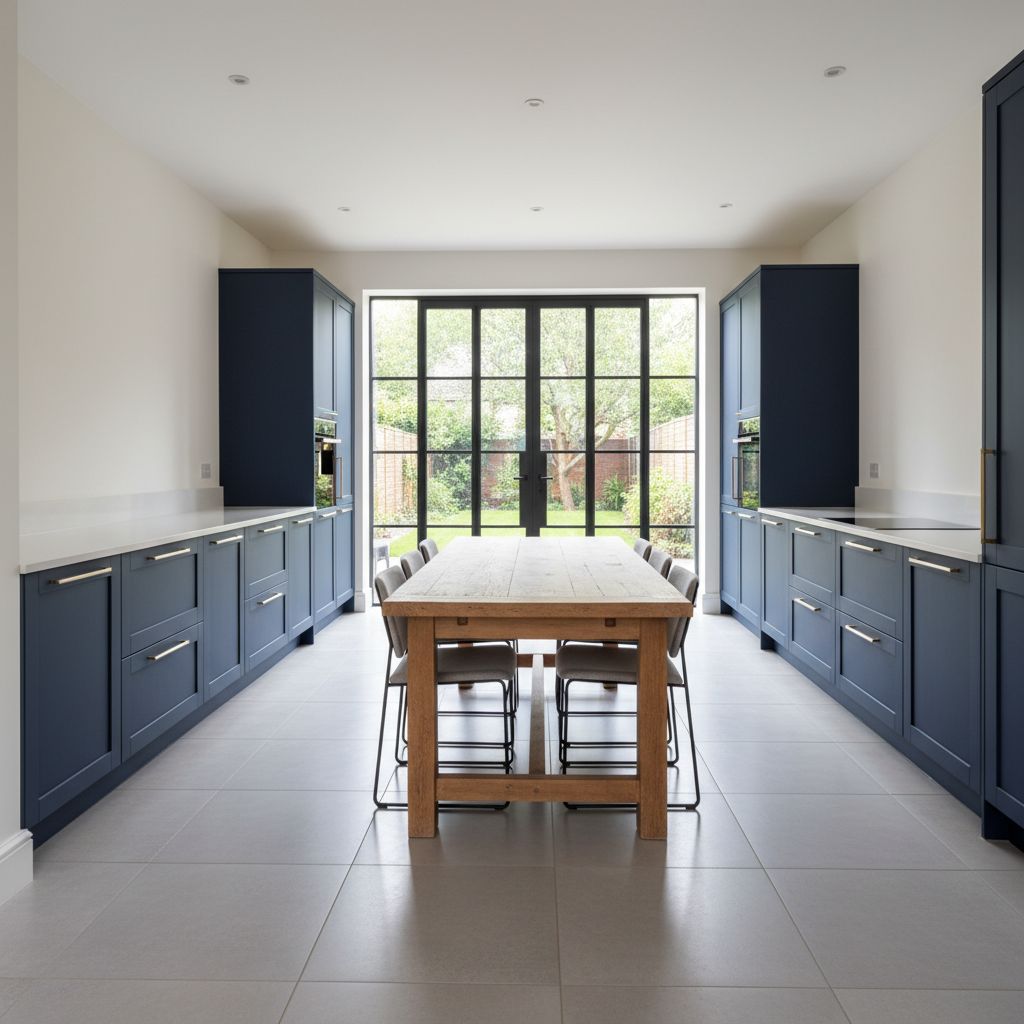
While underfloor heating can work almost anywhere, you’ll get the best results in rooms where you spend the most time and where steady, even warmth matters—think open-plan kitchens and living areas, bathrooms, and frequently used bedrooms—especially in Irish homes where tiled floors, draughts, and damp conditions can make cold spots more noticeable.
In open-plan spaces, UFH spreads heat evenly across large areas, so you won’t rely on one hot radiator.
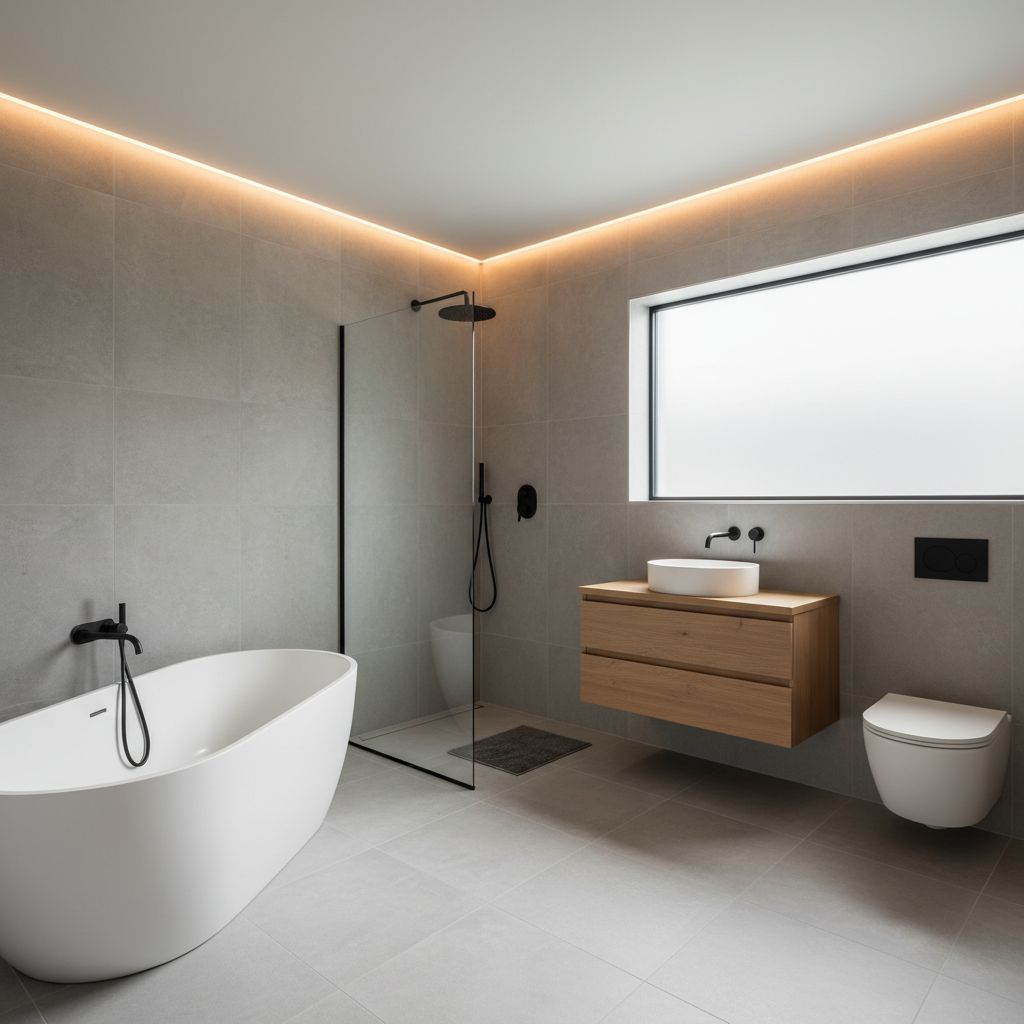
In bathrooms, it keeps mornings comfortable and helps the room feel drier after showers.
In bedrooms you use nightly, you can run lower, consistent temperatures for better sleep comfort.
Hallways and porches also benefit because they’re common draught paths.
If you’ve a home office, UFH stops chill without noisy heaters.
Best Floor Finishes for UFH in Ireland
If you choose the right floor finish, underfloor heating in Ireland feels faster, more even, and cheaper to run. Porcelain or ceramic tile tops the list because it conducts heat quickly and suits kitchens, halls, and bathrooms.
Natural stone also performs brilliantly, holding warmth and adding value, but you’ll want proper sealing for Irish moisture.
Engineered wood works well if you keep boards thin and stable; it gives a softer feel than tile without blocking heat.
Luxury vinyl tile and rigid core vinyl heat efficiently, resist spills, and stay comfortable underfoot.
Polished concrete delivers excellent transfer and thermal mass, ideal for steady, low-cost warmth.
Avoid thick solid timber, heavy underlay, and high-tog carpets, because they insulate the floor and dull UFH’s response.
Installation in Ireland: Retrofit vs New Build
Because Irish homes range from draughty period terraces to airtight A-rated estates, you’ll install underfloor heating very differently in a retrofit than in a new build.
In a retrofit, you’ll work around existing floor build-ups, door thresholds, and uneven slabs. You might choose low-profile panels or overlay systems, then upgrade insulation where you can to stop heat disappearing into old concrete. You’ll also check pipe routes, manifold positions, and whether your boiler or heat pump can run lower flow temperatures.
In a new build, you’ll plan UFH from the start: insulation, screed depth, and zoning go into the design, so rooms heat evenly and controls stay simple. You’ll coordinate with your BER targets, ventilation strategy, and airtightness detailing.
Underfloor Heating Installation Costs in Ireland
How much does underfloor heating cost to install in Ireland? You’ll usually pay more upfront than for radiators, but pricing depends on system type, floor area, and how much disruption you’ll accept.
Electric mats often suit small rooms and straightforward layouts, while water-based systems cost more to fit but work well across whole homes.
For a typical Irish project, expect supply-and-install prices to vary widely: electric underfloor heating commonly lands around €60–€120 per m², while hydronic systems often come in around €90–€150+ per m².
Retrofit jobs can rise due to floor build-up, insulation upgrades, manifold placement, and making good finishes.
You’ll also need to budget for controls, zoning, and any electrician or plumber sign-off required.
Running Costs: Is Underfloor Heating Cheaper to Run?
Although underfloor heating can cost more to install, you may find it cheaper to run than radiators—especially with a well-insulated Irish home and sensible controls. It heats rooms evenly at lower water temperatures, so your boiler or heat pump doesn’t work as hard.
If you’re on a heat pump, underfloor heating typically improves efficiency because it suits low-flow temperatures.
You’ll save most when you zone rooms and match heat to your schedule. Use timers, setback temperatures, and thermostats to avoid overheating unused spaces.
Floor finishes matter too: tiles and stone transfer heat quickly, while thick carpet and underlay can reduce output and raise running time.
In milder Irish winters, steady low heat often costs less than short, high bursts from radiators.
How to Choose an Underfloor Heating Installer in Ireland
When you pick the right underfloor heating installer in Ireland, you’re not just paying for pipes or cables—you’re paying for correct design, neat workmanship, and a system that runs efficiently for years.
Start by checking credentials: ask if they’re registered, insured, and experienced with your build type (new build, retrofit, or extension). Request a room-by-room heat loss calculation and a clear layout showing pipe spacing, manifolds, and controls.
You should also confirm compatibility with your heat source, especially heat pumps, and ask about screed depth, insulation, and commissioning. Get written warranties for parts and labour, plus aftercare terms.
Finally, compare like-for-like quotes and speak to recent customers about timelines, tidiness, and responsiveness.
Conclusion
If you want steady, draft-free warmth in your Irish home, underfloor heating can be a smart upgrade. You’ll get the best results in a well-insulated property, with the right system for your project—electric for quick retrofits, water for efficient whole-house heating. Pairing UFH with a heat pump can cut running costs, while good floor finishes boost performance. Choose an experienced installer, price the full job, and you’ll enjoy comfort that lasts.