Table of Contents
Key Takeaways
- Property for sale in the Peak District spans two very different markets: properties inside the National Park boundary, where planning constraints keep supply tight and prices elevated, and gateway towns just outside it, where buyers can access the same landscape at meaningfully lower prices.
- Average sold prices across the Peak District sit at around £322,000 according to Rightmove data, though this figure masks enormous variation — from sub-£200,000 terraces in Glossop and Buxton to multi-million-pound country estates in Hope Valley and around Bakewell.
- Bakewell is the only town within the Peak District National Park boundary, making it the natural focal point for buyers specifically seeking a National Park address.
- The Peak District National Park Authority has a Local Plan Review under way, with a draft plan due for submission in late 2026 — buyers should monitor how second home and holiday let policy evolves within this process.
- Dark Peak and White Peak offer fundamentally different landscapes, property types, and price profiles; understanding which suits your lifestyle priorities is as important as understanding the headline numbers.
- Stone-built properties, Grade II listed homes, properties with agricultural ties, and those outside mains drainage all require additional survey and legal rigour specific to this market.
Why the Peak District Remains One of England’s Most Compelling Property Markets
Britain’s first National Park has been drawing buyers, walkers, climbers, and cyclists for over seventy years, and its hold on the property market shows no signs of weakening. The Peak District sits at a remarkable geographic pivot point — accessible within an hour to Manchester, Sheffield, Derby, Nottingham, and Stoke-on-Trent — which gives it a catchment of buyers from multiple major cities simultaneously. For those willing to commute, or those who have moved to working from home, the trade-off between urban employment access and genuine rural landscape is more achievable here than almost anywhere else in England.
Property for sale in the Peak District has reflected that structural advantage for years. The National Park spans over 555 square miles and encompasses everything from the dramatic gritstone moorland of the Dark Peak in the north to the softer limestone dales and whitewashed villages of the White Peak in the south. The character of the landscape shifts substantially across this range, and so does the character of the property market.
Understanding the distinction between the National Park itself and the broader Peak District area — which includes gateway towns like Buxton, Matlock, Glossop, and Whaley Bridge that sit outside or on the Park boundary — is essential context for any buyer. The planning environment, price levels, property types on offer, and competitive dynamics all differ markedly between these two zones, and calibrating your search to the right one is the first step toward finding and securing the right property.
Dark Peak, White Peak: Understanding the Landscape and What It Means for Property
The Dark Peak
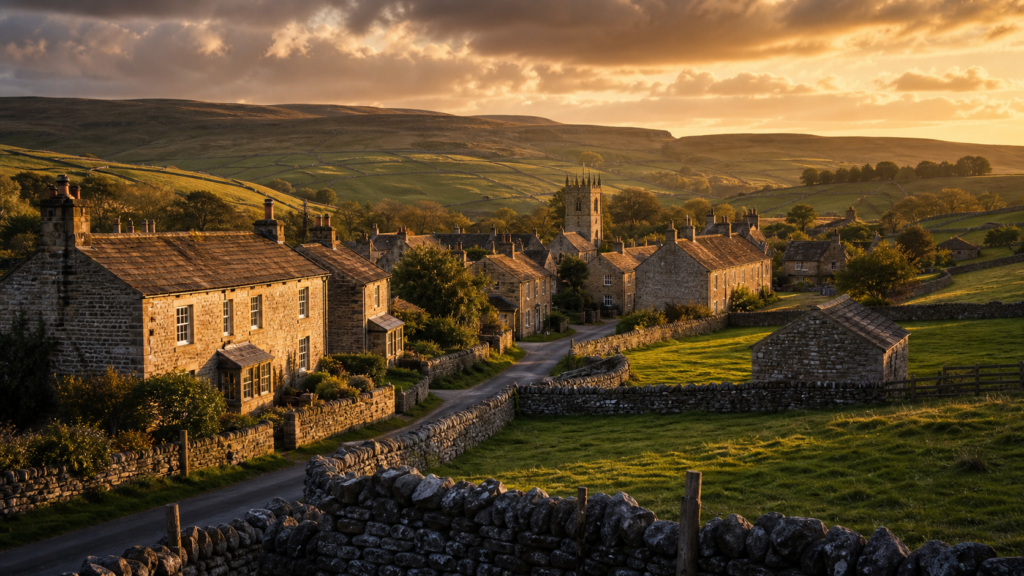
The Dark Peak runs across the northern and eastern edges of the National Park, dominated by high gritstone moorland, peat bogs, and the distinctive crags and edges that have made locations like Stanage, Kinder Scout, and the Derwent Valley iconic among walkers and climbers. The main settlements here — Hathersage, Bamford, Hope, Castleton, and Edale in the Hope Valley; Hayfield and the Sett Valley to the west — have a rugged, no-frills character that tends to attract buyers seeking genuine outdoor immersion rather than polished village amenity.
Property in the Dark Peak is predominantly stone-built gritstone, ranging from modest terraced cottages to substantial farmhouses and converted barns on the fringes of settlements. The Hope Valley corridor in particular — running from Hathersage through Hope and Castleton — is among the most sought-after addresses in the entire Peak District, combining spectacular scenery with a direct rail link to Sheffield and good road access toward Manchester. Prices reflect that combination: well-presented detached houses in the Hope Valley regularly exceed £500,000, and exceptional rural properties with land command considerably more.
The White Peak
The White Peak presents an entirely different character — rolling limestone plateau, deep sheltered dales such as Dovedale, Lathkill Dale, and Monsal Dale, and the traditional stone-walled field patterns that make this one of the most visually distinctive landscapes in England. Villages here — Tideswell, Monyash, Youlgrave, Winster, Hartington, and dozens of others — are built from pale limestone rather than gritstone, giving them a lighter, more pastoral feel.
Bakewell sits at the heart of the White Peak and is the administrative centre of the National Park — the only town within the Park boundary. Matlock and Matlock Bath lie at the southern edge, outside the Park but benefiting from immediate access to the limestone dales. The White Peak generally offers slightly broader price accessibility than the Hope Valley, though premium cottages in well-regarded villages still command strong prices that reflect the scarcity of genuinely attractive period stock.
Where to Search for Peak District Property
The Major Property Portals
Rightmove, Zoopla, and OnTheMarket all carry Peak District listings and are the standard starting points for any buyer. Setting up saved searches with email alerts is essential — desirable cottages and village properties in the Peak District attract serious interest quickly once listed, and being among the first to arrange a viewing on the right day can be the difference between securing a viewing and missing out entirely.
The UK House Price Index from HM Land Registry is indispensable for buyers wanting to understand what properties have actually sold for in specific postcodes, rather than relying on current asking prices alone. Asking prices and achieved prices can diverge in this market depending on demand, property condition, and time of year — the Land Registry data provides the objective baseline.
For High Peak specifically, the ONS Local Housing Data records an average house price of £257,000 in October 2025, up 4.1% year-on-year, with semi-detached properties leading growth at 5.7% — useful context for buyers focusing on the northern portions of the market.
Beyond the Portals
As with all National Park and rural markets, the portals tell only part of the story. A proportion of Peak District properties change hands through direct agent introduction to registered buyers, through word of mouth in tight-knit village communities, and through auction — particularly older, more complex, or rural properties where a conventional sale process is less straightforward.
Registering your interest and requirements with agents covering specific villages or valleys you are targeting, and doing so before you find the right property rather than after, significantly improves your position in a market where motivated buyers compete for limited stock. The Peak District property market rewards persistence and preparation above all else.
Key Towns and Areas: What Each Offers Buyers
Bakewell
As the only town within the Peak District National Park, Bakewell occupies a unique position in the market. It has a genuine working town character — weekly market, independent shops, good cafés and restaurants, and practical services — set within the conservation area of the National Park itself. The famous Bakewell pudding is the town’s most celebrated export, but for property buyers its significance is simpler: it is the most accessible base for daily life within the Park boundary.
Property in Bakewell ranges from period townhouses and stone cottages in the centre to detached family homes on the surrounding roads, and attracts a mix of primary residents, second home buyers, and investors in the short-term holiday let market. Prices are firm — central Bakewell properties in good condition typically start in the mid-£300,000s and rise considerably for larger or more characterful stock. Grade II listed properties are common in the conservation area and require additional planning consideration for any works.
Hope Valley
Hathersage, Hope, Castleton, Bamford, and Edale collectively make up the Hope Valley — arguably the most desirable property addresses in the entire Peak District. The combination of dramatic Dark Peak scenery, the rail link connecting Hathersage and Hope directly into Sheffield, and a genuine year-round community with good local amenities creates sustained demand that keeps prices elevated and stock moving quickly.
Hathersage in particular has developed a reputation for attracting buyers relocating from Sheffield who want the countryside on their doorstep without sacrificing connectivity. A direct train to Sheffield city centre takes around 25 minutes, making it one of the most practical rural relocation options in the North of England. Property here — stone terraces, Victorian semis, and detached houses on the surrounding hillsides — is priced accordingly, with family detached homes comfortably in the £450,000–£700,000 range and the best positioned properties well above that.
Castleton and Edale attract buyers seeking the most genuinely rural end of the valley market — smaller villages, more limited local amenities, but spectacular position and a strong sense of community among people who have chosen to live there deliberately.
Buxton
Buxton sits just outside the National Park boundary on its western edge and represents the most significant urban centre in the broader Peak District area. Its Georgian spa town heritage — the Crescent, the Opera House, the Pavilion Gardens — gives it a distinctive character that sets it apart from the more functional gateway towns. It has a direct rail connection into Manchester Piccadilly, making it one of the more practical commuter bases in the region.
Property in Buxton spans a wide range, from Victorian terraces at accessible price points — some still below £200,000 — to substantial detached properties on the better roads around the town and out toward the National Park boundary. New build activity is present: Keepmoat’s Foxlow Fields development on the Ashbourne Road has been adding modern three and four-bedroom homes at prices from around £348,000. For buyers who want the Peak District lifestyle with Manchester connectivity, Buxton offers a genuinely competitive price-to-lifestyle ratio.
Matlock and Matlock Bath
Matlock functions as the commercial centre for the Derbyshire Dales outside the National Park, with good secondary school provision, a range of shops and services, and transport connections toward Derby and the East Midlands. Matlock Bath, a short distance down the Derwent Gorge, has a more idiosyncratic character — Victorian in origin, with a cable car, illuminations, and a waterside setting that draws visitors throughout the summer.
Property in Matlock is more affordable than inside the National Park, offering genuine value for buyers who can accept being a short drive from the Park rather than within it. Three and four-bedroom detached homes can be found in the £280,000–£450,000 range depending on position and condition, with the hillside roads above the town offering the most dramatic views and the strongest long-term appeal.
Glossop and the Northern Fringe
Glossop sits at the northern edge of the broader Peak District area, on the Pennine fringe between the Dark Peak and Greater Manchester. It has a direct rail link into Manchester Piccadilly that takes around 40 minutes, making it among the most accessible Peak District bases for Manchester commuters. Property prices reflect this connectivity — the market is more affordable than the Hope Valley or Bakewell, with period stone terraces available from well below £200,000 and family homes in the £250,000–£400,000 range.
For buyers priced out of the inner National Park market or needing strong Manchester connectivity, Glossop and the surrounding communities of Hadfield and Tintwistle offer a realistic and practical entry into the broader Peak District property market.
Ashbourne: The Southern Gateway
Ashbourne sits at the southern edge of the Peak District, close to Dovedale and providing easy access to the White Peak from a Derbyshire market town base. It has a strong independent retail and hospitality scene, good local schools, and transport connections toward Derby and the East Midlands. Property here is generally more affordable than inside the Park and attracts buyers who want Dovedale and the limestone dales on their doorstep without paying the National Park premium.
Planning, Permitted Development, and What Buyers Must Know
Inside the National Park Boundary
The Peak District National Park Authority acts as the planning authority for all land within the National Park, and its approach to development reflects the statutory duty to conserve and enhance the natural beauty, wildlife, and cultural heritage of the area. Buyers purchasing inside the National Park boundary should approach any plans for alteration, extension, or development with the assumption that permitted development rights may be restricted.
The National Park’s own guidance on permitted development makes clear that while properties may retain certain permitted development rights under the Town and Country Planning (General Permitted Development) (England) Order 2015, these rights are frequently curtailed within the National Park to preserve local character. Pre-application advice from the PDNPA is available and strongly recommended before committing to any property where planned works are an important part of the purchase rationale.
The Local Plan Review currently under development — with a draft plan expected for Authority Committee approval in July 2026 and submission to the Secretary of State by December 2026 — will shape planning policy within the National Park to 2045. Buyers with a long-term horizon should monitor this process, particularly in relation to any further restrictions on second home use, holiday lets, and residential development within settlement boundaries.
Listed Buildings and Conservation Areas
A substantial proportion of the Peak District’s most desirable stock sits within conservation areas or carries individual listed building designations. Grade II listed properties require listed building consent for any works that would affect their character — internally as well as externally — and this applies to alterations that would not require planning permission at all in an unlisted property. Buyers should factor the additional time, cost, and constraint of listed building ownership into their purchase decision, and should instruct a solicitor with specific experience of listed property conveyancing.
For any listed property, a specialist heritage or building conservation survey alongside the standard building survey is money well spent. Understanding the significance of the building’s historic fabric, and which elements the Local Planning Authority would protect most rigorously, helps buyers plan works realistically and avoid costly enforcement situations post-purchase.
Outside the National Park
Properties in Buxton, Matlock, Glossop, and Ashbourne fall under different local planning authorities — principally Derbyshire Dales District Council, High Peak Borough Council, and Derbyshire County Council for minerals and waste planning. Permitted development rights are generally broader here than inside the National Park, though conservation area designations apply in the historic cores of several of these towns. The Planning Portal provides access to application histories and permitted development guidance for properties across England.
Budgets and What They Buy in the Peak District
The variation in the Peak District market is wider than most buyers initially appreciate. At the entry end, terraced stone cottages outside the National Park proper — in Glossop, parts of Buxton, and the smaller fringe communities — can still be found below £200,000. Moving inside the National Park, entry-level terraced cottages in smaller White Peak villages such as Winster or Stoney Middleton start from the mid-£200,000s, with Bakewell town centre properties and Hope Valley semis typically starting higher.
The mid-market — three and four-bedroom stone detached properties with good gardens and fell or dale views — sits broadly between £400,000 and £650,000 across most of the National Park, though Hope Valley detached homes and anything with significant land or a prominent position will reach well above this. At the prestige end, farms with acreage, large country houses, and historically significant properties regularly list between £1 million and £5 million, with exceptional examples above that.
For buyers targeting the National Park specifically, the UK House Price Index is the most reliable source for understanding what has actually sold at what price in specific villages and valleys, and should be consulted alongside any agent’s current price guidance.
Stamp Duty and Transaction Costs
Buyers should budget for stamp duty at current HMRC rates — use the HMRC stamp duty calculator for the precise current thresholds. Second home purchasers pay the additional 3% surcharge on top of standard residential rates. Legal fees, survey costs, and mortgage arrangement fees typically add £3,000–£6,000 to the total transaction cost for a standard residential purchase, more for complex rural properties involving agricultural elements or unusual title.
Survey and Legal Due Diligence in the Peak District
Stone Buildings and Period Properties
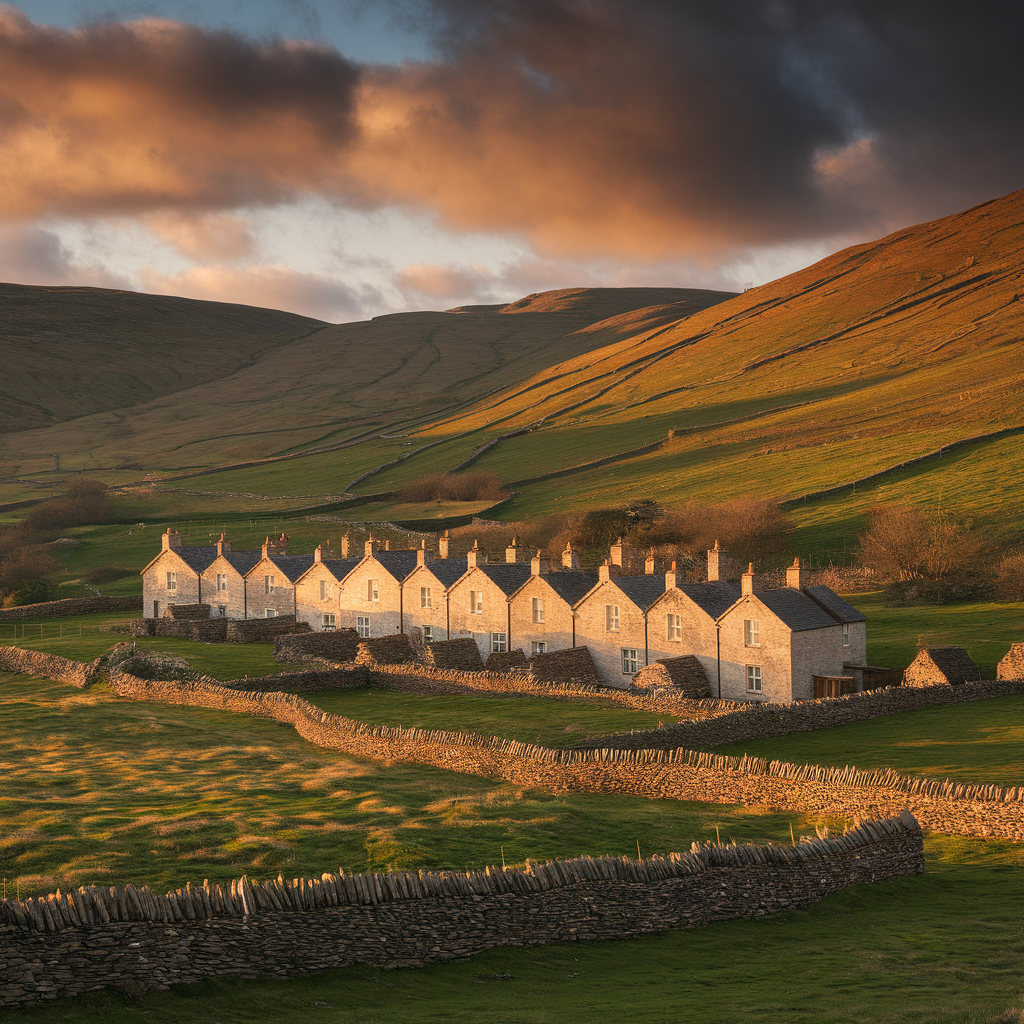
The overwhelming majority of desirable Peak District property is stone-built, and many of the most attractive examples date from the 17th, 18th, or 19th centuries. A full RICS Level 3 Building Survey is the appropriate choice for virtually all period stock — the Level 2 Homebuyer Report is too limited in scope to adequately assess the range of issues that older stone construction can present.
Particular areas of focus in the Peak District context include: damp penetration through solid stone walls or inadequate pointing; condition of traditional roofing materials (gritstone flags and Welsh slate both require specialist contractors and can be expensive to repair or replace); chimney and flue condition; window and door joinery; and the state of any outbuildings or garden walls that form part of the property.
Drainage and Services
Many Peak District properties — especially in smaller villages and more rural locations — are not connected to the mains sewerage network. Private drainage arrangements (septic tanks, package treatment plants, or soakaways) must be identified, their condition assessed, and the cost of any required upgrade factored into the purchase price. Environment Agency regulations apply to private sewage treatment, and non-compliant systems can require significant investment to bring up to standard.
Similarly, properties outside the mains gas network — common across the rural Peak District — use oil or LPG heating. Running costs are generally higher than gas, the storage infrastructure requires maintenance, and the EPC ratings of older stone properties with solid walls can be challenging to improve without significant investment. This matters increasingly as energy performance requirements tighten for both owner-occupied and let properties.
Rights of Way and Access
The Peak District contains one of the densest networks of public rights of way in England, and many properties — particularly those on the edges of settlements or with agricultural history — have footpaths, bridleways, or open access land adjacent to or crossing their boundaries. Your solicitor should identify all registered rights of way affecting the property, and you should walk the full extent of any external boundaries before exchange to understand what public access exists and how it relates to the practical use of gardens and land.
Frequently Asked Questions
Is the Peak District a good place to buy property in 2026?
The structural case for Peak District property remains strong. The combination of genuinely exceptional landscape, broad commuter reach to multiple major northern and Midlands cities, chronic supply constraint within the National Park, and sustained multi-layered demand has historically produced steady long-term capital growth and very limited periods of significant price decline.
For primary residence buyers, the quality of life case is compelling and largely self-evident to anyone who has spent time in the area. The practical accessibility that the Peak District offers — landscape within a short drive or cycle of city employment bases — is a genuine lifestyle advantage that other National Parks cannot match to the same degree. That advantage is increasingly valued in a world where hybrid and remote working are normalised.
For second home and investment buyers, the picture requires more nuance. Holiday let yields in well-positioned Peak District properties can be attractive, but the planning and regulatory environment is evolving. The National Park Authority’s Local Plan Review is under active development, and broader national policy discussion around second home use class changes and holiday let restrictions means that buyers purchasing specifically for short-term letting purposes should take current professional tax and planning advice rather than assuming the existing position is stable.
What is the difference between the Dark Peak and White Peak for property buyers?
Beyond the landscape character, the practical differences for property buyers are meaningful. The Dark Peak — predominantly in the north and east of the National Park — offers more dramatic scenery, stronger rail connectivity in the Hope Valley, and property built from dark gritstone with a more robust, rugged character. Prices in the Hope Valley corridor are the highest in the Peak District outside Bakewell itself.
The White Peak — the central and southern limestone plateau — is gentler in character, with more accessible village communities, a slightly broader range of property types, and prices that are generally somewhat more accessible than the best Hope Valley addresses, though still firm in the most desirable villages. Buyers who prioritise walking the limestone dales, proximity to Dovedale, or access to the more pastoral landscape tend to prefer the White Peak; buyers drawn to big open moorland, gritstone edges, and the climbing culture of Stanage and Froggatt tend to favour the Dark Peak.
Can I buy a Peak District property as a holiday let?
Within the National Park boundary, the planning position on holiday lets is complex and evolving. Existing unfettered properties can currently be used for holiday letting without a change of use in most cases, though this is subject to the National Park’s emerging Local Plan policy and the broader national policy environment around use class reform for second homes and short-term lets.
The National Park Authority is actively consulting on its new Local Plan through 2025 and into 2026, and the direction of travel in UK planning policy more broadly is toward giving local authorities greater powers to control the conversion of permanent homes to holiday let use. Buyers purchasing for holiday let purposes should obtain specific planning advice from a consultant familiar with the PDNPA’s current position before committing.
The economics of Peak District holiday letting are well-established for good-quality, well-positioned properties — particularly stone cottages in popular villages close to major walking and cycling routes. However, the operational costs, management overhead, and increasing compliance requirements for short-term let properties should be assessed carefully alongside gross potential yield.
What are the most affordable places to buy near the Peak District?
For buyers whose budget does not stretch to National Park prices, the gateway towns offer the best value relative to landscape access. Buxton, just outside the western boundary, has a broad price range and strong Manchester rail connectivity. Matlock and Wirksworth provide access to the Derbyshire Dales from a more affordable base. Glossop on the northern fringe combines genuine affordability with direct Manchester Piccadilly rail access in under 45 minutes.
Further afield but still within easy reach of the Park, communities along the Sheffield Valleysand around Chesterfield — particularly the attractive villages of the Moss Valley and the Drone Valley — offer family homes at prices substantially below the National Park average while remaining within a 30–40 minute drive of the best walking in the Dark Peak.
What should I check when buying a stone cottage in the Peak District?
The key areas for survey focus in stone cottage purchases are damp, pointing, roof condition, drainage, and heating systems — detailed under the survey section above. Beyond the physical survey, legal due diligence should cover: planning history (particularly any conditions attached to previous consents, and any outstanding enforcement notices); the presence and nature of any rights of way crossing the property or its boundaries; title to any land, garden, or outbuildings that form part of the sale; drainage arrangements and whether any private system is compliant; and whether any agricultural occupancy condition applies — these are more common in the Peak District than buyers from urban markets typically expect, and can significantly restrict the pool of eligible purchasers on resale.
The Peak District National Park Authority planning search tool allows buyers to check the planning history of any property within the National Park boundary, and should be used alongside the standard local authority searches that your solicitor will conduct as part of conveyancing.
Conclusion
The Peak District property market rewards buyers who go in with a clear understanding of its geography, its planning environment, and the very real differences between buying inside the National Park and purchasing in the gateway towns around its boundaries. Property for sale in the Peak District covers an enormous range of price points, property types, and lifestyle propositions — from affordable stone terraces in Glossop with Manchester Piccadilly access, to multi-million-pound farmhouses in the Hope Valley with Stanage Edge on the doorstep.Don’t forget our guide to the Ribble Valley.
What unites the best purchases across all of these segments is thorough preparation: finance confirmed before the search begins, legal representation experienced in rural and National Park conveyancing instructed early, and a genuine understanding of what the planning framework does and does not permit at the property and location in question. The Peak District’s combination of accessibility, landscape quality, and structural supply constraint has made it one of the most consistently desirable rural property markets in England — and for buyers who approach it with the right preparation, it remains one of the most rewarding.
For a broader view of how the UK property investment market is performing and where opportunity lies nationally, the guide on how UK property investors are thriving in a changing market provides useful wider context alongside this local focus.