Table of Contents
Key Takeaways
- The market for cottages for sale in the UK is one of the most emotionally driven and structurally supply-constrained in British property — period vernacular cottages cannot be mass-produced, and the best examples in sought-after locations attract serious and sustained buyer competition.
- The Cotswolds, Yorkshire Dales, Cornwall, Devon, the Lake District, and the Scottish Borders are consistently the most sought-after cottage markets in England and Scotland, each with a distinctive building tradition, price profile, and buyer character.
- Cottage prices range enormously — from stone terraces in less fashionable northern valleys available below £200,000 to Grade II listed Cotswolds honeypots and Cornish harbour-front fishermen’s cottages comfortably above £700,000 and beyond.
- Listed building status — which applies to a very significant proportion of genuinely old cottage stock across all these areas — carries important implications for planning, permitted works, and maintenance that buyers must understand before purchasing.
- Thatched cottages, stone cottages, and flint cottages each have specific survey and maintenance requirements that go beyond what standard residential surveys cover; specialist instructors are worth the additional cost.
- The UK Land Registry’s sold price data is particularly important in the cottage market, where emotional buyer demand can push asking prices above what comparables support — grounding your offer in objective transaction evidence matters.
What Makes a Cottage — And Why They Remain So Sought After
The word “cottage” is used loosely in the UK property market and covers everything from a genuine 17th-century farmworker’s dwelling to a modern new-build marketing itself as a cottage in style. For the purposes of this guide, we are talking about the real thing: period rural properties of modest original scale, built from local vernacular materials — stone, brick, flint, clay lump, or timber frame — that reflect the building traditions of their specific region and carry the irreplaceable quality of age.
The appeal of cottages for sale in the UK is not difficult to understand and shows no sign of diminishing. They represent a way of living that cannot be replicated in new development — the thickness of the walls, the irregularity of the rooms, the sense of material connection to the landscape they were built from. The pandemic accelerated a migration away from cities and towards rural living that has left a lasting imprint on the market for this type of property, and hybrid working has made that migration viable in ways that were barely imaginable a decade ago.
The result is a market that remains competitive across all the best locations, with genuinely attractive period cottage stock in strong positions commanding prices that reflect both their character and their scarcity. This guide covers the ten locations where buyers have the best chance of finding the right cottage — what to expect in each area, what to pay, and what to look out for before you buy.
1. The Cotswolds
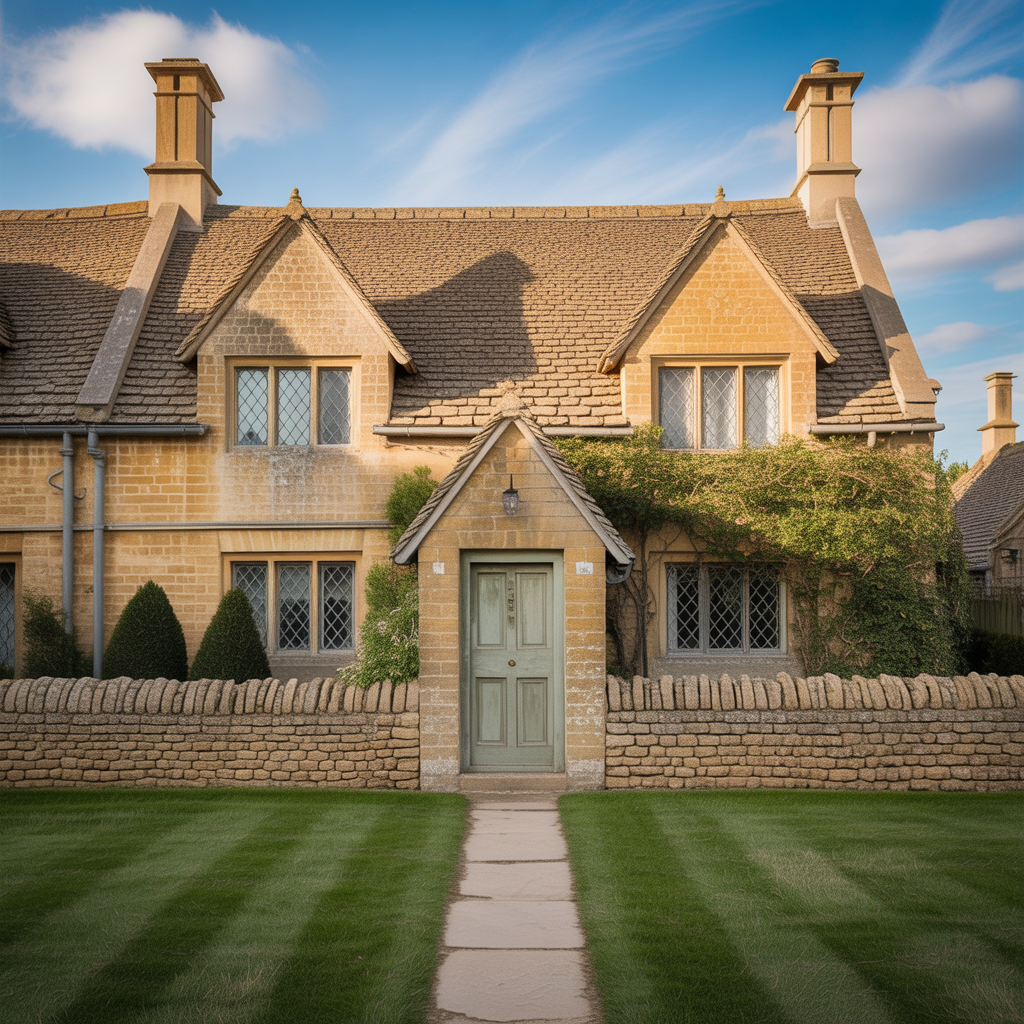
The Cotswolds is the defining cottage landscape of England — the area against which all others are measured. The warm honey-coloured oolitic limestone from which every village, farmhouse, and cottage in the region was built gives the area its visual coherence and its instantly recognisable character. The villages of the north and central Cotswolds — Bourton-on-the-Water, the Slaughters, Burford, Bibury, Chipping Campden, and dozens of others — have been drawing buyers from across the world for generations, and the cottage market here operates at the top end of rural property pricing for good reason.
The Cotswolds National Landscape designation covers the core of the area and places planning constraints on new development that have kept the supply of genuinely characterful cottages firmly limited. What exists is what exists — and maintaining it drives the premium.
Prices for period stone cottages in the most sought-after Cotswolds villages begin around £500,000 for a two-bedroom example in need of updating, rising to £1 million and above for well-positioned, properly renovated three-bedroom properties with good gardens. Exceptional examples — Grade II listed, prominent village positions, original period features intact — command considerably more. For buyers seeking a Cotswolds cottage at a more accessible price, the smaller villages of the western escarpment and the southern Cotswolds — Dursley, Wotton-under-Edge, Tetbury — offer the same building tradition at meaningfully lower price points than the headline villages.
2. Yorkshire Dales
The Yorkshire Dales National Park contains some of the finest stone cottage stock in England, built from the dark gritstone and limestone that defines the Dales landscape. Villages like Grassington, Kettlewell, Reeth, Hawes, and Aysgarth combine spectacular fell-and-dale scenery with a working community character that gives them genuine year-round vitality rather than the seasonal character of more tourism-dominated locations.
Yorkshire Dales cottages are characterised by their robust simplicity — thick stone walls, small windows designed to withstand the upland climate, stone-flagged floors, and fireplaces that were originally the primary heat source. Original examples retain this character and are sought after precisely for it; sympathetically renovated examples that have modernised the interior without compromising the exterior or the bones of the building represent the sweet spot for buyers.
Prices in the Yorkshire Dales are generally more accessible than the Cotswolds, with well-presented two and three-bedroom stone cottages available from £250,000–£400,000 in many village locations, rising considerably for the best positioned examples with fell views and good gardens. The Yorkshire Dales National Park Authority governs planning within the Park — buyers should check whether any cottage carries restrictions on occupancy or holiday let use, which are more common within the National Park boundary than outside it.
3. Cornwall
Cornwall’s cottage tradition is as distinctive as any in Britain — granite and slate construction, low ceilings, small windows, thick walls built to resist the Atlantic weather, and the specific character of the fishing village terraces that cling to the harbour-fronts of places like Port Isaac, Mousehole, Mevagissey, and Polperro. These are not the pastoral cottages of the Cotswolds or Devon; they are working buildings of a very specific maritime character that carries its own powerful appeal.
The Cornish cottage market operates under the same structural pressures that affect the broader Cornwall property market — high second home and holiday let demand competing with primary buyers for genuinely irreplaceable stock in a coastal National Landscape setting. A two-bedroom granite cottage in a sought-after fishing village — Port Isaac, Padstow, Fowey, Rock — will typically require a budget of £450,000 to £700,000 for a well-presented example; Penzance and the far west offer similar character at more accessible prices.
Cornwall Council’s 100% council tax premium on second homes, introduced in April 2025, has added material annual holding cost for buyers not purchasing as a primary residence. Buyers should model the full cost of ownership — including the premium — alongside the purchase price before committing. The Environment Agency Flood Map for Planning is particularly relevant for harbour-front and low-lying coastal cottages in Cornwall, where flood zone designations can affect both insurance and mortgageability.
4. Devon
Devon offers the broadest range of cottage types of any English county — from the whitewashed cob-and-thatch cottages of the South Hams and the Exe Valley to the granite longhouses and farmworkers’ cottages of Dartmoor, and the Arts and Crafts-influenced rendered properties of the north Devon coast. The county’s sheer variety means that buyers with different aesthetic preferences and budgets can each find a version of the Devon cottage market that suits them.
The South Hams — the area between Dartmouth, Kingsbridge, and the coast — contains some of the most desirable and expensive cottage stock in Devon, with two-bedroom cottages in villages like Salcombe, Dartmouth, and Slapton typically starting above £400,000 and rising quickly from there. North Devon, including the Exmoor National Park and the Atlantic coast around Croyde and Braunton, offers a wilder, less manicured version of the cottage landscape at generally more accessible prices.
Dartmoor National Park deserves specific mention for its granite longhouses and moorland cottages — properties of extraordinary character that are as rugged as the landscape they sit in. The Dartmoor National Park Authority governs planning within its boundary, and occupancy conditions attached to some historic agricultural properties within the Park can restrict who may legally occupy them — legal due diligence on this point is essential before purchasing any former agricultural cottage in the Park.
Thatched properties are common across Devon, particularly in the Exe Valley and the villages of the South Hams. Thatched roofs require specialist maintenance, are expensive to replace, and require specific buildings insurance from a provider experienced in thatched properties. Budget for a re-thatch every 25–40 years depending on materials and exposure; this cost should factor into the purchase price rather than be treated as a future surprise.
5. The Lake District
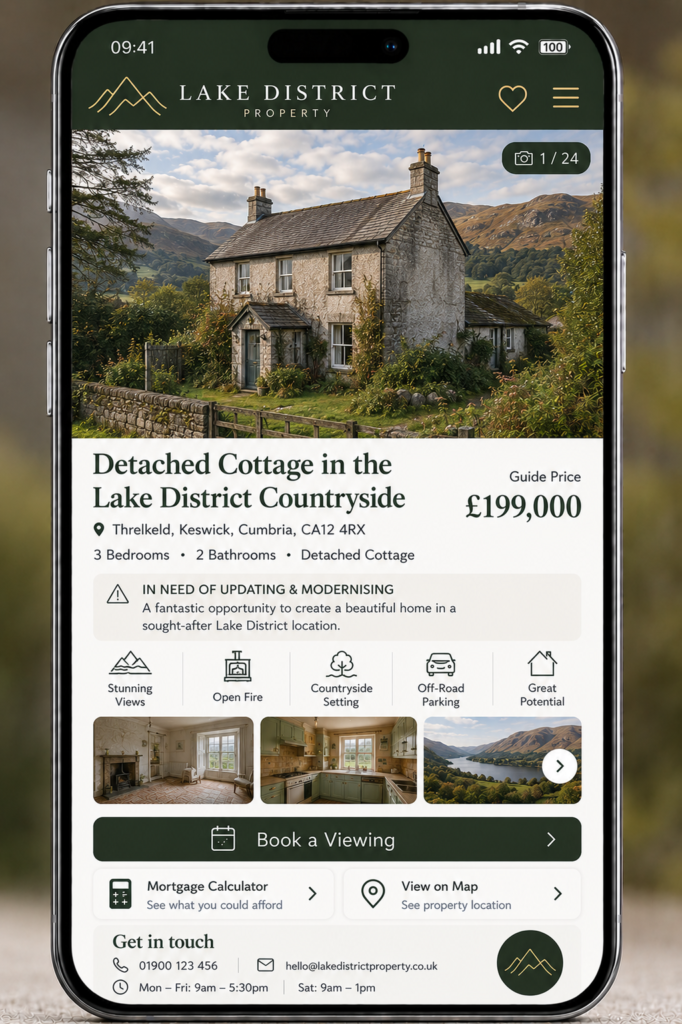
Lake District cottages — stone-built from Lakeland slate and bounded by low-running walls of the same material — represent perhaps the most dramatic setting of any cottage tradition in England. The specific character of these properties, sitting in fell landscapes that change with every hour of light, gives them an appeal that extends well beyond the traditional cottage buyer into a global market of aspirational purchasers.
The practical reality of buying a cottage in the Lake District National Park includes the planning constraints, the second homes council tax premium introduced by Westmorland and Furness Council in April 2025, and the LDNPA’s Local Plan Policy 15 which restricts new homes to primary residence use. Existing unfettered cottages are not subject to this restriction, but buyers should confirm through their solicitor that no occupancy condition applies to any specific property.
Prices for Lake District stone cottages reflect their combination of character and planning-protected scarcity. Two-bedroom cottages in popular fell villages — Hawkshead, Grasmere, Coniston, Ambleside — typically start from £350,000 to £500,000 for a well-presented example, with the best positioned properties well above that. Gateway towns like Kendal and Penrith, just outside the National Park boundary, offer similar building character at more accessible prices.
6. The Scottish Borders and Dumfries & Galloway
Scotland’s border country and the Dumfries and Galloway coastline offer some of the best value for genuine period cottage buying in Britain — a fact that remains underappreciated by buyers focused exclusively on the headline English markets. The cottage tradition here draws on the same stone and slate vernacular as northern England, but with a distinctly Scottish character and, critically, at prices substantially below equivalent English locations.
The town of Moffat, the Yarrow and Ettrick valleys of the Scottish Borders, the villages of the Solway Coast, and the communities of the Galloway Hills all provide good stocks of period stone cottages at prices that can be 30–50% below Lake District or Yorkshire Dales equivalents. The landscape is genuinely extraordinary — rolling hills, dark sky areas, river valleys, and an emptiness that buyers from more crowded parts of Britain often find immediately therapeutic.
The Dark Sky Park designation covering Galloway Forest Park — one of the largest dark sky parks in Europe — is an unusual additional asset for buyers in this area, attracting a specific profile of buyer drawn to the combination of night sky quality and rural lifestyle.
7. Suffolk and the Norfolk Coast
East Anglia’s cottage tradition is entirely different from those of the upland and coastal west — here, the vernacular is clay lump, brick, flint, and timber frame, with thatch appearing frequently on the most characterful examples. The Suffolk villages of Lavenham, Long Melford, Cavendish, and Clare contain some of the finest medieval wool-merchant cottages in England, while the north Norfolk coast from Wells-next-the-Sea to Cromer has developed into one of the most fashionable and expensive cottage markets in the country.
Flint cottages and brick-and-flint farmworkers’ dwellings in the north Norfolk coastal strip — Burnham Market, Wells, Blakeney, Cley next the Sea, and Sheringham — are now firmly premium-priced, with the best examples in the most fashionable villages starting at £500,000 and the finest reaching well above £1 million. Lavenham and the Suffolk wool towns offer medieval timber-framed cottages of extraordinary historical significance at prices that span from £350,000 for a smaller example to £700,000 and above for the grandest.
The Norfolk Coast National Landscape and the Suffolk Coast and Heaths National Landscape both carry planning implications for buyers considering works on properties within their boundaries. Thatched properties are common here — the same maintenance and insurance considerations that apply in Devon apply equally in East Anglia.
8. The Brecon Beacons and Rural Mid-Wales
Wales’s cottage market is less prominently marketed than its English equivalents but offers buyers with flexibility on location some of the most compelling value for genuinely characterful period property in Britain. The Brecon Beacons National Park — recently rebranded as Bannau Brycheiniog National Park — and the rural counties of Carmarthenshire, Ceredigion, and Powys contain extensive stocks of traditional Welsh stone cottages, longhouses, and farmhouses at prices that remain substantially below English National Park equivalents.
A well-presented stone cottage in a Brecon Beacons village will typically be available from £200,000–£350,000 — a price point that would buy a considerably smaller or less characterful property in the Cotswolds or Lake District. Mid-Wales more broadly — the Cambrian Mountains, the upper Wye and Severn valleys, and the communities around Builth Wells, Rhayader, and Llanwrtyd Wells — offers similar value for buyers prepared to embrace genuine rurality.
The Brecon Beacons/Bannau Brycheiniog National Park Authority governs planning within the Park. Note that in Wales, the Town and Country Planning framework operates under separate Welsh Government policy, and Planning Policy Wales governs what is and is not permissible — buyers should ensure their solicitor and any planning consultant are specifically familiar with Welsh planning law.
9. Herefordshire and the Welsh Marches
Herefordshire and the Welsh Marches — the border country running from Shropshire through Herefordshire and into Monmouthshire — is one of the most underrated cottage buying areas in England. The county is defined by its black-and-white timber-framed buildings, which give villages like Weobley, Eardisley, Dilwyn, and Pembridge a visual character unlike anywhere else in Britain. These are medieval buildings of the most characterful kind — jettied upper floors, exposed oak framing, wattle and daub infill, and the particular warmth of old oak that no reproduction can replicate.
Herefordshire cottage prices remain significantly lower than the Cotswolds or south-west alternatives, with well-presented black-and-white cottages in established villages available from £350,000 to £600,000 for three-bedroom examples. The county also benefits from remarkably good accessibility — it sits within two hours of Birmingham, Bristol, and Cardiff — making it viable as a primary residence for buyers with flexible or remote working arrangements.
The Malvern Hills National Landscape covers the eastern edge of the county and carries the usual planning implications for properties within its boundary.
10. Northumberland and the Border Country
Northumberland offers the most dramatic and least-populated landscape for cottage buying in England — a combination of the Cheviot Hills, the Northumberland coast (a National Landscape running from Berwick-upon-Tweed to Amble), and the Northumberland National Park that between them cover much of the county in designated protected landscape. Stone farmworkers’ cottages, former shepherd’s dwellings, and village terraces built from the local sandstone form the primary cottage stock.
Northumberland cottage prices are among the most accessible of any quality rural market in England. Well-presented stone cottages in the coastal villages of Craster, Embleton, Low Newton-by-the-Sea, and Seahouses can be found from £250,000–£450,000 — substantially below equivalent coastal cottage markets in Cornwall or Devon. Inland, the Cheviot villages and the communities of the Rede Valley offer even more affordable options for buyers prioritising space and remoteness over coastal proximity.
The Northumberland National Park Authority governs planning within the Park, and the Northumberland Coast National Landscape carries additional planning implications for coastal properties.
Buying a Cottage in the UK: What Every Buyer Must Know
Listed Buildings and Heritage Constraints
A very significant proportion of the cottage stock described in this guide carries either Grade II or Grade II* listed building designation, or sits within a Conservation Area. Listed building status applies to the whole building, including internal features, and requires listed building consent for any works that affect the character of the building — a category that extends beyond the obvious external changes to include internal alterations, replacing windows and doors, removing or altering historic joinery, and changing fireplaces.
This is not an administrative inconvenience; it is a legal constraint that carries criminal penalties for breach and can significantly complicate resale if unpermitted works have been carried out by a previous owner. Your solicitor should check whether the property is listed, establish the extent of any listed building consent for previous works, and confirm whether any unpermitted works exist that might give rise to enforcement risk. Historic England’s Listed Buildings Online database allows buyers to check listed status for any property in England before proceeding.
Survey Requirements for Period Property
A standard Level 2 Homebuyer Report is inadequate for most genuine period cottages. A full RICS Level 3 Building Survey — ideally from a surveyor with specific experience of the relevant building type and region — is the minimum appropriate standard.
Key survey areas for cottage buyers include: damp in solid walls (cottages built before the modern era of damp-proof courses typically breathe rather than exclude moisture, and interventions with modern materials can cause serious damage); roof structure and covering condition; chimney and flue condition; drainage (private systems are common in rural locations); heating systems (oil and LPG heating are standard across most rural cottage areas); and timber condition, particularly in timber-framed properties where the structural elements are the building’s primary asset.
Using the Land Registry to Ground Your Offer
The UK House Price Index and the Land Registry’s full transaction records allow buyers to check what specific cottages, and comparable properties in the same village and postcode, have actually sold for — not what they were listed at. In a cottage market where asking prices can reflect vendor aspiration and emotional buyer demand rather than objective comparable evidence, this data is particularly valuable for framing a grounded offer.
Permitted Development and Planning in Designated Landscapes
Most of the best cottage locations described in this guide sit within National Parks, National Landscapes (formerly Areas of Outstanding Natural Beauty), or Conservation Areas — all of which can restrict the permitted development rights that would otherwise allow certain extensions and alterations without planning permission. The Town and Country Planning (General Permitted Development) (England) Order 2015 provides the baseline permitted development framework for England, but buyers should always check with the relevant Local Planning Authority whether these rights apply in full, are restricted, or have been removed entirely for the specific property.
Frequently Asked Questions
Where are the most affordable cottages for sale in the UK?
The most affordable quality cottage markets — where period stone or vernacular construction is available below £200,000 — are concentrated in rural mid-Wales, the Scottish Borders and Dumfries & Galloway, County Durham, parts of Northumberland, and the less fashionable villages of the Yorkshire Dales and North York Moors. These areas offer genuine period character and dramatic landscapes at prices that reflect their relative distance from major employment centres and their lower profile compared to the Cotswolds or Cornwall.
Buyers with flexible working arrangements increasingly find that these markets deliver an extraordinary quality of life at a price point that would be impossible in the headline cottage locations. The normalisation of remote and hybrid working has meaningfully widened the practical geography of the affordable cottage market since 2020.
What is the difference between a Grade II and Grade II* listed cottage?
Grade II listed buildings are nationally important and of special interest, warranting every effort to preserve them. Grade II* (pronounced “Grade Two Star”) indicates a step up — particularly important buildings of more than special interest, accounting for approximately 5.5% of all listed buildings. Both designations require listed building consent for any alterations affecting the building’s character, but Grade II* properties attract more detailed scrutiny from Local Planning Authorities and Historic England. Any buyer considering works on a Grade II* property should seek a pre-application discussion with the Local Planning Authority’s conservation officer before purchasing, and should budget for higher professional fees and a more complex consent process than for a standard Grade II property.
How much does it cost to maintain a thatched cottage?
Thatched cottages are among the most characterful properties in England, and among the most expensive to maintain. A full re-thatch using long straw — the most traditional material — costs approximately £15,000–£25,000 for a small cottage, rising considerably for larger properties or where water reed is specified. A ridge replacement, which is needed more frequently, typically costs £3,000–£7,000.
Buildings insurance for thatched properties is more expensive than for standard construction, requires a specialist insurer, and may carry conditions about the installation of fire suppression systems or specific chimney lining standards. These are real, recurring costs that must be budgeted realistically before purchase — they are not prohibitive for a buyer who plans for them, but they are a serious shock for a buyer who does not.
Can I use a cottage as a holiday let?
In most locations, using a cottage as a holiday let is permissible without a change of use application, provided you are not converting an otherwise full-time residential dwelling into exclusive tourism use. However, this position is subject to ongoing policy development — the government has introduced a register for short-term lets in England, and local authorities in some areas have introduced or are considering Article 4 directions that remove permitted development rights for short-term let conversions.
Within National Parks, the picture is more complex. Local occupancy conditions attached to some properties restrict use to local residents. In the Lake District, new build properties are restricted to primary residence use under Policy 15. And in Cornwall and Wales, second home council tax premiums significantly increase the holding cost of properties used for short-term letting that do not qualify for business rates. Buyers should obtain specific planning and tax advice for the property and location in question before relying on holiday let income in their financial model.
What should I check during a viewing of a period cottage?
Beyond the aesthetic appeal — which is the easy part — systematic viewing due diligence for period cottages should cover: the condition of the roof from outside and from within any accessible roof space; the state of pointing on external stone or brick walls; the presence of any damp indicators (tide marks on internal walls, a musty smell, damaged plaster or skirting boards); the condition of windows and doors, particularly original timber joinery; the heating system and its age.
Consider too signs and evidence of any previous extensions or alterations that might require planning or listed building consent investigation; the nature of drainage (ask directly whether the property is connected to mains sewer); and the condition of any outbuildings, walls, or garden structures that form part of the sale. None of these replaces a professional survey — but a systematic first viewing quickly filters properties whose headline appeal masks problems that would be expensive to resolve.
Conclusion
The market for cottages for sale in the UK remains one of the most consistently compelling in British property — emotionally resonant, practically enjoyable to search, and underpinned by the structural scarcity of genuinely characterful period stock that cannot be replicated by new development regardless of demand. The ten locations covered in this guide between them span almost every cottage tradition in Britain, from the limestone villages of the Cotswolds to the granite harbours of Cornwall, the stone Dales farmworkers’ dwellings of Yorkshire, and the timber-framed medieval buildings of the Welsh Marches.
The buyers who succeed in this market are those who understand that the most attractive properties move quickly and off-market as often as on, that the due diligence requirements for period property are more demanding than for modern homes, and that grounding an offer in objective Land Registry sold price data is particularly important in a market where emotional demand can inflate asking prices above what comparables support.
Get those fundamentals right, and the reward is access to a way of living in a property that carries history in its walls — something that no amount of new development can manufacture, and that once experienced as an owner is rarely given up.
For context on how the UK property market is performing more broadly and where investor opportunity sits across price points and property types, the guide on how UK property investors are thriving in a changing market is worth reading alongside this one.