Table of Contents
Key Takeaways
- Hackney property market trends in 2026 show a market stabilising after a period of correction — average prices of £596,000 in February 2026 according to the ONS local housing data, down 3.7% year-on-year, but with early signs of renewed buyer confidence as conveyancing registrations across the Hackney and Islington market rose 74% year-on-year by early 2026.
- The borough’s defining characteristic is its extraordinary neighbourhood diversity — from the Georgian terraces of De Beauvoir Town and the Victorian streets around London Fields to the warehouse conversions of Hackney Wick and the family character of Stoke Newington — each area operating as a distinct micro-market with its own price dynamics.
- Flats dominate Hackney’s transaction volume, accounting for approximately 78% of all sales, with an average price of approximately £560,000–£585,000 — making them the primary entry point for a market where terraced houses average above £1.1 million.
- Private rents in Hackney averaged £2,598 per month in March 2026, up 2.5% year-on-year — outpacing the London average increase of 1.7% — confirming the sustained tenant demand pressure that underpins the borough’s investment case.
- According to Savills data, 76% of buyers in north and east London — the broader market covering Hackney — were under 40 in the twelve months to August 2025, compared with 63% across London as a whole, reinforcing Hackney’s position as London’s foremost market for younger professional buyers.
- The Woodberry Down regeneration — Europe’s largest single-site redevelopment at over 5,500 new homes in partnership with Berkeley Homes — and a series of major estate redevelopments across the borough are reshaping Hackney’s housing landscape for the next decade.
Understanding Hackney’s Unique Market Position
No London borough has undergone a more dramatic residential transformation over the past twenty-five years than Hackney. From its position in the late 1990s as one of London’s most deprived boroughs — consistently ranking at the bottom of deprivation indices, associated in the public imagination with social housing estates and post-industrial decline — it has become one of the capital’s most desired inner-city addresses, attracting a buyer and tenant population of creative professionals, tech industry workers, families priced out of Islington and Stoke Newington, and long-term investors who identified the value trajectory early and held on through the borough’s transformation.
Hackney property market trends in 2026 reflect a market that has absorbed a correction from its pandemic-era peak — prices are modestly down year-on-year — but that maintains the structural demand fundamentals that made the borough’s twenty-year run of outperformance possible. The question for buyers and investors in 2026 is not whether Hackney is a good place to own property — that question was settled long ago. The question is which part of the borough, which property type, and at what price point the opportunity is most compelling given current conditions.
The Numbers: Where Hackney’s Market Stands in 2026
The ONS Local Housing Data for Hackney is the most authoritative source for understanding the borough’s current market position. The average house price in February 2026 was £596,000 — down 3.7% year-on-year, a steeper decline than the wider London average of 3.3% over the same period. Flats fell 4.4% while semi-detached properties held broadly flat — a pattern consistent with the wider London market, where the flat correction from 2022–23 peak prices has been more pronounced than the house market correction.
Rightmove’s transaction data — drawn from Land Registry records — shows a broader borough average of £690,685, with the breakdown by property type revealing the practical price landscape: flats at approximately £560,000–£585,000; terraced houses averaging £1.19 million; and semi-detached properties at £1.47 million. The vast majority of transactions — around 78% — are flats, reflecting the borough’s predominantly flatted housing stock of converted Victorian properties and purpose-built apartment buildings.
First-time buyers paid an average of £540,000 in February 2026, down 4.1% from the previous year — a meaningful correction that has improved affordability at the entry level for buyers who were priced out at the 2022 peak.
Private rents tell a different story: £2,598 per month average in March 2026, up 2.5% year-on-year — growth that comfortably exceeds the London average of 1.7% and reflects the structural demand pressure in a borough where rental supply remains chronically insufficient relative to the population of young professionals seeking accommodation in inner east London.
The early 2026 market mood is one of resumed confidence rather than recovery. Conveyancing registrations — a strong forward indicator of completed transactions — were up 74% year-on-year across the Hackney and Islington market by early 2026, suggesting that the period of buyer hesitation that characterised much of 2024 and 2025 is ending. Buyers are no longer waiting for prices to fall further; sellers are pricing more realistically. That alignment is producing more transactions.
Neighbourhood by Neighbourhood: The Micro-Market Picture
London Fields and Hackney Downs: The Creative Core
London Fields is arguably the most fashionable address in the borough — the 26-acre park that anchors the neighbourhood, the lido, Broadway Market’s Saturday food and independent retail market, and the dense concentration of restaurants, bars, and cafés along the surrounding streets have created a lifestyle intensity that draws buyers from across London. The streets around the park — Mapledene Road, Lavender Grove, Powerscroft Road, and the Victorian terraces of Hackney Downs — are among the most sought-after in the entire east London market.
Property in the London Fields area is predominantly Victorian conversion flats and terraced houses, with the latter commanding prices that regularly exceed £1.2 million for a well-presented three-bedroom example. The flat market is more accessible — one-bedroom conversions from £450,000, two-bedrooms from £550,000 — but remains competitive, with well-presented properties in good positions attracting multiple offers. The area’s combination of the park, Broadway Market, and excellent Overground connectivity makes it the borough’s most obvious competitor to Stoke Newington for the aspirational east London buyer.
Stoke Newington: The Family Village
Stoke Newington occupies a special position within Hackney — a neighbourhood that has maintained the character of a London village even as the borough around it has become intensely fashionable. Church Street’s independent shops, restaurants, and pubs; the twin reservoirs of Clissold Park’s 54 acres; and a community with a deep rooting in alternative culture and progressive politics give Stokey an identity that is more resistant to generic London gentrification than most comparable inner-city areas.
Property prices here reflect that desirability — the average house exceeds £1.15 million; first-time buyer flats are priced around £625,000 — and the family profile of many buyers means that competition for the best schools, particularly the excellent primary provision around Church Street, can be intense. Three-bedroom terraced houses on the best streets command £1.5 million and above for well-presented examples in good condition.
The area’s transport connections — Overground services at Stoke Newington and Manor House (Victoria Line and Piccadilly Line interchange) — provide reasonable but not exceptional central London access. For buyers whose priority is community character and a specific quality of neighbourhood life over commute minimisation, Stoke Newington consistently delivers. The Woodberry Down regeneration at Manor House — over 5,500 new homes delivered by Berkeley Homes over a twenty-year programme — is reshaping the eastern edge of this market significantly.
De Beauvoir Town: Heritage Character and Dual Accessibility
De Beauvoir Town sits at the western edge of the borough, immediately adjacent to Islington’s Canonbury and Barnsbury — managed under the stewardship of the Benyon Estate as a planned heritage development that has maintained its distinctive character through decades of surrounding development pressure. The Victorian terraces and mansion blocks of De Beauvoir Road and the surrounding streets attract buyers who value the architectural coherence and relative quiet of this planned community alongside the proximity of Dalston and Haggerston’s nightlife and London Fields across Kingsland Road.
According to Savills, De Beauvoir Town remains a distinctive, planned heritage development that continues to appeal to aspirational families, in accordance with its original design intention. The area sits adjacent to the buzzy nightlife hotspots of Dalston and Haggerston, while the daytime attractions of London Fields and Broadway Market are also easily accessible. It is served by Dalston Kingsland and Dalston Junction stations locally and is a short walk from Haggerston and Canonbury stations in opposite directions — a level of Overground connectivity that gives it unusually broad transport options.
Dalston: The Transformation Continues
Dalston has been east London’s most talked-about neighbourhood for the better part of fifteen years — the concentration of venues, restaurants, bars, and independent businesses on and around Kingsland High Street making it one of the most vibrant after-dark and cultural destinations in London. The Dalston Kingsland and Dalston Junction Overground stations provide outstanding east-west connectivity across London — to Stratford, the Olympic Park, and Clapham Junction in one direction; to Highbury and Islington, Camden, and Shepherd’s Bush in the other.
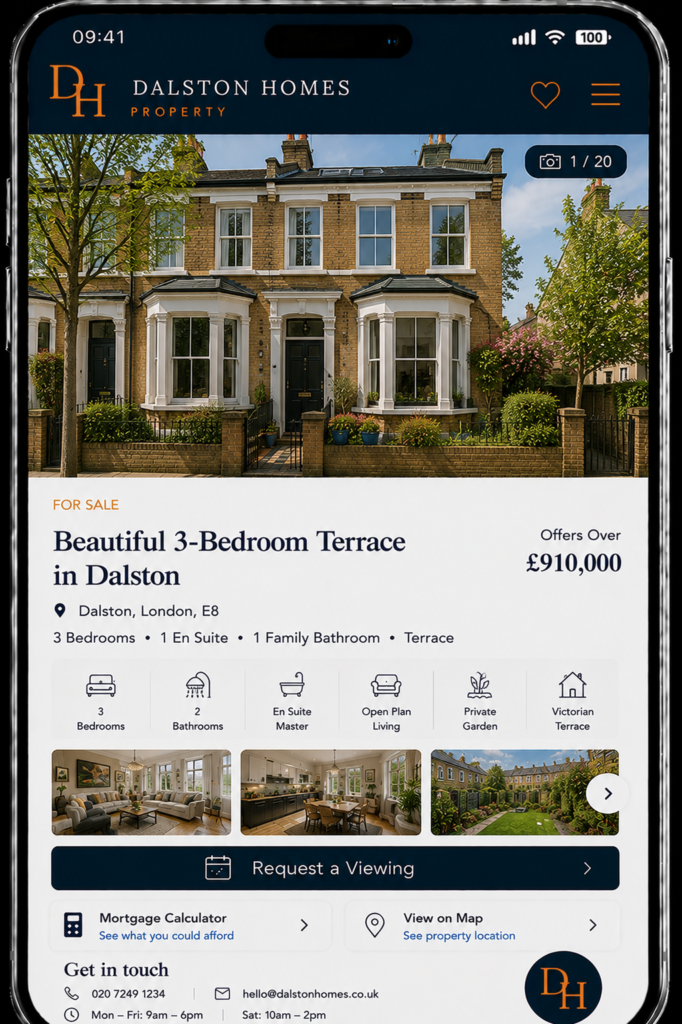
Property in Dalston spans a wide range — from post-war and 1960s flatted estates at more accessible price points to Victorian houses and conversions on the residential streets away from the high street that command prices above £900,000 for three-bedroom terraces in good condition. The Colville Estate regeneration is delivering new housing supply in the area over the coming years. Average property prices in Dalston sit below the London Fields and Stoke Newington premium but above the more affordable parts of the borough further north and east.
Dalston’s evolution is both praised for bringing vibrancy and criticised for pushing up prices and reducing culturally specific and community-embedded shops that gave the area its original character — a tension that is present in most of Hackney’s gentrifying areas and that requires balanced assessment rather than simple celebration or condemnation.
Hackney Wick: The Creative Quarter and New Development
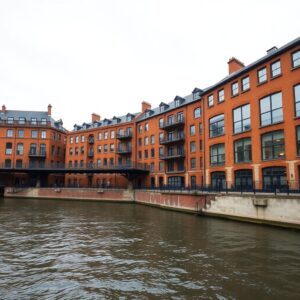
Hackney Wick’s transformation from post-industrial wasteland to one of east London’s most exciting creative and residential destinations has been one of the most dramatic neighbourhood stories of the past decade. The concentration of artists’ studios, brewery taprooms, canal-side bars, and creative businesses that moved into the area’s former factories and warehouses in the years after the 2012 Olympics has created a cultural intensity that is genuinely unlike anything else in the capital.
The property market in Hackney Wick reflects both the recent nature of its residential development and the specific character of the existing stock. Average flat prices run to approximately £527,000, reflecting newer purpose-built stock that is more affordable relative to the converted Victorian properties of London Fields and Stoke Newington. The canal-side and Olympic Park-adjacent locations command meaningful premiums within this average. The area’s flat terrain and excellent cycling infrastructure — Victoria Park is immediately adjacent, the towpath runs directly to Stratford — make it particularly appealing to buyers for whom active travel is part of the daily routine.
The Overground connection at Hackney Wick station — on the Goblin line between Stratford and Highbury & Islington — is improving, and the investment in the area’s public realm and infrastructure as part of the Olympic legacy programme continues to support longer-term values.
Clapton: The Value Frontier
Lower and Upper Clapton have historically been the most accessible areas for buyers entering the Hackney market at lower price points — a position that has eroded somewhat as gentrification has worked its way eastward and northward from the London Fields core, but that still offers relatively more competitive pricing than the borough’s most fashionable addresses.
Victorian and Edwardian terraced houses in Clapton’s residential streets can still be found below £900,000 for three-bedroom examples in need of updating — representing the point in the market where renovation-focused buyers can still identify value relative to the finished-property prices in London Fields and Stoke Newington. The Clapton Square conservation area contains some of the finest Georgian housing in this part of the borough, and proximity to the Lea Valley reservoirs and wetlands adds a green space dimension that is less immediately obvious than Clissold Park or London Fields but equally valuable for those who discover it.
The Regeneration Picture: What’s Reshaping Hackney
Hackney’s housing landscape is being fundamentally reshaped by a series of major regeneration programmes that will deliver tens of thousands of new homes over the next ten to twenty years. Understanding these programmes is important for buyers in adjacent areas — both for the long-term impact on neighbourhood character and for the supply pipeline they represent.
Woodberry Down near Manor House is the most significant — described as one of Europe’s largest single-site regeneration schemes, delivering over 5,500 new homes over a twenty-year programme in partnership with Berkeley Homes. The programme is replacing post-war housing estates with a mixed-tenure neighbourhood, improving the public realm and transport accessibility around Manor House station, and significantly boosting the supply of family housing in this part of the borough.
Barnsbury Estate Redevelopment — 1,116 new homes approved in December 2025 in a partnership between Mount Anvil and Newlon Housing Trust — sits on the Hackney/Islington border and will reshape the Caledonian Road and Barnsbury area over the next decade.
De Beauvoir Estate — a £150 million regeneration project delivering up to 341 new homes — is reshaping the council estate stock immediately adjacent to the heritage De Beauvoir Town area.
Kings Crescent in Stoke Newington, Colville Estate in Dalston, and Hackney Wick regeneration all form part of Hackney Council’s programme targeting 1,000 new council homes by 2026.
Transport: How Hackney’s Overground Network Shapes Values
Hackney’s transport infrastructure is dominated by the London Overground — and the network’s expansion and improved frequency over the past decade has been one of the primary drivers of the borough’s property value growth. The Overground stations at Hackney Central, Hackney Wick, Dalston Kingsland, Dalston Junction, Haggerston, Homerton, and Stoke Newington collectively provide direct east-west connectivity across London that rivals many Underground lines in frequency and coverage.
The TfL Overground network from Dalston Kingsland and Dalston Junction reaches Highbury & Islington (connecting to Victoria Line), Camden Road, Willesden Junction, Clapham Junction, and Crystal Palace in one direction and Stratford, Shadwell, and New Cross in the other — making these two stations among the most transfer-rich on the Overground network and directly supporting the high demand for property within walking distance of Dalston.
Manor House (Piccadilly Line) serves the Stoke Newington area; Canonbury and Essex Road (Overground) serve De Beauvoir Town; and Hackney Wick provides direct Stratford access for the Olympic Park and Elizabeth Line connections. The Elizabeth Line’s presence at Stratford — a short journey from Hackney Wick — has improved the effective connectivity of the eastern end of the borough to Heathrow, the West End, and the City substantially.
The Investment Case: Rental Market and Yields
For investors considering Hackney buy-to-let property, the fundamental picture in 2026 is one of strong rental demand against constrained supply — the structural condition that has driven 2.5% rental growth in a market where London as a whole grew at 1.7%.
Average gross rental yields in Hackney, based on current asking rents against average flat purchase prices, sit in the 4.5–5.5% range for flats — below the London average for outer boroughs but reflecting the inner-London premium paid for proximity to employment and the quality of the tenant pool. For investors specifically targeting yield over capital growth, parts of the borough further from the primary demand drivers — Clapton, parts of Hackney Central — offer better arithmetic than the London Fields and Stoke Newington premium at the cost of some exposure to capital value.
The regulatory environment for landlords has evolved significantly under the Renters’ Rights Act 2025, which came into force in May 2026 and abolished fixed-term assured shorthold tenancies in the private rented sector. Hackney landlords operating under the new periodic tenancy system, with reformed rent review processes and updated possession grounds, need to ensure their management processes are compliant — particularly around documentation, notice requirements, and the evidencing of market rent comparables for any annual review.
What to Know Before Buying in Hackney
Leasehold and Service Charge Due Diligence
The dominance of flatted property in Hackney — accounting for around 78% of transactions — makes leasehold due diligence a priority for the vast majority of buyers in the borough. Check the unexpired lease length (lenders typically require 70–85 years minimum), the annual service charge and its breakdown, the sinking fund balance, any planned major works, and the ground rent position. Properties with escalating ground rent clauses on older leases can affect mortgageability and future saleability and must be identified before exchange.
Conservation Areas and Planning
Hackney has a number of significant conservation areas — particularly the De Beauvoir Town conservation area, the London Fields area, and various Victorian street sequences across the borough — where permitted development rights may be restricted. The Town and Country Planning (General Permitted Development) (England) Order 2015 provides the baseline framework, but conservation area designation frequently limits what can be done without planning consent. Confirm the position with Hackney Council’s planning service before purchasing any property where works are part of the buying rationale.
Historic England’s National Heritage List for England allows buyers to check whether any specific property carries individual listed building designation — relevant for the Georgian properties of Clapton Square, De Beauvoir Town, and parts of Stoke Newington.
Using Sold Price Data
The UK House Price Index from HM Land Registry provides postcode-level sold price data for all Hackney transactions. In a market that has corrected from 2022 peak prices, grounding any offer in objective comparable evidence — rather than relying solely on agent guidance or asking price levels — is particularly important. The variation between asking and achieved prices in the current market makes this data more valuable, not less, than in rising market conditions.
All agents in England are regulated through NTSELAT and must be members of a redress scheme — either The Property Ombudsman (TPO) or the Property Redress Scheme (PRS).
Frequently Asked Questions
Is Hackney property a good investment in 2026?
The structural investment case for Hackney property remains strong — sustained rental demand, a young and economically active tenant population, ongoing regeneration investment, and the Overground network’s east-west connectivity that improves with every infrastructure upgrade. The 3.7% price correction from February 2025 to February 2026 has improved entry conditions relative to the recent peak, and the 2026 market is showing early signs of resumed buyer confidence.
The caveat is that Hackney is no longer the undervalued market it was fifteen years ago — prices fully reflect the borough’s desirability, yields have compressed accordingly, and the investment case rests on sustained rental demand and moderate long-term capital growth rather than dramatic rerating. Buyers who are realistic about those parameters and who hold over the medium to long term are well-positioned.
Which part of Hackney is the best area to buy?
It depends on priorities. London Fields offers the most intense lifestyle experience and the most competitive demand for property at price points buyers can accept. Stoke Newington delivers the best family and community character. De Beauvoir Town provides a heritage-quality residential environment with exceptional Overground connectivity. Hackney Wick offers the most accessible entry point into the borough’s creative quarter with canal and Olympic Park access. Clapton provides the best value for buyers willing to renovate and accept a slightly less fashionable address.
The borough’s defining characteristic is the variety of genuinely different neighbourhood experiences available within its boundaries — and the right area depends on the specific lifestyle the buyer is seeking rather than any generic quality hierarchy.
What is driving Hackney property prices in 2026?
The fundamental drivers are unchanged from the borough’s long-term trajectory: a young, economically active population concentrated in technology, creative, and professional services industries; Overground connectivity that has improved substantially with each phase of the network’s expansion; the cultural density of Broadway Market, Dalston, Shoreditch, and the surrounding areas; and the structural shortage of housing supply relative to demand that characterises all inner London boroughs. The 2025–26 correction has been a price adjustment to higher interest rates rather than a fundamental demand deterioration.
How does Hackney compare to neighbouring boroughs for buyers?
Hackney sits at the intersection of the Islington market to the west — more expensive, more Georgian, more established — and the Tower Hamlets and Newham markets to the south and east — more affordable, with greater new build supply. Waltham Forest to the north offers significantly more affordable Victorian housing stock with improving connectivity. Hackney’s positioning — inner zone, strong Overground access, established cultural identity, predominantly Victorian housing stock — sits at the premium end of the east London market, commanding prices that reflect its position as the most fashionable of the inner east London boroughs.
What are private rents doing in Hackney?
Private rents averaged £2,598 per month in March 2026 — up 2.5% year-on-year, outpacing the London average of 1.7%. The rental market remains severely supply-constrained, with landlord exits from the sector continuing to reduce available stock. Tenants competing for well-presented one and two-bedroom flats in London Fields, Stoke Newington, and Dalston should expect to move quickly and have all documentation — payslips, references, bank statements — ready before attending viewings.
Conclusion
Hackney property market trends in 2026 describe a market that has absorbed its post-pandemic correction and is beginning to re-establish the forward momentum that characterised its long-term trajectory. Prices are modestly below their recent peak; buyer confidence is returning; rental demand is unrelenting; and the regeneration programmes reshaping the borough’s housing landscape are delivering supply that, while significant in scale, has not yet caught up with the structural demand created by the borough’s population growth and economic vitality.
For buyers, 2026 represents a more rational entry point into the Hackney market than the peak conditions of 2021–22 — and the borough’s structural investment fundamentals, neighbourhood variety, and Overground-led connectivity improvements provide a credible long-term case that has consistently rewarded those who bought on it. Getting the neighbourhood, property type, and due diligence right — particularly around leasehold, conservation planning, and the rental market regulatory changes — remains the difference between a well-judged purchase and an expensive learning experience.
For broader context on how the London and UK property market is performing and where investors are finding the best opportunities in 2026, the guide on how UK property investors are thriving in a changing market provides useful wider framing alongside this borough-level analysis.