Table of Contents
Key Takeaways
- Liverpool Street in London is far more than a train station — it is the commercial and cultural pivot point between the City of London’s financial district to the west and the creative energy of Shoreditch and Spitalfields to the east, one of the most dynamic and rapidly evolving parts of the capital.
- Liverpool Street station is Britain’s busiest station by passenger numbers, handling over 67 million passengers annually and serving as a major interchange for the Elizabeth line, Central, Circle, Hammersmith & City, and Metropolitan Underground lines, plus National Rail services to East Anglia, Cambridge, Stansted Airport, and Southend Airport.
- A planning application was submitted in 2025 for the most significant redevelopment of Liverpool Street station since the Broadgate scheme — proposing 929,000 sq ft of new office space, a public roof garden, an auditorium, and substantially improved public realm at the station’s three primary entrances.
- The immediate area — Bishopsgate, Broadgate, Spitalfields, and the edge of Shoreditch — has been transformed over the past decade by sustained investment from British Land and others, making the Broadgate campus one of London’s most sophisticated work, retail, and leisure districts.
- Property in the immediately surrounding postcodes (EC2, E1) ranges from Georgian townhouses in Spitalfields — some of the finest 18th-century residential architecture in London — to contemporary apartment buildings and converted commercial spaces, with prices reflecting Zone 1 status and City employment proximity.
- The area is undergoing its most significant physical transformation in a generation, with new developments at 55 Old Broad Street, 75 London Wall, One Liverpool Street, and the station redevelopment itself all shaping the landscape around EC2 through 2026 and beyond.
Liverpool Street: Where the City Meets the East
Liverpool Street in London occupies a unique position in the capital’s geography — the point at which the formal, glass-and-granite financial district of the City gives way to the brick, market halls, and creative energy of Spitalfields and Shoreditch. It is a boundary as much as a destination: cross Bishopsgate heading east from Liverpool Street station and within two minutes you are in one of London’s oldest surviving streetscapes; cross it heading west and within the same time you are in the financial heart of one of the world’s most important commercial cities.
That duality defines the area’s character in 2026 more than any single description can capture. For the City workers who stream through the station every morning, Liverpool Street is the entry point to a working day in the Square Mile. For the creative and tech industries that have colonised Shoreditch and the adjacent streets since the early 2000s, it is the nearest mainline station to Silicon Roundabout. For tourists, it is the gateway to Spitalfields Market, Brick Lane, and the extraordinary layers of London’s East End history. And for Londoners who simply live nearby, it is a dense, occasionally overwhelming, genuinely thrilling part of one of the world’s great cities.
Liverpool Street Station: The Transport Hub
The Station Itself
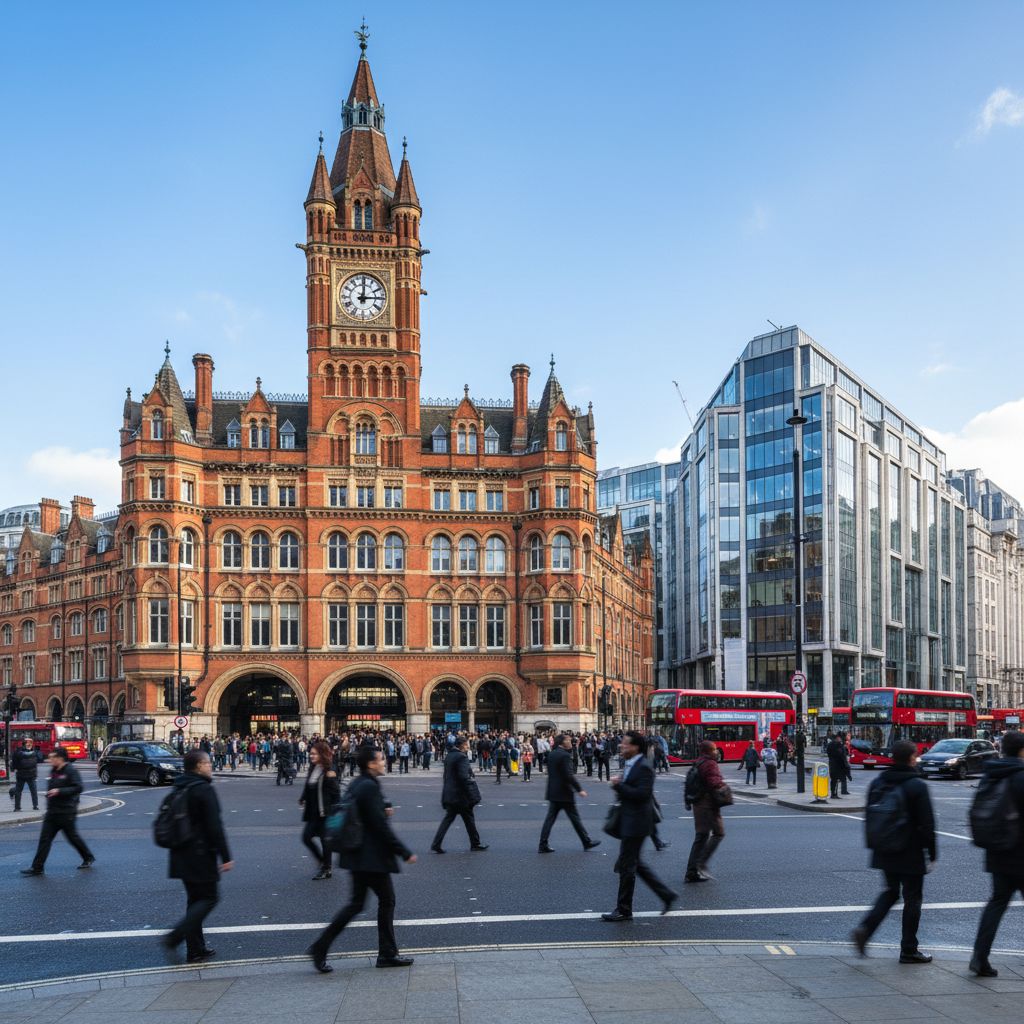
Liverpool Street station opened in 1874 as the London terminus of the Great Eastern Railway and has undergone multiple phases of reconstruction since — most significantly the major late-20th-century redevelopment funded by the Broadgate scheme, which created the office and retail campus that surrounds the station today. The station sits at Bishopsgate, EC2M 7PY, and is directly connected via the 100 Liverpool Street building to the Broadgate campus above.
In 2025, Network Rail Property submitted a major planning application for a further redevelopment of the station — the most ambitious proposal since Broadgate. The application proposes new station infrastructure, 929,000 square feet of new office space above and around the station, a 1,116 square metre auditorium, a 1,968 square metre public roof garden, and substantially improved public realm at the station’s three primary entrances. The proposal also preserves the Great Eastern Railway War Memorial and the East Anglians War Memorial that form part of the station’s historic fabric.
Transport Connections
Liverpool Street is one of the most comprehensively connected transport nodes in London. Its Underground connections alone — the Elizabeth line, the Central, Circle, Hammersmith & City, and Metropolitan lines — serve virtually every major employment and leisure destination in the capital without requiring onward travel. The Elizabeth line specifically has transformed the station’s connectivity since full services launched in 2022: direct services now reach Paddington in approximately 10 minutes, Bond Street in 6 minutes, Canary Wharf in 6 minutes, and Heathrow Terminal 5 in approximately 40 minutes, without changing trains.
National Rail services from Liverpool Street serve one of the most important inter-regional routes in England — the Great Eastern Main Line to East Anglia — connecting London with Cambridge (approximately 50 minutes on the fastest services), Norwich (approximately 100 minutes), the Suffolk coast, and the Norfolk Broads. Stansted Airport is served directly from Liverpool Street via the Stansted Express, with journey times of approximately 47 minutes — making it the primary rail connection for this airport. Southend Airport is also served from Liverpool Street via the c2c service, and London Overground services from the station serve the North London Line corridor.
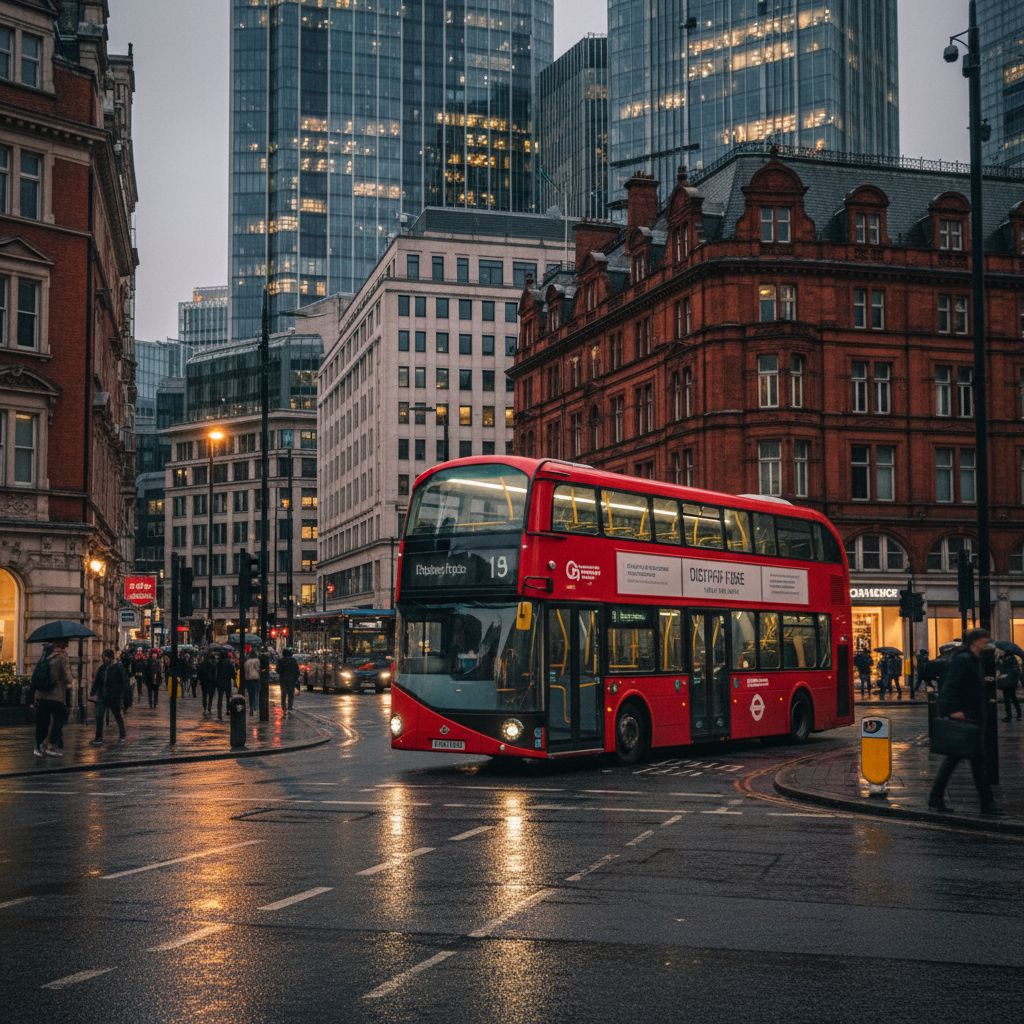
The station’s bus network is equally extensive — Bishopsgate and Liverpool Street are among the most bus-served streets in central London — and cycling infrastructure through the area has improved significantly with dedicated routes toward Shoreditch, Aldgate, and the wider East End.
The Broadgate Campus: A City Destination in Its Own Right
British Land’s Broadgate campus — the vast mixed-use development surrounding Liverpool Street station — has been one of the most significant urban renewal projects in the City of London and is continuing to evolve. Broadgate Circle, the oval public space at the heart of the campus, has been repositioned from a purely office-adjacent environment into a genuine dining and leisure destination, with restaurants and bars operating throughout the day and into the evening.
Eataly at Broadgate — the Italian food hall and marketplace — is among the most significant food retail openings in the City in recent years, bringing the internationally renowned Italian food brand to Bishopsgate and attracting visitors well beyond the immediate office worker population. The circle’s restaurant offer includes Yauatcha City (dim sum, perennially busy at lunchtime), various independent operators, and a programme of outdoor events through the summer months.
The 100 Liverpool Street building — which spans 520,000 square feet of offices and retail above the station itself — was completed in 2019 and is now fully let, with Hudson River Trading occupying the top floor. One Liverpool Street, the adjacent new development, is expected to complete in 2026, delivering up to 91,982 square feet of sustainable office workspace immediately adjacent to the station. At 55 Old Broad Street, a new 24-storey office building designed by Fletcher Priest Architects was progressing through completion in March 2026. The £1.2 billion 75 London Wall development, just minutes from the station, will deliver over 450,000 square feet when complete.
The cumulative effect of this investment is a neighbourhood that is more physically distinguished, more commercially active, and more interesting to be in than at any point in its history.
Spitalfields: The Historic Heart
The streets immediately east of Liverpool Street station — Old Spitalfields Market, Brushfield Street, Commercial Street, and the extraordinary Georgian townhouses of Fournier Street, Elder Street, and Wilkes Street — represent one of the most historically layered and architecturally significant neighbourhoods in London.
Old Spitalfields Market has traded on this site in various forms since 1638, and the restored Victorian market hall — designed by City architect George Sherrin and completed in 1893 — is now one of London’s best-known covered markets. Its weekly programme includes fashion, arts, crafts, antiques, and food markets that draw visitors from across London and internationally. The market operates seven days a week, with Thursdays and Sundays among the most atmospheric days for browsing.
The Huguenot silk-weaving community that established itself in Spitalfields in the late 17th century, fleeing religious persecution in France, left an extraordinary architectural legacy. The Georgian townhouses of Fournier Street and Elder Street are among the finest early 18th-century residential buildings in England — Grade I and II listed properties of rare distinction that occasionally come to market at prices that reflect both their architectural significance and their Zone 1 location. Christ Church Spitalfields, Nicholas Hawksmoor’s masterpiece completed in 1729, dominates the neighbourhood from its position on Commercial Street and is one of the most powerful examples of English Baroque architecture in existence.
The area’s multicultural history is one of the most richly documented in London — from the Huguenots to the Jewish community who arrived in the 19th century and established Brick Lane’s garment industry, to the Bengali community who have shaped the area since the 1970s and whose influence is most visible on Brick Lane and in the brilliant curry restaurants of the area. Each wave of immigration has left its mark, and walking through Spitalfields is walking through layers of London’s social and cultural history in a way that few other urban environments can replicate.
Shoreditch: The Creative Quarter
North of Liverpool Street, beyond Shoreditch High Street and Old Street, lies the neighbourhood that has become synonymous with London’s creative and technology industries. Shoreditch — and the broader area including Hoxton, Bethnal Green, and the rebranded sections of the East End that estate agents now call Shoreditch regardless of their actual location — hosts the highest concentration of technology startups, creative agencies, design studios, and digital businesses in the UK outside the West End.
Old Street roundabout — “Silicon Roundabout” — sits at the northern edge of this area and has become something of a symbol for the UK’s technology sector, though the actual density of tech businesses has spread well beyond the original roundabout and now encompasses much of the E1 and E2 postcodes surrounding Liverpool Street.
Boxpark Shoreditch — the pioneering pop-up retail and food concept built from shipping containers at Shoreditch High Street Overground station — remains one of the area’s most active street level destinations, alongside Cargo, XOYO, and dozens of bars and music venues that make this one of the most concentrated nightlife areas in London. Boxhall City, the all-day social dining experience near Broadgate, has brought some of this energy south toward the station itself.
The street art tradition that has defined Shoreditch’s visual character for two decades — Banksy’s early work on Rivington Street, Stik’s distinctive stick figures, and the work of ROA and dozens of other artists on Brick Lane and the surrounding walls — remains active, with new commissions appearing regularly and the area functioning as an open-air gallery of contemporary urban art.
Food and Drink: What the Area Offers
The food and drink offer around Liverpool Street in London in 2026 is extraordinary in its range and quality — a function of both the Broadgate investment in the immediate station environment and the independent restaurant culture that has developed across Spitalfields and Shoreditch.
Broadgate Circle hosts Yauatcha City (Michelin-starred dim sum), Eataly on Bishopsgate, and a range of casual and mid-market dining. The restored railway arches and the streets around Spitalfields Market have produced some of London’s most talked-about restaurant openings over the past five years — from the Michelin-starred La Chapelle in the extraordinary converted hall at St Botolph’s Hall on Spital Square, to the celebrated Duck & Waffle in Heron Tower at 110 Bishopsgate, which has maintained its reputation as one of the most spectacular dining rooms in London from its 40th-floor position with panoramic views across the city.
The historic pubs of the area — the Gun, the Cock Tavern, the Golden Heart in Commercial Street — are complemented by a newer generation of craft beer bars and wine bars that have colonised the railway arches and ground floor units around Shoreditch and Spitalfields. The coffee shop culture in the area is among the most competitive in London, with independent roasters alongside established chains providing a density of quality that reflects the professional and creative workforce that needs it.
Petticoat Lane Market — operating on Wentworth Street and Middlesex Street on Sunday mornings — is one of the oldest street markets in London and one of the most authentic surviving examples of the East End market tradition that once defined this part of the city.
Living Near Liverpool Street: The Property Picture
The EC2 and E1 Postcode Market
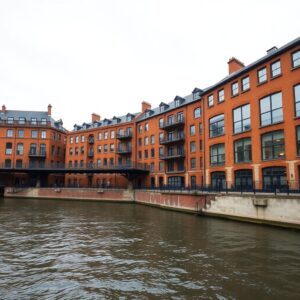
Living immediately adjacent to Liverpool Street is a genuinely niche proposition — the density of commercial development, the constant movement of the station, and the office-dominated character of the immediate streets mean that the neighbourhood is not a conventional residential environment in the way that Islington or Hackney are. What does exist is a significant and varied residential market in the streets around and beyond the station: the Georgian terraces of Spitalfields, the converted warehouse and loft apartments of Shoreditch and the adjacent E1 and E2 postcodes, and a growing supply of purpose-built apartment buildings in the wider area.
The finest residential stock in the immediate area is concentrated in the Spitalfields conservation streets — Fournier Street, Elder Street, Wilkes Street, Princelet Street, and the cobbled Folgate Street. Georgian townhouses here are among the most architecturally significant residential properties in London, and when they come to market they attract serious buyers who are as interested in the history and architecture as in the residential specification. A five-bedroom Georgian house in the heart of Spitalfields was listed at approximately £3.5 million in early 2026; converted period duplex apartments on Princelet Street — circa 2,400 square feet — are available from around £1.5–2 million for well-presented examples.
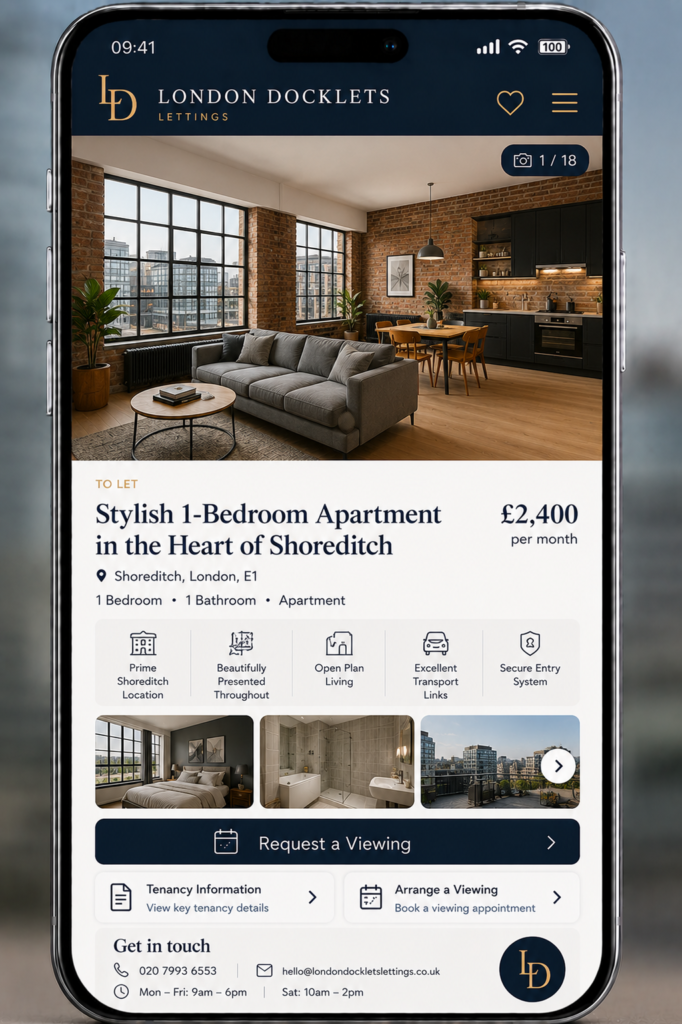
Beyond the Spitalfields conservation core, the wider E1 market around Aldgate East and Commercial Street offers more accessible price points. The Shoreditch average property price sits at approximately £678,000 according to area analysis — down from a 2024 peak of £798,000. One and two-bedroom converted loft apartments and warehouse flats are the dominant stock type, with rents for a one-bedroom apartment running to £2,200–£2,800 per month and two-bedrooms from £2,800–£3,500.
Who Lives Here
The residential population of the Liverpool Street area is distinct from most London neighbourhoods — younger on average (the Shoreditch average resident age is 31), very highly educated (82% degree-educated in the Shoreditch area), and predominantly employed in technology, finance, creative, and professional services. It attracts buyers and renters who prioritise City proximity, the cultural energy of the East End, and the convenience of Zone 1 living over the garden, school catchment, and quiet street concerns that drive decisions in more suburban boroughs.
Getting Around the Area
The transport options from Liverpool Street are covered in the station section above, but the area’s walkability deserves specific mention. The following are all accessible on foot from Liverpool Street station: Bank (12 minutes), Moorgate (8 minutes), the Barbican (12 minutes), Brick Lane (10 minutes), Shoreditch High Street (10 minutes), and Old Street (15 minutes). Cycling infrastructure connecting Liverpool Street to Shoreditch, Hackney, and the wider East End is among the best in inner London, and Santander Cycle docking stations are dense throughout the area.
What’s Changing: Development and the Future of the Area
The redevelopment pipeline around Liverpool Street in London in 2026 is one of the most active of any comparable area in the capital.
The proposed Liverpool Street station redevelopment — if consented — would be the most transformative change to the immediate station environment since the original Broadgate development. The proposed public roof garden above the station, improved concourse, and significant public realm improvements at the primary entrances would change how the station functions both as a transport interchange and as a destination.
The 75 London Wall development — a £1.2 billion project minutes from the station — will deliver over 450,000 square feet of workspace when complete. One Liverpool Street — the sustainable next-generation office development adjacent to the station — is expected to complete in 2026. The 24-storey 55 Old Broad Street building progressing through completion in early 2026 adds further Grade A office supply to the immediate district.
The cumulative effect of this development pipeline is a neighbourhood that will look and function materially differently in five years than it does today — which has implications both for those who work in the area and for buyers or renters considering the surrounding residential market.
Frequently Asked Questions
What is Liverpool Street in London famous for?
Liverpool Street is best known as one of London’s most important transport hubs — Britain’s busiest station, serving the City, East Anglia, Cambridge, Stansted Airport, and the full Elizabeth line corridor. Beyond transport, the area is celebrated for the Broadgate campus (a major City commercial and leisure district), Old Spitalfields Market and the extraordinary Georgian architecture of the Spitalfields conservation area, Hawksmoor’s Christ Church, and its position as the gateway between the City of London and the creative energy of Shoreditch and Brick Lane.
Which Underground lines serve Liverpool Street station?
Liverpool Street is served by the Elizabeth line, the Central line, the Circle line, the Hammersmith & City line, and the Metropolitan line. This combination of five Underground lines, plus National Rail services and extensive bus coverage, makes it one of the most comprehensively connected transport nodes in London. The Elizabeth line has been the most transformative recent addition, providing direct services to Heathrow, Paddington, and Canary Wharf without changing trains.
Is Liverpool Street a good place to live?
Liverpool Street’s immediate streets are dominated by commercial development and the station itself, making them less conventional as residential addresses than the surrounding neighbourhoods. The strongest residential propositions in the immediate area are in Spitalfields — where the Georgian conservation area streets contain some of the finest 18th-century townhouses in London — and in the converted warehouse and loft apartment market of the adjacent Shoreditch and Aldgate East postcodes. For buyers and renters who prioritise City proximity, Zone 1 transport access, and the cultural density of the East End, it is an excellent base; for those seeking a more conventional London residential environment with garden, schools, and quiet streets, the immediate area is not the right fit.
What is there to do near Liverpool Street?
The area around Liverpool Street offers an extraordinary concentration of food, retail, culture, and nightlife within walking distance. Old Spitalfields Market operates seven days a week; Petticoat Lane Market runs on Sundays; Brick Lane and its food, vintage, and antique markets are ten minutes’ walk; the Barbican Centre is twelve minutes; the Tate Modern is accessible directly via the Elizabeth line to Southwark. The restaurant offer — from Michelin-starred La Chapelle and Duck & Waffle to the street food of Spitalfields and Boxhall City — is among the most varied in London. Nightlife in Shoreditch and the adjacent streets is some of the most active in the capital.
What is the proposed Liverpool Street station redevelopment?
Network Rail Property submitted a major planning application in 2025 for the redevelopment of Liverpool Street station — proposing 929,000 square feet of new office space above and around the station, a public roof garden of approximately 1,968 square metres, an auditorium, new station infrastructure, and substantially improved public realm at the station’s three primary entrances. The scheme also preserves the Great Eastern Railway War Memorial and the East Anglians War Memorial that form part of the station’s historic fabric. The development, if consented, would represent the most significant physical transformation of the station since the original Broadgate scheme.
Conclusion
Liverpool Street in London in 2026 is one of the most layered and rapidly evolving parts of the capital — a place where Victorian market halls, Georgian townhouses of extraordinary historical significance, Michelin-starred restaurants, world-class transport infrastructure, and a generational pipeline of commercial development all exist within a few minutes’ walk of each other. Its duality — the formality of the City on one side, the creativity and heritage of Spitalfields and Shoreditch on the other — is what makes it genuinely unlike any other part of London.
Whether you are visiting the area for work, leisure, or the first time; considering it as a place to live; or assessing it as an investment location with one of the most comprehensive transport networks in the world on its doorstep, understanding what Liverpool Street actually is — rather than what its reputation as “a busy train station” might suggest — opens up one of London’s most rewarding and complex urban environments.
For buyers and investors considering property in the wider City fringe and East London market, the guide on how UK property investors are thriving in a changing market provides useful broader context on the opportunities and conditions shaping the 2026 market.