Table of Contents
Key Takeaways
- Asking the right questions of estate agents in Peckham before you commit to a viewing, offer, or purchase can save you from expensive mistakes that only surface post-completion — and in a market as varied as Peckham’s, the quality of your questions matters more than in more uniform residential areas.
- Estate agents represent the seller, not the buyer — they are legally bound to answer your questions truthfully under the Consumer Protection from Unfair Trading Regulations 2008 and the Estate Agents Act 1979, but they will not volunteer unflattering information you have not specifically asked for.
- Peckham’s specific market characteristics — significant variation between streets, the dominance of leasehold flats (approximately 79% of transactions), a Bellenden conservation area with specific planning restrictions, proximity to post-war estates, and ongoing neighbourhood evolution — mean certain questions here are more important than in more uniform London markets.
- Around 41% of property purchases in the UK fall through, according to Quick Move Now data from April–June 2025 — understanding why previous offers on a property collapsed is one of the most productive questions you can ask before investing time and money in a transaction.
- Peckham’s crime profile varies significantly by street — asking specific safety and neighbourhood questions for the exact location you are considering, rather than relying on the neighbourhood’s improving overall reputation, is essential due diligence.
- All estate agents in England must belong to a redress scheme — either The Property Ombudsman (TPO) or the Property Redress Scheme (PRS) — and are regulated by NTSELAT. Verify membership before engaging and use these bodies if anything goes wrong.
Why Your Questions to Estate Agents Matter Especially in Peckham
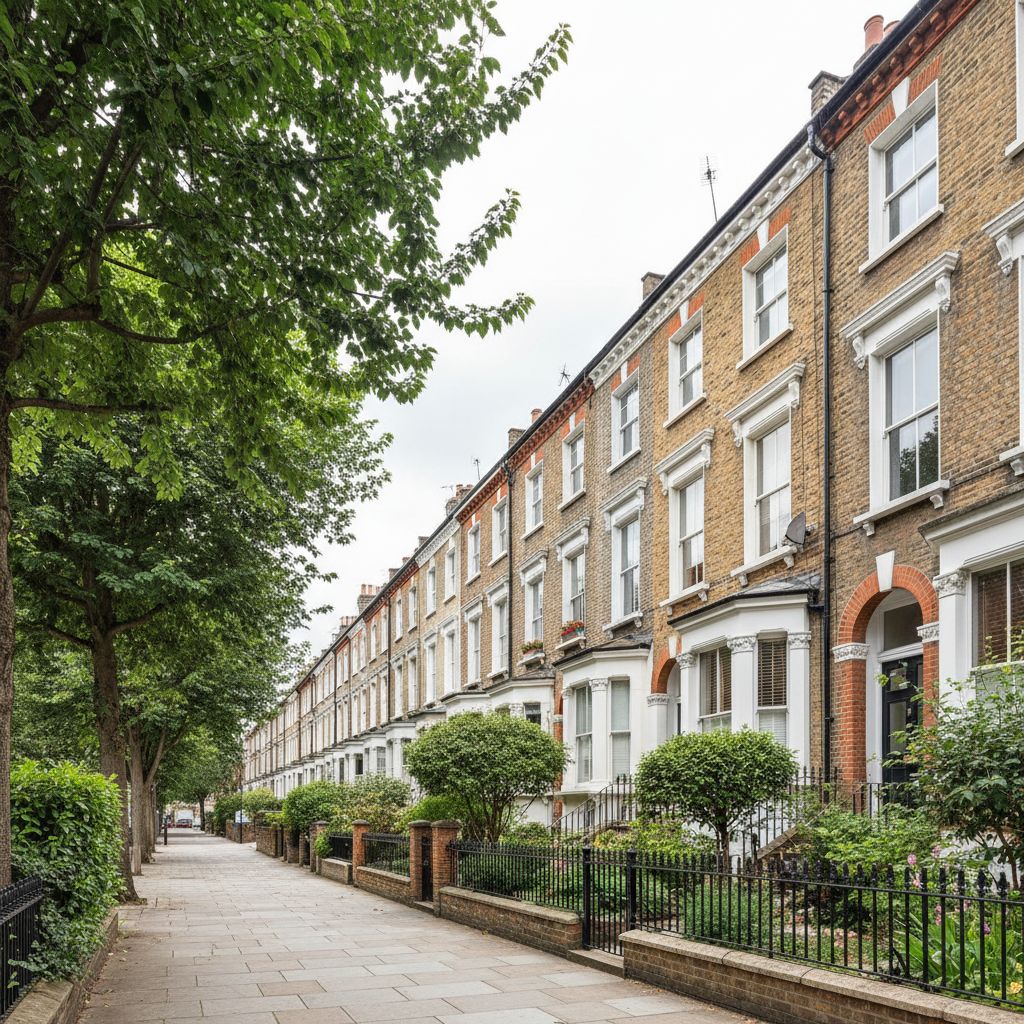
Peckham is one of South London’s most diverse and genuinely varied neighbourhoods — a place where a handsome Victorian conservation area terrace on Bellenden Road and a 1960s flatted estate on the same bus route can occupy entirely different worlds in terms of daily experience, built environment quality, and long-term value trajectory. The Sunday Times named it London’s best place to live in 2017, and the neighbourhood’s food, arts, and cultural scene has continued to evolve since. But Peckham is also a neighbourhood in active transition, with a crime profile that varies sharply between specific streets and a property market where leasehold complexity, conservation area restrictions, and significant variation in building stock quality all require careful investigation.
Estate agents in Peckham — like estate agents everywhere — work for the seller. Their job is to present the property as attractively as possible and to facilitate a transaction. They are not your adviser. The questions you ask are the mechanism by which you extract the information you need to make a sound decision — and the depth and quality of those questions determines whether you go into a purchase with the full picture or with gaps that later become expensive.
People who’ve dealt with property in SE15 often end up mentioning Wooster & Stock estate agents Peckham in that offhand way locals do when a business has actually earned its reputation. They’re one of those names that pops up in conversations about moving house, usually from someone relieved that the whole process felt a bit less chaotic than expected.
This guide covers every question worth asking, organised by when in the process they are most relevant, with specific attention to the Peckham characteristics that make certain questions here more consequential than the generic buyer checklist suggests.
Before You View: Questions Worth Asking First
Investing time in a viewing on a property that has a fundamental problem identifiable before you visit is avoidable. These questions, asked on the phone or by email before you commit to travelling, help you prioritise effectively.
How long has the property been on the market?
In Peckham’s market — where well-positioned, fairly priced properties in good condition typically attract interest within the first two to three weeks of listing — a property that has been available for two months or more without selling is signalling something worth investigating. Ask directly, and listen carefully to the explanation. Extended marketing periods typically reflect one of a small number of issues: overpricing, a condition problem, a legal complication (short lease, service charge dispute, unresolved planning issue), or a location characteristic that is deterring buyers who have viewed.
None of these necessarily makes the property uninspectable — but all of them mean you should approach the viewing with specific questions prepared rather than fresh optimism.
Has there been any offer on the property, and if so, why did it fall through?
Estate agents are legally required to answer this question honestly. If a previous offer fell through, understanding why is some of the most important intelligence you can gather before committing to a transaction. Was it a survey issue — structural movement, damp, roof condition — that deterred the previous buyer? Was it a mortgage valuation below the asking price, suggesting that lenders independently assessed the property as worth less than the vendor is asking? Was it a leasehold issue — short lease, high service charge, pending major works — that emerged through legal due diligence? Or was it simply a buyer whose circumstances changed?
The answer shapes how you approach the subsequent viewing, survey instruction, and legal due diligence. A property that lost a buyer at survey stage should prompt a more rigorous survey brief. A mortgage valuation shortfall should prompt a more cautious offer level.
What is the lease length on this flat?
For the approximately 79% of Peckham transactions that involve leasehold flats, this is not optional preliminary information — it is the most financially consequential single piece of data about the property. Leases below 80 years require significantly more expensive statutory extension; leases below 70 years are increasingly difficult to mortgage with mainstream lenders; and leases below 60 years can effectively make a property unmortgageable and very difficult to sell.
Ask the lease length before viewing, then independently verify it through the HM Land Registry title register (£3 per search) which confirms the lease start date and original term. If the unexpired lease is approaching 80 years, factor extension cost into your offer level — the statutory lease extension right becomes significantly more expensive below this threshold.
Questions to Ask During the Viewing
The viewing is your opportunity to assess the property with your own eyes and to extract specific information from the agent that the portal listing does not provide.
Why is the owner selling?
Not every agent will know the full answer, and not every seller wants their circumstances disclosed. But asking directly — and noting the quality of the response — is worthwhile. A seller moving abroad for work, dealing with a probate estate, or whose onward purchase is already secured may be more motivated to accept a realistic offer than one who is testing the market with no particular urgency. Understanding the seller’s circumstances before you make an offer provides legitimate negotiating context.
What is the annual service charge, what does it cover, and when was the last major works assessment?
For leasehold flats — the dominant property type in Peckham — the service charge is the second-most important financial variable after the purchase price itself. A flat with a £500,000 asking price and a £7,000 annual service charge has a fundamentally different financial profile from one with a charge of £2,000. The service charge typically covers building insurance, communal area maintenance, managing agent fees, lift servicing (if applicable), and contributions to the sinking fund for future major works.
Ask specifically: what is the current annual service charge? Is there a sinking fund and what is its balance? Has there been a recent major works assessment — roof, cladding, external redecoration, lift replacement? Are there any known upcoming works that might result in a special levy? The managing agent’s accounts will ultimately provide the full detail through the legal process, but the agent’s answer gives you an initial steer on whether to proceed.
Is the property in the Bellenden conservation area, and what are the planning implications?
The Bellenden Road conservation area covers some of Peckham’s most desirable Victorian streets and carries specific planning implications for buyers who intend to carry out works. Within conservation areas, certain alterations that would be permitted development elsewhere require full planning permission — replacing windows and doors visible from the street, adding outbuildings, making changes to the external appearance of the property. If you are planning any extension or alteration, ask explicitly whether the property falls within the conservation area, then verify independently with Southwark Council’s planning service and Southwark’s planning portal. Do not assume that works acceptable in other parts of London are automatically permissible here.
Has the property been altered or extended, and are there consents in place?
Peckham’s Victorian and Edwardian housing stock has been subject to decades of extensions, loft conversions, and internal reconfigurations — not all of which were carried out with the required planning and building regulation consents. Works without consent create a liability that passes to the buyer on completion. Ask the agent whether any significant alterations have been made, and whether planning permission and building regulations sign-off are available for those works. If documentation is missing, your solicitor will need to assess whether indemnity insurance is appropriate and available.
What is the ground rent situation?
For any leasehold flat, ground rent is separate from and additional to the service charge, and is paid to the freeholder. The Leasehold Reform (Ground Rent) Act 2022 abolished ground rents for new leases, but existing leases may carry escalating ground rent clauses. Doubling clauses — where the ground rent doubles every ten or twenty-five years — can dramatically increase the holding cost over time and make a property difficult to mortgage and to sell. Ask the current ground rent and whether it escalates, and by what mechanism. Your solicitor should review the full lease before exchange and advise on any terms that affect mortgageability or value.
What are the specific transport connections from this address, and what is the actual walking time to the nearest station?
Peckham Rye is the primary station for most of the neighbourhood, but the walking time from different streets varies considerably — and Peckham High Street station serves different parts of the area. Ask the agent the nearest station and the realistic walking time, then walk it yourself before offering. Check the TfL Journey Planner for the actual journey time from that station to your primary employment destination. Zone 2 is the designation for most of Peckham, but the frequency and coverage of services varies significantly between the rail and Overground options available from different streets.
Questions About the Specific Street and Neighbourhood
Peckham’s variation between streets is one of the most important characteristics for buyers to understand — and one that estate agents will rarely volunteer unless you ask directly.
What is the character of this specific street, and how does it compare to adjacent streets?
The fifteen-minute walk between Peckham Rye station and the Bellenden conservation area traverses significant variation in built environment quality, mix of tenure, and street character. A buyer attracted by Peckham’s reputation should ask explicitly about the immediate street rather than assuming it mirrors the neighbourhood’s best addresses. What is the mix of owner-occupied and rented properties? Are there any social housing blocks or estates adjacent? What does the street feel like at different times of day and evening?
These questions may produce diplomatic or vague responses from some agents, but asking them directly signals that you are a well-informed buyer who is doing proper due diligence — and a reputable agent will provide honest answers.
What are the crime statistics for this specific area?
Peckham’s crime profile varies significantly by ward and street, and the neighbourhood’s improving overall trajectory does not mean that every part of it is equally safe. The Metropolitan Police crime data dashboard provides ward-level statistics for reported crimes in any London area. Ask the agent about the local crime picture, but verify independently using the police data rather than relying solely on the agent’s characterisation.
Are there any planned developments or regeneration schemes nearby?
Peckham and the surrounding parts of Southwark have a number of regeneration programmes underway or in planning — and the character of a street or a specific property’s outlook can be materially affected by planning applications that are not visible from the current property listing. Ask the agent about any known planning applications or development schemes in the vicinity, then search Southwark Council’s planning applications register independently using the property’s postcode. The Planning Portal provides a wider search tool for England.
What are the schools like in the catchment for this address?
For family buyers, Southwark’s school provision varies considerably between specific primaries and secondaries, and catchment boundaries can change year to year. Ask the agent which schools serve the specific address, then verify independently with Southwark Council’s school admissions service and check Ofsted inspection reports for the relevant schools. Do not make a purchase decision based on the agent’s characterisation of local schools without independent verification.
Questions About Price and the Transaction
What comparable sales support the asking price?
In Peckham’s market, where prices vary considerably between the Bellenden conservation area and properties in less established streets, the quality of the comparables an agent uses to justify an asking price is particularly important. Ask for recent comparable sales — similar property types in the same or immediately adjacent streets — and cross-reference them against the UK House Price Index from HM Land Registry and Rightmove’s sold prices tool. Both sources draw from Land Registry transaction data and provide the objective baseline against which to assess any asking price.
Is the seller open to offers, and what is their preferred timeline?
Understanding whether there is flexibility on price and what the seller’s preferred completion timeline is shapes how you structure any offer. A motivated seller — one dealing with a probate estate, one who has already found their onward purchase, one who needs to complete before a specific date — may accept a realistic offer below asking in exchange for certainty and pace. Matching your offer to the seller’s actual priorities, not just the price, is frequently what distinguishes a successful buyer from an unsuccessful one in a competitive situation.
Are there any other offers on the property currently?
Under the Consumer Protection from Unfair Trading Regulations, agents cannot fabricate competing offers. Asking directly whether there is currently an offer on the table — and observing the quality of the answer — is worthwhile. If the agent confirms competitive interest, consider whether you are genuinely prepared to move to your best and final offer immediately, rather than testing the water at a level you would not be comfortable losing the property on.
What will the total cost of this purchase be beyond the purchase price?
For a complete budget, you need to account for Stamp Duty Land Tax (calculate via the HMRC stamp duty calculator), solicitor’s fees, survey costs, and — for leasehold properties — the apportioned service charge, any ground rent advance payment, and management company notice fees that apply on the transfer of a leasehold flat. Ask the agent what additional costs are typically associated with this specific property type and building. The answer will not be exhaustive, but it flags areas where you need further investigation.
Questions About the Agent
Are you a member of a redress scheme?
All estate agents in England are legally required to belong to either The Property Ombudsman (TPO) or the Property Redress Scheme (PRS), regulated by NTSELAT. Confirming membership gives you access to independent dispute resolution if anything goes wrong with how the transaction is handled. If an agent cannot confirm their membership, that is a significant red flag.
How long have you been active specifically in Peckham, and which streets do you know best?
Peckham’s micro-market variation means that an agent with genuine local knowledge — specific familiarity with the Bellenden conservation area, the dynamics of the Rye Lane corridor, the specific buildings with known leasehold issues, the schools most sought-after by family buyers — is more valuable than a generalist London agent. Ask directly about local experience, and note whether the answers are specific or generic.
Questions to Ask Before Making an Offer
Before committing to an offer, consolidate everything you have gathered with these final questions.
Has the property been independently valued, and at what figure?
A previous mortgage valuation below the agreed purchase price is a material risk — if the same happens with your lender, you face the choice of renegotiating, making up the shortfall in cash, or walking away having already spent money on surveys and legal fees. If a previous buyer’s mortgage valuation is known to have come in below asking price, that is particularly significant information.
What is the expected timeline from offer accepted to exchange and completion?
Leasehold flat transactions in Peckham can take longer than freehold transactions because of the additional steps involved — management information packs from the freeholder, licences to assign, and the coordination of multiple parties in a building. Understanding the realistic timeline before you commit to an offer helps you plan and avoids the frustration of a transaction that exceeds your expectations. If you have a specific completion deadline — a rental lease end date, a school start date — make this clear to the agent and ask whether it is achievable.
Is there anything about this property or transaction that I should know that you have not already told me?
This open-ended question, asked directly at the end of your fact-gathering, invites the agent to volunteer anything material that has not emerged through your specific questions. A reputable agent will answer honestly; the quality of the response — including what is said and what is not — is itself informative.
Frequently Asked Questions
Do estate agents in Peckham have to tell me the truth?
Yes. Estate agents in England are legally bound to answer questions truthfully under the Consumer Protection from Unfair Trading Regulations 2008 and the Estate Agents Act 1979. They must not make misleading statements, withhold material information that would affect a buyer’s decision, or fabricate competing offers. However, they are not obliged to volunteer unflattering information about a property unless you specifically ask. This is why the completeness of your questioning matters so much — information you do not ask for is information you may not receive.
Should I use a buyer’s agent rather than relying on estate agents in Peckham?
For buyers spending above £600,000 in Peckham — which includes most Victorian terraces and the upper end of the flat market — a buyer’s agent who represents your interests, has access to off-market properties, and brings specific Peckham local knowledge can add genuine value. The fee (typically 1–2.5% of the purchase price) needs to be weighed against the benefit of independent representation and the access to properties that never reach the portals. For buyers at lower price points purchasing a leasehold flat, the incremental benefit of a buyer’s agent is smaller — but instructing a solicitor with specific Southwark leasehold experience is non-negotiable at any price point.
How do I research a Peckham property independently of what the estate agent tells me?
Four sources cover most of what you need. The UK House Price Index and Rightmove’s sold prices tool provide objective transaction data for SE15 postcodes. The HM Land Registry title register (£3) confirms lease length and title information. Southwark Council’s planning portal shows the planning history of the property and any nearby applications. And the Metropolitan Police crime dashboard provides ward-level crime data for the specific location. Between these four, you can independently verify most of the material information an agent provides before committing to survey and legal instruction.
What should I never say to an estate agent?
Never reveal your maximum budget — once an agent knows your ceiling, they will present options at it rather than below it. Never disclose how enthusiastic you are about a specific property before making an offer — keenness undermines negotiating leverage. Never suggest you are under time pressure to move — urgency weakens your position. And never make an offer immediately after a viewing without taking time to verify comparables and assess the property’s specific characteristics in a calmer frame of mind.
What are the biggest red flags when viewing a Peckham property?
On the property itself: damp tide marks on internal walls or around window frames, visible cracks in external brickwork or internal walls (particularly diagonal cracks suggesting structural movement), a noticeably musty or damp smell in basement or lower ground floor spaces, obvious wear or deterioration in shared entrance hallways suggesting poor building management, and any evidence of alterations — new partition walls, relocated kitchens, loft conversions — without visible signs of professional finish.
On the lease: anything below 80 years remaining, service charge figures that seem unusually high or low without clear explanation, and any mention of unresolved cladding or fire safety issues in the building. On the transaction: a property that has been on the market for three months or more without a clear explanation; a previous fall-through at survey stage that the agent cannot explain convincingly; and an asking price that the agent cannot support with specific recent comparable sales in the same or adjacent streets.
Conclusion
The questions you ask estate agents in Peckham are the foundation of a sound buying or renting decision in one of South London’s most dynamic and varied neighbourhoods. Peckham’s genuine strengths — the cultural scene, the food offer, the transport connectivity, the Victorian architecture at its best — are well documented and well deserved. Its complexities — the street-level variation in quality and safety, the leasehold landscape’s financial implications, the conservation area planning restrictions — require the kind of specific, well-prepared questioning that this guide is designed to support.
Estate agents who receive intelligent, well-prepared questions tend to respect the buyer asking them and engage more honestly as a result. The combination of direct questioning, independent verification using the Land Registry and planning database tools linked throughout this guide, and a solicitor with specific Southwark leasehold conveyancing experience puts you in the strongest possible position to make a sound decision in a market that consistently rewards preparation.
For broader context on how the London and UK property market is performing and where buyers and investors are finding the best opportunities, the guide on how UK property investors are thriving in a changing market provides useful wider framing alongside this Peckham-specific buyer’s guide.