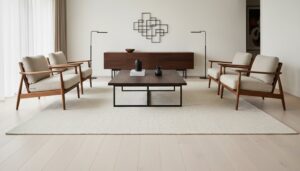
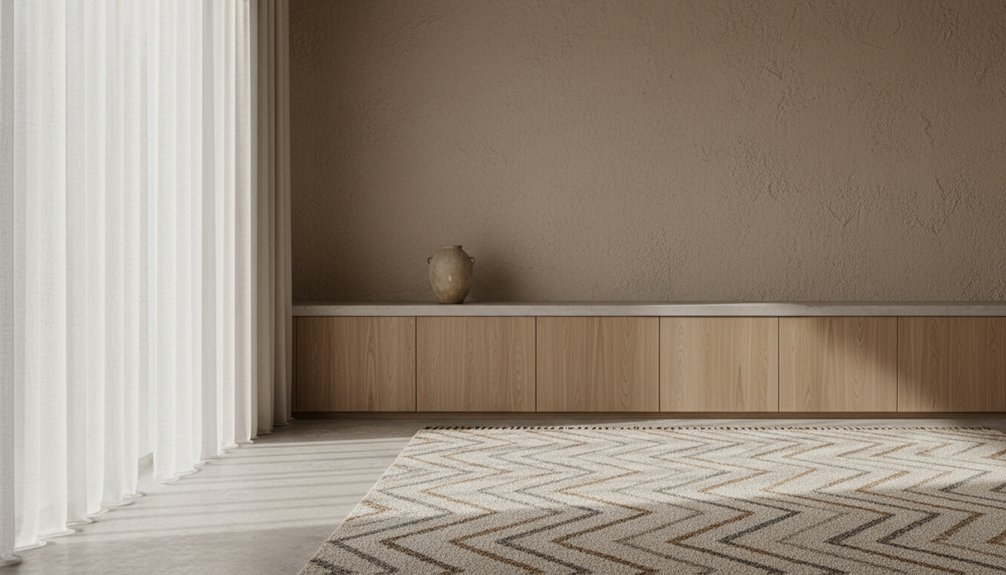
Homes with mostly hard, smooth surfaces can feel up to 30% less inviting than spaces with varied tactile finishes. You can soften minimalist architecture by pairing ribbed upholstery, nubby rugs, textured plaster, and warm timber with a restrained palette. Add linen curtains, wool underfoot, and a few handmade ceramics to introduce comfort without sacrificing clean lines. The key is knowing which surfaces to layer, where to place them, and when to stop.
Key Takeaways
- Introduce ribbed upholstery, nubby rugs, linen curtains, or pleated fabrics to soften stark lines while maintaining a restrained palette.
- Layer warm wood, durable stone, and subtly textured plaster to add depth, movement, and natural contrast without visual clutter.
- Use handmade ceramics with matte glazes, organic shapes, and visible craftsmanship to balance smooth architectural surfaces.
- Vary grain, sheen, and fabric patterns thoughtfully, repeating related tones to create cohesion and sensory richness.
- Edit textures by concentrating rough finishes in focal areas and using grazing or diffuse lighting to control emphasis.
Choose Tactile Textures for Minimalist Rooms
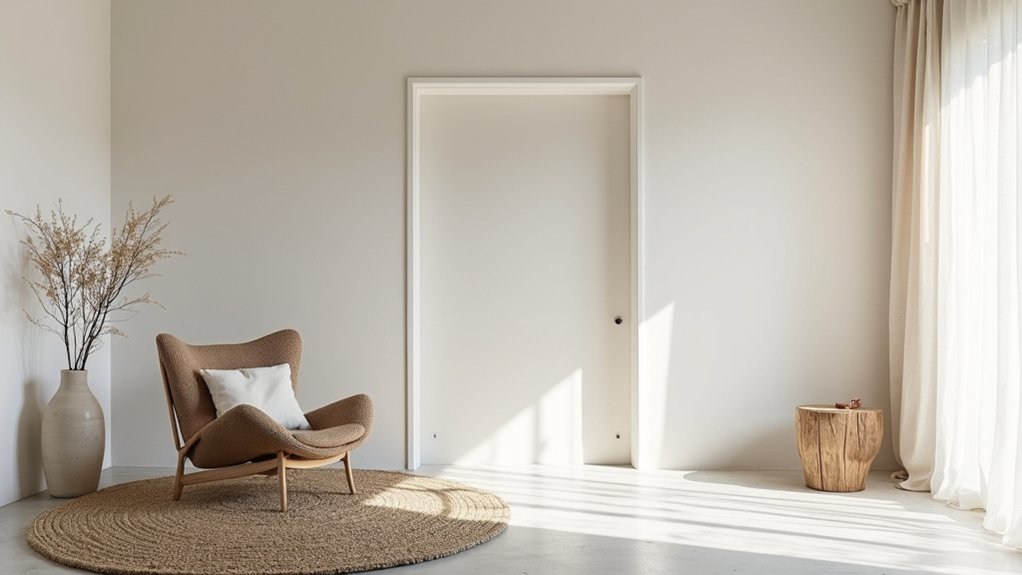
Choose tactile textures that add depth without disrupting a minimalist room’s clean lines. Start with one dominant finish, such as a finely ribbed upholstery, nubby rug, or softly pleated curtain, then repeat it sparingly to create cohesion.
Keep the palette restrained so texture, rather than clutter, defines the space. Use durable, easy-care materials in high-traffic areas; they’ll protect long-term property value while maintaining a refined appearance.
Introduce color accents through a single cushion, artwork, or upholstered chair, ensuring contrast remains intentional. Test samples in daylight and after dark, because lighting effects can exaggerate roughness, flatten subtle patterns, or reveal unwanted sheen.
Maintain clear circulation around textured furnishings, and avoid oversized pieces that make the room feel crowded. Your goal is controlled softness, not visual noise.
Layer Wood, Stone, and Textured Plaster
Layer wood, stone, and textured plaster to bring warmth and depth to a minimalist room without compromising its architectural clarity. Use wood on cabinetry, ceiling slats, or a feature wall to introduce visual warmth and soften hard lines.
Add stone at the fireplace, kitchen island, or entry floor, where durability supports daily use and strengthens the property’s long-term appeal.
Apply textured plaster across broad walls to create subtle movement without adding clutter. Keep each finish within a restrained palette, then repeat tones so the combination feels intentional rather than busy.
This material contrast gives your room definition while preserving a clean silhouette. Vary sheen and grain to encourage sensory engagement, especially where daylight changes throughout the day.
Before installation, sample every surface together to confirm color, scale, maintenance needs, and overall cohesion.
Use Fabrics to Soften Minimalist Rooms
Textiles can soften minimalist rooms while preserving their clean architectural lines. Choose linen curtains, wool rugs, and upholstered seating to introduce warmth without making the space feel crowded.
Let each fabric support the room’s proportions: hang full-length curtains to emphasize ceiling height, and place a low-pile rug beneath key furniture to define zones in an open plan.
Use Pattern contrast thoughtfully. Pair a finely woven sofa with a subtly ribbed throw or a restrained geometric rug, rather than stacking competing prints.
Maintain color harmony by selecting fabrics within the existing palette, then add one deeper or lighter tone for dimension.
Prioritize durable, easy-care materials in high-traffic areas, since they protect long-term property appeal.
Keep window treatments simple, and choose tailored cushions to preserve the room’s crisp silhouette.
Add Handmade Ceramics and Organic Forms
Handmade ceramics can bring organic texture and quiet character to minimalist rooms without disrupting their architectural clarity. Choose vases, bowls, or sculptural vessels with visible wheel marks, matte glazes, or subtle tonal variation.
Place them on a stone console, open shelf, or dining table where their irregular surfaces contrast with precise cabinetry and smooth flooring. Use organic forms—rounded silhouettes, uneven rims, and softly tapered profiles—to introduce warmth without adding visual noise.
Select pieces that echo the room’s neutral palette, since restrained color supports a stronger connection between craft and architecture. In a property setting, these accents create a considered, livable impression while remaining easy to replace or relocate.
Group ceramics by height or shape, and let each piece receive natural or architectural light that reveals its tactile finish.
Edit Texture to Prevent Visual Clutter
Once handmade ceramics and organic forms add warmth, edit the room’s textures so they don’t compete for attention. Choose one dominant tactile finish, such as ribbed plaster, and support it with two quieter surfaces. Limit roughness to focal areas, then balance it with smooth cabinetry, polished stone, or calm painted walls.
Watch Color contrast, because strong shifts between materials can make a compact property feel busier and smaller. Keep adjacent finishes within a related tonal range, reserving contrast for architectural features worth highlighting.
Use lighting techniques to reveal texture selectively: grazing light can emphasize a wall, while diffuse illumination keeps shelves and counters visually calm.
Step back from each entry point and remove anything that repeats the same pattern. Your goal isn’t fewer materials; it’s a clear hierarchy that makes the room feel spacious.
Frequently Asked Questions
How Do Tactile Textures Affect Acoustics in Minimalist Spaces?
Tactile textures improve acoustics by adding Sound absorption, reducing echoes across minimalist rooms. You’ll also gain sensory stimulation through rugs, upholstery, wood slats, and acoustic panels, making properties feel warmer, quieter, and more marketable.
Are Tactile Textures Suitable for Minimalist Bathrooms and Kitchens?
Yes—but choose carefully. You’ll protect your property’s value by specifying moisture-resistant Decorative wall panels and durable Textured furniture accents; then, maintenance-friendly finishes quietly deliver warmth, traction, and depth without compromising minimalist bathrooms or kitchens.
How Can Renters Add Tactile Texture Without Permanent Renovations?
You can add texture without renovations using temporary wall coverings, removable fabric panels, woven rugs, chunky throws, and freestanding wood screens. Choose damage-free adhesives, protect surfaces, and confirm your lease permits installations before proceeding.
Which Tactile Materials Are Easiest to Clean and Maintain?
Choose performance upholstery, washable cotton, sealed wood, and low-pile wool rugs. Follow simple cleaning tips and maintenance routines: vacuum weekly, blot spills immediately, and use manufacturer-approved products to preserve texture and property appeal.
How Do Textured Surfaces Influence Indoor Lighting and Shadows?
Textured surfaces scatter light, creating soft shadows and stronger visual depth. You’ll notice surface reflectivity varies across ridges and recesses, reducing glare while adding character. Choose finishes strategically to brighten rooms, conceal imperfections, and improve property appeal.